The Ultimate History of the Kansas City Chiefs: Heritage, Traditions & Fan Culture
Kansas City Chiefs history in one sentence: The franchise was founded in 1959 as part of the American Football League, played its first three seasons as the Dallas Texans, relocated to Kansas City in 1963, won three AFL championships before the 1970 merger with the NFL, and has since added four Super Bowl titles — one under Hank Stram and Len Dawson, three more under Andy Reid and Patrick Mahomes.
The history of the Kansas City Chiefs begins in 1959, when a rejected Dallas businessman named Lamar Hunt helped found a rival professional football league rather than keep waiting for the NFL to let him in. His team played as the Dallas Texans from 1960 through 1962, relocated to Kansas City in 1963, and has since won four Super Bowl championships: one in the Hank Stram–Len Dawson era of the late 1960s, and three more in the Andy Reid–Patrick Mahomes era that is still being written today.
The championships tell only part of the story. The other half is in the scouting decisions, the civic identity, the stadium culture, and the rituals that gave the franchise its distinct place in Kansas City — a scouting department that reshaped how professional football recruited talent from historically Black colleges, a Missouri mayor whose nickname became a franchise identity, a stadium loud enough to hold a Guinness World Record, and a fan base that stayed through decades of uneven results, long championship droughts, and repeated playoff disappointments before the current dynasty gave them something to show for it. There’s also a stadium chapter that isn’t finished yet: the Chiefs have already announced they’ll leave Arrowhead for a new home across the state line.
This guide covers both halves of that story — what happened on the field, from Lamar Hunt’s founding vision through the Mahomes era, and what grew up around it off the field, from Hank Stram’s coaching innovations to the traditions that built Chiefs Kingdom into one of the most recognizable fan cultures in American sports.
How Did the Kansas City Chiefs Become One of the NFL’s Most Historic Franchises?
The short answer: the Chiefs are one of a handful of NFL teams that started life in a rival league, and they carried that league’s identity — its risk-taking ownership, its faster offense, its willingness to recruit players the NFL had overlooked — into the merger that created professional football as we know it today.
The Chiefs at a Glance
Lamar Hunt’s frustration with a closed NFL in the late 1950s led him to help start the American Football League instead. His Dallas Texans began play in 1960, won the AFL Championship in 1962, and moved to Kansas City in 1963 to become the Chiefs. The franchise won AFL titles again in 1966 and 1969, becoming the only team in AFL history to win three league championships and compiling the best all-time regular-season record of any AFL franchise, 92-50-5 across the league’s ten seasons, according to the Pro Football Hall of Fame. The Chiefs lost the first Super Bowl to the Green Bay Packers in January 1967, then beat the Minnesota Vikings in Super Bowl IV three years later — the last game the AFL played as an independent league before the merger with the NFL became official in 1970. Decades of inconsistency followed, interrupted by competitive stretches under coaches like Marty Schottenheimer, until Andy Reid arrived in 2013 and Patrick Mahomes took over the starting job in 2018, kicking off the current dynasty. That’s the compressed history of the Kansas City Chiefs: a founding-league pedigree, one golden decade, a long rebuilding stretch, and a modern run that has already produced four championships.
Why Chiefs History Is Connected to Kansas City Culture
What separates the Chiefs from a lot of storied franchises is how completely the team’s identity fused with the city itself. Arrowhead Stadium became one of the most recognizable landmarks associated with the franchise. Chiefs red and gold became highly visible across Kansas City on game days, from storefronts and offices to homes and tailgates. Tailgating in the Truman Sports Complex parking lots, generations of the same families following the team together, and the collective identity fans call Chiefs Kingdom all grew out of decades of shared experience rather than a marketing campaign — which is part of why the team’s story resonates beyond box scores.
From Dallas Texans to Kansas City: Where the Chiefs Began
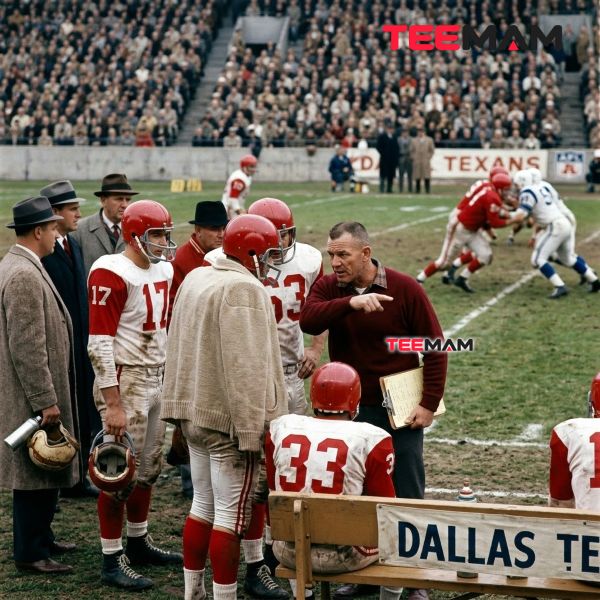
To understand the history of the Kansas City Chiefs, you have to start in Dallas, not Missouri.
Lamar Hunt and the Creation of the AFL
Lamar Hunt, son of oil magnate H.L. Hunt, spent the late 1950s trying to land an NFL franchise for Dallas. The league turned him down, and a separate attempt to buy the Chicago Cardinals and move them south also fell through. Rather than keep knocking on a door that wouldn’t open, Hunt spent 1959 recruiting other spurned would-be owners — including Houston’s K.S. “Bud” Adams — to launch a competing league. Within about seven months, the American Football League existed on paper, with an ownership group nicknamed the “Foolish Club” for daring to challenge the NFL’s monopoly. The AFL kicked off play in 1960 with eight teams and a mandate to play a faster, more pass-heavy brand of football than the older league had fully embraced.
That decision reshaped professional football well beyond Hunt’s own team. The AFL’s emphasis on the passing game, its willingness to sign players NFL scouts had passed over, and its 1970 merger with the NFL changed the league’s structure permanently. Hunt is informally credited with coining the term “Super Bowl,” and his family has owned the Chiefs continuously since — a level of founder-to-present continuity very few franchises in American sports can claim.
The Dallas Texans Era
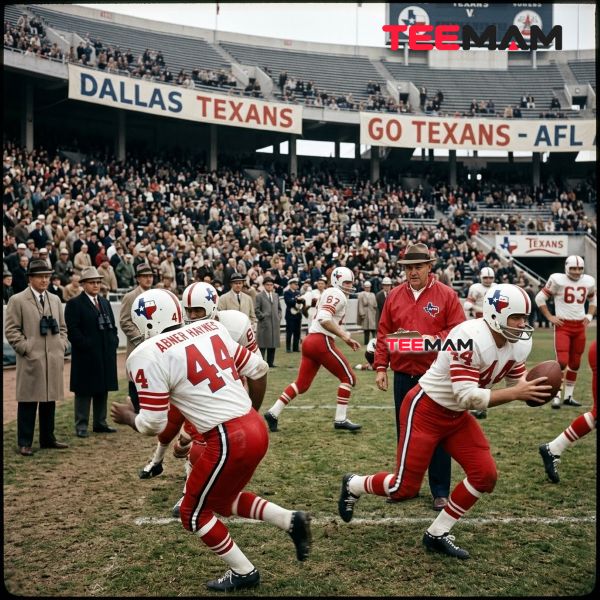
Hunt named his own team the Dallas Texans and hired a young Miami assistant named Hank Stram as head coach. The team’s early visual identity leaned heavily on Texas itself: the helmet and jersey design incorporated the state’s outline alongside a star marking Dallas, a distinctly local look that would need to be scrapped entirely once the franchise left the state.
The early seasons were as much a fight for survival as a fight for wins. The Texans went 8-6 in their 1960 debut, splitting a skeptical local market with an NFL expansion team the older league had rushed in specifically to undercut Hunt’s venture — the Dallas Cowboys, founded that same year in direct response to the AFL’s arrival. The Texans’ fortunes peaked in their third and final Dallas season. Behind Len Dawson, the 1962 team went 11-3 and won the AFL Championship in a legendary double-overtime battle against the Houston Oilers, a 20-17 win that was, at the time, the longest professional football game ever played.
Why the Franchise Left Dallas
Winning a championship didn’t solve the Texans’ core problem: two professional football teams splitting one metro area’s ticket revenue. The Cowboys had NFL backing and a head start on local loyalty, and the Texans were losing money despite outplaying their crosstown rival on the field. Hunt considered relocating to Atlanta or Miami before Kansas City’s mayor, H. Roe Bartle, made an offer that proved more compelling — civic backing and a path toward a dedicated stadium in a market with no existing pro football presence to compete against. Hunt announced the move on February 8, 1963, and the team adopted its new name later that spring.
Dallas Texans to Kansas City origins get a much deeper treatment in our dedicated history piece, including the roster decisions and business pressures behind the relocation: read the full origin story.
For a primary source on this period, the Pro Football Hall of Fame’s franchise history confirms the founding timeline and the 1963 relocation as part of the league’s official record.
Why Were They Called the Kansas City Chiefs?
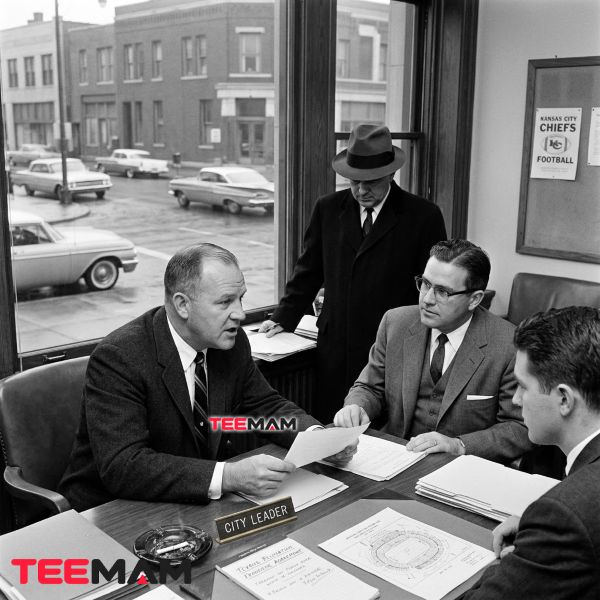
Quick answer: the team was renamed for Kansas City mayor H. Roe Bartle, whose local nickname was “Chief” — a civic tribute, not a reference to a specific tribe or historical figure.
The Kansas City Move in 1963
When Hunt’s team landed in Missouri, it needed a new identity — “Texans” obviously no longer fit. Hunt and Stram reportedly considered keeping the old name before ultimately deciding against it, and the organization fielded more than a thousand suggestions before settling on one. Bartle had been instrumental in luring the franchise away from Dallas, promising municipal support and a stadium solution the Cowboys’ hometown hadn’t offered him. As a nod to Bartle’s local standing, Hunt renamed the team the Chiefs, and the identity stuck instantly with a city that had gone nearly two decades without top-tier professional football.
The Meaning Behind the Chiefs Name
Bartle’s nickname came from his decades of involvement with the Boy Scouts of America and a Scouting honor society he founded, not from any claimed tribal title. The 1963 naming decision was civic rather than a direct reference to Native American heritage. But the franchise’s early game-day presentation — including headdress imagery in its original branding, and a live-horse mascot ridden by a rider in ceremonial-style regalia — drew heavily on Native American iconography that had nothing to do with Bartle’s actual biography. The team has since worked to retire pieces of that imagery, including permanently ending the horse mascot’s headdress tradition in 2021, and has engaged in ongoing dialogue with Kansas City’s American Indian Community Working Group. The 1963 name has one origin. The Native American imagery and gameday rituals that developed around it came later, for different reasons, which is why the two parts of the story need to be examined separately — and the more contested half of it gets its own treatment later, in the section on Chiefs traditions.
Forging the Red and Gold: How Chiefs Visual Identity Evolved
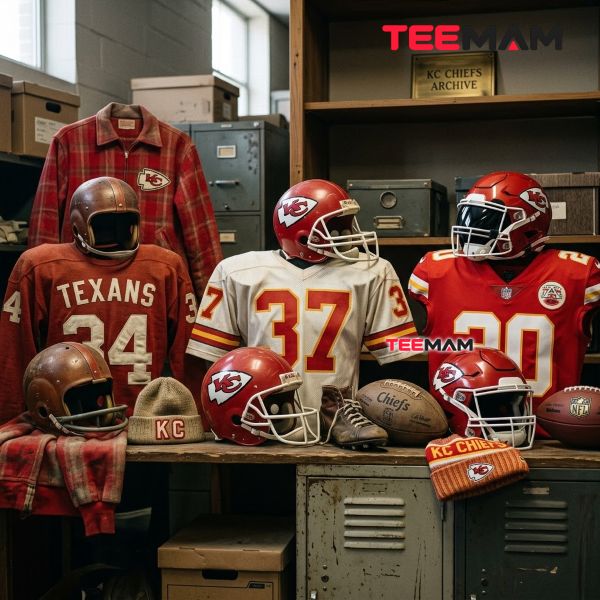
The history of the Kansas City Chiefs is also a history of visual continuity. The Chiefs’ look changed far less than the franchise itself. The Dallas Texans’ Texas-outline branding disappeared entirely in 1963, but red and gold carried over, and the arrowhead Lamar Hunt introduced around the move to Kansas City has survived more than six decades with only minor tweaks — a rarity in a league where teams often overhaul their branding every decade or two.
The Evolution of the Arrowhead
Hunt wanted a mark that connected to the “Chiefs” name without leaning into caricature, and the arrowhead’s geometric simplicity made it one of the most recognizable emblems in professional sports. For a full breakdown of how the design has shifted in small ways since 1963, our Kansas City Chiefs logo evolution guide walks through every iteration: see the complete logo timeline.
What Does the Arrowhead Symbol Represent?
A great sports logo communicates identity from the nosebleed seats, and the arrowhead does exactly that. It’s become shorthand for the team, the stadium that borrowed its name, and Kansas City’s football identity as a whole. It’s also part of the broader conversation about Native American imagery in sports branding, since the shape itself references tribal weaponry even though the naming rationale behind the team was about a mayor’s nickname rather than tribal heritage. We unpack that tension directly in our piece on the meaning behind the Chiefs arrowhead: explore the arrowhead’s full meaning.
Red, Gold and the Visual Language of Chiefs Kingdom
Color became just as important as the logo itself. Chiefs red and gold show up far outside Arrowhead — on downtown storefronts during a playoff run, in office decorations every October, in baby clothes for kids born into fan families who never had a choice in the matter.
Throwback Uniforms and the Preservation of Memory
A throwback jersey gives fans a way to identify a specific chapter of team history at a glance. A Dawson-era design points back to the AFL and Super Bowl IV; a 1990s throwback recalls the Schottenheimer years; a newer alternate lets a Mahomes-era fan wear symbols tied to a much earlier generation of the same franchise. For the full rundown of every throwback style the team has worn, check our Chiefs throwback uniform history guide: browse the throwback uniform archive.
That instinct to hold onto the past through what you wear isn’t limited to official uniforms. Plenty of longtime fans do the same thing with their own closets, pulling out a faded cap or a game-day jacket older than their kids, because heritage apparel is one of the simplest ways to carry decades of team memory into the present.
The Scouting Decision That Shaped the Chiefs’ First Championship
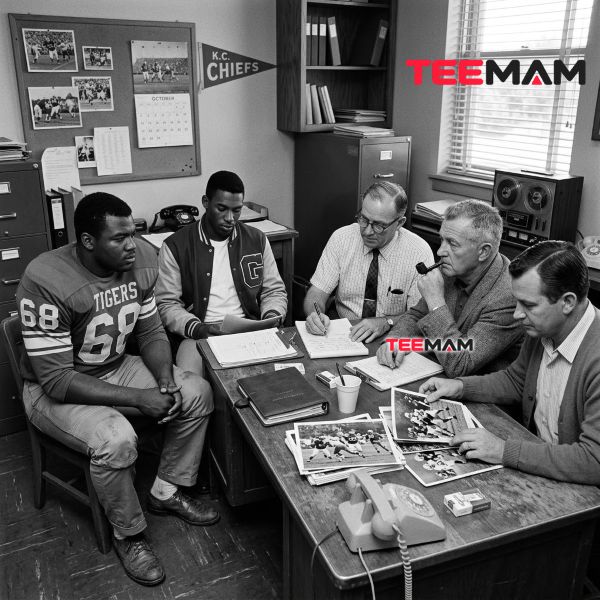
Before getting to Hank Stram’s coaching philosophy, it’s worth understanding one specific decision that separated the early Chiefs from most of their AFL and NFL peers: who they recruited, and where they looked.
In the early 1960s, the Chiefs brought in Lloyd Wells, a Texas Southern graduate and former sports photographer, first as a part-time scout and then, by the mid-1960s, as what the team and multiple historians describe as pro football’s first full-time Black scout. Wells built relationships across historically Black colleges and universities that larger programs and NFL teams were overlooking, and that pipeline produced Hall of Famers Buck Buchanan (Grambling), Willie Lanier (Morgan State), and Emmitt Thomas (Bishop College), along with star wide receiver Otis Taylor (Prairie View A&M), who caught the touchdown that put Super Bowl IV out of reach. Buchanan, taken with the first overall pick in the 1963 AFL Draft, became the first Black player selected first overall in professional football history.
By Super Bowl IV, the Chiefs’ 40-man roster included 19 Black players — nearly half the team, a proportion virtually unheard of in the NFL at the time. The 1969 Chiefs also drew unusually heavily on HBCU talent: historical accounts commonly put the HBCU contingent on that Super Bowl IV roster at 13 players, including Buck Buchanan, Willie Lanier, Emmitt Thomas, and Otis Taylor, a figure widely cited, including by HBCU Gameday, as the largest HBCU presence on any Super Bowl team before or since. The Vikings that Kansas City beat that day, by contrast, fielded no HBCU players at all. That scouting decision is arguably as important to the franchise’s first championship as anything Stram drew up on a whiteboard, and it’s a piece of the history of the Kansas City Chiefs that deserves more attention than a highlight-reel recap of the game itself usually gives it.
Hank Stram and the Chiefs’ First Golden Era
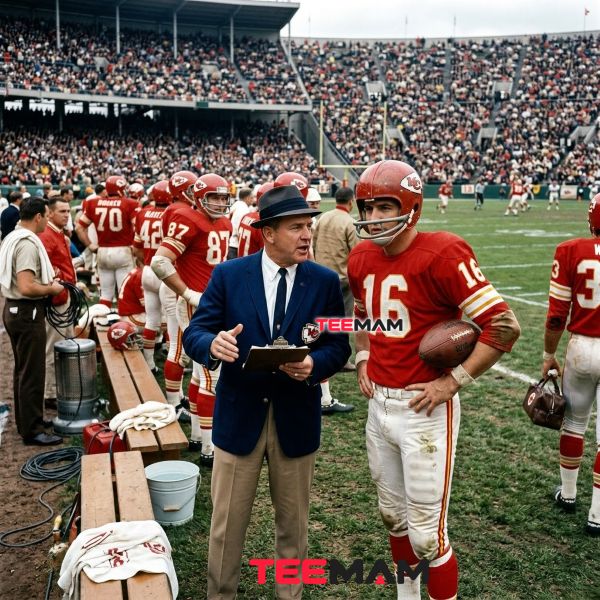
Hank Stram’s Coaching Philosophy
Stram was an offensive innovator at a time when most professional football was still fairly conservative, popularizing concepts like the moving pocket and building his roster around speed and versatility rather than pure size. He and Hunt built the organization from the ground up together — an owner willing to bankroll unconventional ideas, and a coach willing to use them. Stram is also the only man to serve as a head coach across the entire ten-year existence of the AFL.
Len Dawson and the Rise of the Chiefs
If Stram was the architect, Len Dawson was the franchise’s first true face. Dawson ran Stram’s offense with the kind of poise that earned him the nickname “Lenny the Cool,” leading the team from its final Dallas season through the Kansas City move and into the Super Bowl era. The standard he set is still the one every Chiefs quarterback since has been measured against.
Super Bowl IV and the End of the First Golden Era
The 1966 AFL Championship got the franchise its first trip to the Super Bowl, a loss to the Green Bay Packers that turned out to be an important dress rehearsal rather than a wasted trip. Three seasons later, the 1969 Chiefs beat the heavily favored Vikings 23-7 in Super Bowl IV, closing out the AFL’s existence as an independent league on January 11, 1970, and validating years of arguments that AFL football could compete with — and beat — the NFL’s best. It’s the last Super Bowl played before the AFL-NFL merger became fully official, which permanently ties the Chiefs to the final chapter of pro football’s pre-merger era. For a full breakdown of every Chiefs Super Bowl appearance since, our Kansas City Chiefs Super Bowl timeline covers each game in detail: view the full Super Bowl history.
From Championship Glory to the Long Road Back
What followed Super Bowl IV wasn’t another dynasty. For more than four decades, the franchise cycled through rebuilding periods and genuinely competitive teams without reaching another Super Bowl until the Mahomes era began.
The 1970s: Life After the AFL
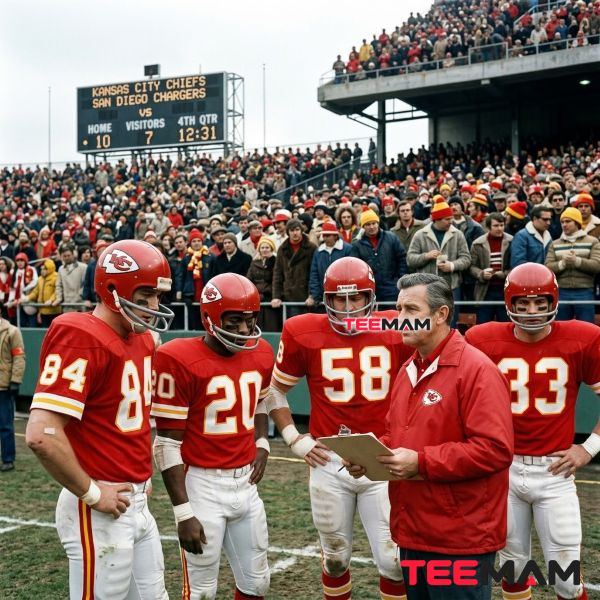
The 1970 merger folded the AFL into the NFL as the American Football Conference, and the Chiefs suddenly had to compete with 26 teams for the same title they’d just won. Kansas City made the playoffs as late as 1971 but slid into a long decline through the rest of the decade, cycling through coaches and losing much of the talent pipeline that had defined the Stram years.
The Schottenheimer Era
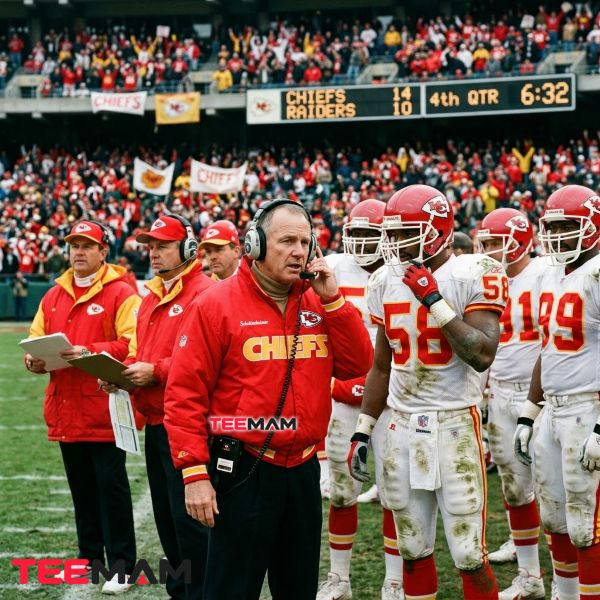
Marty Schottenheimer took over in 1989 and built a physical, defense-first team that reached the playoffs in seven of his ten seasons in Kansas City, including a 13-3 finish in 1995. Those Chiefs teams were genuinely good — they just kept running into a wall in January, never advancing past the AFC Championship Game under Schottenheimer.
The Long Search for the Next Franchise Quarterback
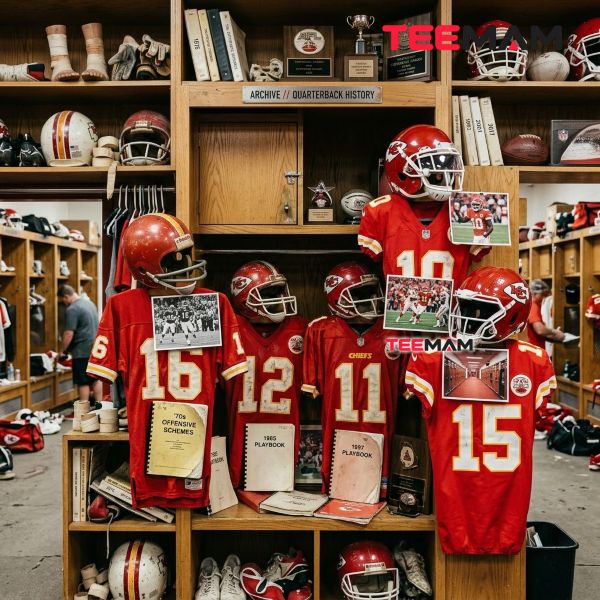
Between Dawson’s retirement and Mahomes’s arrival, the Chiefs cycled through more than a dozen different primary starting quarterbacks without finding one who could carry the franchise the way Dawson had. That search, more than any single losing season, is what defined the decades between the two championship eras.
Franchise Icons Across Generations
Even during the leaner stretches, individual players kept the Chiefs’ identity alive. Hall of Famers from multiple eras — defensive stars from the Stram years, offensive standouts from the Schottenheimer years, and eventually the Reid-Mahomes core — each added their own chapter regardless of whether the surrounding roster was contending for championships. Our Chiefs Hall of Fame players page profiles every enshrined player connected to the franchise: meet the full Hall of Fame class.
The Coaching Legacy That Shaped the Franchise
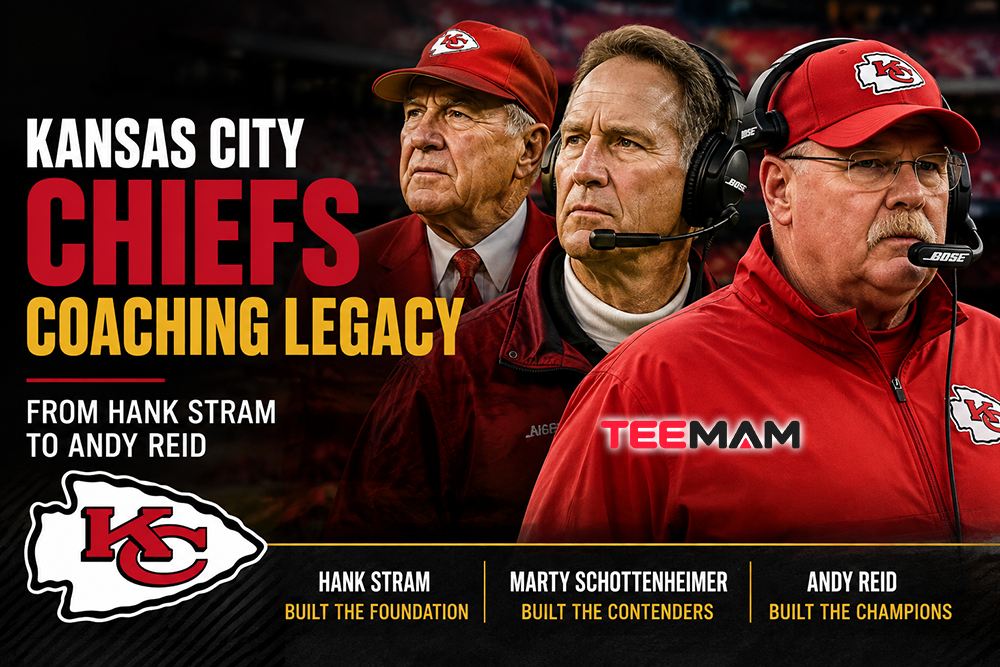
From Stram’s innovation through Schottenheimer’s disciplined, defense-first teams of the 1990s, and eventually to Andy Reid’s offensive renaissance, Chiefs coaching has swung between eras of identity-defining success and long stretches of being competitive but not championship-caliber. Our Chiefs coaching legacy explained guide traces the full list of head coaches and what each one changed about the organization: read the complete coaching history.
The Road Back to Championship Contention
The rebuilding years matter because they give the modern dynasty its context. A fan base that sat through Schottenheimer-era playoff heartbreak, early-2000s mediocrity, and a genuinely bad 2-14 season in 2012 understands exactly what the Mahomes years represent: not an inevitability, but a payoff for decades of patience.
Andy Reid, Patrick Mahomes and the Modern Chiefs Dynasty
This is the chapter that turned the Chiefs from a historically interesting franchise into the NFL’s defining team of the 2020s.
Andy Reid Changes the Direction of the Franchise
The Chiefs hired Andy Reid as their 13th head coach on January 7, 2013, bringing in an offensive mind who had spent 14 seasons building the Philadelphia Eagles into a consistent contender without ever winning it all. Reid’s arrival immediately stabilized an organization coming off that 2-14 season, and his offensive system, paired with a front office committed to building around a franchise quarterback, set the stage for everything that followed. Reid has since become the winningest active head coach in the NFL and one of only a few coaches to become the all-time wins leader for two different franchises.
Patrick Mahomes Changes the Franchise’s Trajectory

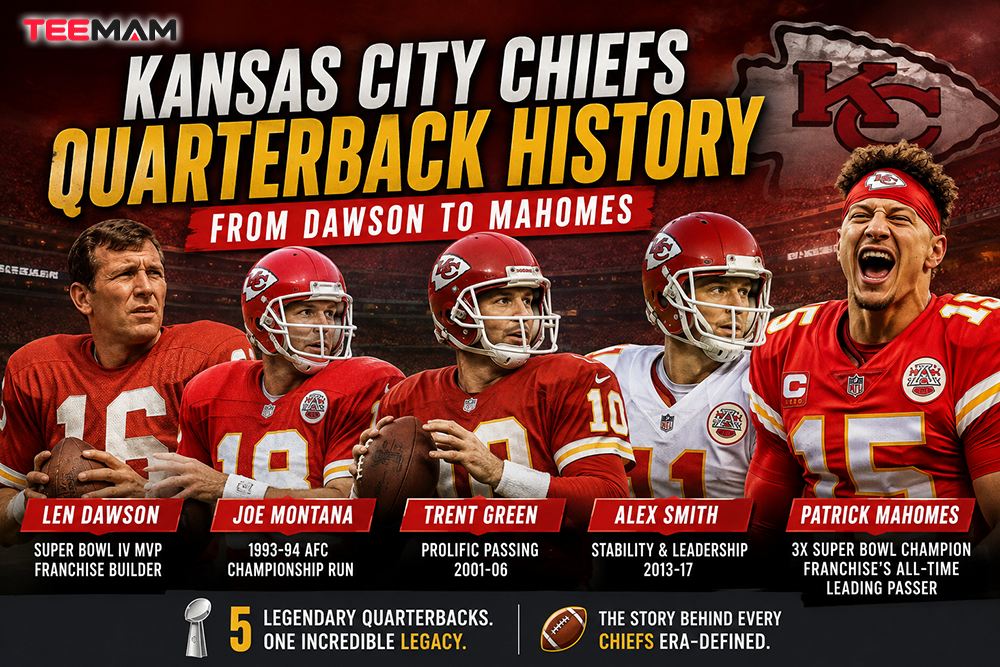
The Chiefs traded up in the 2017 NFL Draft to select Patrick Mahomes out of Texas Tech, sat him behind veteran Alex Smith for a season, then handed him the starting job in 2018. What followed reset expectations for the entire league: Mahomes won NFL MVP in his first year as a starter, brought a level of improvisational, high-velocity passing rarely seen at that scale in the NFL, and formed a partnership with Reid that has produced sustained success matched by very few coach-quarterback pairings in league history. Mahomes’s rise connects directly back to Dawson’s — both quarterbacks became the defining face of a Chiefs championship era, roughly six decades apart. Our quarterback history from Dawson to Mahomes guide traces that full line of succession, decade by decade: follow the full quarterback lineage.
Travis Kelce and the Modern Offensive Identity
No account of the Reid-Mahomes era is complete without Travis Kelce, whose partnership with Mahomes redefined how dangerous the tight end position could be inside a modern passing offense. Kelce’s blend of route-running polish and physicality after the catch became a defining feature of the Chiefs’ attack, and his sustained production across more than a decade in Kansas City places him among the most statistically productive tight ends the league has ever seen.
The Chiefs’ Super Bowl Resurgence
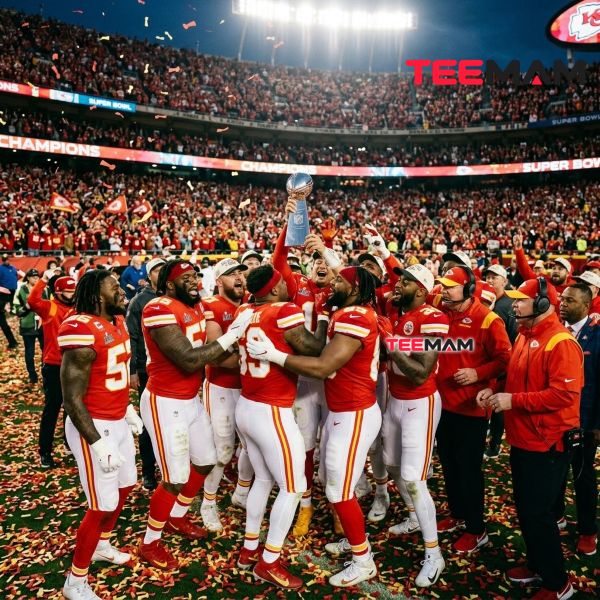
From the 2019 through 2024 seasons, Kansas City reached five of six Super Bowls under Reid and Mahomes — an extraordinary run by any historical standard. The Chiefs beat the San Francisco 49ers in Super Bowl LIV to end a 50-year championship drought, lost Super Bowl LV to Tom Brady and the Tampa Bay Buccaneers the following year, then beat the Philadelphia Eagles in Super Bowl LVII and the 49ers again in overtime in Super Bowl LVIII, becoming the first team since the early-2000s New England Patriots to win back-to-back titles. That run hit a wall in Super Bowl LIX, played in February 2025 to cap the 2024 season, where the Eagles routed the Chiefs and denied Kansas City an unprecedented three-peat. The 2025 regular season was rougher still: Kansas City finished 6-11, missed the playoffs for the first time since 2014, and posted its first losing record since 2012 — a genuinely humbling stretch for a team that had reached the Super Bowl in five of the previous six years. By the close of the 2025 season, the franchise’s full Super Bowl ledger stood at four championships (IV, LIV, LVII, LVIII) against three losses (I, LV, LIX) across seven total appearances. That kind of swing is itself part of the story: dynasties don’t move in a straight line, and how the Reid-Mahomes core responds to adversity will shape the next chapter of the history of the Kansas City Chiefs as much as the championships did.
Who Owns the Chiefs and How Has Leadership Shaped the Franchise?
The Hunt Family Legacy
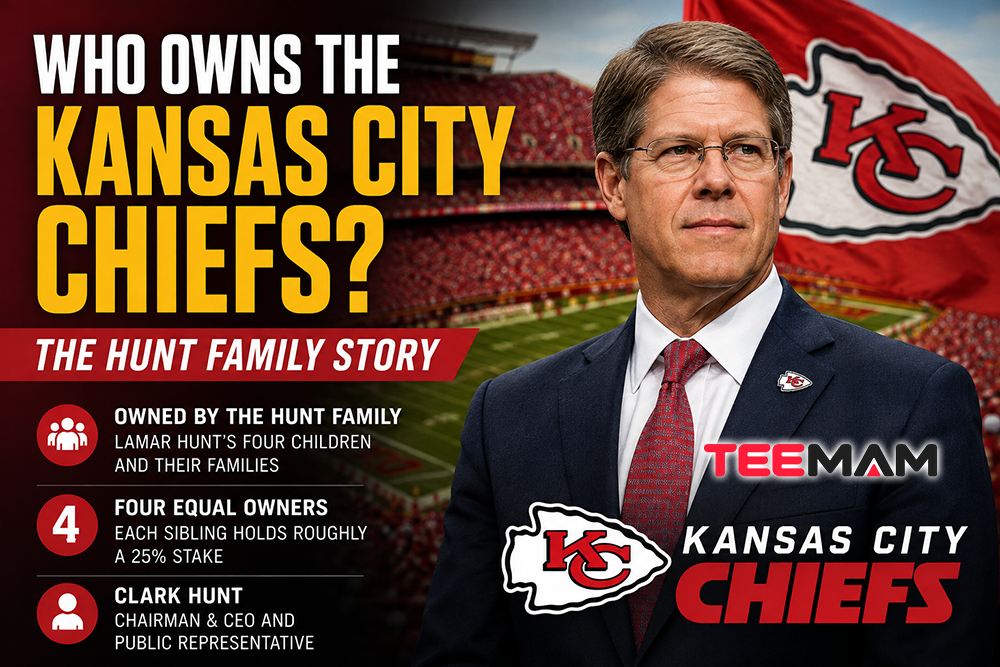
Lamar Hunt owned the Chiefs from their founding until his death in 2006, and the franchise has remained in Hunt family hands ever since, with his son Clark Hunt now serving as Chairman and CEO. That continuity is unusual in modern professional sports, where franchises regularly change hands between corporate ownership groups. Our Hunt family Chiefs ownership guide traces that lineage across three generations: read the full ownership history.
Why Stable Ownership Matters to Franchise Identity
Single-family ownership across more than six decades has given the Chiefs an unusually consistent organizational culture: the same emphasis on Kansas City civic ties, the same patience with a coaching hire like Reid, and the same commitment to preserving the visual and cultural identity Lamar Hunt established back in 1963.
Arrowhead Stadium and the Birth of Chiefs Kingdom

Much of the history of the Kansas City Chiefs off the field can be told through one building.
Why Arrowhead Became More Than a Stadium
After nearly a decade sharing Kansas City’s Municipal Stadium with the city’s baseball team, the Chiefs moved into their own purpose-built home on August 12, 1972, when Arrowhead Stadium opened with a preseason win over the St. Louis Cardinals in front of a near-sellout crowd of more than 78,000. Designed exclusively for football rather than as a shared multipurpose facility, its steep, fully enclosed seating bowl was built for sound — and it has delivered in a measurable way. On September 29, 2014, Chiefs fans hit 142.2 decibels during a Monday Night Football win over the New England Patriots, a mark Guinness World Records still certifies as the loudest crowd roar ever recorded at a sports stadium.
From Stadium to Cultural Landmark
Arrowhead’s red seats, the wall of sound during opposing offensive snaps, and the sea of tailgates that fill the surrounding Truman Sports Complex parking lots on gameday have turned the building into something closer to a civic institution than a football venue. Generations of Kansas City families have incorporated Chiefs games into their own traditions, and the stadium’s atmosphere is routinely cited by opposing players and coaches as one of the toughest road environments in the league. Our Arrowhead Stadium fan experience guide covers seating layout, capacity, and gameday logistics for anyone planning a visit: plan your Arrowhead visit.
Arrowhead’s Next Chapter

Arrowhead’s place in Chiefs history is now entering a transition of its own. In December 2025, after Jackson County voters rejected a sales-tax measure that would have funded stadium renovations, the Chiefs and the state of Kansas announced a deal to build a new $3 billion, roughly 70,000-seat domed stadium in Wyandotte County, Kansas, across the state line from Arrowhead’s current site. The Chiefs’ lease at Arrowhead runs through the 2030 season, and the new stadium is planned to open for the 2031 NFL season. In mid-2026, the team released initial renderings from lead design architect MANICA, showing an enclosed, translucent-roofed building that echoes Arrowhead’s shape and preserves its signature gameday traditions, including tailgating, even as the franchise moves indoors for the first time. That makes Arrowhead more than a historical landmark at this point — it’s the setting for an unfinished chapter of Chiefs history that fans are actively living through.
Training Camp and Direct Fan Access
Chiefs training camp gives fans a level of access most NFL teams don’t offer — open practices where kids can watch Mahomes throw routes up close and collect autographs from players who’ll be on national television by September. Our Kansas City Chiefs training camp guide breaks down when and where to catch practices each summer: see the training camp guide.
The Traditions That Define Chiefs Kingdom
By kickoff, the franchise’s history isn’t sitting in a record book anymore — it’s being performed in the stands, through chants, songs, tailgates, and a sea of red.
The Tomahawk Chop and Its Complicated History
The tomahawk chop didn’t originate with the Chiefs at all. Florida State University fans introduced the chant in 1984, with permission from the Seminole Tribe of Florida. The Chiefs adopted their version of the chant in 1990, after Arrowhead’s public-address staff heard it performed by the marching band at Northwest Missouri State University, whose director at the time was a Florida State graduate. It’s since become one of the most recognizable, and most contested, gameday traditions in American sports. Native American advocacy groups, including the Kansas City Indian Center and the Not In Our Honor coalition, have called the chop offensive and pushed for the team to retire it alongside its imagery, arguing it reduces hundreds of distinct Indigenous nations to a single stereotyped gesture. The organization has made adjustments over the years, banning fan headdresses and face paint in 2020 and retiring its live-horse mascot’s headdress-style regalia in 2021, but the chant remains part of Arrowhead’s gameday soundscape and continues to draw national debate every time the Chiefs reach the playoffs. Any accurate account of Chiefs traditions has to include that tension rather than smoothing it over. For the fuller story, including the FSU-to-Kansas City lineage of the chant, see our dedicated piece on the history of the Tomahawk Chop: read the full Tomahawk Chop history.
Fight Songs, Touchdown Music and Gameday Sound
Music has been part of Chiefs gameday culture since the franchise’s early years in Kansas City, from a traditional team fight song to the touchdown music blasted over Arrowhead’s public-address system. The specific songs have changed over time — the team dropped a longtime post-touchdown track in 2018 over its performer’s legal history and let fans vote on the replacement — but their function has stayed the same: building a recognizable soundscape that cues crowd energy at kickoff, on third downs, and after every score. Our Chiefs fight song history guide covers that evolution in more detail: learn the fight song’s backstory.
Tailgating and the Sea of Red
Long before kickoff, the Truman Sports Complex parking lots fill with grills, folding tables, and family groups who’ve been doing this together for decades. For a lot of fans, tailgating at Arrowhead isn’t a pregame formality — it’s the actual point of the day, a chance to see the same extended parking-lot family they’ve known for twenty years, regardless of how the team performs once the gates open. Our Kansas City Chiefs tailgate traditions guide has tips for first-timers and veterans alike: explore tailgate culture at Arrowhead.
KC Wolf and the Performance of Fandom
KC Wolf made his debut on March 23, 1989, becoming the Chiefs’ first costumed mascot and taking his name from the “Wolfpack,” a group of especially loud fans who had occupied bleacher seats at the old Municipal Stadium. He was inducted into the Mascot Hall of Fame’s inaugural 2006 class. Longtime performer Dan Meers wore the costume for 35 years, appearing at 375 games and five Super Bowls before retiring in 2025. Our story behind KC Wolf covers how the mascot became such a fixture of the organization: meet KC Wolf.
Chiefs Cheerleaders and Gameday Culture
Chiefs gameday entertainment traces back to the franchise’s arrival in Kansas City in 1963, though the modern Chiefs Cheer program developed gradually out of earlier groups, including an organization known as the Chiefettes in the team’s early Kansas City years. That gameday presentation has evolved over more than six decades into a more visible extension of the team’s brand, including community and charitable appearances throughout the year. Our Chiefs cheerleaders through history guide traces that evolution in detail: see the full cheerleading history.
How Fan Culture Became Part of Chiefs History
No pillar on the history of the Kansas City Chiefs is complete without the people in the stands, since Chiefs Kingdom is as much a product of six decades of fandom as it is of anything that happened on the field.
Chiefs Kingdom as a Generational Identity
Chiefs fandom often enters a family before the next generation has chosen a team for itself. A child’s first jersey, a first trip to Arrowhead, or stories about Len Dawson passed down at Thanksgiving can turn football into a family tradition rather than an individual preference — which is part of why Chiefs Kingdom functions less like a customer base and more like an extended family, bound by shared memorabilia and shared rituals long before the current dynasty gave fans shared championships.
Famous Fans and Public-Figure Fandom
Over the decades, the Chiefs have picked up a roster of recognizable public fans whose visibility has helped extend the team’s cultural footprint well beyond Missouri and Kansas. Our famous Chiefs fans and celebrities guide runs down the most notable names: see who’s repping Chiefs Kingdom.
The Taylor Swift Effect and the Expansion of the Audience
Since 2023, Taylor Swift’s relationship with Travis Kelce has pulled a genuinely new audience into Chiefs games — younger viewers, international fans, and casual observers who’d never watched a full football broadcast before. It’s a real chapter in the team’s fan-culture story, not the reason the Chiefs built a following in the first place; decades of tailgating, throwback jerseys, and a world-record-setting crowd predate any of this by fifty years. What the “Swift effect” has done is create some visible friction between longtime fans and a newer, more casual viewing audience, around what “real” fandom is supposed to look like. Our Taylor Swift’s impact on Chiefs fandom guide covers the full scope of that shift: read about the Taylor Swift effect.
How Chiefs Apparel and Symbols Preserve Franchise Memory
Why Fans Wear Franchise History
For a lot of Chiefs fans, apparel becomes a record of personal fandom rather than simple merchandise. A faded cap can mark a specific Super Bowl run, a throwback jersey can preserve an earlier generation of the franchise, and a child’s first Chiefs shirt can end up permanently associated with a first trip to Arrowhead. That’s true of current-era Mahomes gear just as much as decades-old memorabilia passed down through a family.
From Game-Day Gear to Everyday Identity
Chiefs imagery doesn’t stay inside Arrowhead. It shows up at Thanksgiving tables in October, on office desks during a playoff run, and in family photos going back generations — an everyday presence that separates a genuinely rooted fan culture from a purely seasonal one.
Carrying the Legacy Forward
At TeeMam, fan apparel is one way supporters carry team history into everyday life, and we design pieces that combine recognizable Chiefs heritage with modern fits. Fans who want to keep that history close year-round can browse our Chiefs heritage apparel ideas alongside the broader history covered here: browse Chiefs heritage apparel ideas.
Retired Numbers and the Players Who Became Permanent Symbols
Retired numbers are one of the more permanent, low-key ways a franchise writes its own history of the Kansas City Chiefs into the building itself, long after the players involved have left the field.
Why Teams Retire Jersey Numbers
Retiring a number is one of the more permanent honors a franchise can offer — a public statement that a player’s contribution shouldn’t be diluted by handing their digits to the next rookie who needs a locker assignment.
The Names Behind the Numbers
The Chiefs have retired ten numbers, more than most franchises in the league, spanning the AFL era through the merger years. Jan Stenerud’s No. 3 was the first, retired in 1992 after his Hall of Fame kicking career, and Len Dawson’s No. 16 followed as arguably the most symbolically important — the number belonging to the quarterback who led the franchise from Dallas to its first Super Bowl title. Others include Bobby Bell’s No. 78, Willie Lanier’s No. 63, Buck Buchanan’s No. 86, Emmitt Thomas’s No. 18, and Derrick Thomas’s No. 58, retired after the star linebacker’s death in 2000. Rather than reproduce the full list here, our Chiefs retired jersey numbers guide profiles each honoree and the case behind their retirement: see every retired Chiefs number.
The Chiefs in American Pop Culture
The most recent chapter of the history of the Kansas City Chiefs is playing out somewhere well outside Arrowhead Stadium: in national broadcast ratings, celebrity gossip columns, and social media feeds that have nothing to do with football.
From Kansas City Institution to National Brand
A franchise that spent decades as a regional team with occasional national relevance has, over the past several seasons, become one of the most broadcast, most discussed teams in American sports. National prime-time scheduling, a run of consecutive Super Bowl appearances, and star power at nearly every offensive skill position have pushed the Chiefs into a level of media saturation the franchise never had during its AFL or Schottenheimer-era years.
Why the Chiefs Became a Cultural Story Beyond Football
Championships alone don’t explain that shift; plenty of winning teams stay regionally popular without becoming a national story. The combination of championships, individually famous stars like Mahomes and Kelce, a stadium culture recognizable even to non-football fans, a merchandise footprint that extends well past game day, and a level of celebrity and social-media attention has pushed the history of the Kansas City Chiefs into genuinely mainstream pop-culture conversation.
The Chiefs Historical Timeline: 1960 to Today
For readers who want the condensed version, here’s the full history of the Kansas City Chiefs by year.
| Year | Milestone |
|---|---|
| 1959 | Lamar Hunt helps found the American Football League after being denied an NFL franchise |
| 1960 | Dallas Texans begin play as a founding AFL franchise |
| 1962 | Dallas Texans win the AFL Championship in a double-overtime win over Houston |
| 1963 | Franchise relocates to Kansas City (announced February 8), renamed the Chiefs after Mayor H. Roe Bartle |
| 1966 | Chiefs win the AFL Championship and play in the first Super Bowl, losing to Green Bay |
| 1969–70 | Chiefs win their third AFL title and beat the Minnesota Vikings 23-7 in Super Bowl IV (January 11, 1970) |
| 1970 | AFL-NFL merger becomes official; Chiefs join the AFC |
| 1972 | Arrowhead Stadium opens on August 12 |
| 1989 | Schottenheimer era begins; KC Wolf debuts as the team’s first costumed mascot |
| 2013 | Andy Reid hired as head coach on January 7 |
| 2014 | Chiefs fans set the Guinness World Record for loudest crowd roar at a sports stadium (142.2 dBA) |
| 2017 | Chiefs draft Patrick Mahomes out of Texas Tech |
| 2020 | Chiefs win Super Bowl LIV, ending a 50-year championship drought |
| 2021 | Chiefs lose Super Bowl LV to the Tampa Bay Buccaneers |
| 2023 | Chiefs win Super Bowl LVII over the Philadelphia Eagles |
| 2024 | Chiefs win Super Bowl LVIII in overtime, their second straight title |
| 2025 | Chiefs lose Super Bowl LIX to the Eagles, then finish 6-11 and miss the playoffs |
| 2025 | Chiefs and the state of Kansas announce an agreement for a new $3 billion domed stadium targeted to open in 2031 |
| 2026 | Chiefs release initial renderings for the new enclosed stadium |
What Makes the Chiefs’ Legacy Different From Other NFL Franchises?
Compared to teams with entirely NFL-native histories, the history of the Kansas City Chiefs carries a distinct combination of traits that few franchises can match.
AFL Roots
Unlike most NFL franchises, the Chiefs weren’t born inside the league they now play in — they were born to compete against it, which gives their early history a different flavor than teams that entered through conventional expansion.
Lamar Hunt’s Long-Term Influence
Hunt’s role wasn’t limited to owning one team; he helped architect the entire league structure the Chiefs eventually joined, and his family has owned the franchise continuously since. Few teams in any major American sport can claim that level of founder-to-present continuity.
Arrowhead as a Cultural Anchor
Purpose-built for football and world-record loud, Arrowhead Stadium has become as central to the team’s identity as any player or coach, giving the franchise a physical landmark that doubles as a cultural symbol — one now heading into a new, uncertain next chapter of its own.
Generational Fan Culture
Chiefs Kingdom isn’t a marketing term invented for the Mahomes era. It describes an inherited fandom, passed through families across decades of both losing seasons and championships.
The Contrast Between Historic Roots and Modern Global Reach
What makes the current moment interesting is the friction between a deeply local, generationally rooted fan base and a suddenly global audience pulled in by star power and mainstream celebrity crossover. Few franchises are navigating that specific tension — staying rooted in Kansas City while being watched and dissected worldwide — quite as visibly as the Chiefs are right now.
Common Questions About Kansas City Chiefs History
When Were the Kansas City Chiefs Founded?
The franchise’s roots date to 1959, when Lamar Hunt helped found the American Football League; the Dallas Texans began play in 1960; and the team became the Kansas City Chiefs in 1963. Which year counts as the “founding” depends on what’s being measured — the AFL franchise itself, its first season on the field, or the Kansas City identity fans know today.
What Were the Kansas City Chiefs Called Before They Moved to Kansas City?
They were the Dallas Texans. That’s a key part of the history of the Kansas City Chiefs: the franchise won its first championship, the 1962 AFL title, three years before it ever set foot in Missouri.
Why Did the Dallas Texans Move to Kansas City?
Competition with the rival NFL’s Dallas Cowboys split the local football market and hurt attendance, and Kansas City’s civic leadership, led by Mayor H. Roe Bartle, offered stadium support and a market with no existing pro football presence. Lamar Hunt announced the relocation on February 8, 1963.
Why Are the Kansas City Chiefs Called the Chiefs?
The team was renamed to honor Mayor H. Roe Bartle, whose nickname was “The Chief,” in recognition of his role in bringing the franchise to Kansas City. It wasn’t chosen as a reference to any specific Native American tribe, though the early franchise’s imagery and traditions later drew heavily on Native American iconography that had nothing to do with Bartle’s actual biography.
When Did the Chiefs Win Their First Super Bowl?
Super Bowl IV, played January 11, 1970, for the 1969 season, when the Chiefs beat the Minnesota Vikings 23-7 to close out the AFL era as champions. It was also the franchise’s third AFL championship overall, following titles in 1962 and 1966.
Who Is the Most Important Player in Chiefs History?
There isn’t a single objectively correct answer — it depends on what you’re measuring. Len Dawson has the strongest claim as the franchise’s first true icon, leading the team from Dallas through its first Super Bowl title and setting the template for what a Chiefs quarterback should look like. Patrick Mahomes has the stronger case by pure statistical and championship volume, with three Super Bowl titles for the franchise so far and multiple MVP honors across his career. Reasonable fans land on either side of that debate, and honestly, that’s part of what makes the argument between eras fun in the first place.
Why Is Arrowhead Stadium So Important to Chiefs History?
Arrowhead has been the team’s home since 1972, and its football-only design created an atmosphere that’s become part of the franchise’s competitive identity. The stadium’s 2014 Guinness World Record for crowd noise, 142.2 decibels, is a direct product of decades of fans building a shared gameday culture inside that specific building — a building the Chiefs are now set to leave for a new domed stadium in Kansas in 2031.
How Has Chiefs Fan Culture Changed Over Time?
Early AFL-era fandom was largely local and built around underdog pride against the established NFL. Post-merger, especially through the Schottenheimer years, fan culture solidified around Arrowhead traditions and tailgating even without championships to show for it. The Mahomes era added digital-first fandom, national media saturation, and, since 2023, a wave of newer, more casual fans drawn in by celebrity crossover attention, layered on top of decades of deeply rooted generational loyalty.
What the Kansas City Chiefs Legacy Means Today
Strip away any single season, and the Chiefs’ legacy is built from layers, not one era. It starts with the Dallas Texans and Lamar Hunt’s decision to build a league rather than wait for a phone call from one. It runs through the Kansas City relocation and an AFL heritage — three league championships, the best regular-season record in AFL history — that still separates the Chiefs from teams that only ever knew the NFL. It includes the scouting pipeline that brought Lloyd Wells, Buck Buchanan, Willie Lanier, and Otis Taylor into the organization, and the Stram-Dawson golden era that pipeline helped build. It includes the decades of rebuilding that followed, and the way Arrowhead Stadium and fan traditions kept Chiefs Kingdom intact through all of it, win or lose. And it includes the visual identity — that arrowhead, that red and gold — that has barely changed since 1963 even as everything else about the franchise, including its future home address, keeps changing around it. Andy Reid and Patrick Mahomes didn’t create that foundation; they built the modern dynasty on top of it, and the stumble in Super Bowl LIX and the rough 2025 season are proof that this chapter of the history of the Kansas City Chiefs is still being written, not finished.
For fans who want to keep that history close year-round, the same instinct to hold onto team heritage extends naturally into gift-giving, and our Kansas City Chiefs Christmas gifts guide is built for exactly that moment when understanding the team’s story turns into celebrating it: find Chiefs gift ideas for the holidays.
Additional background sourced from official franchise records via Chiefs.com, the Mascot Hall of Fame, and Andscape’s reporting on the 1969 Chiefs and HBCU scouting.

Hi, I’m Olivia Bennett, a fashion and lifestyle writer at TeeMam with 6 years of experience creating content about fashion, outfits, and lifestyle trends. I enjoy sharing practical style ideas for everyday wear, game days, holidays, and special occasions, helping readers find looks that feel comfortable, fun, and uniquely their own.