Kansas City Chiefs Throwback Uniforms: A Style Retrospective
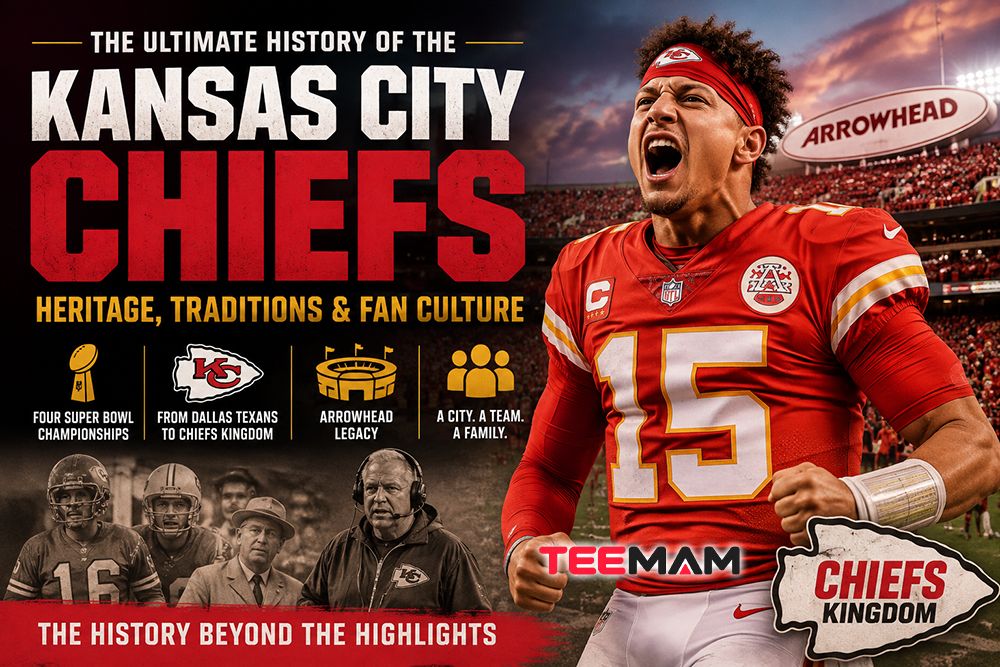
Step into the tailgate lots outside Arrowhead Stadium on a cold Sunday and the generational mix is obvious immediately. Grandfathers in faded red satin jackets stand next to twenty-somethings in reissued Dallas Texans caps, all part of the same sea of red that’s defined Chiefs Kingdom for generations. That’s not just nostalgia marketing at work. It reflects something genuinely rare in modern sports branding: a franchise that has barely touched its own look in more than sixty years. Most of the NFC East and half the AFC have cycled through five or six visual identities apiece since the 1990s. Kansas City Chiefs throwback uniforms, by contrast, trace back almost exactly to a design finalized before the franchise even played its first down in Missouri. This guide walks through how that happened, era by era, and why the look still shows up on jerseys, jackets, and Sunday morning parking lots decades later.
Quick Facts
| Franchise founded | August 14, 1959, as the Dallas Texans |
| First season | 1960 (AFL charter member) |
| Moved to Kansas City | 1963 |
| Current helmet logo | White arrowhead with red “KC,” unchanged since 1963 |
| Most celebrated throwback | 2009 AFL Legacy Game (Dallas Texans reproduction) |
| Retired uniform numbers | 10 (most recently No. 58, Derrick Thomas, in 2009) |
| Uniform suppliers by era | Sand-Knit → Rawlings → Russell Athletic → Wilson → Reebok → Nike |
Why Kansas City Chiefs Throwback Uniforms Remain Timeless
Kansas City Chiefs throwback uniforms remain timeless because the franchise has kept its core red-and-gold colorway and arrowhead helmet logo essentially unchanged since 1963, favoring patches and tributes over full redesigns.
Most NFL teams treat uniforms the way tech companies treat app icons — due for a refresh every few seasons. Kansas City never bought into that logic. Founder Lamar Hunt built the franchise around the American Football League itself, and that scrappy, history-conscious AFL identity carried directly into how the team approached its look. While division rivals chased uniform trends through the 1990s and 2000s, the Chiefs stuck close to what already worked. The result is a uniform that a fan in their twenties and a fan in their seventies both recognize instantly — a rare thing in a league that treats rebrands as routine business. For the ownership decisions and cultural moments behind that consistency, our complete Chiefs franchise heritage guide covers the fuller arc.
Key Takeaways
Here’s the short version of what makes Kansas City Chiefs throwback uniforms worth a deep dive, before we get into the full history below.
- The core Chiefs uniform — red helmet, white arrowhead, red “KC” — has been essentially unchanged since 1963.
- Only the Dallas Texans years (1960–1962) represent a genuinely different design.
- The 2009 AFL Legacy Game throwback remains the franchise’s most celebrated single-game uniform.
- The team has retired 10 uniform numbers, most recently Derrick Thomas’s No. 58 in 2009.
- Nike has supplied Chiefs uniforms since 2012, following Reebok, Wilson, Russell Athletic, Rawlings, and Sand-Knit.
The Complete Timeline of Chiefs Throwback Uniform Evolution
Most retrospectives skip straight from the 1960 Dallas Texans origin story to the 2009 AFL anniversary throwback, glossing over two decades of quieter, meaningful changes in between. Tracing the full evolution of Kansas City Chiefs throwback uniforms era by era shows how small adjustments — not overhauls — preserved this look for six decades.
1960–1962: The Dallas Texans Beginning
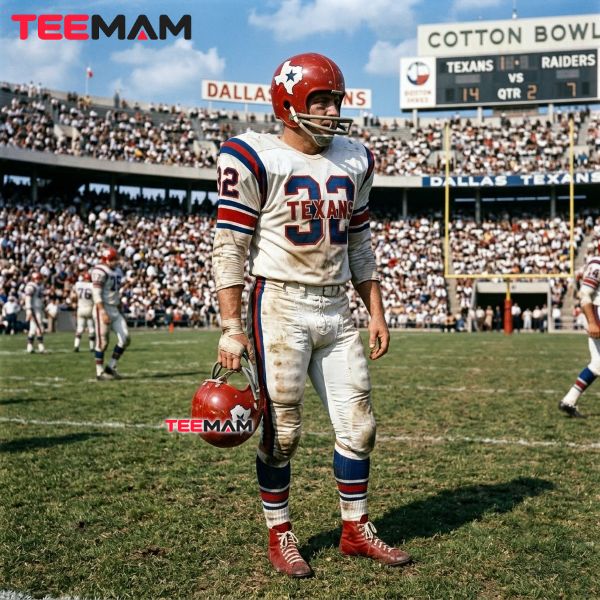
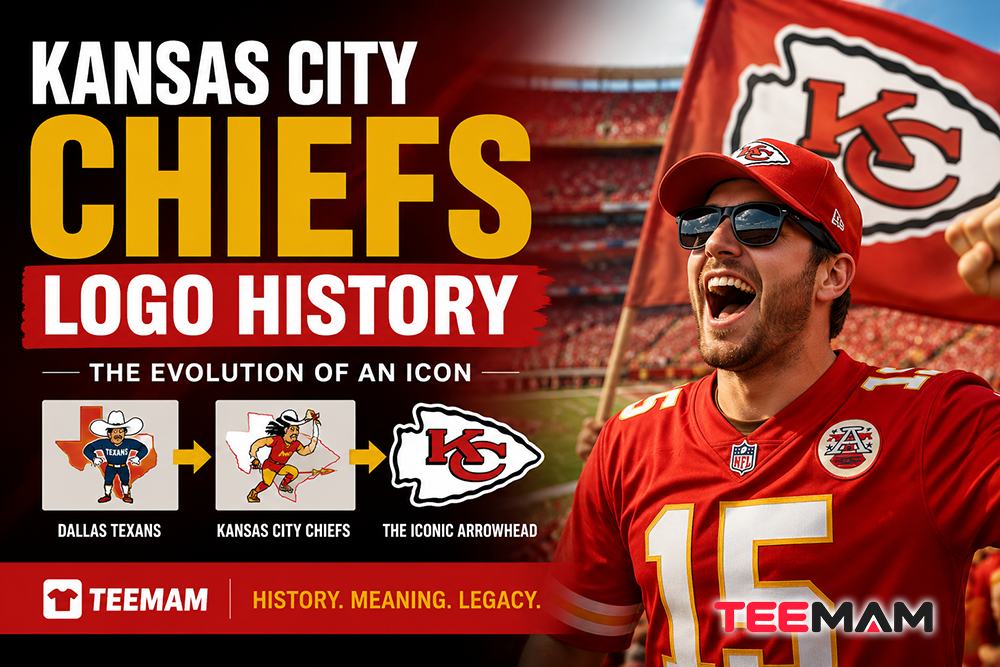
The franchise launched in 1960 as a charter member of the American Football League, one of eight original clubs alongside teams that would become the Jets, Broncos, Chargers, Titans (Oilers), Patriots, Bills, and Raiders. As the Dallas Texans, the team wore red helmets bearing a white outline of the state of Texas with a star marking Dallas — a busier, more illustrative design than anything that followed. The road jersey featured red numbers outlined in yellow on white, paired with red-and-orange striped pants. It wasn’t a polished look by modern standards, but it locked in the color foundation — red primary, gold accent — that the franchise never abandoned. The Texans went 11-3 in 1962 and won the AFL Championship in double overtime over the Houston Oilers before relocating to Kansas City the following year. For the origin story behind the franchise’s name change, see our piece on the story behind the original team name.
1963–1973: Moving to Kansas City and Building an Icon
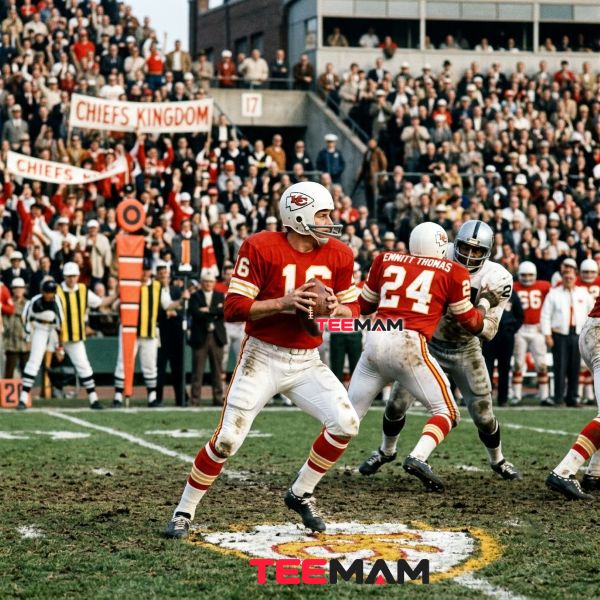
Once in Kansas City, the club needed a new identity — literally, since a fan-naming contest produced “Chiefs.” Out went the Texas-shaped logo; in came the white arrowhead with a red interlocking “KC,” a mark that hasn’t meaningfully changed since. Red stayed the primary helmet and jersey color, and white pants became a fixture. This is also the decade that built the franchise’s greatest era on the field, led by head coach Hank Stram and quarterback Len Dawson, culminating in a 23-7 upset of the Minnesota Vikings in Super Bowl IV in January 1970 — the final game an AFL team ever played before the full NFL merger.
1974–1988: Small Changes That Fans Still Notice
This stretch is where the detail-obsessed collectors start splitting hairs. Sleeve striping shifted more than once, jersey number fonts were tweaked, and facemask styles evolved alongside league-wide equipment standards. Suppliers changed hands too — Rawlings through the early 1970s, then Russell Athletic from 1973 into the late 1980s — and small fabric and construction differences crept in with every transition. None of it altered the silhouette a casual fan would recognize on sight, but it’s exactly the kind of period a Mitchell & Ness-style reproduction jersey has to get right down to the stitch.
1989–2008: Tradition Over Reinvention
While the rest of the NFL leaned hard into uniform overhauls in the 1990s — teal, silver, and black alternates spreading league-wide — Kansas City mostly sat it out. Wilson supplied uniforms from 1989 to 1996, followed by Reebok from 1997 into 2011, but the design itself barely moved. This is also the stretch where “throwback” became a marketing category across the NFL, and fans increasingly treated the Chiefs’ current uniform as functionally identical to a throwback, since so little separated the two.
2009 AFL Anniversary Throwback
To mark the American Football League’s 50th anniversary, the Chiefs wore an all-white Dallas Texans throwback in an official AFL Legacy Game against the Oakland Raiders on November 15, 2009. The uniform reproduced the original Texans look with real historical accuracy, right down to the star-and-state helmet logo, rendered in athletic gold rather than the metallic gold shown in some earlier team depictions. It remains one of the most discussed single-game uniforms in franchise history, and collectors prize it specifically because it represents a design the team wore for only three seasons, nearly half a century earlier.
2010–Present: Classic Uniforms in the Modern NFL
Nike became the league’s official uniform supplier in 2012, and the Chiefs’ switch brought modern fabric technology without touching the core look. This era also introduced memorial patches marking milestones and losses, including tributes tied to Lamar Hunt and franchise anniversaries. Add in three Super Bowl championships (LIV, LVII, LVIII) won in essentially the same uniform Len Dawson wore in 1970, and the “we haven’t changed” storyline has shifted from trivia to a genuine point of pride across Chiefs Kingdom.
Design Details That Make Chiefs Throwback Uniforms Instantly Recognizable
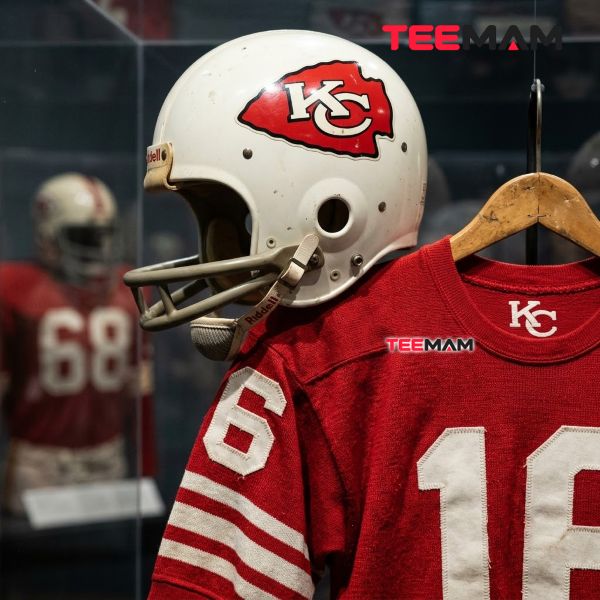
Past the general silhouette, a handful of specific choices do most of the work in making Kansas City Chiefs throwback uniforms recognizable from thirty yards or a thumbnail-sized photo online.
The Arrowhead Helmet
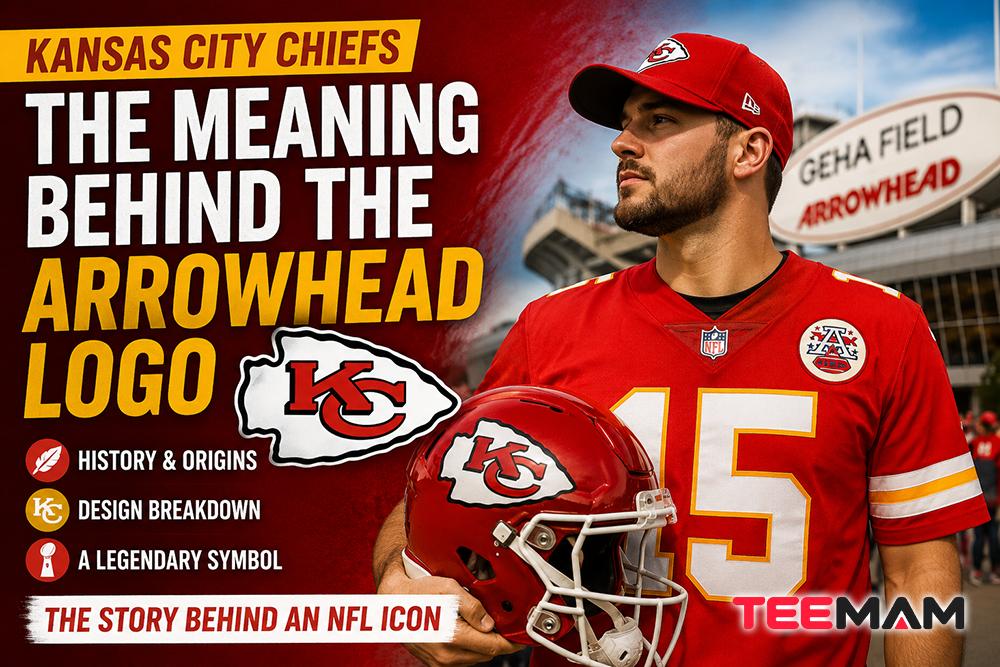
The white arrowhead with its red-outlined “KC” was reportedly sketched by Lamar Hunt himself, inspired partly by the San Francisco 49ers’ oval helmet mark, and produced by cartoonist Bob Taylor, the same artist behind the original Dallas Texans logo. It’s been the primary helmet mark since 1963 without a single redesign — a run of visual continuity almost no other NFL logo can match. For the full design story, see our breakdown of the history of the famous arrowhead logo.
Red and Gold Color Identity
Red has always carried the visual weight of the Chiefs identity. Under stadium lights, it reads clearly on television and in person, while gold plays a strictly supporting role — trim, accents, an occasional alternate jersey — rather than competing with red for attention. That restraint is a big part of why uniforms photographed in the 1960s still look surprisingly current: the palette never got crowded with a third or fourth clashing color the way some rebranded franchises did.
Classic Jersey Numbers and Sleeve Striping
The number font has stayed close to a traditional block style, resisting the swooping, stylized numerals several teams adopted in the 2000s. Sleeve striping has shifted in width and placement across different eras, but always within the same narrow, disciplined red-white-gold palette.
Historic Memorial Patches
Patches have become the franchise’s preferred way of marking history without touching the base uniform. Tributes to Lamar Hunt, anniversary recognitions, and championship commemorations have all appeared as sleeve or chest patches rather than jersey redesigns — a pattern that lets the Chiefs honor their past while leaving the core look alone.
Why the Chiefs Rarely Change Their Uniforms
The short version: brand recognition built over sixty-plus years is expensive to walk away from, and ownership has consistently favored continuity over chasing whatever uniform trend is currently sweeping the league.
That decision holds up for a few overlapping reasons. The arrowhead and the red-and-white scheme are now genuinely valuable intellectual property, and instantly identifiable merchandise sells itself in a way a redesigned logo would need years to rebuild. NFL uniform overhauls are also expensive and risky — several teams that redesigned in the 1990s and 2000s later walked back parts of those changes after fan backlash. And Chiefs Kingdom itself has made its preference clear through decades of merchandise sales and fan sentiment: they want the uniform their parents and grandparents watched, not a modernized reinterpretation of it.
| Team Approach | Redesign Frequency | Chiefs Philosophy |
|---|---|---|
| Several NFL franchises (Buccaneers, Broncos, Seahawks, Falcons, among others) | Multiple full redesigns since the 1990s | Preserve the original 1963 design with only minor, era-specific tweaks |
| League average since 2000 | One or more logo/uniform overhauls per decade for many clubs | Zero full redesigns; patches and supplier changes only |
Comparing Every Major Throwback Era
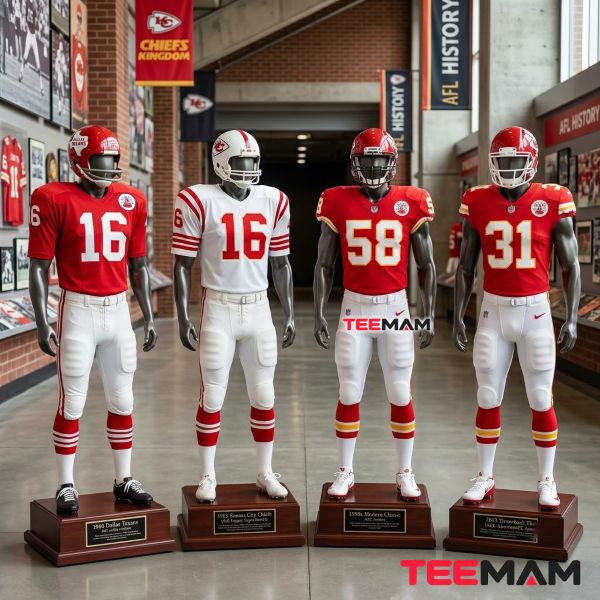
| Era | Helmet | Pants | Sleeve Style | Legacy |
|---|---|---|---|---|
| 1960–1962 (Dallas Texans) | Red with white Texas outline, gold star | Red and orange stripe | Basic red/yellow/red trim | Foundational color scheme; rarely reproduced outside collector circles |
| 1963–1973 | Red with white arrowhead, red “KC” | White | Simple single stripe | Introduced the arrowhead that never left |
| 1974–1988 | Arrowhead, minor facemask updates | White, striping refinements | Multiple stripe variations | Most-debated era among detail-focused collectors |
| 1989–2008 | Arrowhead, largely stable | White | Stable, minimal change | Bridge era; team leaned into “we haven’t changed” as an identity |
| 2009 AFL Legacy Game | Texans-era star helmet, athletic gold | White with orange/red stripe | Historically accurate reproduction | Single-game throwback, high collector demand |
| 2010–Present | Arrowhead, Nike fabric tech | White, red, occasional gold alternate | Modern construction, classic proportions | Three Super Bowl titles won in essentially the same uniform |
At a glance: Most iconic throwback — 2009 AFL Legacy Game. Most unchanged element — the arrowhead helmet logo. Biggest single design shift — the 1963 helmet redesign. Most collectible era — the 1960–1962 Dallas Texans years.
How Throwback Uniforms Influenced Modern Chiefs Fan Style

Somewhere in the last decade and a half, “throwback” stopped being a once-a-season alternate jersey and became its own lane in gameday fashion. Walk the tailgate lots outside Arrowhead now — past the smoke of the smokers, the roar of the crowd building before kickoff — and you’ll see almost as many people in vintage-cut, Texans-inspired gear as in current-issue jerseys. Older supporters tend to favor pieces tied to Len Dawson or Derrick Thomas’s era; younger fans are more likely to pair a vintage-style jacket with current Patrick Mahomes gear. That mix mirrors a broader streetwear trend, where older sports design language reads as more authentic than whatever’s on the shelf this particular season — the same instinct that’s kept brands like Mitchell & Ness relevant for reproducing exactly this kind of gear, and part of why Kansas City Chiefs throwback uniforms keep resurfacing in everyday fashion rather than staying confined to the stadium.
Honoring that heritage means respecting the exact proportions, vintage colorways, and stitching details that defined this uniform’s history. For fans looking to build a gameday outfit rooted in that tradition without sacrificing everyday comfort, our classic fan apparel collection is built around that same era-spanning approach.
Collecting Authentic Throwback Jerseys: What to Look For
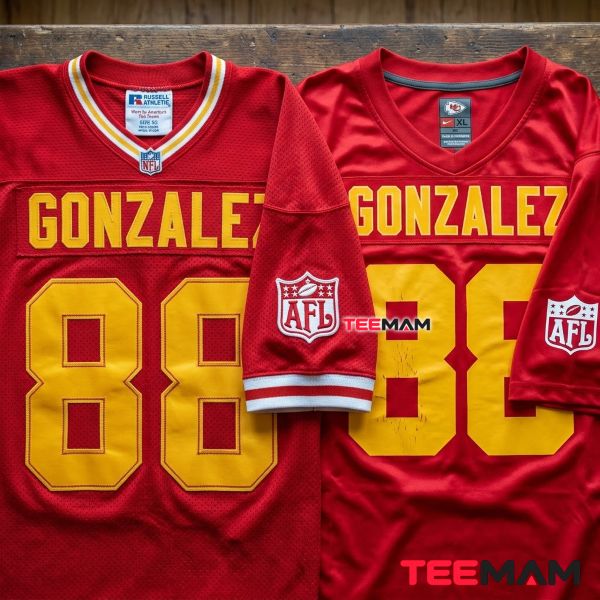
Collectors rarely judge authentic Kansas City Chiefs throwback uniforms on one detail alone. They compare several elements together — licensing labels, stitching quality, fabric weight, sleeve proportions, and era-specific typography — and when all of it lines up, the jersey usually feels authentic before anyone even checks the tag.
Officially licensed jerseys carry NFL tagging specific to the supplier of that era — Sand-Knit, Rawlings, Russell Athletic, Wilson, Reebok, or Nike — and the stitching on numbers and letters tends to be noticeably cleaner than on unlicensed reproductions. Fonts are a common giveaway too: the number style used in the 1960s and 70s differs subtly from the modern block numeral, and a jersey claiming to represent an earlier era while using current typography is a red flag. Authentic throwbacks also tend to use heavier, more textured fabric that mirrors the era’s actual construction rather than the lightweight mesh used in current on-field jerseys. Era accuracy extends to small things too — the exact shade of gold, the width of sleeve stripes, whether a piece uses the Texans-era logo or the post-1963 arrowhead. None of this is a buying recommendation for any one jersey; it’s simply what genuine, era-accurate craftsmanship looks like before spending real money on a collector’s piece.
Legendary Players Most Associated With Throwback Uniforms
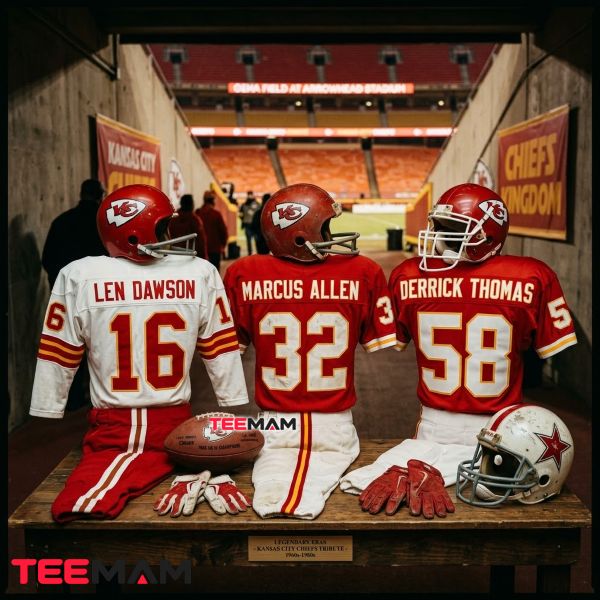
Certain eras of this uniform are permanently linked to specific players in fans’ memories, which is part of why throwback gear tied to those years carries extra weight.
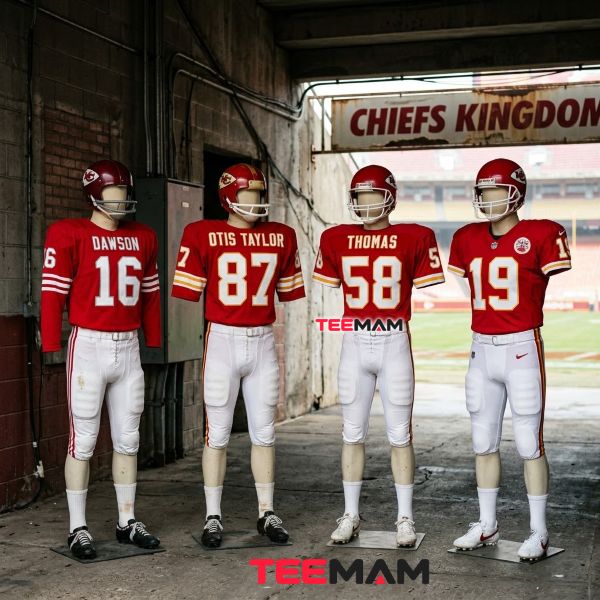
Len Dawson wore the Chiefs’ classic red and white through the franchise’s first golden era under coach Hank Stram, leading Kansas City to victory in Super Bowl IV and earning the game’s MVP honor — his No. 16 has never been worn by another Chief since. Derrick Thomas, one of the most feared pass rushers of his generation, spent his entire 11-year career in Kansas City from 1989 to 1999; his No. 58 was officially retired in 2009, the same year he entered the Pro Football Hall of Fame. Tony Gonzalez redefined the tight end position across his 12 seasons in Kansas City from 1997 to 2008, finishing his Chiefs tenure with more receiving yards than any player in franchise history at any position, and no Chiefs player has worn his No. 88 since he left for Atlanta. Patrick Mahomes represents the uniform’s modern chapter: the same red helmet and white road jersey Dawson wore in 1970 now sits on a quarterback who has already delivered three Super Bowl titles in the current era. For a full rundown of every number the franchise has honored, see Chiefs legends honored forever.
Choosing Retro Inspired Chiefs Apparel as a Gift
Retro-styled Chiefs gear tends to land better as a gift than current-season merchandise, mostly because it reads as more personal — a nod to a specific era rather than whatever jersey happens to be on shelves this month.
For birthdays, a throwback piece tied to the decade a fan actually grew up watching tends to hit harder than a generic current jersey. Around Christmas, retro gear fits naturally into the “classic” framing most holiday gift guides lean into anyway. Father’s Day is arguably the strongest occasion for this category, since plenty of Chiefs fans came up watching the team in the 1970s, 80s, or 90s, and gear echoing that specific period tends to feel more thoughtful than anything from the current season. Tailgate regulars and outright collectors round out the audience, since retro pieces double as both wearable gear and something closer to a keepsake. Our football gifts for devoted fans guide breaks down more occasion-specific picks.
Common Questions About Kansas City Chiefs Throwback Uniforms
What qualifies as a true Chiefs throwback uniform?
Genuine Kansas City Chiefs throwback uniforms reproduce a specific historical design from the team’s past — most commonly the 1960–1962 Dallas Texans look — with accurate colors, logo placement, and construction details, rather than a modern uniform with only minor retro-inspired accents.
Why have the Chiefs changed their uniforms so little?
Ownership has consistently prioritized brand continuity over trend-chasing, treating the arrowhead logo and red-and-white color scheme as core equity rather than something to refresh every few seasons.
Which throwback season is considered the most iconic?
The 2009 AFL 50th-anniversary throwback, worn against the Raiders in an official AFL Legacy Game, is generally considered the most significant single-game throwback in franchise history because of its historical accuracy and rarity.
Are AFL anniversary uniforms different from regular throwbacks?
Yes. The 2009 AFL Legacy Game uniform specifically reproduces the Dallas Texans-era design worn only from 1960 to 1962, while the word “throwback” is sometimes used more loosely for any uniform styled after an earlier decade.
Can fans wear throwback styles outside game day?
Yes — retro-inspired Chiefs apparel has become a staple of everyday streetwear well beyond stadium visits, showing up in casual and vintage sportswear circles independent of the NFL calendar.
Final Thoughts
Six decades, three Super Bowl titles, one franchise relocation, and almost no meaningful change to the uniform itself — that’s a rare combination in professional sports, and it’s exactly why Kansas City Chiefs throwback uniforms keep showing up in fan closets, collector databases, and tailgate lots long after the seasons they originally represented have faded from memory. Trends come and go across the NFL every few years; this particular red, white, and gold identity has simply outlasted all of them.
Sources
- Franchise facts, retired numbers, and championship record: Pro Football Hall of Fame — Kansas City Chiefs Team Facts
- Franchise history, AFL era, and Super Bowl IV: Pro Football Hall of Fame — Kansas City Chiefs Team History
- Year-by-year uniform design changes: Uni Watch — “Supe’s On 2024: Kansas City Uniform History”

Hi, I’m Olivia Bennett, a fashion and lifestyle writer at TeeMam with 6 years of experience creating content about fashion, outfits, and lifestyle trends. I enjoy sharing practical style ideas for everyday wear, game days, holidays, and special occasions, helping readers find looks that feel comfortable, fun, and uniquely their own.