Kansas City Chiefs Name Origin: From Dallas Texans to Kansas City
If you’ve only ever known this franchise as the team in red and gold running out of Arrowhead, the backstory can come as a surprise. Before the Chiefs were the Chiefs, they were the Dallas Texans, an American Football League club that Lamar Hunt built from scratch in a city that already had its hands full with the Dallas Cowboys. The name change wasn’t a marketing exercise. It was the price of survival, and it came bundled with a Kansas City mayor, a fan contest, and a Boy Scout nickname nobody outside Missouri had heard of.
Many summaries stop at “the team was renamed in 1963.” The real Kansas City Chiefs name origin story is richer than that, combining civic politics, AFL history, and one of the most consequential relocations in professional football.
Why Are the Kansas City Chiefs Called the Chiefs?

The Kansas City Chiefs name origin dates to 1963, when owner Lamar Hunt relocated the Dallas Texans from Dallas to Kansas City. The new name honored Mayor H. Roe Bartle, known locally as “The Chief,” and was not originally chosen as a direct reference to Native American tribes.
Key facts at a glance
| Detail | Answer |
|---|---|
| Previous team name | Dallas Texans |
| Year renamed | 1963 |
| Named after | Mayor H. Roe Bartle, nicknamed “The Chief” |
| Founder and owner | Lamar Hunt |
| League at founding | American Football League (AFL) |
| First head coach | Hank Stram |
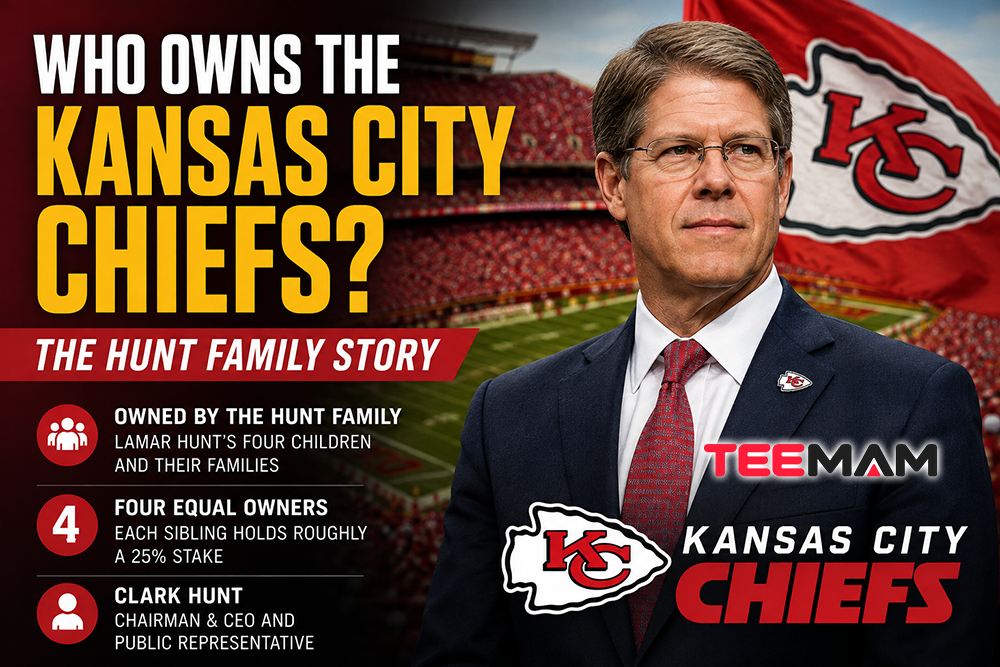
| Current owner | Clark Hunt (Hunt family, since 1959) |
The Dallas Texans Experiment
A New League, A Crowded Market
Lamar Hunt, son of oil magnate H.L. Hunt, spent the late 1950s trying to buy his way into the NFL through an expansion franchise. When the league wouldn’t budge, he started his own: the American Football League, founded in 1959. His own entry, the Dallas Texans, took the field for the first time in September 1960, with Hank Stram, a young assistant coach hired away from the University of Miami, running the sideline.
The timing put Hunt in an immediate bind. Dallas already had an NFL team, the Cowboys, who kicked off their own inaugural season that same week. Two brand-new pro football franchises sharing one metro area was a rough experiment even for a city as football-obsessed as Dallas.
Two Teams, One City, Not Enough Fans
For three seasons, the Texans actually held their own on the field. Led by quarterback Len Dawson, running back Abner Haynes, and Stram’s game plans, they won the 1962 AFL Championship after a marathon double-overtime win over the Houston Oilers, a game that still ranks among the longest in pro football history. On the business side, the financials never lined up. The Texans and Cowboys were splitting the same corporate sponsors, the same season-ticket buyers, and the same newspaper column inches, and neither team pulled decisively ahead. Attendance at the Cotton Bowl hovered around 22,000 per game during that championship season, thin numbers for a market carrying two full pro football operations. Hunt, who was also covering rising costs to keep the AFL itself afloat as a league, started quietly shopping his franchise to other cities before the title-game confetti had settled.
Why Kansas City Won the Franchise
Bartle’s Play for Kansas City
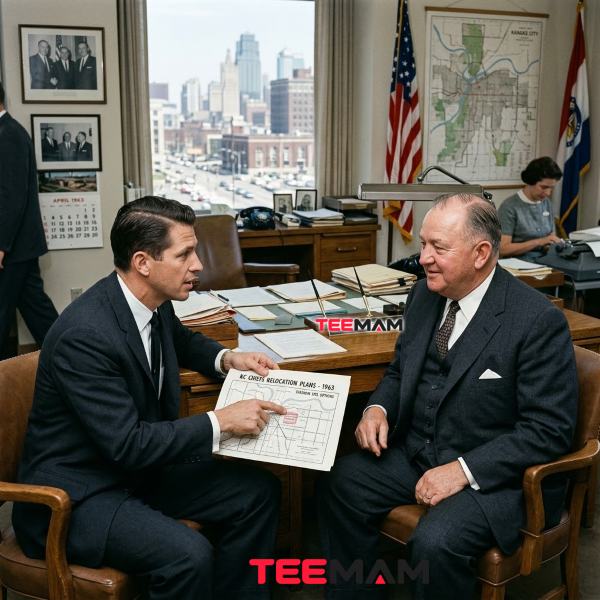
Kansas City wasn’t the only city courting Hunt. Reports at the time had him scouting New Orleans and Atlanta as well. Bartle, a large, forceful civic operator known around Kansas City for his booming voice and relentless persuasion, flew to Dallas and sat down with Hunt directly to make his case in person. He backed the pitch with real commitments: expanding Municipal Stadium with thousands of new permanent and temporary seats, and organizing a citywide push, more than a thousand volunteers strong, to sell season tickets before the team had even packed a box. The negotiations were kept quiet enough that Bartle reportedly introduced Hunt to local businessmen under the alias “Mr. Lamar” to keep the press off the scent.
The Case Kansas City Made
Atlanta and New Orleans could offer warm weather and untapped Southern markets, but neither had a mayor personally lobbying door to door, and neither had a stadium partner already lined up. Kansas City had one more thing going for it: baseball. The Kansas City Athletics had relocated there in 1955, so the city already had big-league infrastructure and an appetite for another major franchise. That combination of civic muscle and stadium readiness, more than climate or market size, is what won Kansas City the deal.
That 1963 relocation was only the opening chapter of a much larger story. The franchise’s evolution, from its early AFL battles to the modern Super Bowl dynasty, is captured in this deep dive into the complete Chiefs franchise history.
Major Milestones in Chiefs Franchise History
- 1959 — Lamar Hunt founds the American Football League; the Dallas Texans become a charter franchise.
- 1960 — The Texans play their first AFL season.
- 1962 — Dallas wins the AFL Championship, defeating the Houston Oilers in double overtime.
- 1963 — The franchise relocates to Kansas City and is renamed the Chiefs, honoring Mayor H. Roe Bartle.
- 1966 — Lamar Hunt helps spearhead merger talks between the AFL and NFL.
- 1970 — The Chiefs defeat the Minnesota Vikings 23-7 in Super Bowl IV, the same year the AFL-NFL merger is completed.
- 1972 — Lamar Hunt is inducted into the Pro Football Hall of Fame.
- 1987 — Len Dawson is inducted into the Pro Football Hall of Fame.
- 2003 — Hank Stram is inducted into the Pro Football Hall of Fame.
Seen together, these milestones show that the Kansas City Chiefs name origin was the result of relocation, civic leadership, and the AFL’s rapid growth, not a simple branding exercise dreamed up in a boardroom.
Picking a Name: The Contest That Almost Gave Us the Mules

Four Thousand Suggestions, One Winner
Keeping the Texans name was considered at first, but once the move became official, it no longer fit the franchise’s new home. So The Kansas City Star organized a public “Rename the Dallas Texans” contest, and the response was bigger than anyone expected: more than 4,000 entries and over 1,000 distinct suggestions. “Mules” was actually the crowd favorite. Had Hunt gone with popular vote, Kansas City fans today would be cheering for the Mules instead.
Honoring Bartle, Not a Tribe
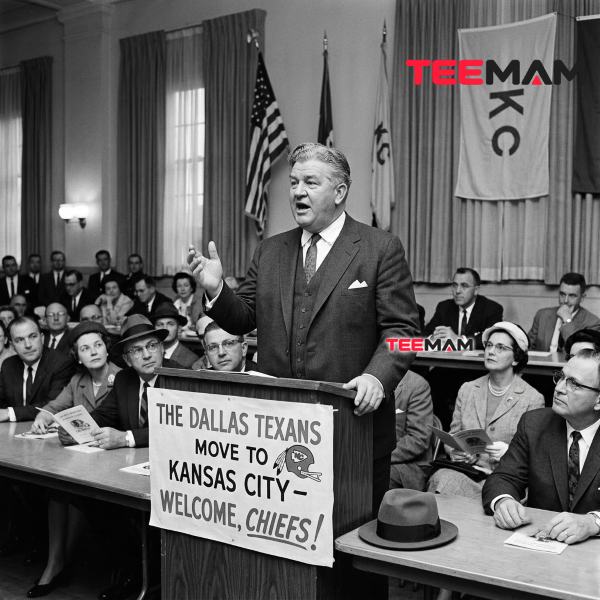
Hunt and longtime front-office executive Jack Steadman landed on “Chiefs” instead. The decision reflected several considerations: it honored Bartle’s nickname and his role in landing the franchise, it nodded broadly to the region’s frontier history, and, practically speaking, it was short and punchy enough to fit cleanly into a newspaper headline. Hunt made the announcement in May 1963, and the Kansas City Chiefs officially took the field that fall.
The Native American Question
Much of the confusion around the Kansas City Chiefs name origin comes down to one common assumption: that the franchise was named directly after Native American tribes. Historically, that isn’t how the name was chosen.
Where the Name Actually Comes From
The Kansas City Chiefs name comes directly from Bartle’s personal nickname, not from a tribe, a chief, or any specific Native nation. Bartle earned “The Chief” through his decades running Mic-O-Say, a Native American-themed honor society he founded inside the Boy Scouts back in 1925.
A Common Misreading
Because the word “Chiefs” sits so close to Native American vocabulary, it’s an easy assumption that the franchise was named directly for Indigenous heritage. In reality, the naming chain runs through a Scouting tradition built by non-Native founders imitating Native customs, a pattern with roots going back to groups like the Woodcraft Indians in the early 1900s. Bartle’s own claimed ancestral ties to the Arapaho have not held up to scrutiny by historians who have examined his background.
An Ongoing Conversation
That gap between origin and perception is part of why the Chiefs’ branding remains part of the broader national conversation about Native American names and imagery in sports, the same conversation that pushed the former Washington franchise to rebrand as the Commanders in 2020. Kansas City has kept its name but has adjusted some game-day traditions and imagery over the years in response to community feedback. This piece stays with the historical record rather than weighing in on that debate, since reasonable people land in different places on it.
How Historians Explain the Chiefs Name Today
Historians and team researchers who study this period tend to draw a clear line between where the name came from and how it’s discussed today. The origin traces to Bartle’s nickname and his civic role in the 1963 relocation, a matter of documented record rather than interpretation. The modern debate over Native American names and imagery in sports is a separate, later conversation, one shaped by decades of advocacy from Indigenous groups rather than by anything in the franchise’s founding story. Treating these as two distinct questions, one historical and one ongoing, is what separates a careful account of the Chiefs’ name from the shorthand version most casual retellings settle for.
Why the Old Name Still Matters
The Texans Years Never Left the Record Books
It’s easy to forget the Texans era ever happened, but the franchise still counts that Dallas chapter as part of its official history, including the 1962 AFL title. Some of the biggest names in Chiefs lore built their reputations before a single Kansas City snap. Len Dawson, who later earned Super Bowl IV MVP honors and a 1987 Pro Football Hall of Fame induction, was already the Texans’ starting quarterback in Dallas. Hank Stram, inducted into the Hall of Fame in 2003, coached the team through both cities, and running back Abner Haynes was already an AFL All-Star before the move. That continuity, rather than a clean break, is arguably the more interesting story: the Chiefs are one of the few AFL relocations that kept both its championship pedigree and its ownership intact through the move, which is part of why the franchise’s identity feels unbroken across more than sixty years.
Arrowhead’s Nod to Its AFL Roots
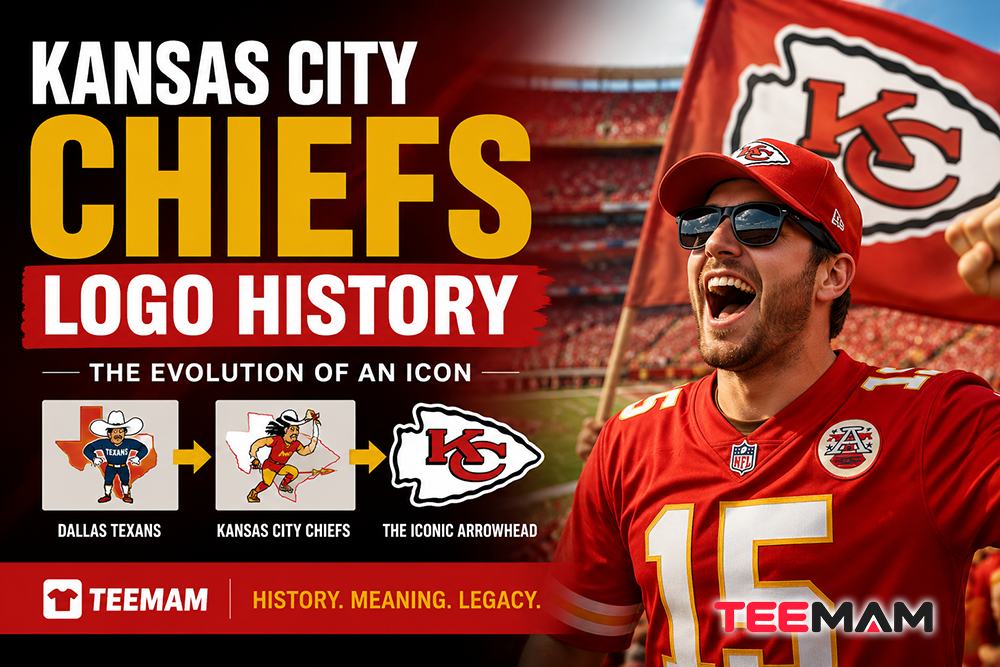
During legacy and throwback game days, the organization regularly highlights its AFL heritage through historic branding and pre-merger presentations, a small but deliberate way of keeping the full story visible instead of starting the clock in 1963. The franchise’s visual identity evolved right alongside that move to Kansas City, which is what makes the logo’s own history almost as revealing as the name change itself, from the classic Chiefs logo evolution through to the arrowhead fans know now.
How the Arrowhead Logo Became an NFL Icon

The Texans’ original branding leaned on lone-star Texas imagery, a fitting look for a team trying to plant itself in the middle of Cowboys country. Once the Kansas City move was locked in, Hunt got personally involved in the redesign. He picked red and gold as the team colors (his first choice had actually been Columbia blue and white) and worked out the interlocking “KC” arrowhead mark, drawing some visual inspiration from the San Francisco 49ers’ helmet design of that era. That arrowhead has stuck around ever since and is now one of the most recognized marks in the NFL.
Why Chiefs Throwback Gear Still Matters

Vintage AFL-era apparel continues to resonate with fans because it connects them to the franchise’s earliest identity: the scrappy, underdog years before the merger, when the AFL was still fighting the NFL for legitimacy and Kansas City was a city betting on an unproven league. Wearing a Texans-era throwback isn’t really about looking retro. It’s a nod to Lamar Hunt’s stubbornness and to a franchise that came closer to folding in Dallas than most fans realize.
At TeeMam, we see throwback football apparel as more than vintage fashion. For many fans, it’s a way to connect with the franchise’s earliest chapters and the stories that shaped Chiefs Kingdom, which is exactly the spirit behind tracing the jersey and helmet changes in these historic Chiefs throwback uniforms, from the original Texas lone-star to the interlocking KC.
Who Controls the Chiefs Brand Today

The Hunt family has owned the franchise continuously since 1959, an unusually long period of ownership in modern professional sports. Lamar Hunt ran the club until his death in 2006 and was inducted into the Pro Football Hall of Fame in 1972 for his role in building the AFL and negotiating its merger with the NFL. Today, Clark Hunt continues to steer the franchise under that same founding lineage. Understanding the current Chiefs ownership structure reveals how successive generations of Hunt family leadership have preserved the club’s identity while building it into one of the league’s flagship franchises.
Common Questions About the Kansas City Chiefs Name
Why did the Dallas Texans leave Dallas?
The Texans and the NFL’s Dallas Cowboys were competing for the same fans, sponsors, and media coverage in one market, and neither team could pull ahead financially. Even after winning the 1962 AFL title, Hunt’s franchise wasn’t drawing enough at the Cotton Bowl to make the two-team arrangement sustainable long term.
Who gave the Kansas City Chiefs their name?
Team executive Jack Steadman recommended “Chiefs” as a tribute to Mayor H. Roe Bartle, whose personal nickname was “The Chief.” Owner Lamar Hunt signed off on it after a public renaming contest failed to produce a better option.
Was the team always called the Chiefs?
No. From 1960 through 1962 the franchise played as the Dallas Texans. The Chiefs name only took effect in 1963 after the move to Kansas City.
Is the Chiefs name connected to Native Americans?
Not directly. The name traces back to Bartle’s nickname, which he earned through his Boy Scout leadership work rather than any tribal affiliation, though the imagery has drawn ongoing scrutiny given its resemblance to Native American terminology.
When did the Dallas Texans become the Kansas City Chiefs?
The rename became official in May 1963, ahead of the team’s first season playing home games in Kansas City.
The Lasting Meaning Behind the Chiefs Name
More than sixty years later, the Kansas City Chiefs name origin remains one of the more fascinating stories in NFL history, because it reflects relocation and civic leadership more than any deliberate rebrand. The name still traces back to the partnership between a stubborn Texas oilman’s son and a Missouri mayor determined to bring big-league football to his city. The Dallas Texans years, Hunt’s persistence, Bartle’s civic hustle, and the fan contest that nearly gave us the Kansas City Mules are all still baked into what “Chiefs” means today. The franchise’s uninterrupted ownership also helps explain why that identity has stayed unusually consistent compared with the many pro teams that have changed hands, cities, or names outright since the merger era. That history hasn’t faded into the background. It’s part of what Chiefs Kingdom actually is.

Hi, I’m Olivia Bennett, a fashion and lifestyle writer at TeeMam with 6 years of experience creating content about fashion, outfits, and lifestyle trends. I enjoy sharing practical style ideas for everyday wear, game days, holidays, and special occasions, helping readers find looks that feel comfortable, fun, and uniquely their own.