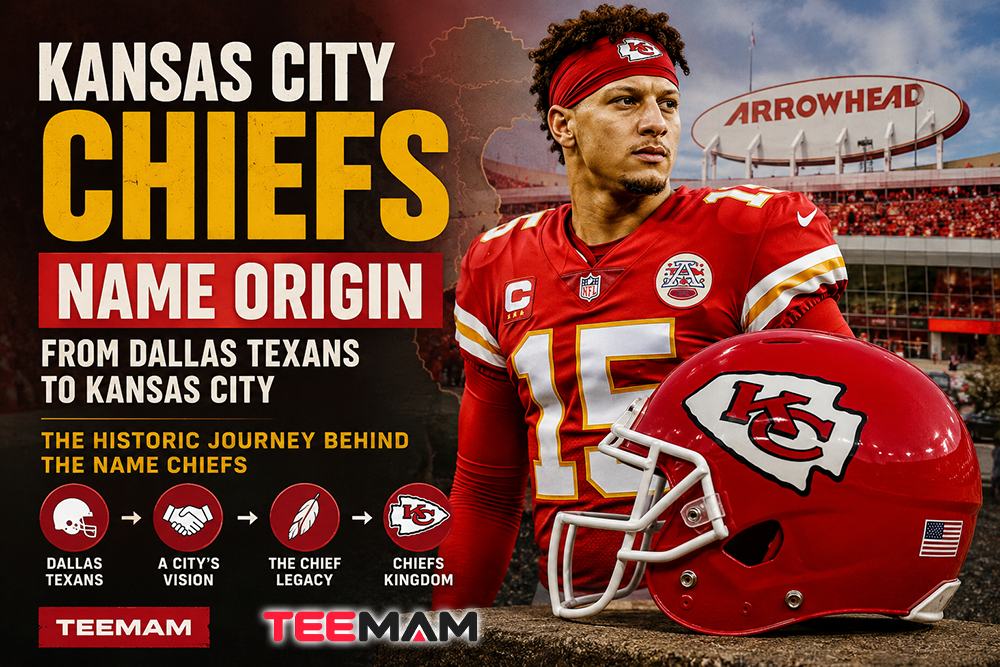
Who Owns the Kansas City Chiefs? The Hunt Family Story
The Kansas City Chiefs are owned by the Hunt family: Lamar Hunt’s four children — Clark Hunt, Lamar Hunt Jr., Sharron Hunt, and Daniel Hunt — and their respective families. Clark serves as Chairman and CEO and represents the franchise at NFL owners’ meetings, but he isn’t the team’s sole owner — Forbes estimates that each sibling holds roughly an equal, 25 percent stake. Understanding that split between ownership and day-to-day leadership explains a lot about how this one family has run an NFL franchise for more than six decades.

| Owner | Relationship to Lamar Hunt | Role |
|---|---|---|
| Clark Hunt | Son | Chairman & CEO |
| Lamar Hunt Jr. | Son | Co-owner |
| Sharron Hunt | Daughter | Co-owner |
| Daniel Hunt | Son | Co-owner |
Is Clark Hunt the Only Owner of the Chiefs?
No. Clark Hunt is the operating head of the franchise and its public representative, but ownership belongs to all four Hunt siblings. According to the Chiefs’ official ownership page, the team is owned by the families of Lamar’s four children, and Forbes’ team-valuation reporting lists each sibling’s stake at approximately 25 percent. Norma Hunt, Lamar’s widow and the family’s longtime matriarch, held a minority interest in the franchise until her death in 2023; the Chiefs’ current ownership description centers on the four children’s families rather than a separate share for Norma.
Many quick answers stop at “Clark Hunt owns the Chiefs” because he’s the one at the podium after games and in the room at league meetings. That’s accurate as far as it goes, but it skips the fact that his brothers and sister are just as much owners of record — they simply aren’t involved in football operations. For anyone typing who owns kansas city chiefs into a search bar, that’s the full picture: one family, four equal owners, one of them serving as the public face.
How the Hunt Family Came to Own the Chiefs
Lamar Hunt and the Birth of a Franchise
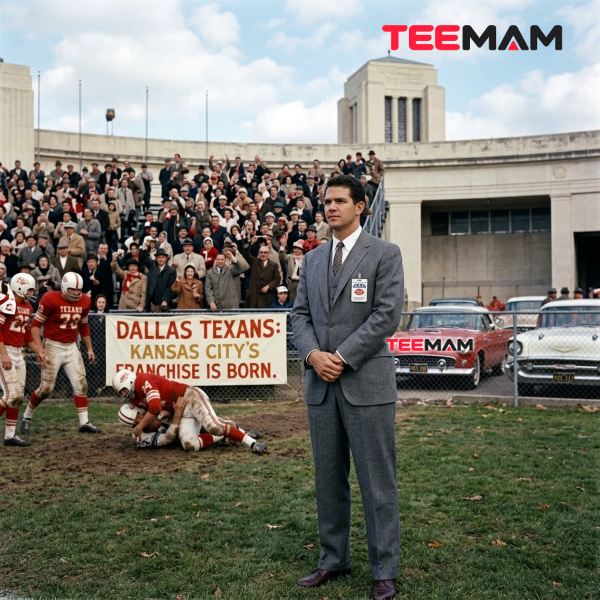
In the late 1950s, Lamar Hunt tried to secure an NFL expansion franchise for Dallas and was turned down. Rather than give up on the idea, he helped organize a competing league instead: the American Football League, which he founded in 1959. Hunt placed his own team, the Dallas Texans, in the AFL’s inaugural 1960 season — one of a small group of original owners who kept the young league funded through its shaky early years, later nicknamed the “Foolish Club.”
From the Dallas Texans to the Kansas City Chiefs
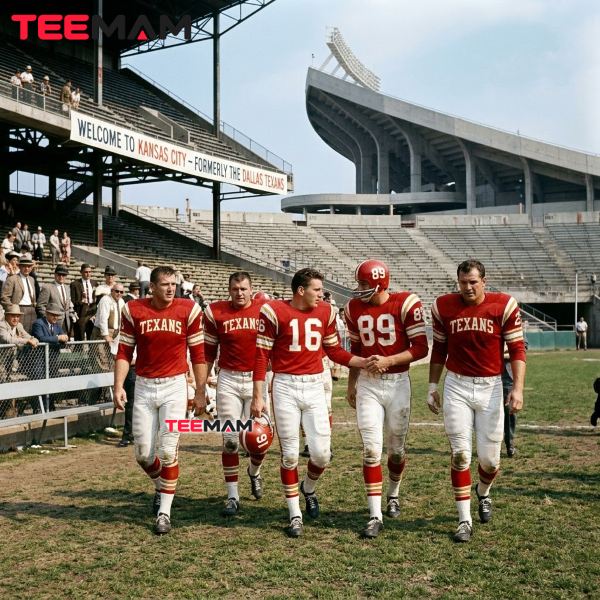
The Texans struggled to draw fans while competing with the NFL’s Dallas Cowboys for the same market, so Hunt relocated the franchise to Kansas City in 1963 and renamed it the Chiefs. The AFL and NFL agreed to merge in 1966, with the merger fully taking effect for the 1970 season, bringing the Chiefs into the NFL for good. For a deeper look at that stretch of franchise history, see the Chiefs’ full history and heritage guide.
Lamar Hunt’s imprint on professional football extends well past the Chiefs. He’s widely credited with coining the term “Super Bowl,” and the trophy awarded each year to the AFC Championship winner — the Lamar Hunt Trophy — carries his name. That’s the foundation his four children inherited in 2006, and it’s part of why the ownership story here is more than a one-line family-business summary.
Where the Hunt Family Fortune Actually Comes From
The Chiefs were financed by wealth the Hunt family had accumulated through the oil business long before Lamar Hunt entered professional football.
H.L. Hunt, Lamar’s father, made his fortune in oil, largely through major holdings in Texas’s East Texas Oil Field starting in the 1930s. He died in 1974, leaving 15 children; Lamar was one of eleven Hunt heirs who appeared on the very first Forbes 400 list of wealthiest Americans in 1982. Lamar then used a portion of that inherited wealth to help fund the AFL and buy the team that became the Chiefs — meaning the sports empire came after the oil money, not the other way around.
Forbes treats those figures separately. The extended Hunt family’s collective net worth is estimated at roughly $24.8 billion, ranking the family among the wealthiest in the country, with holdings spread across energy, real estate, and sports. Clark Hunt’s individual net worth is tracked on its own, estimated by Forbes at around $1.6 billion as of 2025, tied mainly to his Chiefs stake and his ownership of MLS club FC Dallas. Neither of those figures is the same as what the Chiefs franchise itself is worth on paper.
What Does Clark Hunt Actually Do?

Clark Hunt was named Chairman of the Chiefs in 2005, a year before his father’s death, and added the CEO title in 2010. In that role, he represents the franchise at NFL owners’ meetings, votes on league business, and signs off on major front-office and coaching decisions. He isn’t the general manager, and he isn’t calling plays — his job is closer to running the business side of a large, privately held company than managing a roster.
The clearest recent example of that role in action is the Chiefs’ stadium relocation. In December 2025, the team and the state of Kansas announced an agreement for the Chiefs to leave Arrowhead Stadium and build a new domed stadium in Wyandotte County, Kansas, along with a separate headquarters and practice facility in Olathe. Hunt described the move as a change of location rather than a change in identity, saying the new stadium would still be <cite index=”29-1″>”home to championship-caliber teams”</cite> and that Chiefs games would remain <cite index=”29-1″>”the best place in the world to tailgate.”</cite>
The Kansas Legislative Coordinating Council approved the state funding package that same month, and the Chiefs released initial concept renderings for the enclosed, dome-style stadium in July 2026, with an opening targeted for the 2031 NFL season. As of this writing, the project has cleared its major legislative and financing hurdles but has not broken ground. A deal of that scale — spanning state government, county tax boards, and league approval — is exactly the kind of decision that falls to a Chairman and CEO rather than to the ownership group as a whole.
What Are the Kansas City Chiefs Actually Worth?
Forbes valued the Kansas City Chiefs at $6.2 billion in its 2025 NFL team valuations, ranking the franchise 22nd in the league, with annual revenue of about $610 million. Sportico’s separate 2025 estimate put the figure a bit higher, at $6.53 billion. Franchise values shift every year based on media-rights deals, stadium economics, and league-wide revenue sharing, so any number attached to the Chiefs should come with a source and a year attached rather than being treated as a fixed fact — you can see the underlying data on Forbes’ Kansas City Chiefs valuation page.
The $6.2 billion figure shouldn’t be confused with the Hunt family’s personal wealth. It’s an estimate of what the team could fetch in a sale, split notionally across four owners who have given no indication they intend to sell, and it’s a separate number entirely from the family’s broader $24.8 billion net worth, most of which sits in assets that have nothing to do with football.
The Hunt Family’s Legacy Beyond the Chiefs
Owning an NFL franchise turned out to be one piece of a much larger sports portfolio. Lamar Hunt was a charter investor when Major League Soccer launched in 1996, and he owned two of the league’s original clubs from day one: the Kansas City Wizards (now Sporting Kansas City) and the Columbus Crew. In 2003, he acquired a third MLS club, the Dallas Burn, which was later rebranded FC Dallas. Clark Hunt still owns FC Dallas today through Hunt Sports Group; the Wizards and the Crew have since been sold to other ownership groups.
On the football side, the family’s Super Bowl history is well documented. The Chiefs have won four Super Bowl titles — Super Bowl IV, LIV, LVII, and LVIII — which, per the team’s own franchise history, puts them among just seven NFL clubs with at least four championships. That run included a seven-season streak of AFC Championship Game appearances that ended when Kansas City missed the playoffs in the 2025 season, after quarterback Patrick Mahomes suffered torn ACL and LCL ligaments in December of that year. A closer breakdown of those title runs is available in the Chiefs’ Super Bowl appearance history.
Chiefs Kingdom and the Hunt Name

Norma Hunt, Lamar’s widow, became known for her extraordinary attendance record at Chiefs games across the franchise’s history, rarely missing a game until her death in 2023. That kind of visible, personal continuity — founder to widow to four adult children who still show up to games together — is unusual in a league where ownership groups increasingly look like investment consortiums rather than families. It’s also part of why so much of the Chiefs’ visual identity, including the arrowhead logo and the vintage AFL-era styling still found on throwback gear, traces directly back to decisions Lamar Hunt made in the early 1960s. The team’s name itself has its own story, covered in more detail in this guide to the Kansas City Chiefs’ name origin.
That continuity matters to fans because the Chiefs are unusual among major American sports franchises: the same family has remained connected to the club across three generations, even as day-to-day authority has increasingly centered on one family member. At TeeMam, we see the Hunt family’s multigenerational ownership as an important part of the Chiefs’ identity beyond the field — one reason the franchise still feels tied to Lamar Hunt’s original vision nearly 65 years later.
Key Facts About Kansas City Chiefs Ownership
| Question | Answer |
|---|---|
| Current owner | Hunt family (four siblings) |
| Founder | Lamar Hunt |
| Chairman & CEO | Clark Hunt |
| Other co-owners | Lamar Hunt Jr., Sharron Hunt, Daniel Hunt |
| Each sibling’s estimated stake | ~25% (Forbes estimate) |
| Original franchise name | Dallas Texans |
| Founded | 1959 (AFL); began play 1960 |
| Renamed Kansas City Chiefs | 1963 |
| Joined the NFL | 1970 (AFL-NFL merger) |
| 2025 Forbes valuation | $6.2 billion |
| Hunt family net worth (Forbes) | ~$24.8 billion |
| Upcoming stadium | Enclosed stadium, Wyandotte County, KS — targeted for 2031 |
Answers to Common Kansas City Chiefs Ownership Questions
Who owns the Kansas City Chiefs today?
For readers searching who owns kansas city chiefs, the answer is the Hunt family — specifically the families of founder Lamar Hunt’s four children: Clark Hunt, Lamar Hunt Jr., Sharron Hunt, and Daniel Hunt. Clark serves as Chairman and CEO and represents the team publicly, while ownership itself is shared across all four siblings.
Is Clark Hunt the only owner of the Chiefs?
No. Clark Hunt is Chairman and CEO and the franchise’s public-facing leader, but Forbes estimates he holds roughly the same 25 percent stake as each of his three siblings, who are not involved in day-to-day football operations.
How many Hunt family members own the Chiefs?
Four — all children of founder Lamar Hunt. Norma Hunt, Lamar’s widow, held a minority interest until her death in 2023; today’s ownership is described around the four children’s families.
Who originally owned the Kansas City Chiefs?
Lamar Hunt founded the franchise in 1959 as part of the American Football League he helped create, fielding the team as the Dallas Texans starting in 1960. He moved it to Kansas City in 1963 and renamed it the Chiefs.
How much are the Kansas City Chiefs worth?
Forbes valued the franchise at $6.2 billion in its 2025 NFL team valuations, ranking 22nd in the league. Sportico’s separate 2025 estimate placed the figure at $6.53 billion.
How did the Hunt family make its fortune?
The family’s original wealth came from H.L. Hunt’s oil business, built largely on East Texas oil holdings starting in the 1930s. His son Lamar later used part of that inheritance to help found the AFL and buy the team that became the Chiefs.
The Hunt Family Story Behind the Kansas City Chiefs
The answer to who owns kansas city chiefs is straightforward: the franchise remains controlled by the Hunt family, specifically the families of Lamar Hunt’s four children, with Clark Hunt serving as Chairman and CEO. That structure connects today’s team directly to the franchise Lamar Hunt founded as the Dallas Texans in 1959. More than six decades later, the ownership story is still built around the same family — even as the organization moves into a new era, with an enclosed stadium in Wyandotte County, Kansas, targeted to open for the 2031 season.

Hi, I’m Olivia Bennett, a fashion and lifestyle writer at TeeMam with 6 years of experience creating content about fashion, outfits, and lifestyle trends. I enjoy sharing practical style ideas for everyday wear, game days, holidays, and special occasions, helping readers find looks that feel comfortable, fun, and uniquely their own.