Kansas City Chiefs Jersey Numbers: Retired Legends Behind the Digits
On game day at Arrowhead, the sea of red at GEHA Field includes far more than the stars of the current roster. Alongside Patrick Mahomes and Travis Kelce jerseys, you’ll spot throwback numbers tied to entirely different eras of Chiefs football — numbers that no player will ever wear again. Ten of them, to be exact: 3, 16, 18, 28, 33, 36, 58, 63, 78, and 86.
Those ten Kansas City Chiefs jersey numbers span almost the entire franchise story: the Dallas Texans years, the AFL championship era, the 1969 season and Super Bowl IV championship, and the defensive era that came before today’s Mahomes-led offense. Kansas City has retired only ten numbers in its history, and the franchise has generally used a stricter standard than most teams for granting that honor. This guide covers which numbers are officially retired, who wore them, why the franchise made each call, and how numbers like Mahomes’ 15 and Kelce’s 87 fit into that legacy today.
Quick answer: The Kansas City Chiefs have officially retired 10 uniform numbers: 3, 16, 18, 28, 33, 36, 58, 63, 78, and 86 — a list confirmed by the Pro Football Hall of Fame’s Chiefs team page. They belong to Jan Stenerud, Len Dawson, Emmitt Thomas, Abner Haynes, Stone Johnson, Mack Lee Hill, Derrick Thomas, Willie Lanier, Bobby Bell, and Buck Buchanan. Seven are members of the Pro Football Hall of Fame; the other three were honored by the franchise outside the normal Hall of Fame-based retirement pathway.
Which Kansas City Chiefs Jersey Numbers Are Officially Retired?
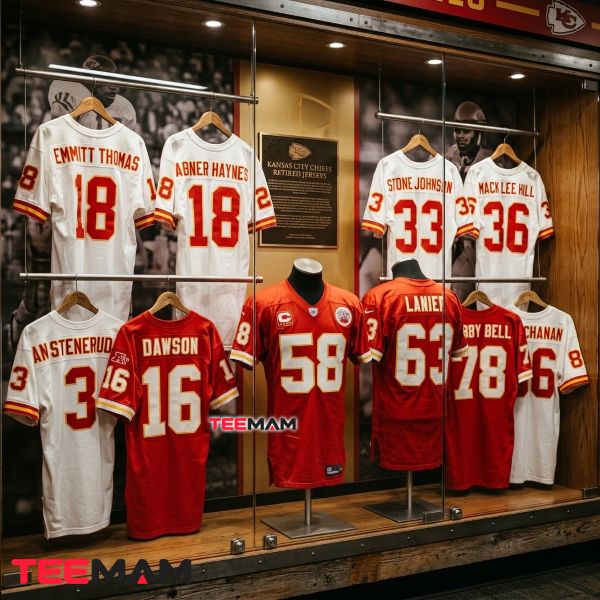
Kansas City has retired only ten numbers in franchise history, and each one points to a different chapter of the team’s story. Once a number is retired, no player on the current roster — rookie, Pro Bowler, or franchise quarterback — is issued it again.
| Number | Player | Position | Era | Retired | Hall of Fame |
|---|---|---|---|---|---|
| 3 | Jan Stenerud | Kicker | 1967–1979 | 1992 | Yes (1991) |
| 16 | Len Dawson | Quarterback | 1962–1975 | 1987 | Yes (1987) |
| 18 | Emmitt Thomas | Cornerback | 1966–1978 | 2008 | Yes (2008) |
| 28 | Abner Haynes | Running back | 1960–1964 | 1988 | No |
| 33 | Stone Johnson | Running back | 1963 | 1963 | No |
| 36 | Mack Lee Hill | Running back | 1964–1965 | 1965 | No |
| 58 | Derrick Thomas | Linebacker | 1989–1999 | 2009 | Yes (2009) |
| 63 | Willie Lanier | Linebacker | 1967–1977 | 1992 | Yes (1986) |
| 78 | Bobby Bell | Linebacker/DE | 1963–1974 | 1984 | Yes (1983) |
| 86 | Buck Buchanan | Defensive tackle | 1963–1975 | 1992 | Yes (1990) |
That’s the complete list of officially retired Kansas City Chiefs jersey numbers — seven Hall of Famers and three numbers retired for reasons outside the standard Hall of Fame pathway.
Numbers Fans Often Confuse With Retired Jerseys
A few other numbers get mistaken for retired ones because of how closely they’re tied to Chiefs history, even though none of them carry official retired status.
| Number | Player | Status |
|---|---|---|
| 15 | Patrick Mahomes | Active |
| 37 | Joe Delaney | Not officially retired; unissued since 1983 |
| 87 | Travis Kelce | Active |
Why Are These Chiefs Jersey Numbers Retired?
The Lamar Hunt Standard Behind the Chiefs’ Retired Number Tradition
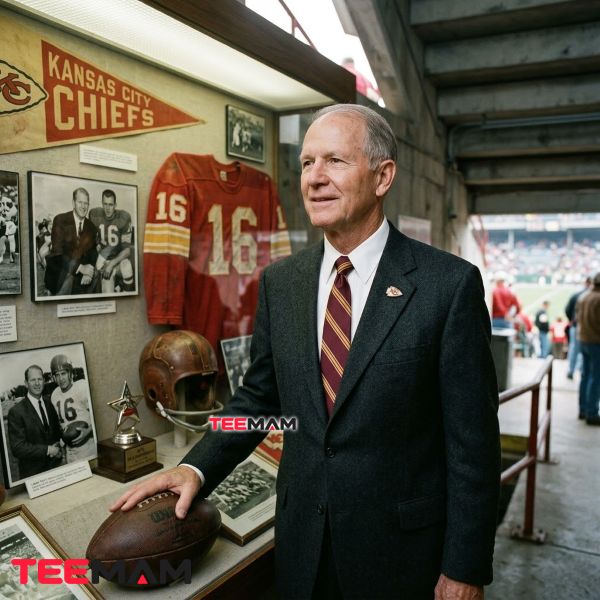
Franchise founder Lamar Hunt set the bar deliberately high. According to the Chiefs’ own account of the policy, Hunt established a standard sometime in the 1990s: a player’s number is considered for retirement at the time of his induction into the Pro Football Hall of Fame. That’s a stricter test than most franchises apply, and it’s a big reason Kansas City has retired only ten numbers to date — for comparison, the Chicago Bears and New York Giants have each retired 14.
That standard came after the fact for some of the ten numbers on the list. Before Hunt’s policy took shape, the Chiefs had already retired the numbers of Stone Johnson and Mack Lee Hill following their deaths, and Abner Haynes’ No. 28 was retired in 1988 even though he was never inducted into the Pro Football Hall of Fame. Seven retired numbers belong to Pro Football Hall of Famers. The other three — Abner Haynes, Stone Johnson, and Mack Lee Hill — predate that Hall of Fame-based standard. Johnson and Hill were honored following tragic deaths early in their careers, while Haynes’ No. 28 was retired before the current policy was established.
What does it take for the Chiefs to retire a jersey number? Under the Chiefs’ stated policy, a player’s number is considered for retirement at the time of his induction into the Pro Football Hall of Fame. A handful of exceptions predate that policy, tied to the franchise’s earliest seasons rather than a Canton bust.
A retired number is not automatically the same thing as a number tied to a legend. That distinction matters most with three numbers: Joe Delaney’s No. 37, Patrick Mahomes’ No. 15, and Travis Kelce’s No. 87 — none of which are officially retired.
- Retired number: No longer issued to any player. Ten exist today.
- Chiefs Hall of Honor member: A franchise-level honor, recognized in the team’s own Hall of Honor at GEHA Field at Arrowhead Stadium — separate from the Pro Football Hall of Fame in Canton.
- Pro Football Hall of Fame inductee: Enshrined in Canton. Seven of the ten Chiefs with retired numbers hold this status, according to the Pro Football Hall of Fame’s team page.
- Number kept out of circulation by tradition: Not formally retired, but effectively untouchable, like Joe Delaney’s No. 37.
Why Does Kansas City Have So Few Retired Numbers?
Ten is a small number for a franchise with more than 60 years of history. According to the Pro Football Hall of Fame, 26 members of the Chiefs franchise are represented in Canton — a group that includes players, coaches, and executives such as Lamar Hunt and Bobby Beathard, not just former Chiefs on the field. Because the Lamar Hunt standard ties jersey retirement to Canton induction, making the Chiefs Hall of Honor — or even building a Hall of Fame-caliber career — doesn’t automatically retire a number. Chairman and CEO Clark Hunt has said the franchise has grown more selective over time partly for practical reasons: retiring too many numbers eventually creates a shortage for training camp rosters, where dozens of players need a number of their own. That’s part of why some Chiefs legends who never reached Canton, like longtime punter Jerrel Wilson, don’t have a retired number despite decades of team records to their name.
Can Anyone Wear a Retired Chiefs Jersey Number?
Under normal Chiefs roster policy, an officially retired number is removed from circulation and is not assigned to another player. That’s different from a number that simply hasn’t been reassigned out of respect, which the team could technically hand out even though it rarely does.
The Legends Behind the Numbers
The Super Bowl IV Core
#16 Len Dawson: The Quarterback Who Defined an Era
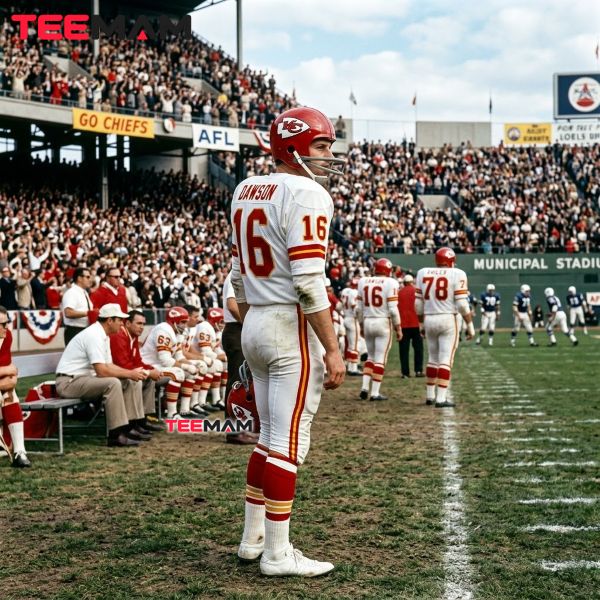
Len Dawson had already spent five seasons in the NFL before joining the Dallas Texans in 1962, but Kansas City is where his career became legendary. He led the league in completion percentage for six consecutive seasons and threw the touchdown pass that helped seal Super Bowl IV, earning him MVP honors in the Chiefs’ win over the heavily favored Minnesota Vikings. Dawson entered the Pro Football Hall of Fame in 1987, and his No. 16 has stood as shorthand for the franchise’s first golden era — the run that began with the Dallas Texans’ early AFL seasons and carried through the 1970 merger with the NFL — ever since.
#78 Bobby Bell, #63 Willie Lanier, and #86 Buck Buchanan
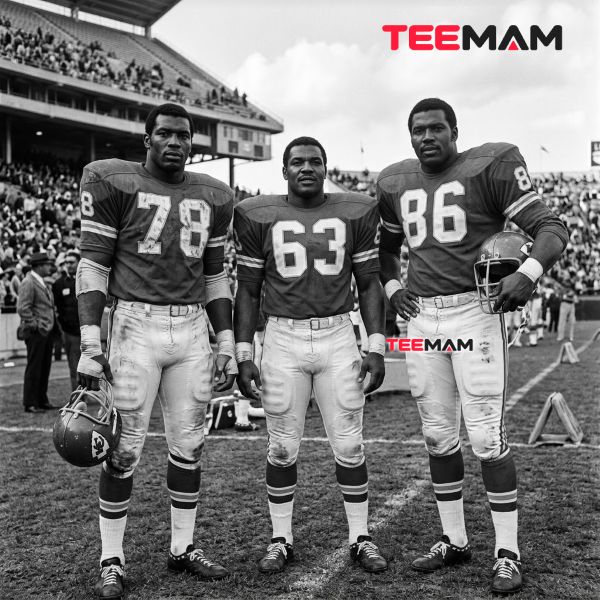
These three didn’t just play defense for the Chiefs — they were the identity of the unit that suffocated the Vikings in Super Bowl IV. Bobby Bell became the first Chiefs player ever inducted into Canton, in 1983, after a 12-year career split between linebacker and defensive end. Willie Lanier, a punishing middle linebacker for 11 seasons, joined him in the Hall in 1986 and had his number retired alongside Buchanan’s in a joint August 1992 ceremony. Buck Buchanan, the first overall pick of the 1963 AFL Draft, spent 13 years at defensive tackle and was enshrined in 1990. Together they represent a different Chiefs than the offense fans watch today — a team built to win with defense first.
#3 Jan Stenerud: A Special Teams Pioneer
Stenerud is the outlier on this list in the best way. He’s the first placekicker ever inducted into the Pro Football Hall of Fame, and his 13 seasons in Kansas City (1967–1979) included the Super Bowl IV title and three of his four career Pro Bowl selections. The Chiefs retired his No. 3 in 1992, shortly after his Canton induction. His career also gave Kansas City one of its earliest examples of a specialist becoming a franchise icon.
The Defensive Icon of the Modern Era
#58 Derrick Thomas and a Legacy Built on Sacks
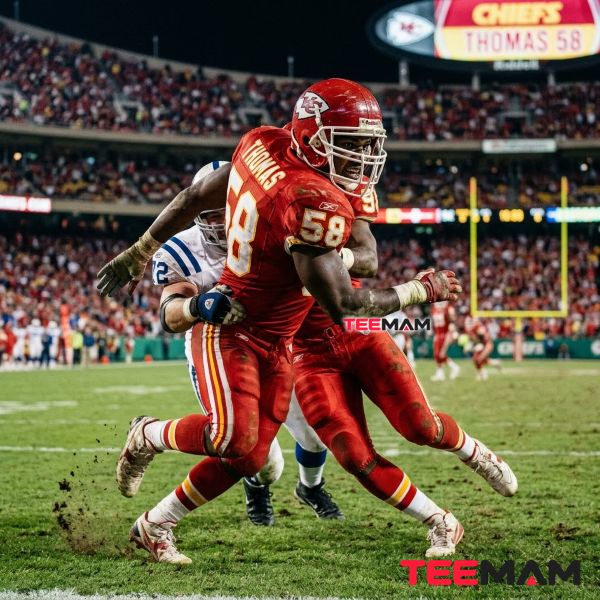
Derrick Thomas arrived in 1989 as the fourth overall pick and immediately became the most feared pass rusher in franchise history. You don’t just wear a No. 58 jersey around Chiefs Kingdom — you’re wearing a piece of the defense that still holds the NFL’s single-game record with seven sacks against Seattle in 1990. Thomas was named Defensive Rookie of the Year, made nine Pro Bowls, and finished with 126.5 career sacks. According to the Chiefs Hall of Honor, he was involved in a car accident on January 23, 2000, and died on February 8, 2000, from complications following the crash. His number sat unissued for nine years until the Chiefs formally retired it in 2009, the same year he entered the Pro Football Hall of Fame. For a broader look at how the franchise recognizes its greatest names, see this guide to Chiefs Hall of Fame players.
The Numbers Remembered Through Tragedy
#33 Stone Johnson and #36 Mack Lee Hill
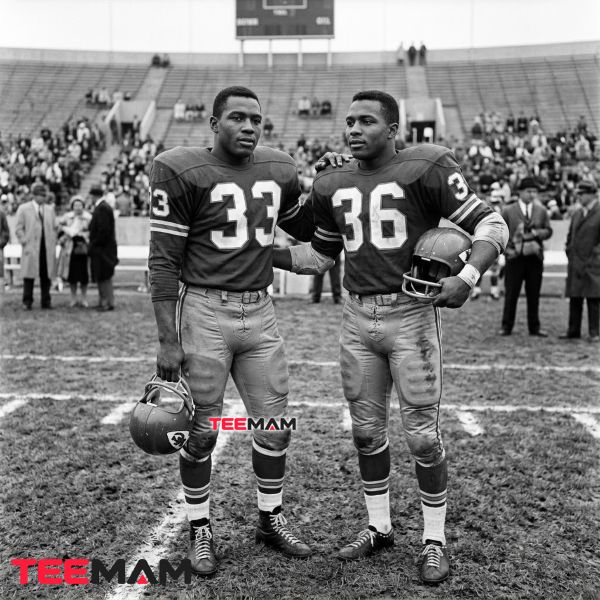
Two of the ten retired numbers exist for reasons that have nothing to do with statistics. Stone Johnson, a former Olympic sprinter drafted in 1963, suffered a fractured vertebra during a preseason game in Wichita and died ten days later, without ever playing a regular-season snap. Mack Lee Hill, one of the AFL’s top rushers through his first two seasons, died in 1965 following complications from knee surgery. Both numbers represent a different kind of legacy: players remembered not for what they accomplished over a full career, but for careers cut tragically short.
#18 Emmitt Thomas and #28 Abner Haynes
Emmitt Thomas built one of the best cornerback careers in franchise history, spending all 13 of his NFL seasons in Kansas City and finishing with 58 career interceptions — still a Chiefs record decades later. His No. 18 was retired in 2008, the same year he entered the Pro Football Hall of Fame. Abner Haynes represents an earlier chapter: he was the AFL’s first Rookie of the Year and Player of the Year in 1960 with the Dallas Texans, became the franchise’s first 1,000-yard rusher in 1962, and had his No. 28 retired despite never reaching Canton. Haynes passed away in July 2024 at age 86, and the Chiefs organization remembered him as one of the AFL’s first great stars and a civil rights pioneer who helped integrate college football in Texas.
What About Patrick Mahomes’ #15 and Travis Kelce’s #87?

Could #15 Become a Retired Chiefs Number?
Not yet. Patrick Mahomes has already won three Super Bowls and multiple NFL MVP awards, but under the Chiefs’ stated retirement policy, his number would be considered for retirement at the time of his eventual Pro Football Hall of Fame induction, assuming the franchise continues to follow that policy. As of the 2026 season, No. 15 is active, and Mahomes is still playing.
Could #87 Join the Chiefs’ Retired Numbers?
Travis Kelce returned for his 14th season with Kansas City in 2026 as the franchise’s career leader in receptions, receiving yards, and receiving touchdowns, and the NFL’s all-time leader in postseason receptions. He remains an active player, so No. 87 is not officially retired. Any decision about retiring it would come after his playing career ends and his Hall of Fame case is settled.
What Happened to Joe Delaney’s #37?
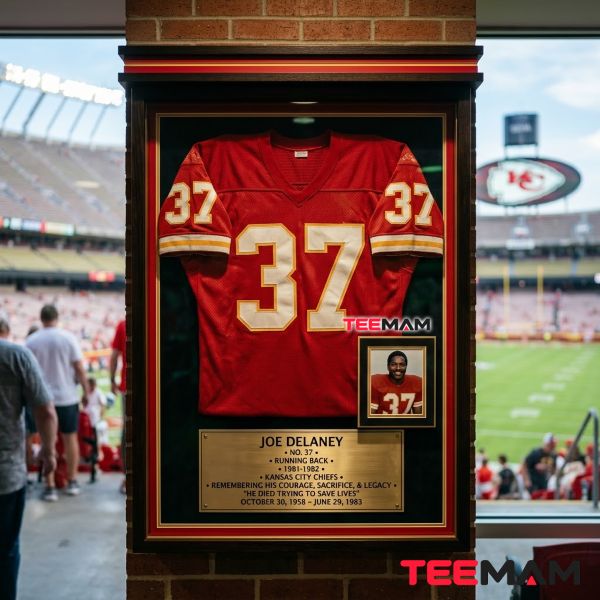
Joe Delaney’s story sits apart from every other number on this list because it was never about football at all. Delaney was the AFC’s 1981 Rookie of the Year, a Pro Bowl running back who rushed for 1,121 yards in his first season. According to the Chiefs’ own account, on June 29, 1983, Delaney jumped into a flooded gravel pit to save three drowning children despite not knowing how to swim himself. He saved one child before drowning alongside two others. He was 24 years old.
No. 37 has never been officially retired by the Chiefs, but the team has not issued it to another player since Delaney’s death. That makes No. 37 different from the ten officially retired numbers, even though fans still associate it strongly with Chiefs history.
How Chiefs Fans Keep Retired Numbers Alive Today
At Arrowhead, a No. 58 or No. 16 throwback can connect a fan with an era they may never have watched live. For younger Chiefs fans, retired numbers can be an easy entry point into the team’s older history: No. 16 connects to Len Dawson and Super Bowl IV; Nos. 78, 63, and 86 point to the defense that won that championship; No. 58 represents Derrick Thomas and the franchise’s late-1980s and 1990s identity. A throwback jersey turns those names from something seen in old footage into part of the game-day experience — worn during Legends Weekend, at tailgates, and reflected in the classic Chiefs uniform styles the team has cycled through over six decades.
That is also why Chiefs apparel can mean more than supporting the current roster. A No. 15 look speaks to the Mahomes era; a throwback-inspired design can point back to Dawson, Bell, Lanier, or Thomas. At TeeMam, we use that connection between eras when creating Chiefs-inspired fan apparel designs.
Where Chiefs Jersey Numbers Fit Into the Team’s Larger Legacy
Put the retired numbers in chronological order and the franchise’s history becomes easier to see: early AFL stars, the Super Bowl IV champions, the great defenses of the 1960s and 1990s, and the modern Mahomes era. Readers who want to trace how the quarterback position specifically evolved from Dawson through Mahomes can follow this full Chiefs quarterback history.
Chiefs Jersey Number Questions Fans Ask Most
What numbers are retired by the Kansas City Chiefs?
The Chiefs have retired ten numbers: 3 (Jan Stenerud), 16 (Len Dawson), 18 (Emmitt Thomas), 28 (Abner Haynes), 33 (Stone Johnson), 36 (Mack Lee Hill), 58 (Derrick Thomas), 63 (Willie Lanier), 78 (Bobby Bell), and 86 (Buck Buchanan).
Who wore number 58 for the Chiefs?
Derrick Thomas, a Hall of Fame linebacker who still holds the NFL’s single-game sack record. The number was retired in 2009, the same year he was inducted into the Pro Football Hall of Fame.
Is Patrick Mahomes’ number 15 retired?
No. As of the 2026 season, No. 15 is active and Mahomes is still playing. Under the Chiefs’ policy, retirement consideration typically comes only after a player’s Hall of Fame case is settled.
Is Travis Kelce’s number 87 retired?
No. Kelce returned for his 14th NFL season in 2026 and remains an active player, so No. 87 has not been retired.
Why did the Chiefs retire number 33?
Stone Johnson wore No. 33 in 1963 before suffering a fatal neck injury in a preseason game, without ever playing a regular-season down. The Chiefs retired the number in his memory.
Why is number 36 retired by the Chiefs?
Mack Lee Hill wore No. 36 and died from surgical complications during the 1965 season, after establishing himself as one of the AFL’s top young rushers. His number was retired as a tribute.
Are all Chiefs Hall of Famers’ numbers retired?
No. Jersey retirement and Hall of Fame induction are related but separate decisions. Most Chiefs whose numbers are retired are also Pro Football Hall of Famers, but plenty of Pro Football Hall of Famers — and Chiefs Hall of Honor members — never had their numbers retired.
Final Takeaway: The Numbers That Built Chiefs History
Ten officially retired Kansas City Chiefs jersey numbers tell a story that spans the Dallas Texans relocation, the Super Bowl IV championship, two tragic losses, and a modern dynasty still writing its own chapter. Some belong to Hall of Famers, while others honor players whose careers were cut tragically short, and one number outside the official list — Joe Delaney’s 37 — belongs to a legacy bigger than football entirely. Whether you’re drawn to Dawson’s 16 or Mahomes’ 15, the number on the back of a Chiefs jersey has always meant more than a stat line. Fans looking to celebrate that history with someone in their life can explore Chiefs gifts for longtime fans, built around both the legends and the current roster.

Hi, I’m Olivia Bennett, a fashion and lifestyle writer at TeeMam with 6 years of experience creating content about fashion, outfits, and lifestyle trends. I enjoy sharing practical style ideas for everyday wear, game days, holidays, and special occasions, helping readers find looks that feel comfortable, fun, and uniquely their own.