The Kansas City Chiefs Fight Song: A Fan Tradition Explained
Ask ten people in Chiefs Kingdom what the Kansas City Chiefs song is, and you’ll get ten different answers. Some will hum “Give a Cheer for Kansas City.” Others will point straight at Tech N9ne’s “Red Kingdom” blasting through the tunnel before kickoff. A few old-timers will bring up a trumpet player named Tony DiPardo, who played at nearly every home game for over four decades. They’re all right, in a way. Arrowhead Stadium doesn’t run on one anthem — it runs on layers of music stacked up over sixty years of football.
If you’re gearing up for your first tailgate, or just trying to figure out what 76,000 people are chanting on TV, this is your guide to where those songs came from, why Arrowhead became one of the loudest buildings in American sports, and how to join in without stepping on a tradition you don’t fully understand yet.
Quick answer: When fans search for the official Kansas City Chiefs song, they’re usually looking for “Give a Cheer for Kansas City,” written by former head coach Marv Levy in the early 1980s. In practice, most fans today associate Chiefs gameday with two other traditions instead: the pregame War Chant and Tech N9ne’s “Red Kingdom,” the unofficial anthem of the Patrick Mahomes era.
Key takeaways:
- “Give a Cheer for Kansas City” is the Chiefs’ only officially credited fight song, but it’s rarely played today.
- The War Chant and Tomahawk Chop, adopted in the 1990s, remain the most recognizable in-stadium tradition — and the most debated.
- “Red Kingdom” by Tech N9ne, released in 2019, has become the closest thing to a modern anthem for Chiefs Kingdom.
What Is the Kansas City Chiefs Song?
The Kansas City Chiefs song most people mean is “Give a Cheer for Kansas City,” the team’s one officially credited fight song. But ask around Arrowhead and the term covers more ground than that. It also gets used for the War Chant that plays before kickoff, the Tomahawk Chop chant tied to it, and “Red Kingdom,” the modern anthem that has defined the Mahomes-Kelce years.
Each belongs to a different era. Levy’s song dates to the franchise’s lean years in the early 1980s. The War Chant traces back to the Marty Schottenheimer era of the 1990s. “Red Kingdom” is a 2019 release that caught fire during the team’s first Super Bowl run in fifty years. Understanding which is which clears up a lot of confusion for new fans — and it’s the gap most articles on this topic never quite close.
Part of that confusion is structural. Official fight songs are far more common in college football, where marching bands and decades of tradition keep them in heavy rotation every Saturday. NFL teams rarely lean on a written fight song the way college programs do; most build gameday identity instead around walk-up music, stadium chants, and whatever song a player latches onto during a playoff run. The Chiefs are a good example of that pattern in action — Levy’s fight song came and mostly went, while three separate, informally adopted traditions filled the space it left behind.
A quick timeline of how Chiefs gameday music evolved:
- 1963 — Tony DiPardo’s Zing Band debuts at Municipal Stadium, launching four decades of live music at Chiefs games.
- Early 1980s — Head coach Marv Levy writes “Give a Cheer for Kansas City,” the team’s official fight song.
- 1990s — The War Chant, adapted from Florida State’s fight song, becomes a fixture during Marty Schottenheimer’s tenure.
- 2019 — Kansas City rapper Tech N9ne releases “Red Kingdom,” which becomes closely tied to the Chiefs’ Super Bowl LIV title run.
How the Official Fight Song Began
Who Wrote “Give a Cheer for Kansas City”?
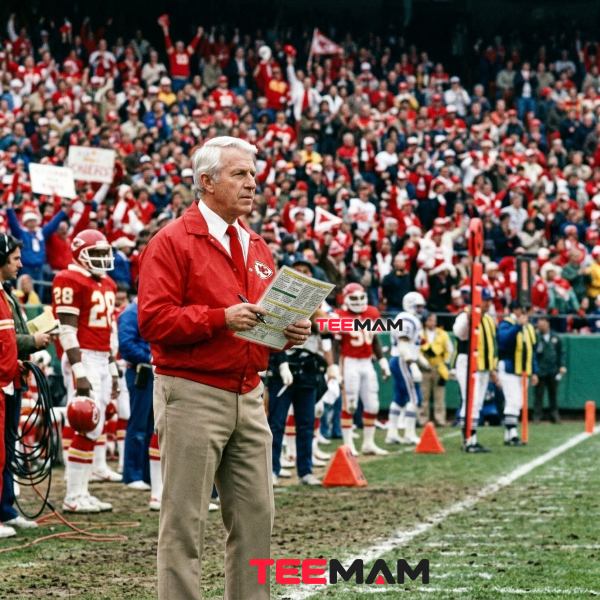
Marv Levy wrote the lyrics himself, with music by Walter Bryant, while serving as Chiefs head coach from 1978 to 1982. He borrowed the concept directly from Washington’s “Hail to the Redskins,” hoping Arrowhead could build the same kind of built-in home-field psychology. Owner Lamar Hunt, who had already made live music part of the Chiefs’ identity since the franchise’s earliest days in Kansas City, backed the idea right away.
The lyrics followed a classic collegiate fight-song formula: short lines, easy rhymes, a call to “beat the drum” behind “warriors brave and strong.” Levy himself simply called it “a fight song,” nothing more complicated than that, according to Chiefs.com’s retrospective on the song’s origin.
Records show the song never became a weekly ritual. It got PA play after Chiefs scores for a stretch in the early 1980s, but it faded once Levy’s Kansas City tenure ended after the 1982 season. He later resurfaced as head coach of the Buffalo Bills in 1986, where he built a Hall of Fame career and reached four straight Super Bowls. Most fans in Arrowhead today have never heard “Give a Cheer for Kansas City” played at a game. Historians and team archivists still regard it as the franchise’s only formally credited fight song, even if it never became the weekly soundtrack Levy envisioned.
Why the Song Still Shaped Chiefs Identity
Even without becoming a weekly staple, the song captured something real about how the organization thought about crowd noise. Decades before sports teams treated game presentation as a science, the Chiefs understood that sound could function as a competitive tool. That instinct connects Levy’s fight song to everything that followed, including the decibel records Arrowhead would eventually set.
From One Song to an Entire Stadium Soundtrack
Live music at Chiefs games predates the fight song by fifteen years. To understand today’s Kansas City Chiefs song, it helps to trace how the franchise’s soundtrack evolved from a single band to a full stadium production.
Tony DiPardo and the Famous Stadium Band
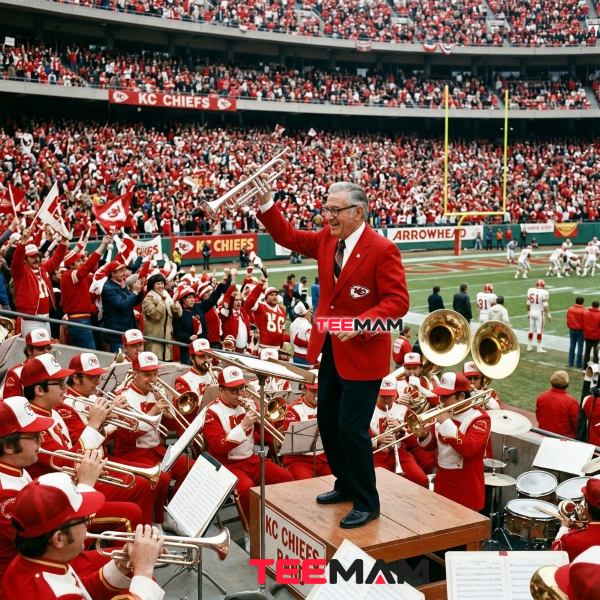
When Lamar Hunt moved the Dallas Texans to Kansas City in 1963 and renamed them the Chiefs, then-mayor Roe Bartle pushed for a live band at every home game. Trumpeter Tony DiPardo answered the call. He brought his 15-piece Zing Band to Municipal Stadium on a handshake deal with Hunt.
DiPardo composed original material for the team, including “The Hank Stram Polka” and “We’re Number One.” The latter, recorded with Kansas City singer Marilyn Maye, celebrated the franchise’s Super Bowl IV win over the Minnesota Vikings.
The band — later renamed the TD Pack Band — moved with the Chiefs to Arrowhead Stadium in 1972 and kept a dedicated bandstand behind the east end zone for decades. DiPardo, nicknamed “Mr. Music,” stayed a fixture at games from 1963 through the 2008 season, with a brief health-related absence in the 1980s. Head coach Hank Stram honored him with a Super Bowl ring in 1969, and the team later gave him a permanent place in the Chiefs Hall of Honor. DiPardo died in January 2011 at age 98, closing out one of the longest continuous traditions in NFL history: a live band playing nearly every home game for over four decades.
How Music Changed After the Band Era
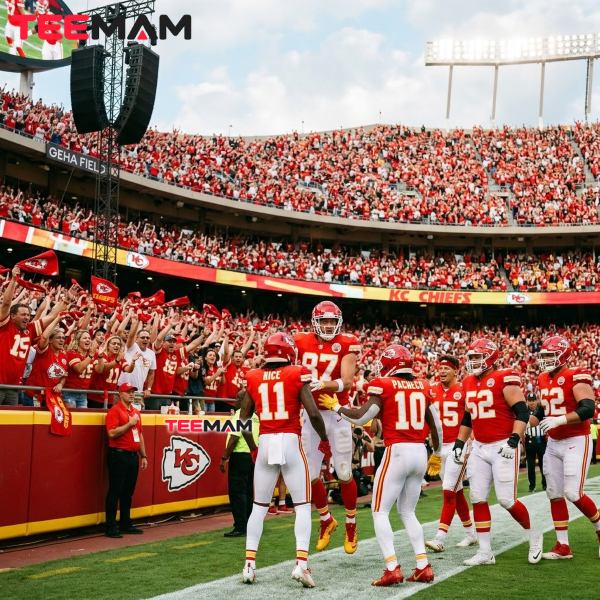
Arrowhead’s 2007–2010 renovation eliminated the old bandstand entirely. Live-band music gave way to the recorded, DJ-driven soundscape most fans know today — pump-up tracks before kickoff and a rotating rotation of celebration songs tied to different moments in the game. The most notable shakeup came in 2006, when the Chiefs dropped Gary Glitter’s “Rock and Roll Part 2” after the NFL flagged the artist’s criminal history. In the years since, the Beastie Boys’ “(You Gotta) Fight for Your Right (To Party!)” has become one of the songs most closely associated with Chiefs touchdown celebrations, largely thanks to Travis Kelce’s habit of belting it out during championship runs.
The team’s mascots shifted alongside the music. Warpaint, the horse once ridden onto the field, gave way to KC Wolf as the primary in-stadium mascot starting in 1989, part of a broader move away from Native American imagery that would continue for decades.
Why Arrowhead Stadium Sounds Different From Any Other NFL Venue
How Crowd Noise Creates Home Field Advantage
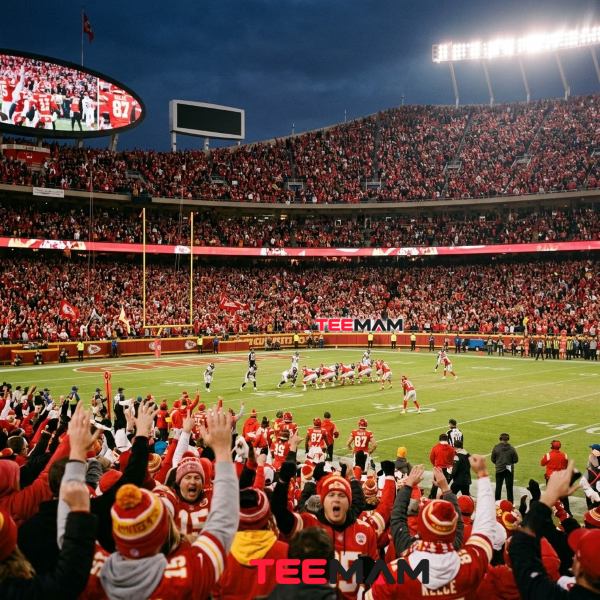
On September 29, 2014, during a Monday Night Football game against the New England Patriots, the crowd at GEHA Field at Arrowhead Stadium hit 142.2 decibels. That broke the Guinness World Record for loudest crowd roar at an outdoor sports stadium. Chiefs fans had already set an earlier mark of 137.5 decibels the year before against Oakland, then reclaimed the title from the Seattle Seahawks with the 2014 reading — a number roughly comparable to a jet engine at close range. The Chiefs won that game 41–14. The record still stands, confirmed by Guinness World Records’ official listing for the achievement.
Arrowhead’s bowl-shaped design plays a real role here. The upper deck cantilevers out over the lower bowl. The stadium was also built without the open corners that let sound escape at many newer venues, so noise bounces back down onto the field instead of rising and dissipating. Pair that architecture with a fan base that treats volume like a job, and you get a stadium that regularly disrupts opposing offenses’ snap counts.
Why Songs Matter More Than Entertainment
Coordinated singing and chanting gives 70,000-plus strangers a shared rhythm, and that rhythm is what turns individual noise into a wall of sound loud enough to force false starts. The tradition is also generational: grandparents who watched Len Dawson and Otis Taylor pass the same chants down to grandchildren watching Mahomes and Kelce today. The songs connect eras of Chiefs football that otherwise share almost nothing in common.
Understanding the Difference Between the Fight Song, War Chant, and “Red Kingdom”
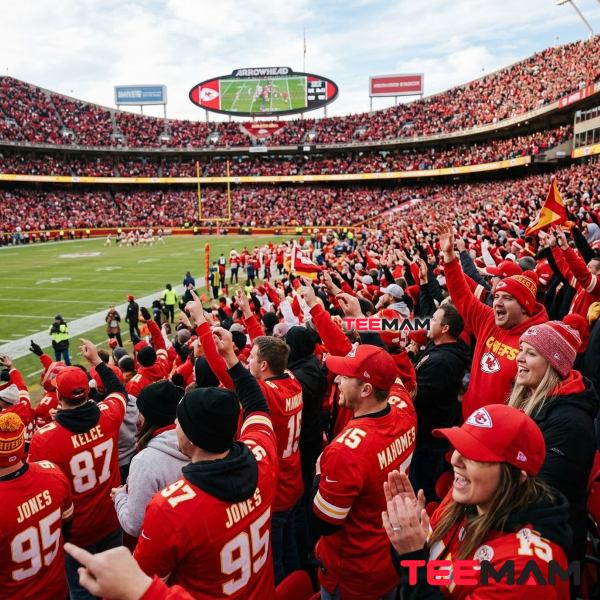
Most articles blur these three traditions together, which is exactly where confusion for new fans starts. Here’s how they actually differ.
| Tradition | Origin | Purpose | When Fans Hear It |
|---|---|---|---|
| Give a Cheer for Kansas City | Written by coach Marv Levy, early 1980s | Official team fight song | Rarely played today; a historical artifact more than an active tradition |
| War Chant | Adapted from Florida State’s fight-song chant during Marty Schottenheimer’s coaching tenure | Rally chant tied to the Tomahawk Chop arm motion | Before kickoff and after big plays, alongside the Drum Deck ceremony |
| Red Kingdom (Tech N9ne) | Released by hometown rapper Tech N9ne in January 2019, days before that season’s AFC Championship Game | Unofficial modern anthem celebrating “Chiefs Kingdom” fan identity | Pregame hype, tailgates, and frequently in-stadium during the Mahomes era |
Why do fans confuse these songs? Mostly because all three get lumped under the same casual label. Fans use “Kansas City Chiefs song” to describe three traditions that each serve a different purpose: “Give a Cheer for Kansas City” is the historical, official fight song; the War Chant is a stadium ritual meant to energize the crowd during games; and “Red Kingdom” is a modern anthem the fan base adopted on its own, outside of any team decision.
It is worth being upfront about one more layer here. The War Chant and its accompanying Tomahawk Chop have drawn sustained criticism from Native American advocacy groups. Critics argue the gesture and its musical cue rely on inaccurate, stereotyped imagery. Starting with the 2020 season, the Chiefs banned fans from wearing headdresses or Native American-style face paint at Arrowhead. The team also altered the chop itself, with cheerleaders now using a closed fist rather than an open palm, following what the organization described as meaningful conversations with the American Indian Community Working Group. The Chiefs retired Warpaint the horse mascot entirely ahead of the 2021 season. The chant and chop still happen at Arrowhead today, alongside real, ongoing debate about whether those changes go far enough. We’ve put together a deeper dive into the history behind the Tomahawk Chop and how the chant took shape, including where the controversy stands now.
“Red Kingdom” sits in a different category entirely. Tech N9ne, born and raised in Kansas City, wrote and recorded the track in a single night with producer King Iso, days before the Chiefs’ AFC Championship matchup against New England. It name-drops franchise legends like Derrick Thomas and Len Dawson alongside the current roster. The song exploded in popularity during the team’s Super Bowl LIV run the following season, with no stereotyped imagery and no historical baggage attached — just a hometown artist’s tribute that fans adopted on their own.
How Music Brings Chiefs Kingdom Together on Gameday
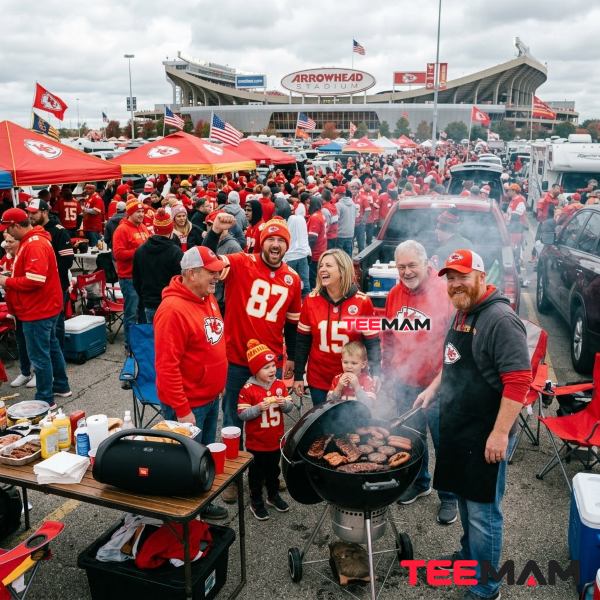
If you’ve ever arrived at Arrowhead before sunrise for a marquee matchup, you’ll notice the soundtrack changes almost by the hour. Early arrivals lean on classic rock and country around the grills as smoke rises off the tailgates. By late morning, as the lots fill in, the mix shifts toward “Red Kingdom” and whatever’s trending that season. Inside the stadium, PA announcers cue the War Chant before kickoff. Fans handle touchdown celebrations on their own with the Beastie Boys blaring, and postgame wins often end with Kelce leading a singalong from the field.
A lot of what makes this soundtrack distinct is fan-driven rather than scripted by the team. The “Swag Surfin'” ritual that’s become a stadium mainstay during blowouts started as fan momentum, not a marketing department decision. Over time, that grew into an unwritten tradition of its own, passed along by word of mouth rather than any official campaign. For a full rundown of how the parking-lot rituals connect to what happens inside the stadium, check out our guide to classic Chiefs tailgate and gameday customs.
How Fans Express the Tradition Beyond the Music
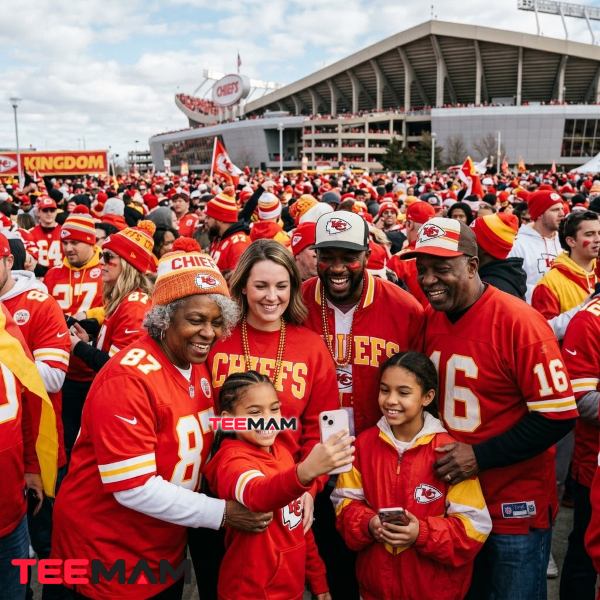
Sound is only half of what makes Arrowhead feel the way it does. Walk into the stadium on any Sunday and the visual side hits just as fast: 76,000-plus fans dressed almost entirely in red, a look locals call the Sea of Red. Nobody coordinates it. Over decades, that simply became the default among a fan base that’s worn the same colors to the same building for more than fifty years.
You’ll see plenty of vintage gear mixed into that crowd, too — throwback jerseys from the Dawson and Stram era next to current Mahomes jerseys, faded caps passed down from parents who tailgated at Municipal Stadium when the Zing Band still played. Families build entire gameday routines around this: the same parking spot every home game, the same pregame meal, a kid’s first jersey handed down like a family heirloom.
At TeeMam, we see vintage-inspired gameday apparel as another way fans carry those traditions from one generation to the next. Our heritage-inspired Kansas City Chiefs apparel collection reflects that same spirit, built for fans who treat gameday gear as part of the history rather than just merchandise.
How New Fans Can Join the Tradition Respectfully
First trip to Arrowhead? A few things will make the day go smoother.
Sing along during the War Chant and touchdown songs — that part’s universal, and nobody will look at you twice. Skip anything resembling Native American headdresses, face paint, or costume elements. The team has explicitly banned this at the stadium since 2020, and doing it anyway will earn you dirty looks at best. Save your loudest voice for third downs on defense, when Arrowhead’s noise actually swings a game by forcing false starts and blown snap counts. And don’t stress about getting every chant word-perfect on day one. Most of what makes the stadium loud isn’t precision — it’s volume and timing, and you’ll pick up the rhythm by the second quarter.
For a longer walk through team history before your first visit, our complete guide to Chiefs history and heritage covers the franchise’s full arc from Dallas Texans to Super Bowl dynasty.
Common Questions About Chiefs Songs and Stadium Traditions
Is the Kansas City Chiefs song the same as the War Chant? No. The Kansas City Chiefs song most often refers to “Give a Cheer for Kansas City,” the official fight song written by Marv Levy. The War Chant is a separate chant adapted from Florida State’s fight song in the 1990s, tied to the Tomahawk Chop gesture rather than the official team song.
Who wrote the Kansas City Chiefs fight song? Head coach Marv Levy wrote “Give a Cheer for Kansas City” during his time leading the team from 1978 to 1982, with music by Walter Bryant. He modeled it on Washington’s “Hail to the Redskins.”
What song plays after a Chiefs touchdown? Since 2006, the Beastie Boys’ “(You Gotta) Fight for Your Right (To Party!)” has been one of the songs most associated with Chiefs touchdown celebrations at Arrowhead, following the team’s decision to drop “Rock and Roll Part 2” over concerns tied to that song’s original performer.
Do fans still sing the original fight song today? Rarely. “Give a Cheer for Kansas City” isn’t part of the regular gameday rotation. Modern Arrowhead leans on the War Chant, Tech N9ne’s “Red Kingdom,” and whatever celebration song is in rotation that season instead.
Can first-time visitors participate in the stadium chants? Yes. New fans are welcome to join the War Chant, sing along to touchdown songs, and get loud on defensive third downs. The one hard rule: headdresses, face paint, and other Native American-themed costume elements have been banned at Arrowhead since 2020.
Why the Kansas City Chiefs Song Still Matters Today
There isn’t one definitive Kansas City Chiefs song. It’s Marv Levy’s forgotten fight-song experiment, Tony DiPardo’s four decades behind a trumpet, a chant the team is still working to reshape responsibly, and a hometown rapper’s tribute that became the unofficial soundtrack of a dynasty. Arrowhead’s record-setting noise didn’t happen by accident. It’s the byproduct of a fan base that has treated sound as part of the game plan since the franchise’s earliest days in Kansas City. Whatever gets played next, from the next viral celebration song to whatever comes out of a Strange Music studio session, it will get folded into a soundtrack that has been building since 1963 — and shows no sign of stopping.

Hi, I’m Olivia Bennett, a fashion and lifestyle writer at TeeMam with 6 years of experience creating content about fashion, outfits, and lifestyle trends. I enjoy sharing practical style ideas for everyday wear, game days, holidays, and special occasions, helping readers find looks that feel comfortable, fun, and uniquely their own.