The Kansas City Chiefs Tomahawk Chop: History and Controversy
Quick answer: The Kansas City Chiefs tomahawk chop is a synchronized arm motion and drum-led chant performed during home games at GEHA Field at Arrowhead Stadium. Adopted from Florida State University in 1990, it remains one of the NFL’s best-known traditions while continuing to draw criticism from Native American organizations and an ongoing internal review from the Chiefs.
| Quick Facts | |
|---|---|
| Origin | Florida State University marching band, 1980s |
| Adopted by Chiefs | November 1990, vs. San Diego Chargers |
| Coach at adoption | Marty Schottenheimer |
| Venue | GEHA Field at Arrowhead Stadium |
| Headdress policy | Banned since August 20, 2020 |
| Face paint policy | Native-styled paint prohibited; other face paint allowed |
| Current status | Still performed; under organizational review |
| Team leadership | Clark Hunt (Chairman/CEO), Mark Donovan (President) |
What’s actually in this guide
This piece traces the Kansas City Chiefs tomahawk chop from a 1990 marching-band cheer to the version fans perform today, explains why Native American advocacy groups have opposed it for decades, and lays out — with specifics, not vague gestures at “controversy” — exactly what has and hasn’t changed at Arrowhead Stadium since the team’s 2020 policy update. It also places the Chiefs’ version of the chop next to Florida State’s and the Atlanta Braves’, because those three situations get conflated constantly and they’re not the same thing.
What Is the Kansas City Chiefs Tomahawk Chop?
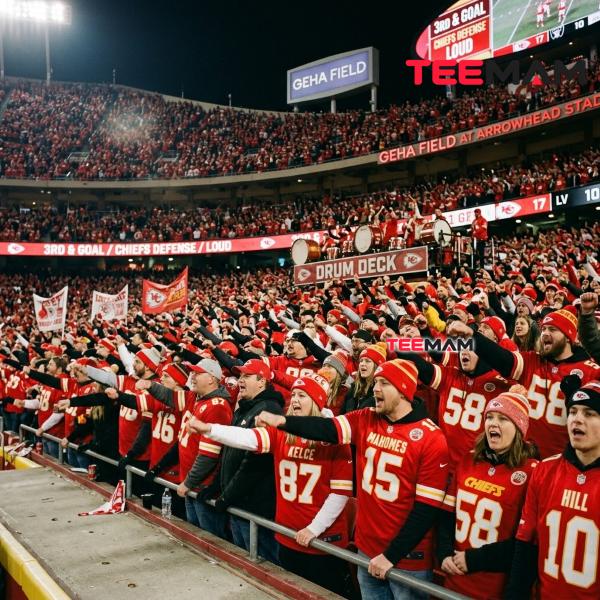
What is the Kansas City Chiefs tomahawk chop? It’s a synchronized arm motion and drum-led chant performed by fans during Chiefs home games at GEHA Field at Arrowhead Stadium. Although people often associate it exclusively with Kansas City, the tradition actually originated at Florida State University before reaching the NFL in 1990.
Mechanically, the chop is simple: fans extend one arm and chop it forward in rhythm with a wordless chant, usually set off by a large drum on the stadium’s Drum Deck. A few details matter more than casual observers realize:
- The chant has no meaning in any Native American language — it was invented for the gesture itself, decades before it reached Kansas City.
- Chiefs cheerleaders have led the motion with a closed fist rather than an open palm since 2020, a small but deliberate change.
- The chop isn’t confined to kickoff. It resurfaces during third-down defensive stands, often louder than the opening version.
- It’s sometimes called the “Arrowhead Chop” internally, distinguishing the Kansas City version from the Florida State and Atlanta Braves cheers it descended from.
Anyone who’s sat through a fourth-quarter defensive stand at Arrowhead knows the chop isn’t background noise. The drumbeat lands in your chest before the chant even starts, and 76,000 people moving one arm in unison is a genuinely disorienting thing to experience from the stands, whatever you think of where the gesture came from.
How the chop reached Kansas City: a quick timeline
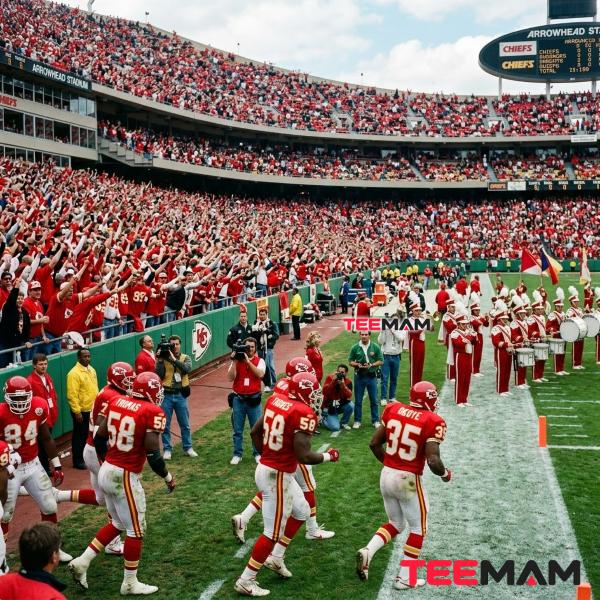
- 1980s — The chop and chant originate at Florida State University.
- Late 1980s — The Atlanta Braves adopt a version for baseball.
- 1990 — The Chiefs adopt the chant during a home game against the Chargers.
- 2014 — Arrowhead sets the Guinness World Record for stadium crowd noise; the Chiefs open dialogue with local tribal leaders the same year.
- 2020 — Headdresses are banned, face paint is restricted, and the chop is placed under formal review.
- 2023 — The Kansas City Indian Center campaigns publicly ahead of Super Bowl LVII.
- Today — The chant continues; the 2020 review hasn’t produced a final decision.
Each of these gets more detail below — this is just the shape of the story before the specifics.
The Florida State Connection and How the Tradition Reached Kansas City
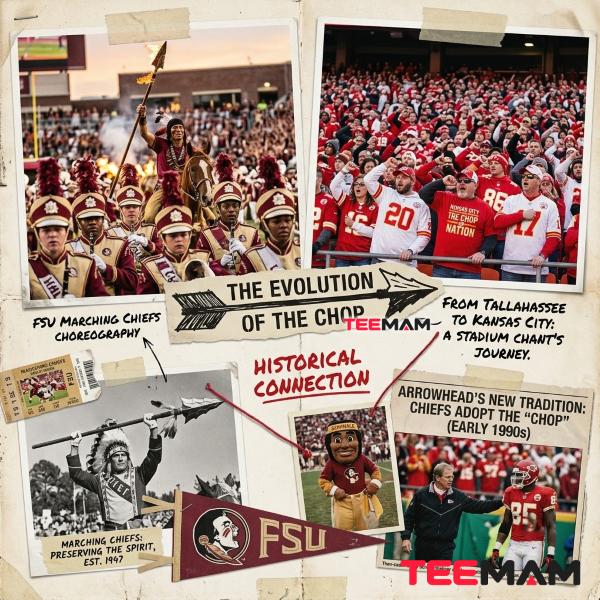
The chop and its chant trace back to Florida State University in the 1980s, where the Seminoles’ marching band introduced the gesture and crowds picked it up on their own. The Atlanta Braves adopted a version for baseball around the same period, which is why casual fans often assume the Braves invented it — they didn’t, they just got there before the Chiefs did.
The gesture arrived in Kansas City almost by accident, rather than through a marketing campaign or league mandate. In November 1990, members of the Northwest Missouri State University marching band began playing Florida State’s war chant while the Chiefs warmed up for a home game against the Chargers. The band’s director, Al Sergel, was a 1969 Florida State graduate who’d brought the song into the Bearcats’ own repertoire. A few Chiefs defensive players responded to the chant during a key defensive series, the crowd joined in, and Kansas City won that game while staying in playoff contention. Chiefs promotions director Phil Thomas later called it “a direct descendant of Florida State,” and Schottenheimer’s visible enthusiasm helped cement it as a fixture rather than a one-off.
That organic origin story is worth noting, because it’s part of why the debate is so hard to resolve cleanly: the chop wasn’t installed top-down as official Chiefs branding, the way a mascot or logo would be. It grew out of a spontaneous crowd moment and then got institutionalized after the fact — cheerleaders formalized the motion, the drum ceremony was built around it, and by the mid-1990s it was inseparable from the home-game experience. Fans who defend the tradition are often defending that organic history specifically, not making an argument about Native American culture at all.
If you want the fuller backstory on how the franchise itself took shape — the Lamar Hunt era, the Dallas Texans years, the 1972 move into what’s now GEHA Field at Arrowhead Stadium — that’s covered in our complete breakdown of Kansas City Chiefs history and heritage.
Why Is the Chop Controversial?
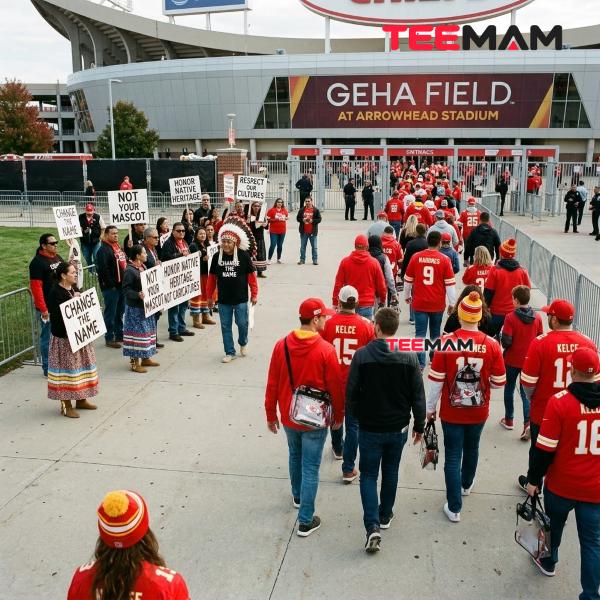
Why do Native American groups oppose the Kansas City Chiefs tomahawk chop? Because organizations like the National Congress of American Indians argue it reduces hundreds of distinct tribal nations to one invented gesture and a fabricated chant — a stereotype dressed up as tribute, in their framing, rather than an honor to anyone.
What Native American organizations argue
What is the National Congress of American Indians’ position on the tomahawk chop? NCAI, the country’s oldest and largest American Indian and Alaska Native advocacy organization, has campaigned against unsanctioned Native-themed mascots and gestures in sports since 1968, and its position hasn’t softened: these depictions aren’t tributes, the organization argues, they’re stereotypes that flatten hundreds of distinct tribal nations into one invented caricature.
Locally, the Kansas City Indian Center and students at Haskell Indian Nations University have pushed the Chiefs to retire both the chop and the team name outright. In 2023, the Kansas City Indian Center put up billboards around town reading “change the name and stop the chop,” timed to the team’s Super Bowl LVII run. Rhonda LeValdo, a Haskell instructor and co-founder of the Not In Our Honor coalition, has described the coordinated arm motion as “synchronized racism.” For the fuller case these organizations make, see Native American perspectives on sports imagery.
Why many fans keep doing it anyway
For a large share of the fan base, the chop reads less as a statement about Native American culture and more as inherited stadium ritual — the drumbeat, the shared motion, a routine older than most current season-ticket holders. Fans often describe it as a bonding moment with the people around them, not a deliberate comment on anyone’s heritage. That gap between original intent and cultural impact is exactly what keeps this debate unresolved rather than settled one way or the other; both sides are describing something real, just from different vantage points.
What the Chiefs organization has actually changed
Has the NFL or the Chiefs banned the tomahawk chop? No — the chant and arm motion themselves remain legal and common at Arrowhead. What the organization has restricted is the imagery around it. In 2014, the Chiefs began meeting with the American Indian Community Working Group, a coalition of local tribal leaders, to talk through concerns about team imagery. That dialogue led to a formal policy announced on August 20, 2020: headdresses banned outright, face paint “styled in a way that references or appropriates American Indian cultures and traditions” prohibited, and fans asked to remove violating items before passing security. The same statement confirmed the chop was under a “thorough review process,” with cheerleaders directed to lead the motion with a closed fist going forward. The team has since layered in tribal-consulted elements — an annual American Indian Heritage Month Game, a Blessing of the Drum, a Blessing of the Four Directions — developed with the working group’s input. Full details are in the team’s own statement: official stadium fan guidelines.
How Arrowhead Stadium Traditions Have Changed
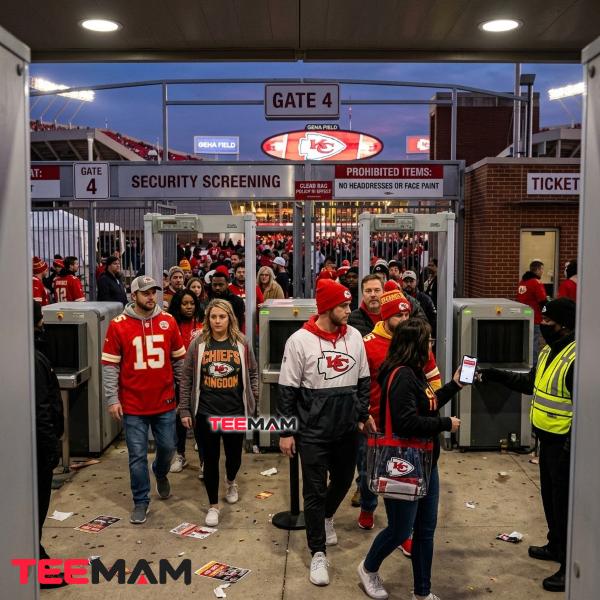
Most coverage frames this as a binary: either the chop got banned or nothing changed. Neither is accurate. Stadium policy, ceremonial elements, and fan-facing enforcement have all shifted meaningfully since 2020, even though the core chant survives.
Fan attire enforcement is now real, not just discouraged
Before 2020, the Chiefs “discouraged” headdresses and Native-styled face paint — language with no teeth behind it. Since August 2020, security staff at Arrowhead gates actively enforce the ban, asking fans to remove or leave prohibited items before entry. That’s the clearest, most measurable change in this entire story: a suggestion became a screened-for policy.
That enforcement shift has also nudged fan culture in a direction worth naming directly, since it doesn’t get much coverage: rather than leaning on the old headdress-and-face-paint aesthetic, a lot of what shows up in the Arrowhead parking lots now is Red Friday streetwear, vintage-inspired 1990s graphic tees, and Chiefs Kingdom-branded gear that signals team identity without borrowing anyone else’s culture to do it. That’s not a top-down marketing push — it’s fans finding a different visual language for the same loyalty.
The Drum Deck and what’s still being negotiated
The stadium’s Drum Deck — where the pregame drum is struck to kick off the chop — is part of what the Chiefs described as still under review. The organization has said it’s exploring ways to “shift the focus of the drum to something that symbolizes the heartbeat of the stadium” rather than a Native-coded ceremonial object, while keeping the crowd-unifying moment intact. That’s a harder problem than the headdress ban, because a drum ceremony is baked into the pregame sequence in a way a piece of clothing isn’t, and the team hasn’t announced a final resolution.
How the Chop Compares With Similar Sports Traditions
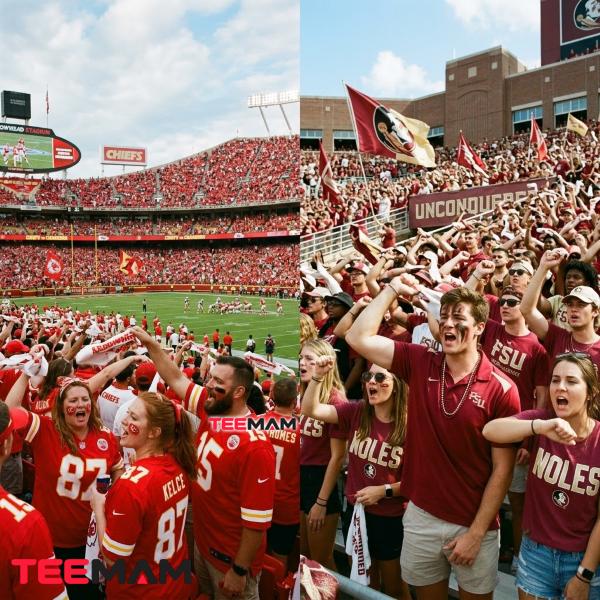
One reason this comparison gets muddled is that people assume every version of the chop exists under the same circumstances. It doesn’t. The physical motion looks nearly identical at Florida State, Atlanta, and Kansas City, but each organization has taken a different path to get there:
| Team/Program | Origin | Current Status |
|---|---|---|
| Kansas City Chiefs | Adopted November 1990 via a visiting college marching band | Still performed; headdresses banned and face paint restricted since 2020; chop itself under ongoing review |
| Florida State Seminoles | Originated with the FSU marching band, 1980s | Continues under a formal, sanctioned partnership between FSU and the federally recognized Seminole Tribe of Florida |
| Atlanta Braves | Adopted from Florida State in the late 1980s | Foam tomahawk giveaways and chop-related music were pulled during the 2019 playoffs after Cardinals pitcher Ryan Helsley, a Cherokee Nation member, called the ritual disrespectful; MLB Commissioner Rob Manfred said in 2021 the decision rests with the club, and the chop has continued as fan-driven practice since |
Florida State’s version gets cited constantly by defenders of the Chiefs’ tradition, but the comparison doesn’t hold up structurally: FSU has a direct, sanctioned agreement with the Seminole Tribe of Florida governing the use of Seminole imagery. Neither the Chiefs nor the Braves has an equivalent partnership with any tribal nation. That distinction — sanctioned collaboration versus unsanctioned borrowing — is the actual crux of why Native organizations treat the FSU situation differently, even though the physical chop looks identical at all three venues. It’s also why the NFL’s Washington franchise took a different path entirely, retiring the Redskins name in July 2020 and rebranding as the Commanders in February 2022 rather than negotiating a partnership.
What First-Time Visitors Should Know
If this is your first trip to Arrowhead, don’t overthink it — most visitors have zero issues. A couple of policies are worth knowing before you walk through the gate, though:
- Headdresses are prohibited at the gate — leave them at home.
- Face paint is fine; skip anything styled to reference Native American imagery, or you’ll be asked to remove it before screening.
- The chop typically opens with the pregame drum and returns during defensive stands; you don’t need to memorize anything, it’s mostly rhythmic sound rather than words.
- Not everyone around you will participate, and that’s normal — plenty of longtime ticket holders sit it out without making a scene either way.
- Policies here have changed more than once since 2020, so if you want the current word straight from the source, the team’s own fan pages are more reliable than secondhand recaps like this one.
Other Chiefs Traditions Worth Knowing
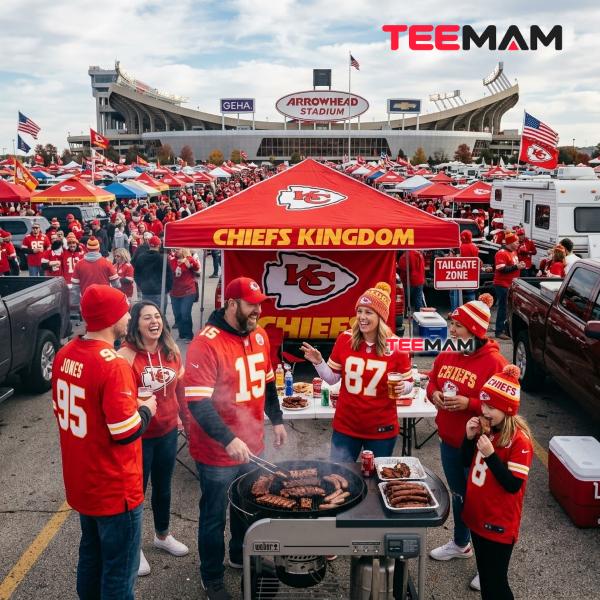
The chop dominates outside coverage of Chiefs game days, but it’s one piece of a much bigger fan culture. Red Friday — wearing Chiefs red every Friday during the season, well beyond the stadium — has become a genuine citywide habit rather than a marketing gimmick. Tailgating in the Arrowhead lots starts hours before kickoff and is regularly ranked among the best in the league for scale and atmosphere. “Chiefs Kingdom” functions as an identity marker far outside game day, showing up in local business names and community events across Kansas and Missouri. For a closer look at what the parking lots actually look like on a Sunday morning, check out our insider guide to Arrowhead Stadium tailgate traditions.
Beyond the Chop: Songs, Chants, and Crowd Rituals
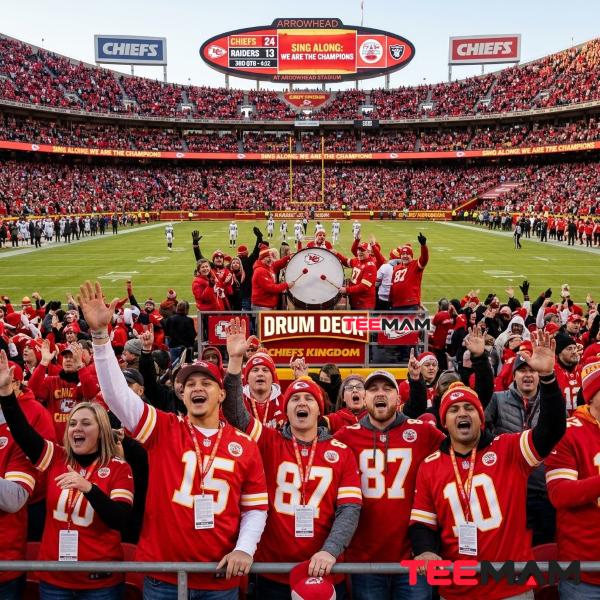
The tomahawk chop often gets conflated with the Chiefs’ other audio traditions, but they serve different roles in the gameday sequence. The team’s fight song is a separate piece of music tied to touchdowns and wins, distinct from the chop’s chant-and-drum pattern. Crowd noise itself has become its own point of pride independent of any single chant — Arrowhead set the Guinness World Record for loudest outdoor stadium crowd at 142.2 decibels in 2014, a record that predates most of the policy changes discussed above and has nothing to do with the chop specifically. For the full lyrics and backstory behind the team’s official fight song, see our history of the Kansas City Chiefs fight song.
Why This Tradition Keeps Sparking Debate
The Kansas City Chiefs tomahawk chop sits at an uncomfortable intersection: a genuinely spontaneous piece of 1990s stadium culture on one side, a documented, decades-long history of Native American communities objecting to being reduced to a costume and a chant on the other. Neither side of that has gone away, and neither is likely to concede the point anytime soon. The organization has made real, verifiable changes — the 2020 headdress ban, face-paint restrictions, an acknowledged review of the chop itself — without eliminating the chant outright, which leaves activists arguing the changes don’t go far enough and fans arguing the tradition has already been meaningfully softened. Given how much national attention the Chiefs have drawn through their recent run of Super Bowl appearances, the debate isn’t likely to fade from the conversation.
Traditions like this rarely resolve into a clean verdict — they keep evolving under pressure from both directions at once. TeeMam covers these shifts because understanding where a stadium ritual came from, and how it’s changed, matters as much to fans as the score on Sunday.
Common Questions About the Kansas City Chiefs Tomahawk Chop
Is the Kansas City Chiefs tomahawk chop banned? No. The chant and arm motion have not been banned. The Chiefs have restricted related fan behavior — headdresses are prohibited and Native-styled face paint isn’t allowed — and the chop remains under an organizational review that, as of the most recent seasons, hadn’t produced a final policy change.
Why do fans still perform it? Most fans describe it as stadium ritual and shared identity, tied to memories of Chiefs games going back decades, rather than a statement about Native American culture specifically. The drum-and-chant pattern functions as crowd bonding in their own framing, whatever critics make of its origins.
Did the Chiefs invent the tomahawk chop? No. It originated at Florida State University in the 1980s and was picked up by the Atlanta Braves around the same period. The Chiefs adopted it in November 1990 after a visiting college marching band performed the chant during a home game, and it stuck from there.
Can fans still wear Native American-inspired clothing at Arrowhead Stadium? Headdresses specifically are banned outright. Face paint styled to reference or appropriate American Indian cultures and traditions is also prohibited, and fans are asked to remove it before passing security. Other clothing isn’t subject to the same blanket ban, though the team has generally moved away from promoting Native-themed merchandise over the past decade.
How is today’s game-day experience different from twenty years ago? The core chop and drum ceremony still happen, but the policy around them has changed substantially: headdresses are prohibited rather than merely discouraged, cheerleaders lead the motion with a closed fist instead of an open palm, and the team has added tribal-consulted elements — the Blessing of the Drum, the American Indian Heritage Month Game — that didn’t exist in the tradition’s earlier decades.
Conclusion
The Kansas City Chiefs tomahawk chop began as an imported college band cheer in November 1990 and grew into one of the most recognizable — and contested — rituals in professional football. Native American organizations continue to challenge it as a stereotype dressed up as tribute; a large share of Chiefs Kingdom holds onto it as inherited stadium memory. What’s changed concretely is the policy surrounding it: headdresses banned, face paint restricted, and a review process the organization has publicly acknowledged since 2020. Whether that’s enough remains genuinely unresolved, and it’s likely to stay that way as long as the Chiefs keep playing meaningful January football in front of a full house at Arrowhead.

Hi, I’m Olivia Bennett, a fashion and lifestyle writer at TeeMam with 6 years of experience creating content about fashion, outfits, and lifestyle trends. I enjoy sharing practical style ideas for everyday wear, game days, holidays, and special occasions, helping readers find looks that feel comfortable, fun, and uniquely their own.