Kansas City Chiefs Cheerleaders: History and Role in Gameday Culture
If you think the Chiefs’ identity starts and ends with Patrick Mahomes and a Lombardi Trophy count, you’re missing half the show. For more than six decades, the Kansas City Chiefs cheerleaders have been building their own version of the franchise’s story — one that runs through a 1963 letter to team founder Lamar Hunt, a modern roster split into two very different jobs, and a voluntary Super Bowl tattoo tradition that’s marked the squad’s championship-game trips with permanent ink.
Most fans know the squad as a sideline fixture: red and gold, white boots, synchronized routines during timeouts. Fewer know that the cheerleaders working the field are doing a different job than the ones working the club level and suites, or that the program’s roots trace to a 21-year-old college student who mailed a letter to Hunt and got back two words that changed his life. This guide covers all of it: where the Kansas City Chiefs cheerleaders came from, what the job actually involves, and how to try out if you’re considering it yourself.
When Did the Kansas City Chiefs Cheerleaders Begin?
Before Kansas City: The Dallas Texans and Kay Sutton
The franchise’s cheer tradition has an earlier chapter that predates the Chiefs name entirely. When Lamar Hunt’s Dallas Texans took the field in 1960 as a charter member of the American Football League, the team’s most visible ambassador wasn’t a cheer squad — it was a Texas beauty-pageant contestant named Kay Sutton, elected “Miss Dallas Texan” by a panel of local media. According to Chiefs.com’s official franchise history, Sutton was so closely tied to the team’s public image that its publicist briefed her after every game so she could field football questions from reporters, functioning as an early version of a team spokesperson. That role didn’t survive the franchise’s move north, but it’s the earliest instance of the organization pairing a public-facing ambassador with its on-field product — a concept that resurfaces, in a very different form, in today’s roster structure.
1963: A Letter, a Two-Word Reply, and the First Squad
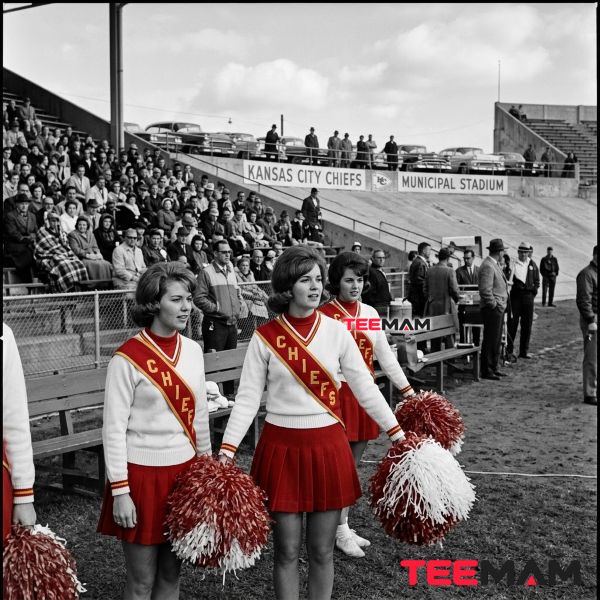
The cheerleading program most fans recognize today traces to a specific, well-documented moment. In 1963, as Hunt prepared to relocate the Texans to Kansas City, a 21-year-old University of Kansas student and cheerleader named Randy Neil wrote Hunt a letter asking whether the relocating team would need a cheer squad. Hunt sent back a handwritten note that read, in full: “Dear Randy — Go to it.” Neil took him up on it, hand-picking about 18 male and female cheerleaders from local high schools and colleges on a reported annual budget of just $400, with the first practice held in his parents’ front yard in Prairie Village, Missouri, according to Neil’s own account reported by FOX4 Kansas City. The group is widely credited as an early co-ed cheerleading squad in professional football, and its members were on the sideline for the franchise’s first Super Bowl appearance in January 1967.
From Co-Ed Squad to the Chiefettes — and Back
The co-ed format continued through the 1960s and into the 1970s before the squad dropped its male members and rebranded as the all-female Chiefettes. The name changed again in the 1980s, and male cheerleaders briefly rejoined the roster between 1986 and 1992 before the program settled into the structure fans see today.
The bigger change was not the name on the uniform but the job itself. Cheerleading across the NFL professionalized over those same decades — tighter choreography standards, more competitive tryouts, and a shift from pure sideline entertainment toward a brand-facing role. For the Chiefs specifically, that shift eventually produced a roster split into two distinct jobs instead of one general cheer squad, and the Kansas City Chiefs cheerleaders still operate under that structure today.
| Period | Chiefs Cheer History |
|---|---|
| 1960 | Franchise begins as the Dallas Texans; Kay Sutton serves as the team’s early public ambassador |
| 1963 | Randy Neil organizes the first Kansas City squad following the franchise’s move from Dallas |
| Mid-1960s–1970s | Co-ed cheerleading squad, with members present for the team’s first two Super Bowl appearances |
| 1970s–1980s | Squad rebrands as the all-female Chiefettes |
| 1986–1992 | Male cheerleaders briefly rejoin the roster |
| 1990s–present | Squad settles into the modern Chiefs Cheerleaders identity |
| Today | Roster organized into Field and Ambassador roles |
At a Glance: Chiefs Cheerleaders Fast Facts
| Question | Answer |
|---|---|
| Origins | Traces to the team’s 1960 Dallas Texans era; the current program dates to the 1963 move to Kansas City |
| Two roster tracks | Field Cheerleaders and Ambassador Cheerleaders |
| Home venue | GEHA Field at Arrowhead Stadium |
| Core job | On-field performance, fan and suite engagement, community representation |
| Program leadership | Stephanie Judah, Director of Chiefs Cheerleading and a former Chiefs Cheerleader herself |
| Youth pipeline | Junior Chiefs Cheer (ages 6+) and Teen Chiefs Cheer (ages 13+), both with a halftime performance at Arrowhead |
| Signature ritual | A voluntary team tattoo tradition marking Super Bowl trips |
What Do Kansas City Chiefs Cheerleaders Do on Gameday?
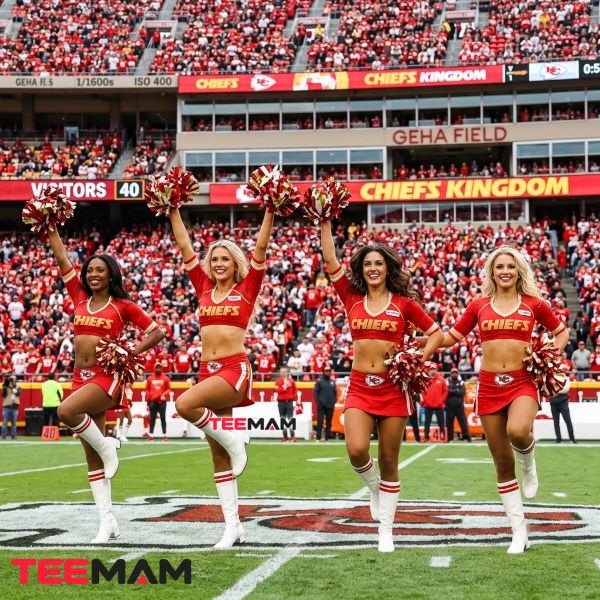
Short answer: They perform choreographed routines on the field, lead sideline chants, and engage fans in the suites and concourse. The job splits into two roles, Field and Ambassador, that divide those duties differently.
The Kansas City Chiefs cheerleaders operate as a combined game-entertainment and community-representation program built around those two roles: Field Cheerleaders, who perform during home games, and Ambassador Cheerleaders, who focus on fan interaction, appearances, and public-facing responsibilities.
| Role | Primary Responsibility | Where They Work | Key Skills |
|---|---|---|---|
| Field Cheerleader | Sideline and field performance | Field, sidelines | Dance technique, stamina, choreography |
| Ambassador Cheerleader | Fan engagement and representation | Suites, concourse, community events | Communication, football knowledge, poise |
Field Cheerleaders: Performance on the Sidelines
Field cheerleaders handle the pregame production number, sideline choreography, and halftime performances — the parts of the job built for a camera and a stadium full of people. That means learning and cleaning multiple routines across a season, since the in-game entertainment package rarely repeats week to week.
Ambassador Cheerleaders: Fan Interaction Beyond the Field
Ambassador cheerleaders don’t perform on the field during games. Instead, they’re stationed in suites and around the concourse for fan photos and interaction, and they take the lead on public appearances and community events. In a Chiefs.com audition overview, the team has described Ambassador candidates being tested on public speaking and football knowledge alongside poise and presentation, a different emphasis than the choreography-heavy Field track.
The two-track system also changes how the job should be understood. A Field Cheerleader is judged primarily on movement, timing, stamina, and visual performance in front of a 76,000-seat stadium. An Ambassador has to switch gears entirely, carrying football knowledge and conversational skill into a suite, a school gym, or a sponsor event instead of a sideline routine. That makes Chiefs Cheer less like a single dance team and more like two specialized, public-facing roles operating under one uniform.
A Typical Gameday, Start to Finish
Chiefs Cheer Director Stephanie Judah has described gameday call time as roughly four hours before kickoff, starting with a team meeting on logistics before the squad heads to the field for rehearsal.
| Stage | What Happens |
|---|---|
| Days before | Rehearsals and choreography review |
| ~4 hours before kickoff | Team meeting, hair/makeup, field rehearsal |
| Pregame | Field production number |
| During the game | Sideline routines (Field) and suite/concourse engagement (Ambassador) |
| Halftime | Featured performance |
| Postgame | Fan photos, community appearances |
How the Chiefs Cheerleading Squad Shapes Arrowhead’s Gameday Culture
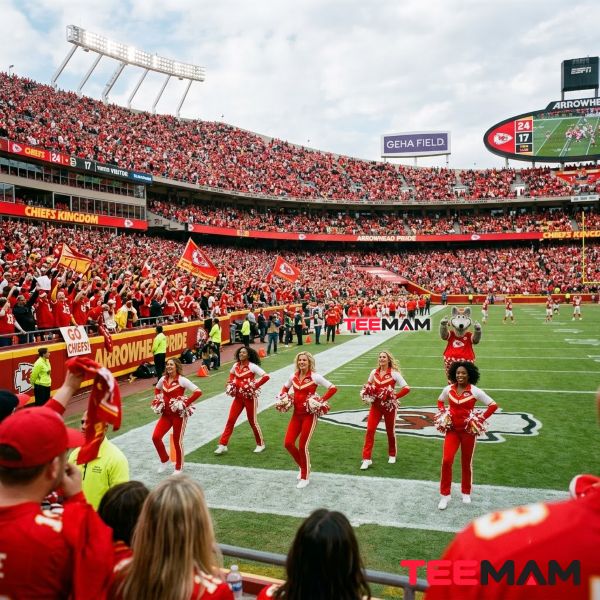
The cheer program is one piece of a much larger gameday production. Warpaint, the Chiefs’ former horse mascot, was part of the team’s earlier gameday presentation before K.C. Wolf became the franchise’s modern mascot in 1989. Chiefs Cheer sits alongside that lineage and the red-and-gold “Chiefs Kingdom” identity, helping connect crowd interaction, live performance, and the team’s visual branding into one continuous gameday presentation.
That fits into a stadium already famous for its sound. Arrowhead Stadium holds the Guinness World Record for loudest crowd roar at a sports stadium, measured at 142.2 decibels during a Monday Night Football game against the New England Patriots on September 29, 2014. Sideline routines and other in-stadium cues are part of the broader game presentation that helps keep fans engaged during key moments, contributing to an atmosphere that’s been measured as the loudest in professional sports.
Anyone digging into the current roster eventually gets curious about what came before it. For the fuller story of the franchise’s move from Dallas and its early Kansas City years, see this Chiefs heritage and history guide.
Chiefs Cheerleaders Uniforms: From Sideline Basics to Modern Gameday Fashion
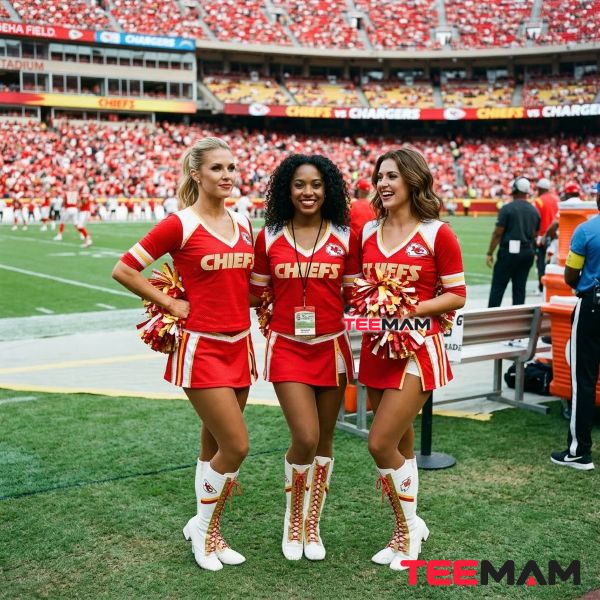
The Kansas City Chiefs cheerleaders wear a uniform built on the same red, gold, and white as the rest of the organization, typically finished with white boots — a look that reads clearly from the upper deck and on camera. The uniform has evolved alongside the broader presentation of NFL cheerleading, while retaining the Chiefs’ red, gold, and white visual identity.
That red-and-gold identity also shows up throughout the Arrowhead parking lots, where fans build gameday outfits around the same colors the squad wears on the field. That same red-and-gold visual language also influences how fans build modern Chiefs gameday outfits, from layered hoodies and jackets to vintage-inspired tees.
At TeeMam, we design fan apparel around that aesthetic, with pieces intended to work as part of a complete gameday outfit rather than a one-day costume.
What Makes Chiefs Cheerleaders Different From Other NFL Squads?
Not every NFL team formally splits its cheer roster into two roles the way the Chiefs do. That structure means the organization runs two specialized programs — one optimized for on-field performance, one for public representation — instead of asking one group to do both jobs at a lower level of focus each.
| Feature | Chiefs Cheer | Why It Matters |
|---|---|---|
| Field role | Sideline and field performance | Drives live gameday entertainment |
| Ambassador role | Suites, fan interaction, appearances | Extends the program beyond the field |
| Community work | Youth programs and outreach events | Connects the squad to Kansas City |
| Super Bowl tradition | Shared commemorative tattoos | Creates a lasting, internal team ritual |
Arrowhead’s reputation for crowd noise, combined with a decade of sustained playoff success under Mahomes and head coach Andy Reid, also gives the program a bigger stage than most franchises can offer. The Kansas City Chiefs cheerleaders are one part of a bigger in-stadium show that includes K.C. Wolf and the broader game-entertainment operation — for more on that side of things, see KC Wolf and Chiefs gameday entertainment.
Chiefs Cheerleaders and the Super Bowl Tattoo Tradition
The Chiefs have won four Super Bowls in franchise history — Super Bowl IV in 1970, then three titles in five seasons during the Mahomes-Reid era: Super Bowl LIV (2020), Super Bowl LVII (2023), and Super Bowl LVIII (2024). They also reached Super Bowl LIX in February 2025, a loss to the Philadelphia Eagles.
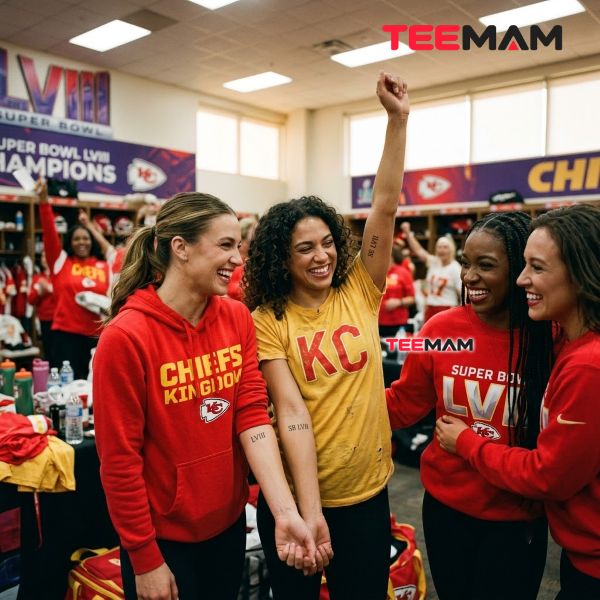
One of the squad’s most distinctive traditions is commemorating Super Bowl trips with tattoos — usually the Roman numerals of that year’s game, sometimes paired with a small arrowhead. Participation is voluntary, but for at least the past several Super Bowl runs, a large share of the cheerleading squad has taken part. Longtime cheerleader Stefanie Hill described the tradition publicly after Super Bowl LVIII, explaining that the team has an established practice of getting tattoos each time they reach a Super Bowl, that it’s entirely optional with no pressure attached, and that most of the squad still chooses to take part — according to People’s report on the tradition.
By that point, Hill had four sets of numerals marking four separate Super Bowl trips, and even the team’s athletic trainer joined in that year, getting a Vegas-themed tattoo of her own. The tradition ties the squad’s own history directly to the team’s championship runs — a shared ritual that most fans only see from the stands.
How Do You Become a Kansas City Chiefs Cheerleader?
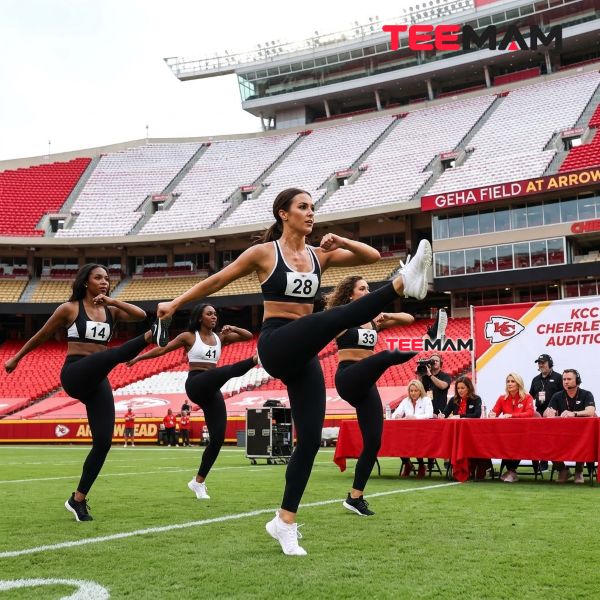
Short answer: Candidates submit a preliminary video audition, advance through virtual semifinal interviews if selected, and finish with an in-person finals weekend at Arrowhead. Exact dates shift every year; the 2026 cycle ran preliminary submissions through April 6, semifinal interviews April 14–17, and in-person finals May 1–3.
The Audition Process
Becoming one of the Kansas City Chiefs cheerleaders means clearing a format that has evolved over the years but generally keeps three stages: a video-based preliminary round (choreography, a solo, and a public-speaking segment), a virtual interview round for semifinalists, and an in-person finals weekend where finalists learn new choreography on site and interview with a judging panel. Candidates must be at least 18 years old by the preliminary deadline. Professional dance experience isn’t strictly required, but candidates should be prepared to demonstrate strong performance ability, physical stamina, and the ability to pick up choreography quickly. Because the calendar changes year to year, anyone planning to try out should confirm current dates and requirements on the team’s official audition page before registering. As of this writing, the 2026 audition cycle has closed; the Chiefs are taking sign-ups for updates on the 2027 cycle.
What the Judges Look For
- Dance technique and performance ability
- Physical fitness and stamina for a full gameday schedule
- Public speaking and interview presence, weighted more heavily for Ambassador candidates
- Working knowledge of football and Chiefs team history
- Poise and confidence in front of a crowd and a camera
- Comfort with community and fan-facing appearances
After Making the Team
New cheerleaders move into regular rehearsals, media training, and community appearance assignments ahead of the season. Director Stephanie Judah, a former Chiefs cheerleader herself who has led the program for years, has said the organization looks for women who combine strong performance skills with character, since the job extends well beyond gameday into schools, charity events, and youth clinics.
Beyond Arrowhead: Community Work and the Junior Chiefs Cheer Program
The squad’s public-facing work extends past the stadium into charity events, hospital visits, and appearances across the Kansas City metro. The Kansas City Chiefs cheerleaders work in the community year-round through programs sponsored by the organization, well beyond the gameday role most fans see.
That outreach includes a direct pipeline for younger fans. The Chiefs run two youth programs through the same Junior Chiefs Cheer initiative: Junior Chiefs Cheer, open to children 6 and older, and Teen Chiefs Cheer, for participants 13 and older. Both pair kids with a current cheerleader as a “Big Sis” mentor across several rehearsals and end in a halftime performance at GEHA Field at Arrowhead Stadium alongside the official squad. Participants rehearse with current cheerleaders over several sessions before that performance, turning the squad into a direct connection between the professional team and its youngest fans.
How the Squad Fits Into the Wider Chiefs Kingdom
The Kansas City Chiefs cheerleaders are one layer of a gameday culture that starts hours before kickoff in the parking lots surrounding Arrowhead, where fans grill, play games, and dress head to toe in red. For a fuller look at that side of the experience, see Kansas City Chiefs tailgate traditions.
Chiefs Kingdom is bigger than any single gameday role. It includes former players, celebrities who’ve adopted the team, and generations of Kansas City families who’ve never missed a home opener. The cheer squad is one visible thread in that larger fabric; for a look at some of the famous Chiefs fans and supporters who’ve become part of the team’s public identity, that’s a natural next stop.
Common Questions About the Chiefs Cheerleading Program
When did the Chiefs cheerleaders start? The program’s roots go back to the team’s 1960 Dallas Texans era, but the squad fans recognize today began in 1963, when Randy Neil organized the first roster ahead of the franchise’s move to Kansas City.
What do Chiefs cheerleaders do during games? Field cheerleaders perform choreographed routines before kickoff and during breaks in play. Ambassador cheerleaders work the suites and concourse, engaging fans and representing the organization off the field.
How can you audition to become a Chiefs cheerleader? Through the team’s annual audition cycle, which runs a video-based preliminary round, virtual semifinal interviews, and an in-person finals weekend at Arrowhead. Dates change yearly, so check the official Chiefs cheerleader tryouts page for current requirements.
What’s the difference between Field and Ambassador cheerleaders? Field cheerleaders perform on the sidelines during games. Ambassador cheerleaders don’t perform on the field; they focus on suite visits, fan interaction, and public appearances.
Do Chiefs cheerleaders take part in community events? Yes, through charity appearances, school visits, and programs like Junior Chiefs Cheer, which brings teen participants into a mentorship and halftime-performance experience.
Do Chiefs cheerleaders travel to away games? No. Chiefs.com confirms the squad does not travel for road games and is required to cheer at all home games, including preseason, regular season, and postseason.
Why does the cheer squad matter to Arrowhead’s gameday culture? The Kansas City Chiefs cheerleaders contribute to the live game presentation through choreographed routines and crowd engagement, while Ambassador Cheerleaders extend that role into fan interaction and community representation, reinforcing the red-and-gold identity shared across the organization.
The Bottom Line
Across six decades, the program has evolved from a small co-ed squad organized in a Prairie Village front yard into a professional organization with specialized Field and Ambassador roles, a dedicated youth pipeline, and traditions tied directly to the team’s Super Bowl history. The Kansas City Chiefs cheerleaders help turn a football game into a shared stadium experience, represent the organization beyond Arrowhead, and give fans another way to participate in Chiefs Kingdom — a combination of performance, representation, and community work that makes the program more than a sideline act.
Key sources: Chiefs.com official team and cheerleader program pages, Guinness World Records, and People’s reporting on the squad’s Super Bowl tattoo tradition. Audition dates and requirements reflect the 2026 cycle and change annually — verify current details on the team’s official page before applying.

Hi, I’m Olivia Bennett, a fashion and lifestyle writer at TeeMam with 6 years of experience creating content about fashion, outfits, and lifestyle trends. I enjoy sharing practical style ideas for everyday wear, game days, holidays, and special occasions, helping readers find looks that feel comfortable, fun, and uniquely their own.