All Hallows’ Eve: The Complete History and Meaning of Halloween
In short: The all hallows eve meaning is “the evening before All Hallows’ Day,” the older name for All Saints’ Day, observed on November 1. All Hallows’ Eve itself falls on October 31. The name “Halloween” is Christian in origin, deriving from that same evening, while the modern holiday incorporates older Gaelic seasonal tradition, medieval folk custom, 19th-century immigration, and 20th-century American popular culture.
If you’ve ever wondered why we call October 31 “Halloween” when the word sounds like it’s hiding an older story, that’s the reason. “Hallow” comes from the Old English word for holy, and “eve” marked the vigil before an important feast, so the name described the night that opened into that sacred morning. Somewhere between a medieval church calendar and a modern porch covered in plastic spiders, that religious evening turned into one of America’s most recognizable fall celebrations.
This piece follows that whole arc: the Celtic festival of Samhain, the Christian calendar that gave the night its name, the immigrant communities that carried it across the Atlantic, and the trick-or-treaters, candy bowls, and matching family costumes we know today. Halloween doesn’t have a single origin story. It grew out of several traditions layered on top of each other over more than a thousand years, and the record we actually have is messier, and more interesting, than a one-line answer can capture.
What Is the All Hallows Eve Meaning?
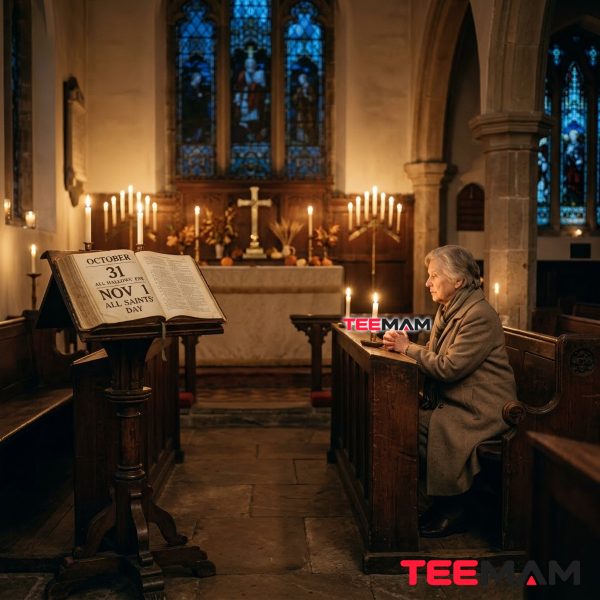
What Does “Hallow” Mean?
“Hallow” has mostly vanished from everyday English except inside this one holiday name. As a noun, it once meant a holy person or a saint; as an adjective, “hallowed” meant sacred or consecrated. Merriam-Webster traces the word to the Old English adjective hālig, meaning “holy.” All Hallows’ Day was an English name for the Christian feast now commonly called All Saints’ Day, a title that didn’t come into common use until the 16th century. Before that, November 1 was widely known simply as “All Hallows,” a day honoring all the saints, including those without an individual feast day of their own. The November 1 feast was also associated with the Middle English term All-hallowmas, reflecting the same link between “All Hallows” and a formal feast, or mass, in the saints’ honor.
What Does “Eve” Mean?
“Eve” causes more confusion than it should. Today we tend to hear it as “the night before,” but in medieval English, eve and even referred more broadly to the day or evening preceding an important date. Major Christian feasts traditionally opened with a vigil, a period of preparation and prayer, the night before.
Why Is October 31 Called All Hallows’ Eve?
Once November 1 was designated a major feast day, October 31 automatically inherited its own name as that vigil evening, the same pattern seen in Christmas Eve or New Year’s Eve. That’s the direct answer to a common question: why is it called All Hallows’ Eve? Because it functioned as the eve, or vigil, that opened the observance of All Hallows’ Day. In short, the all hallows eve meaning is tied directly to this vigil relationship with All Saints’ Day.
How All Hallows’ Eve Became Halloween
The word passed through several spellings on its way to the one we use now. The Oxford English Dictionary traces “Halloween” to a clipped form of “All-Hallow-Even,” with its earliest recorded written use dating to 1556. Merriam-Webster lays out the same chain: October 31 was called “All Hallow Eve” or “All Hallow Even,” sometimes written “All Hallow E’en,” which was shortened first to “Hallowe’en” and eventually to “Halloween.” The apostrophe in “Hallowe’en” isn’t a modern stylistic add-on; it stood in for the letters dropped from “even.” Scottish poet Robert Burns helped popularize the spelling “Hallowe’en” with his 1785 poem of the same name. Over time, writers increasingly dropped the apostrophe, giving us the “Halloween” most Americans write today. Both spellings remain correct; the apostrophe is simply more common outside the United States.
In modern usage, All Hallows’ Eve and Halloween describe the same October 31 observance. The difference is register and history rather than meaning: All Hallows’ Eve is the older, fuller name that keeps the holiday’s religious framing visible, while Halloween is the contracted, secularized form that has absorbed centuries of additional folk, immigrant, and commercial tradition.
When Did All Hallows’ Eve Begin?
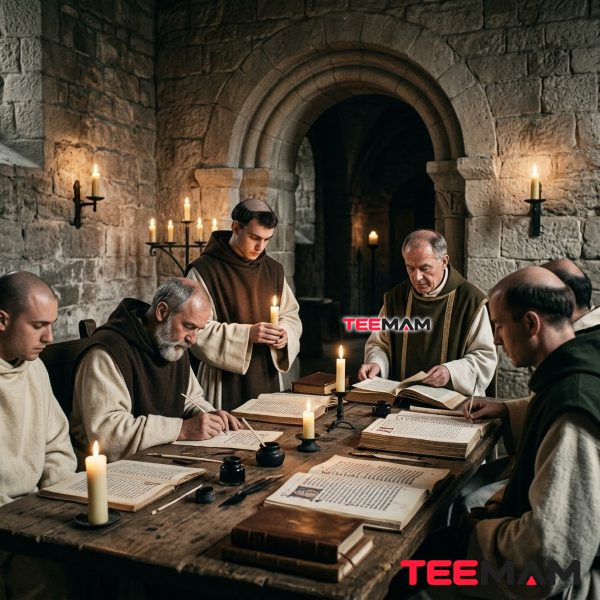
To understand when All Hallows’ Eve began, start with All Saints’ Day itself, since the eve only exists because of the feast it precedes. A shared feast honoring Christian martyrs together, rather than each one on a separate day, developed gradually as persecutions under emperors like Diocletian left more martyrs than the calendar could hold individually. Historical accounts describe Pope Boniface IV consecrating the Pantheon in Rome to the Virgin Mary and all martyrs in 609 or 610 CE, with that feast observed on May 13.
The move to a November date, and the origin of All Hallows’ Eve as we understand it now, came later and is genuinely debated among historians. Multiple sources describe Pope Gregory III, who led the church from 731 to 741, dedicating a chapel in St. Peter’s Basilica to all the saints and associating that dedication with November 1, a distinct event from Boniface IV’s earlier May 13 feast, not a direct continuation of it. In the 9th century, Pope Gregory IV extended the November 1 observance across the wider Western church, which gave the date its broader, lasting significance. The evidence doesn’t offer a tidy answer for why November 1 specifically was chosen; the date may have developed for several overlapping reasons, and historians continue to debate how closely its timing was tied to older seasonal festivals already observed in that part of the calendar.
Once November 1 became established as the feast of All Saints, October 31 came to be known as its eve, or vigil evening, in English Christian usage, the point in the timeline where the name we opened with actually enters the calendar.
| Period | What happened | Why it matters |
|---|---|---|
| 609–610 CE | Pope Boniface IV dedicates the Pantheon in Rome to the Virgin Mary and the martyrs; the feast is set for May 13 | Establishes an early, collective feast honoring Christian martyrs in the West |
| 731–741 CE | Pope Gregory III dedicates a chapel at St. Peter’s Basilica to all saints and links its observance to November 1 | Provides an early documented connection between November 1 and an all-saints observance |
| 9th century | Pope Gregory IV extends the November 1 feast across the Western church | Establishes November 1 broadly as All Saints’ Day across Western Christianity |
| Medieval period | “All Hallows'” becomes a standard English name for the November 1 feast; October 31 becomes its vigil | Gives October 31 the name that later contracts into “Halloween” |
| 1556 | Earliest recorded written use of “Halloween” | Marks the word’s first documented appearance in English |
| 1785 | Robert Burns publishes his poem “Hallowe’en” | Helps popularize and stabilize the spelling in wider English usage |
| 19th century | Irish and Scottish immigrants bring Halloween traditions to the United States | Halloween takes root as an American community holiday |
| 1930s | Trick-or-treating appears as an organized neighborhood practice | The modern door-to-door tradition takes shape |
| 1942–1947 | Wartime sugar rationing slows candy-based celebrations | Halloween’s growth as a candy holiday pauses, then resumes after the war |
| 1950s onward | Trick-or-treating and mass-produced candy become fixtures of suburban American life | The holiday’s modern, candy-centered form becomes standard nationwide |
| Today | Traditions extend across weeks of “spooky season” | The holiday expands well beyond a single night |
Milestones like these aren’t the only surprising details in Halloween’s timeline; our Halloween trivia for curious readers rounds up more of them.
All Hallows’ Eve, All Saints’ Day, and All Souls’ Day
Three related Christian observances fall on consecutive dates and are easy to blur together.
| Term | Date | What it marks |
|---|---|---|
| All Hallows’ Eve | October 31 | The vigil evening that opens the observance |
| All Saints’ Day | November 1 | A feast honoring all Christian saints collectively |
| All Souls’ Day | November 2 | A day of prayer for the souls of the departed generally, traced to the monastery of Cluny in southern France around the year 998 |
All Hallows’ Eve, sometimes grouped with the two days that follow under the umbrella term Allhallowtide, is the vigil evening that opens this stretch, though the term’s exact liturgical use has varied by time and place. The three observances are related but not interchangeable.
Samhain and the Celtic Background of Halloween
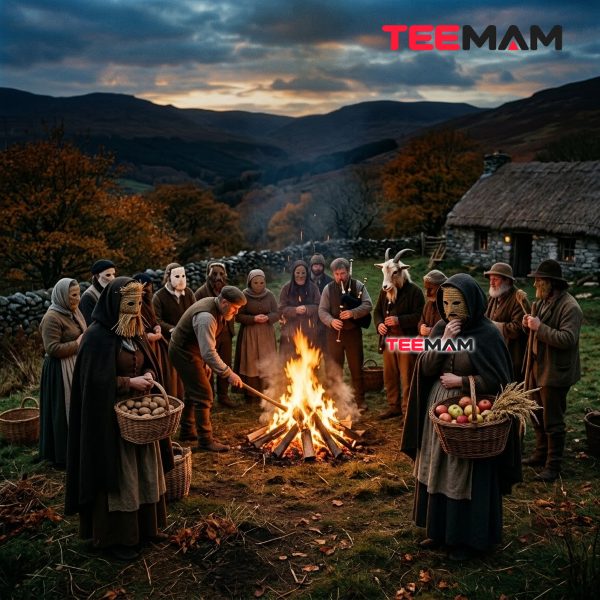
Long before the name All Hallows’ Eve appeared in English, Gaelic-speaking communities, particularly in Ireland and Scotland, marked the turning of the year with a festival called Samhain. HISTORY describes Samhain as a major festival observed by Celtic peoples roughly 3,000 years ago, tied to the end of the harvest and the beginning of the darker half of the year, and Britannica likewise traces Halloween’s roots to Samhain as observed among the Celts of ancient Ireland. Written evidence for Samhain is considerably later than the period in which the festival is thought to have developed, so modern descriptions often combine limited historical evidence with folklore recorded centuries afterward. The Library of Congress describes it as a celebration marking the end of the harvest season, during which people lit bonfires and wore costumes believed to ward off spirits. The word’s pronunciation varies by dialect and by which English-language guide you consult.
Traditional and later folkloric accounts describe Samhain as a time when the boundary between the world of the living and the dead was believed to grow thin. This belief is commonly associated with bonfires, disguises, and offerings of food, though the specific rituals varied by region. Much of what circulates today about Samhain’s finer details, particularly divination customs and specific supernatural encounters, comes down to us through 18th- and 19th-century folklore collectors rather than firsthand ancient sources; readers who enjoy that folkloric side of the season can find some of it retold in our scary Halloween stories to tell.
Did Halloween really come from Samhain? No, not as a direct, unbroken line. Samhain is an important historical influence, particularly through its seasonal timing and traditions associated with spirits, bonfires, and disguises. But Halloween is not simply Samhain wearing a costume of its own. A Celtic seasonal festival marking harvest’s end sat near the date the Christian church later designated for All Hallows’ Day; the two coexisted and intermingled for centuries in Ireland, Scotland, and parts of Britain; Roman festivals such as Feralia (commemorating the dead) and the celebration of Pomona, goddess of fruit and trees, added their own influence, with HISTORY noting that the incorporation of Pomona’s celebration likely explains the familiar tradition of bobbing for apples; and medieval, immigrant, and 20th-century American customs each layered more on top. Today’s Halloween is the accumulated result of these layers, not an unchanged continuation of any single ancient festival.
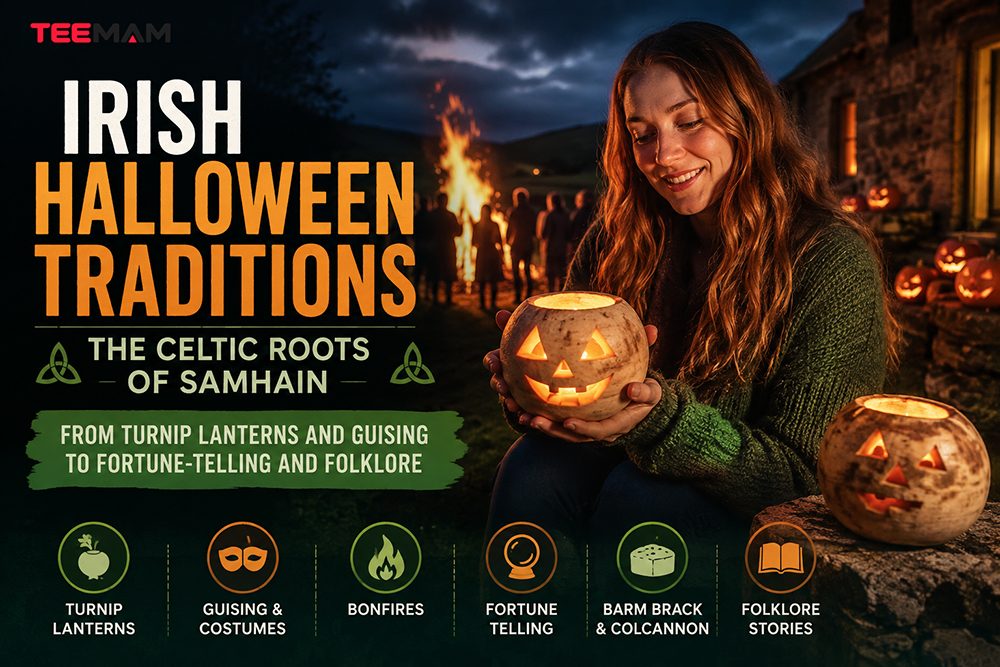
The costume tradition likely has more than one root, too. Disguising oneself to avoid being recognized by wandering spirits is a recurring theme tied to Samhain-era practices, while medieval mumming, in which costumed performers moved door to door putting on short plays or songs, added a separate tradition of disguise linked to winter and harvest festivities more broadly. Later Christian customs contributed their own costumed processions tied to Allhallowtide observances. Readers who want to go deeper on this specific thread can see our guide to Irish Halloween traditions and Samhain.
How Christianity Shaped All Hallows’ Eve
At its core, the all hallows eve meaning is inseparable from the Christian calendar that produced it. Once November 1 was fixed on the church calendar as All Hallows’ Day, the vigil evening before it took its name from the feast it preceded. Whether the church deliberately placed the feast on November 1 to replace or absorb Samhain is genuinely debated, and the two most common answers people repeat are both oversimplified. One says the timing was a deliberate substitution; the other says the dates are an unrelated coincidence. The evidence supports a middle ground: Christian and pre-Christian traditions overlapped and evolved together in the regions where both existed, while the exact motivation behind fixing the feast on November 1 remains an open question rather than a settled fact.
The name All Hallows’ Eve refers specifically to that vigil evening in the Christian calendar. Modern Halloween developed through additional folk, regional, immigrant, and commercial traditions layered on top of that religious observance over many centuries, and today’s celebration extends well beyond its liturgical starting point: from a religious vigil, to a night entangled with folk belief and remembrance of the dead, to a season of community gatherings and pranks, and eventually to the costume-and-candy holiday most Americans recognize now. Readers interested in how Halloween’s religious threads are treated in scripture and Christian tradition specifically can see our piece on Halloween’s meaning in the Bible.
What Historians Know—and What Remains Debated
Not every claim you’ll read about the all hallows eve meaning or Halloween’s history carries the same level of certainty. Here’s a rough guide to what’s well established versus what’s genuinely contested:
| Claim | Confidence |
|---|---|
| “Halloween” derives from “All Hallow(s) Even,” the vigil of All Saints’ Day | Well established |
| November 1 became linked to an all-saints observance under Pope Gregory III in the 8th century | Well established |
| Samhain was a significant Gaelic seasonal festival marking harvest’s end | Well established |
| Halloween developed through multiple, overlapping influences rather than one line of descent | Well established |
| Irish and Scottish immigrants carried Halloween traditions to the United States in the 19th century | Well established |
| The church deliberately set November 1 specifically to replace or absorb Samhain | Debated among historians |
| Modern trick-or-treating descends directly and exclusively from one ancient or medieval custom | Debated; most likely a blend of several practices |
| The Stingy Jack tale explains the exact origin of the term “jack-o’-lantern” | Popular folklore, not confirmed etymology |
From Souling and Guising to Trick-or-Treating
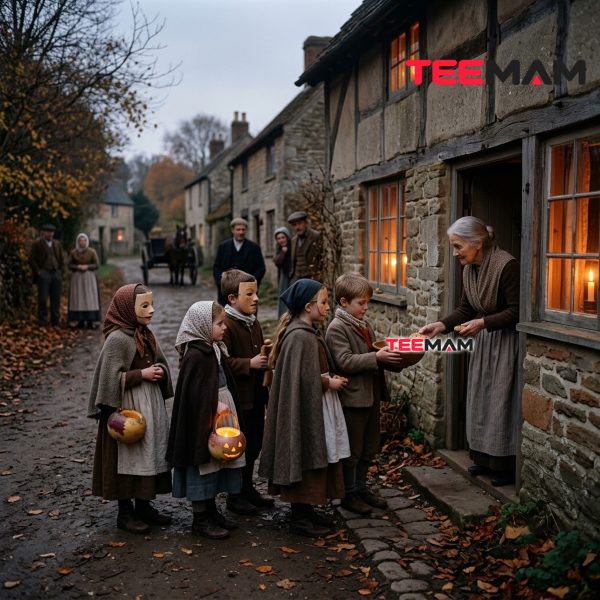
One of the clearest medieval threads leading toward modern trick-or-treating is a practice called souling. Poor people, often children, went door to door around All Souls’ Day offering prayers for the dead in exchange for small spiced cakes known as soul cakes. The Library of Congress connects souling directly to the roots of trick-or-treating, describing how the door-to-door structure carried forward into the modern tradition. A related but distinct custom, guising, involved children going door to door in costume and performing a song, poem, or trick for food or coins rather than offering prayers specifically; it was especially associated with Scotland and Ireland and blended more directly with Samhain’s disguise-focused customs.
Modern trick-or-treating didn’t spring fully formed from either one alone. HISTORY’s reporting on the tradition notes that its exact origin is genuinely complicated, pulling threads from ancient Celtic festivals, Christian holy days, medieval begging customs, and later British traditions, without a single clean line connecting them. The American timeline is better documented: some version of the phrase “trick or treat” was circulating in Canadian newspapers by the 1920s, and it began appearing regularly in American papers in the early-to-mid 1930s, tied to reports of Halloween pranks and organized attempts to redirect them. The custom spread through American communities during the 1930s and became increasingly established nationwide after World War II, and its growth in between was interrupted by wartime sugar rationing, which began in 1942 and lasted until 1947. After rationing ended, trick-or-treating expanded rapidly, while commercially packaged candy became an increasingly common, and eventually dominant, Halloween treat. Candy corn is one of the clearest examples of that shift; our history behind Halloween candy corn covers more of these small, surprising details.
Why Do We Carve Pumpkins on Halloween?
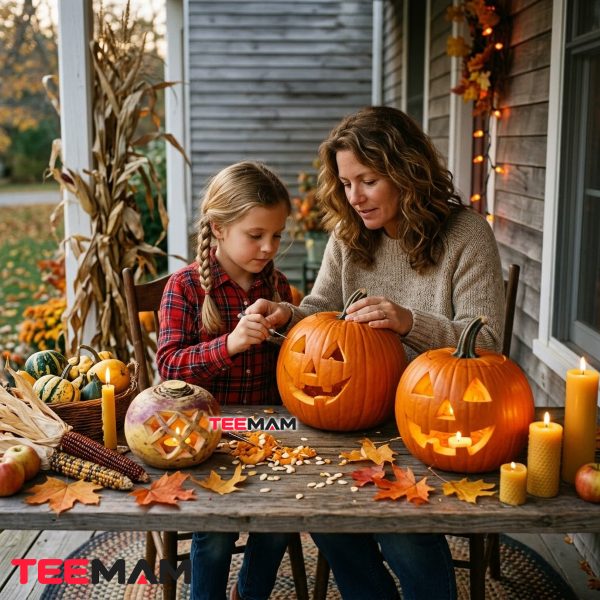
Before pumpkins became the standard, people in parts of Ireland and Scotland carved lanterns from turnips and other root vegetables. Merriam-Webster describes one theory tracing the illuminated pumpkin back to a Celtic pagan practice of hollowing out root vegetables, carving faces into them, and lighting them with coal or candles to ward off evil spirits, a custom later carried forward by Christians during All Hallows’ Eve observances. A related Irish folk tale about a man known as “Stingy Jack” adds the second half of the name: according to the story, Jack tricked the devil and, after death, was left to wander the earth with only a hollowed-out, ember-lit turnip to light his way, earning him the nickname “Jack of the Lantern.” Worth being precise here: the Stingy Jack tale is genuine Irish folklore, not documented history, and its role in the term “jack-o’-lantern” is a widely repeated theory rather than a proven origin.
When Irish and Scottish immigrants arrived in the United States, turnips were far less available than they had been at home, while pumpkins, which were widely available in North America, were abundant. It’s likely that immigrants brought the carving-and-lighting custom with them and substituted the larger, easier-to-carve pumpkin once turnips proved scarce. Pumpkins also fit neatly into an American autumn agricultural calendar already built around harvest imagery, and as the custom spread, the image traveled quickly through print advertising and postcards, cementing the jack-o’-lantern as one of the holiday’s most recognizable symbols. Our guide on the history of the Halloween jack-o’-lantern walks through that transatlantic shift in more detail.
Why Do We Dress Up for Halloween?
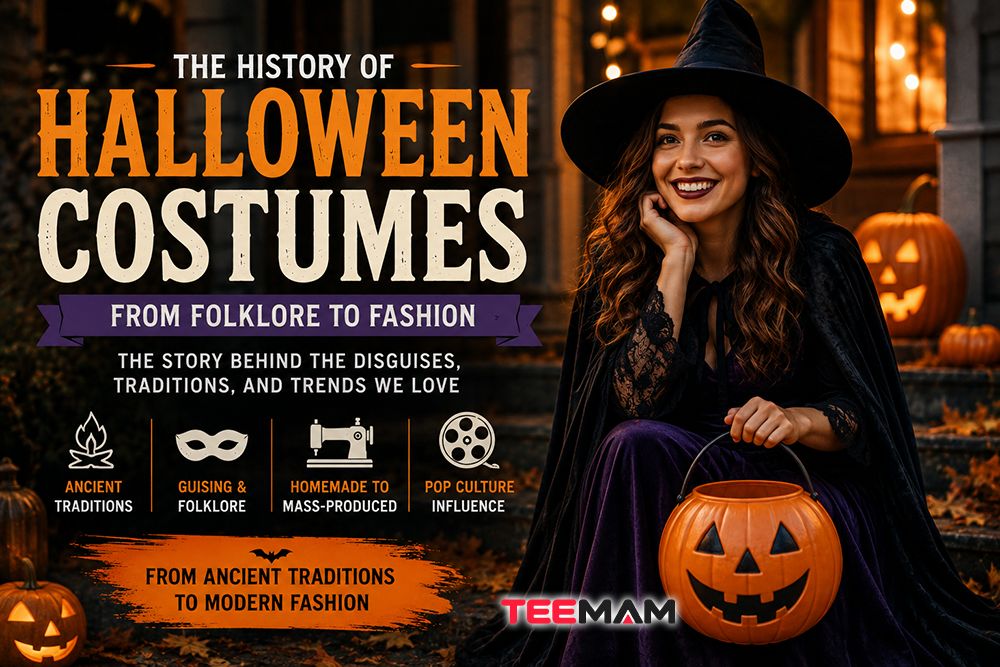
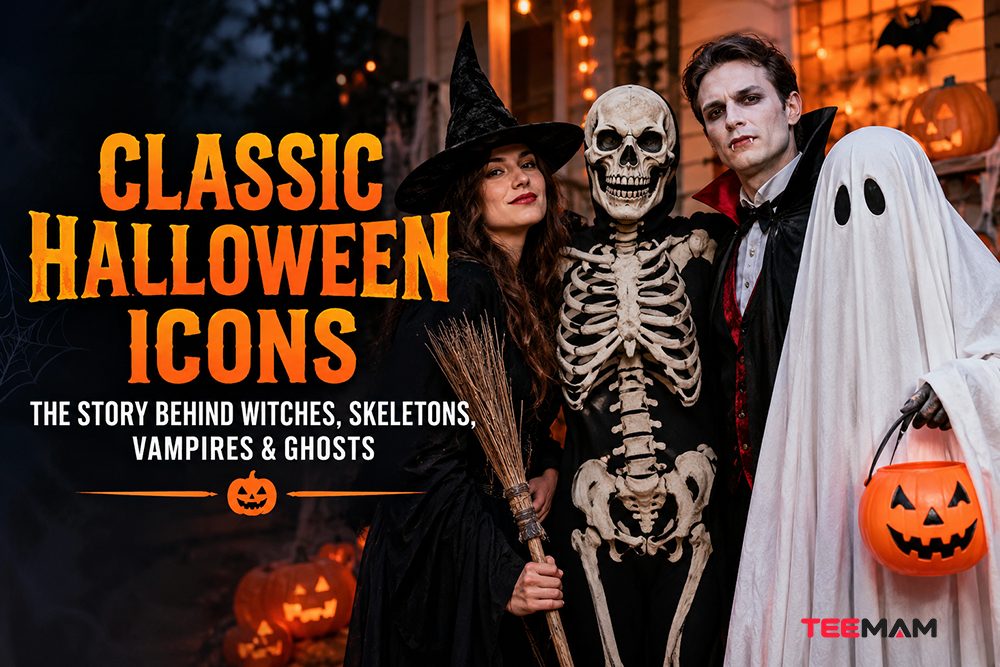
Costume traditions on Halloween pass through several stages: protective disguise tied to Samhain-era beliefs, guising practices that added performance and reward, medieval mumming and masking tied to winter and Allhallowtide observances, and eventually the theatrical, then commercial, costume industry that emerged in the 20th century. Each stage layered onto the last rather than simply replacing it, which is part of why Halloween costumes today can range from something genuinely folkloric, a witch, a ghost, a skeleton, to something that has nothing to do with the holiday’s older history at all, a licensed movie character or a pop-culture reference from the last few years. Supernatural imagery (ghosts, witches, skeletons, black cats, and bats) became closely associated with the holiday through a combination of genuine folk belief, Gothic literature popular in the 19th century, and decorative postcard art that circulated around the turn of the 20th century; black cats in particular were traditionally believed to assist witches, a superstition that shows up repeatedly in early Halloween postcard imagery. Our history of Halloween costumes traces how those images evolved decade by decade.
Homemade costumes and paper masks dominated the early 20th century before manufactured costume companies began mass-producing options tied to popular characters starting in the 1930s, a trend that television and film accelerated through the rest of the century. That commercial thread continues today in a different form: costumes remain popular, but many families now also mark the season through graphic tees, sweatshirts, and matching sets worn well past a single trick-or-treating night, at a pumpkin patch, a family gathering, or a casual weekend outing. That evolution also explains why Halloween apparel has become part of the modern season, with familiar seasonal imagery extending beyond a single night. At Teemam, we design Halloween apparel around that same idea; our Halloween apparel for spooky season collection is one example of that shift, and our overview of classic Halloween symbols covers the recurring visual language of the season more broadly.
How Halloween Came to America
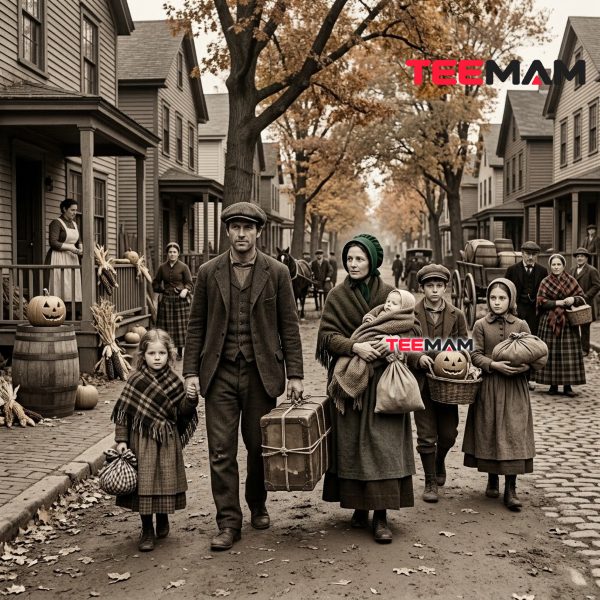
Halloween’s American story begins with immigration. Scots-Irish settlers had arrived in America through the 18th century, but the holiday’s larger cultural footprint traces to the much bigger wave of Irish immigration following the Irish Potato Famine of the late 1840s, along with continued British and Irish immigration that peaked in the 1880s. These communities brought Samhain-rooted customs, All Hallows’ Eve traditions, and practices like guising and mischief-making with them. Early American Halloween celebrations leaned heavily on community gatherings, harvest-season storytelling, fortune-telling games, and pranks rather than the trick-or-treating structure familiar today. Irish and Scottish immigrants specifically brought the tradition of “Mischief Night,” a night of good-natured pranks that became associated with the evening before Halloween in many American communities. As these communities integrated more broadly into American life through the late 19th and early 20th centuries, their customs blended with wider community celebration culture: church socials, school parties, and neighborhood gatherings absorbed and reshaped the older traditions into something distinctly American, including organized Halloween parties designed partly to channel younger participants’ energy away from destructive pranking. For modern gatherings that carry on that same party tradition, our Halloween group costume inspiration is one resource for planning larger gatherings.
Postwar suburban growth then helped create an environment especially well suited to the holiday’s modern form: front lawns, porches, and quiet residential streets built almost perfectly for trick-or-treating routes and block-by-block participation. Horror films, animated specials, seasonal television, and Halloween-themed music reinforced and reshaped the holiday’s imagery for decades, turning October into a media season of its own; Tim Burton’s The Nightmare Before Christmas helped make “This Is Halloween” one of the most recognizable modern Halloween songs, and our story behind This Is Halloween looks at how it became so closely tied to the season. Orange and black’s association with the holiday grew out of straightforward symbolic logic (orange echoes harvest and autumn foliage, black carries the holiday’s older ties to night and mortality) and became standardized through decades of decorations, packaging, and advertising rather than any single deliberate decision.
From Community Celebrations to Commercialization
By the early 20th century, schools, civic groups, and parents increasingly promoted supervised Halloween celebrations, parties, parades, and organized trick-or-treating, as a way to move the holiday away from destructive pranks and toward safer, sponsored activities. That shift opened the door for retailers: costume manufacturers, candy companies, and greeting-card publishers built entire product lines around the holiday through the mid-20th century, and Halloween has grown into one of the largest seasonal retail categories in the United States, spanning costumes, candy, decorations, and now apparel worn well beyond a single night. Families looking to mark the season with something for the people around them can find a starting point in our Halloween gift ideas for everyone.
All Hallows’ Eve vs. Halloween, at a Glance
| Term | Meaning | Historical context |
|---|---|---|
| All Hallows’ Eve | The older Christian calendar name for the evening before All Saints’ Day | The traditional English name for October 31, predating “Halloween” |
| Halloween | Contracted, modern form of the same name | Today’s secular, cultural holiday, shaped by centuries of folk, immigrant, and commercial tradition |
Halloween and Día de los Muertos Are Not the Same Holiday
Halloween and Día de los Muertos (Day of the Dead) are often grouped together simply because they land on nearby dates and both touch on themes of death and remembrance, but they come from different histories. Día de los Muertos is a Mexican tradition shaped by Indigenous Mesoamerican practices and centuries of Catholic influence, with observances that vary by community and region, generally held around November 1 and 2 and centered on joyfully welcoming the spirits of deceased loved ones home through ofrendas, marigolds, and family gatherings, often at gravesites. Halloween, by contrast, developed primarily in Ireland, Scotland, and England before crossing to America, and its modern form leans far more toward costumes, candy, and community celebration than direct ancestor veneration. Shared imagery, skulls, spirits, candles, doesn’t make the holidays interchangeable; our comparison piece, Halloween versus Día de los Muertos, goes deeper into where they diverge.
How Families Celebrate Halloween Today
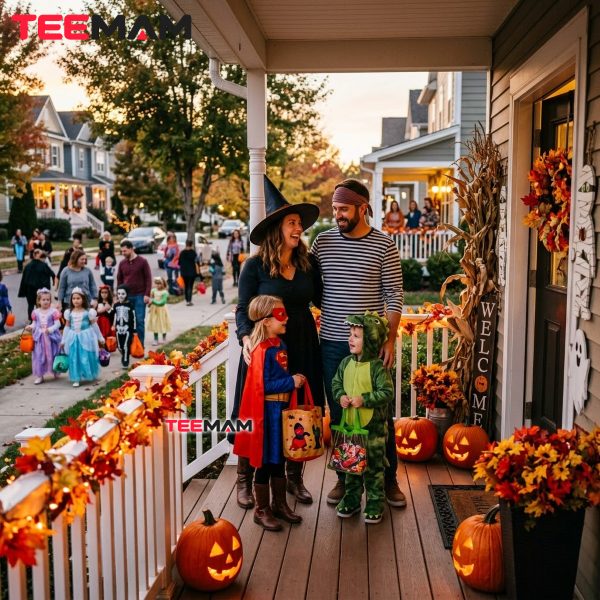
For most American families, Halloween still centers on trick-or-treating: costumes chosen weeks in advance, a route planned around the best-decorated streets, and a candy haul that somehow always needs “checking” by a parent before bedtime. Pumpkins on the porch, string lights, and an orange-and-black color scheme have become standard markers of a house joining the season, often going up weeks before October 31 arrives; our piece on the meaning behind Halloween colors covers why that palette in particular became standard. In many communities, trunk-or-treat events, where decorated car trunks in a parking lot substitute for door-to-door trick-or-treating, offer a well-lit alternative, especially for families with very young children; our complete trunk-or-treat guide covers how to plan or attend one.
A Halloween movie night rounds out the season for many households, and our best family Halloween movies list is built for mixed-age viewing. Some communities take the celebration further into public life: Salem, Massachusetts, has become one of the country’s most recognizable Halloween destinations, its October calendar strongly shaped by the city’s history, including the 1692 witch trials, and our Salem Halloween guide for visitors covers what to expect. New York City’s Greenwich Village Halloween Parade has become one of the country’s best-known public Halloween celebrations, and our Village Halloween Parade guide breaks down the logistics for anyone hoping to attend.
Plenty of the season’s traditions are simply for fun at home. Our funny Halloween dad jokes and best Halloween quotes are built for texting friends or captioning photos. For anyone hosting a party, our funniest Halloween memes and Halloween riddles with answers are easy ways to keep guests entertained between rounds of candy.
What All Hallows’ Eve Means Today
Modern Halloween makes more sense once you stop looking for a single starting point in the all hallows eve meaning. Its seasonal background reaches back to Samhain and the Gaelic marking of harvest’s end. Its name comes from the Christian calendar, the vigil before All Saints’ Day. Medieval customs contributed practices like souling and guising. Irish and Scottish immigrants carried those traditions into the United States in the 19th century, and 20th-century American communities reshaped the holiday again through parties, costumes, trick-or-treating, candy, and popular culture. Words like haunted, spooky, eerie, and creepy have become part of that everyday vocabulary, rounded up in our spooky Halloween vocabulary guide.
That history explains why Halloween can feel both ancient and unmistakably modern at once. A jack-o’-lantern echoes a lantern tradition rooted in Irish folklore, while the costume next to it might come from a movie released only a few years ago. The holiday has remained culturally durable in part because its symbols and traditions have continued to change.
Frequently Asked Questions
What does All Hallows’ Eve mean? The all hallows eve meaning is “the evening before All Hallows’ Day,” the older name for All Saints’ Day, observed on November 1. “Hallow” means holy or saint, and “eve” marks the vigil evening before that feast.
When is All Hallows’ Eve? All Hallows’ Eve is observed on October 31, the evening before All Saints’ Day on November 1.
Why is Halloween called Halloween? Halloween comes from “All-Hallow-Even,” meaning the evening before All Hallows’ Day, which is now known as All Saints’ Day. The name was shortened over time, first to “Hallowe’en” and eventually to “Halloween.”
Is All Hallows’ Eve the same as Halloween? Yes, in modern usage. All Hallows’ Eve is the older, fuller religious name; Halloween is the contracted form that developed over centuries of common use.
Why is October 31 called All Hallows’ Eve? Because November 1 was designated All Hallows’ Day, and major Christian feasts traditionally opened with a vigil the evening before, giving October 31 its name as that eve.
What does the word hallow mean? It comes from the Old English hālig, meaning holy. As a noun it once meant a saint or holy person, which is why the day honoring all saints was called All Hallows.
Is All Hallows’ Eve a Christian holiday? The name and the original observance are Christian in origin. Modern Halloween has since evolved into a largely secular cultural holiday shaped by additional folk, immigrant, and commercial influences layered on top of that religious starting point.
Did Halloween come directly from Samhain? Not as a direct, unchanged line. Samhain is a significant influence, particularly its seasonal timing and its association with spirits, but Halloween also developed through the Christian calendar, medieval customs, immigrant traditions, and 20th-century American commercial culture.
When did Halloween become popular in America? Irish and Scottish immigrants brought Halloween traditions to America in the 19th century, especially after the Irish Famine of the 1840s, but the holiday’s organized, trick-or-treat-centered form largely took shape in the 1930s and expanded after World War II.
Why do people carve pumpkins for Halloween? The modern pumpkin-carving tradition is generally linked to earlier Irish and Scottish practices of carving and illuminating turnips and other root vegetables, tied to the folk tale of Stingy Jack. When Irish and Scottish immigrants found turnips scarce in America but pumpkins plentiful, they adapted the custom to the larger, easier-to-carve pumpkin.
What’s the difference between All Hallows’ Eve and Samhain? All Hallows’ Eve is a Christian calendar term for the evening before All Saints’ Day. Samhain is an older Gaelic seasonal festival that predates it and shares the same general date. The two traditions coexisted and influenced each other over centuries rather than one simply replacing the other.
What is the difference between All Saints’ Day and All Hallows’ Eve? All Saints’ Day is the November 1 feast itself, honoring all Christian saints. All Hallows’ Eve is the vigil evening before it, October 31, which later developed into the modern Halloween holiday.
Conclusion
In simple terms, the all hallows eve meaning is the evening before All Saints’ Day, and it falls on October 31. Its name is Christian, but the Halloween celebrated today reflects centuries of Gaelic, medieval, immigrant, and American traditions layered onto that original calendar date. In the medieval Christian calendar, All Hallows’ Eve pointed toward the feast of All Saints’ Day. In Ireland and Scotland, older seasonal customs tied to Samhain continued alongside Christian observance. In America, immigrant traditions became neighborhood celebrations, then the familiar mix of costumes, candy, pumpkins, parties, and popular culture. Understood this way, the all hallows eve meaning isn’t a single fact so much as a record of everything the holiday has absorbed along the way: a Celtic harvest festival, a Christian vigil, centuries of folk custom, an immigrant tradition, and a distinctly American holiday built from all of it.

Hi, I’m Olivia Bennett, a fashion and lifestyle writer at TeeMam with 6 years of experience creating content about fashion, outfits, and lifestyle trends. I enjoy sharing practical style ideas for everyday wear, game days, holidays, and special occasions, helping readers find looks that feel comfortable, fun, and uniquely their own.