Scary Halloween Stories to Tell in the Dark
Looking for scary stories Halloween audiences will actually remember? The best choices are short, easy to retell, and built around suspense rather than gore. This guide covers kid-friendly ghost stories, classic urban legends, psychological horror for adults, two-sentence scares, and the delivery tricks that make each one land.
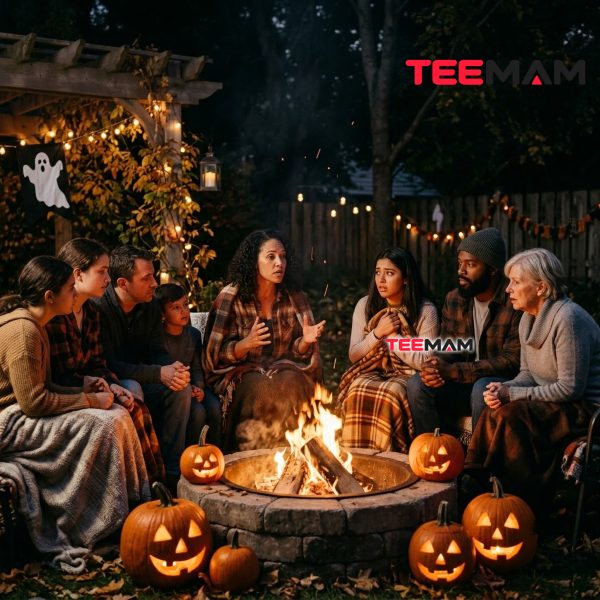
I once completely ruined a campfire story. I rushed the ending, talked too fast, and instead of the scream I was hoping for, I got a room full of people just staring at me, waiting for a punchline that never came. It taught me something every good storyteller eventually learns the hard way: the best scary Halloween stories aren’t about how much blood they contain. They’re about pacing, and about the few seconds of silence right before the twist.
That’s the idea behind this list. If you’re searching for scary Halloween stories that people will actually sit still and listen to, not just something to skim, what follows is sorted by audience and scare level, along with the delivery tricks that turn an okay story into the one people bring up again next year. Whether you’re hosting a sleepover, gathered around a fire pit, or dimming the lights at a Halloween party, there’s something here built for the room you’re in.
Editor’s note: The scariest Halloween stories rarely rely on gore. They rely on a familiar setting, one detail that doesn’t belong, and a sudden drop in the storyteller’s voice right before the silence.
How to Choose the Right Halloween Scary Story
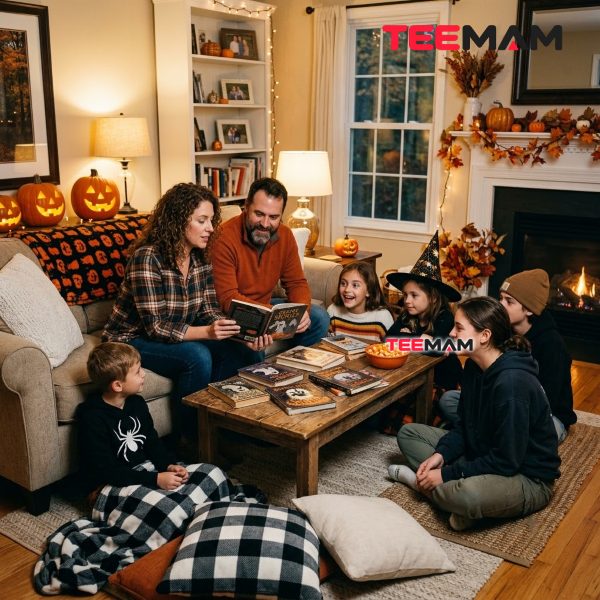
Not every scary story belongs in every room. A tale that delights a group of ten-year-olds can fall flat with adults, and a story built for adults can genuinely spook a kid who wasn’t ready for it. The scary stories Halloween calls for at a family dinner table are rarely the same ones that land at a teenage sleepover, so before you pick one, take a beat and think about who’s listening, where you are, and how frightened you actually want the room to get.
Age and comfort level matter first. Kids tend to do best with mystery and mild suspense rather than anything graphic. Tweens can handle a little more tension and an ending that stays unresolved. Teens usually enjoy classic urban legends with a sharp twist, and adults often want something closer to psychological horror, where the fear comes from what’s implied rather than what’s shown outright.
Where you’re telling the story matters just as much. A campfire story benefits from real darkness beyond the flames. A sleepover story works best in a smaller, quieter room where whispering feels natural. A Halloween party story needs to survive over background noise, which usually means shorter and punchier. A late-night living room story can afford to move slower and lean into atmosphere.
Here’s a quick way to match a story to your crowd:
| Scare level | Best for | Story style |
|---|---|---|
| Mild | Kids, family gatherings | Ghosts, gentle mystery |
| Medium | Teens, mixed groups | Urban legends, twist endings |
| High | Adults, late-night groups | Psychological horror, ambiguity |
A good Halloween scary story is easy to follow without much setup, builds tension gradually instead of front-loading the scare, uses a setting the listener already recognizes, and lands on something they didn’t see coming. Match that shape to the right audience, and almost any story will land.
Mild Scary Halloween Stories for Kids and Families
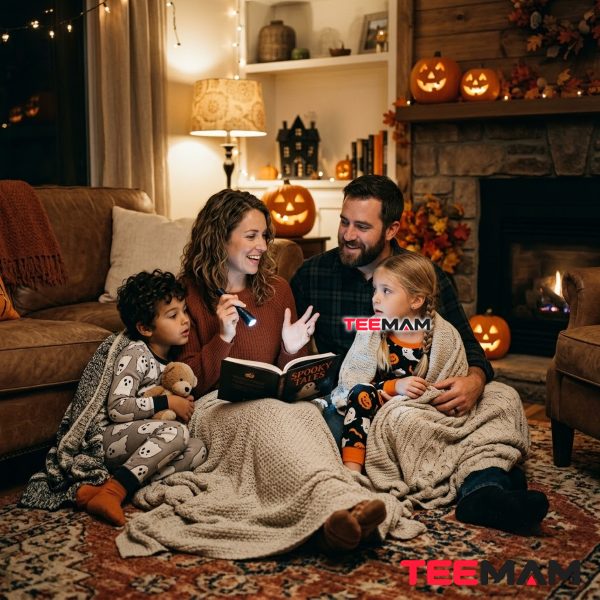
These are original stories built for atmosphere over shock, meant to be told slowly, with your voice dropping near the end. They’re the kind of scary Halloween stories families with young kids can actually enjoy without turning bedtime into a problem.
The Ghost at the Window. A little girl notices a pale face watching her from the upstairs window every night at exactly nine o’clock. Her parents insist no one lives on that side of the house. One night she finally waves back, and the face waves too, from the inside of her own room. Say “nine o’clock” slowly, and let a few seconds of quiet sit before the last line.
The Empty Chair. At a family dinner, there’s always one extra chair at the table, set with a plate, just in case. No one remembers when the tradition started or who it’s for. One Halloween, the youngest child finally asks why, and the oldest relative at the table glances at the chair and says only, “Because she gets upset if we forget.” Don’t explain who “she” is. Let the sentence hang there and move on. The audience will do the frightening part for you.
The Footsteps Upstairs. A babysitter hears slow footsteps crossing the floor above her, back and forth, all evening. She assumes it’s the kids messing around before bed. When she finally checks, both children are asleep, and the room above the living room has been locked and empty since the family moved in. This one is best told in a house the listeners actually know, because the fear comes from a familiar floor plan turning strange.
For younger listeners, delivery does more work than plot. Keep the room dim rather than pitch black, lower your voice as you approach the ending, pause before the reveal, and skip anything violent or bloody. For families, the best scary stories Halloween has to offer for kids usually keep the tension high without relying on graphic detail, and kids are often more unsettled by what they have to imagine than by anything you could describe outright.
Classic Scary Stories for Teens and Sleepovers
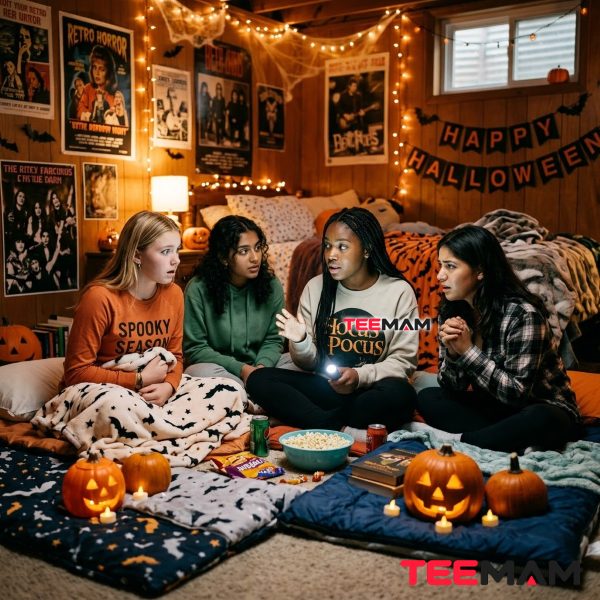
The next three draw on the kind of urban legends that have circulated through American oral tradition for decades, retold at sleepovers with the names and details shifting depending on who’s telling it. For anyone hunting down scary stories Halloween sleepovers have leaned on for generations, these three are a solid place to start, long before anyone had a phone to record them on.
The Faceless Hitchhiker. A classic urban legend. A driver picks up a hitchhiker on a lonely road late at night. The passenger gives directions to a house a few miles ahead and says almost nothing else. When the driver glances over to ask a question, the passenger seat is empty, the door still closed, the seatbelt still buckled. At the house, an old woman answers and says her daughter died on that road exactly one year ago tonight, wearing the same jacket the hitchhiker had on.
The Babysitter and the Man Upstairs. A classic American urban legend that has circulated in multiple forms for decades. A babysitter starts getting phone calls from a man asking, “Have you checked on the children?” She hangs up, annoyed, until she finally calls the police, who trace the calls to an extension inside the house. It’s a widely retold legend in American horror, and its core premise, a threat you assume is outside turning out to already be inside, later became a familiar setup in horror films. Its staying power comes from that simple reversal: the danger was never where you were looking.
The Voice From the Closet. A teenager staying home alone hears a voice from the closet, counting slowly upward: “Ten… I’m getting closer… nine… eight…” She calls the police, who tell her to leave immediately without looking back. As she runs from the house, she hears the count reach one right as the front door slams behind her.
What makes urban legends like these so durable is how ordinary they start. A car ride, a babysitting job, a bedroom after midnight, all recognizable enough that the listener can picture themselves there. One detail breaks that sense of safety, and by the time you realize what changed, the story has already gotten under your skin. That “this could happen to me” quality is what keeps these stories feeling personal instead of distant. (Dive into our guide on Halloween traditions and origins to see how tonight’s campfire ghost story traces back centuries.)
If you want a written source rather than an oral one, Alvin Schwartz’s Scary Stories to Tell in the Dark collected many of these same American folk legends into a series that’s been introducing kids to campfire horror since 1981, and it’s still a solid place to find source material if you’d rather adapt a classic than write your own.
Storytelling itself is older than any of these specific legends. Halloween has roots in several older traditions, including the Celtic festival of Samhain and the Christian observances of All Hallows’ Eve and All Saints’ Day, which over time blended with later European customs to shape the holiday as it’s celebrated today. Long before doorbell cameras and phone screens, people were already gathering after dark to tell each other stories about who or what might be crossing over. The technology changes. The instinct to sit in the dark and scare each other on purpose hasn’t.
Terrifying Halloween Stories for Adults
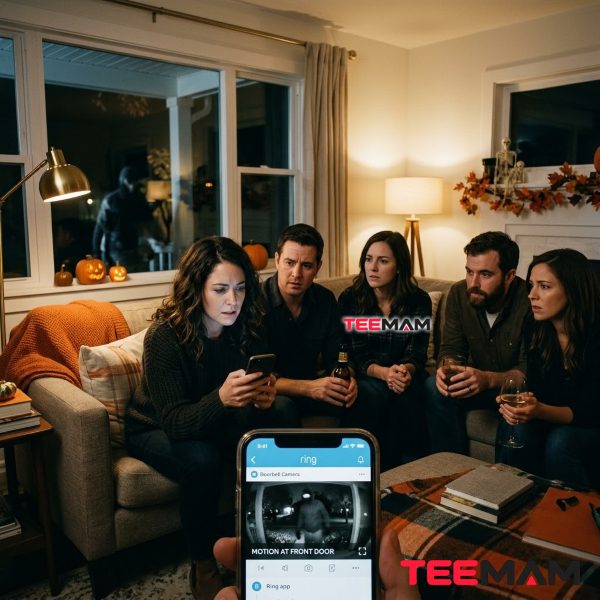
A generic ghost drifting down a hallway doesn’t do much for most adults anymore. But a notification from your own doorbell camera at 3 a.m., showing someone you don’t recognize standing perfectly still? That lands differently. These three original stories are built for the kind of late-night Halloween gathering where adults want the scary stories Halloween nights are remembered for, something more unsettling than a traditional ghost tale, leaning into modern technology and ambiguity instead of classic haunting.
The Smiling Man on the Doorbell Camera. A woman checks her doorbell app after a notification wakes her at 2 a.m. A man she doesn’t recognize is standing on her porch, smiling directly into the camera. The next morning, she reviews the footage again and finds the same man, in the same spot, in a recording from three nights earlier that she never noticed before.
Someone Is Standing Behind You. You’re home alone, reading in a quiet room, when the temperature drops slightly and the room goes unnaturally still. You feel, more than hear, that someone is standing directly behind your chair. You never turn around. You never find out if you were right. Tell this one almost in a whisper, and leave the ending unresolved on purpose.
The Last Message. A man is scrolling through his late father’s old phone, months after the funeral, mostly out of habit, when a new text arrives from his father’s number. It reads only: “I’m almost there.” The timestamp shows it was sent two minutes ago.
A visible monster gives people one thing to picture. An unexplained sound, message, or shadow gives them room to imagine something worse. A dark phone screen, an unexplained notification, or a face on a camera you can’t quite place tends to linger longer than any creature you could actually see clearly, which is part of why blending everyday technology into a classic ghost-story structure often feels fresher than another retelling of a legend everyone’s already heard.
Instant Scares and Short Stories for Halloween
Sometimes you don’t want a long build. For anyone searching for scary stories Halloween groups can tell in just a few minutes, these shorter formats fit between rounds of a game or right before everyone heads home.
Instant scares (10 to 20 seconds). The Reflection: A woman brushing her teeth notices her reflection blink half a second after she does. The Text: You get a message from a friend who died last year. It just says, “Can you let me in?” The Photo: A family photo from last Halloween shows a fourth person standing behind everyone. No one remembers who that was.
Short stories (1 to 2 minutes). The Camp Counselor’s Warning: Every year, a counselor tells new campers never to leave the trail after dark, because a camper who wandered off years ago was never found, only her flashlight, still switched on, propped up and facing the woods. The Missing Marker: A hiking trail has 12 numbered posts. Every hiker who counts only 11 on the way back can never explain what happened between them.
Campfire stories (3 to 5 minutes). The House That Isn’t There: A group of friends dares each other to knock on the door of an abandoned house at the edge of town, and the porch light switches on the moment they step onto the property, a curtain moves behind the window, in a house that’s been condemned for eleven years. The Last One to Leave: At a Halloween party, someone starts a game where the final guest has to turn off every light in the house alone before leaving. No one at this year’s party can quite remember who volunteered to go first, or whether that person ever actually made it home.
| Format | Approximate telling time | Best for |
|---|---|---|
| Instant scare | 10-20 seconds | Quick jolts between activities |
| Short story | 1-2 minutes | Sleepovers, small groups |
| Campfire story | 3-5 minutes | Immersive group storytelling |
Two-Sentence Horror for a Quick Halloween Scare
Two-sentence horror is a recognizable short-form horror format that’s become popular online because it delivers a complete scare with almost no setup. The rule is simple: imply, don’t describe.
- I tucked my daughter into bed and told her nothing was under it. Something under the bed agreed.
- The graveyard shift always ends at 6 a.m., but tonight the clock has been stuck on 3 a.m. for the last hour.
- I found an old photo of my house from before we moved in. Someone was already sitting in my chair.
- My phone’s flashlight turned on by itself in the middle of the night. It was pointed at the closet.
- I always leave a light on for my cat when I go out. Tonight it was off, and I don’t own a cat.
A single unexplained detail is usually scarier than a full paragraph could ever be.
How to Tell Scary Stories in the Dark
Delivery matters more than plot for most short-form horror. Slow your pace as you approach the twist, drop your voice instead of raising it, and let a few seconds of real silence sit before the final line. That combination does more work than any extra sentence of description ever could.
A dim room, not a pitch-black one, gives listeners just enough to imagine the rest. A flashlight held under your chin can create a surprisingly effective visual effect. So does the sound of a real fire crackling, a door creaking somewhere in the house, or wind outside a window. None of it requires props. It just requires you to notice what’s already in the room and use it.
The single biggest mistake most storytellers make is naming the threat too early. “There was a monster in the closet” tells the audience exactly what to fear. Leaving it vague, a shape, a sound, a shift in temperature, almost always scares people more, because their imagination fills in something worse than anything you could have described.
Set the Scene: Cozy Horror for Halloween Storytelling
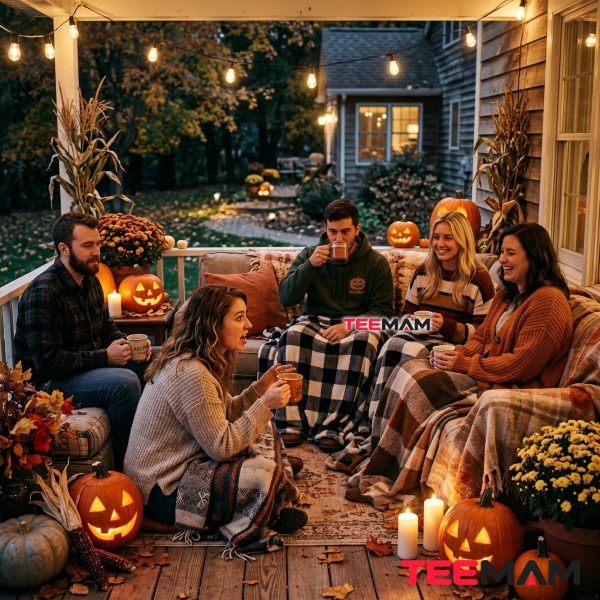
Horror works surprisingly well in a comfortable room, and that contrast is exactly what people mean when they talk about “cozy horror.” Give everyone a blanket, something warm to drink, and just enough light to still feel safe, then let the story create all the discomfort.
Warm lighting instead of overhead lamps, a pile of blankets, candles or battery-powered lights if you’re outside, mugs of hot cider or cocoa passed around, s’mores if you’re near a fire. If you’re setting up outdoors, a few simple seasonal touches, like pumpkins, jack-o’-lanterns, and warm string lights, help the space feel festive without much effort. A cozy Halloween hoodie, a soft throw blanket, or a favorite spooky-themed mug can round out the setting without pulling focus away from the story itself.
Pair the Stories With a Few Other Halloween Traditions
A storytelling night rarely stands entirely on its own. Most groups mix it with a few other low-key activities before or after the stories start.
A quick round of trivia works well while everyone’s still settling in and the lights haven’t gone down yet. If your group is into that, it’s worth taking a minute to test your Halloween trivia knowledge before the storytelling starts.
Horror and comedy sit closer together than people expect, and a laugh between two intense stories genuinely resets the mood so the next one lands harder. It’s a good excuse to share funny Halloween memes during a lull.
Once the stories wind down, plenty of groups keep the night going with a movie instead of ending things cold. If you’re planning that far ahead, it helps to find family Halloween movies that match whatever scare level the group just went through.
The Five Ingredients Behind a Good Scare
Ever notice how some stories stick in your head long after the lights come back on, and others just fade by morning? It’s rarely the monster itself. It’s the unsettling feeling of something ordinary turning wrong: a familiar ringtone at 3 a.m., a shadow in your own hallway, a chair that’s suddenly empty when it shouldn’t be.
| Ingredient | What it does | How to use it |
|---|---|---|
| Familiarity | Makes the danger feel personal | Set the story in a bedroom, car, or phone |
| Suspense | Keeps the audience engaged | Delay the reveal instead of rushing to it |
| Silence | Builds anticipation | Pause for two or three seconds before the twist |
| Uncertainty | Activates the imagination | Leave one detail deliberately unexplained |
| Twist | Reframes the whole story | Change what the listener thought was true |
If you want a simple shape to build your own story around, try this five-beat structure:
- Normal — introduce something ordinary.
- Wrong detail — add one detail that doesn’t belong.
- Confirmation — give a second clue that something is genuinely wrong.
- Silence — stop explaining and let it sit.
- Reveal — deliver the twist that reframes everything the listener just heard.
It’s the same rhythm behind most of the stories in this list.
Research on recreational fear points to why this rhythm works on us. Sociologist Margee Kerr, who studies fear at the University of Pittsburgh, has spent years looking at why people voluntarily seek out scary experiences like haunted attractions. A separate field study of 110 visitors to a haunted attraction, published in a peer-reviewed journal, found that enjoyment followed an inverted-U pattern: fear that felt too mild wasn’t very fun, fear that felt overwhelming wasn’t fun either, and the experiences people rated highest sat somewhere in between, strong enough to feel exciting, not so intense that it tipped into genuine distress.
Questions Readers Ask About Halloween Scary Stories
What is a good scary Halloween story? Scary stories Halloween audiences remember are usually short enough to hold attention, simple enough to retell without notes, and suspenseful enough to keep listeners guessing. The strongest picks use a familiar setting, one unsettling detail, and a final reveal that changes how the audience understood everything before it.
What are some short scary stories for Halloween? Two-sentence horror, quick instant scares, and classic urban legends like The Faceless Hitchhiker or The Babysitter and the Man Upstairs all work well in under two minutes. For younger listeners, stick with mystery-driven stories that build suspense without graphic detail, like The Ghost at the Window.
What makes a Halloween story scary? Suspense, a familiar setting, unanswered questions, an unexpected twist, and suggestion rather than explicit description. Stories that explain too much tend to feel less frightening than ones that leave a gap for the imagination to fill.
How long should a Halloween scary story be? As a rough guide, 10 to 20 seconds works for a quick jolt between activities, 1 to 2 minutes suits sleepovers and small groups, and 3 to 5 minutes fits immersive campfire storytelling where the group has time to settle in.
Are scary Halloween stories suitable for kids? Yes, as long as they’re matched to the child’s age and comfort level. Mild, mystery-driven stories without graphic detail work well for younger kids, while teens can usually handle classic urban legends with a sharper twist.
Where are the best places to tell scary stories? Campfires, sleepovers, dimly lit living rooms, and Halloween parties all work, though each setting favors a slightly different pace and story length.
Make Your Halloween Storytelling Night Memorable
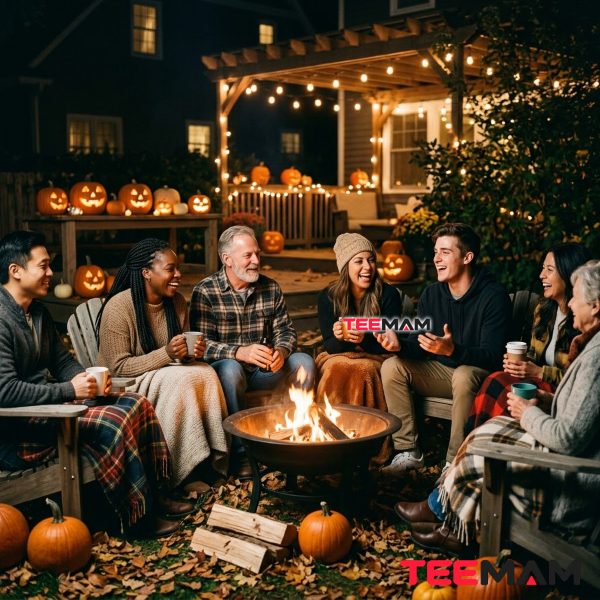
The best Halloween storytelling nights aren’t the ones with the goriest tale. They’re the ones where the room actually goes quiet for a second before everyone laughs it off together. Whatever scary stories Halloween brings to your night this year, pick one that fits your crowd, respect the pacing, and let the silence do some of the heavy lifting.
At TeeMam, we see Halloween as a chance to make an ordinary fall night a little more memorable, especially when a good story gives everyone something to laugh about afterward.
Pick a story, turn down the lights, and let the room do the rest.

Hi, I’m Olivia Bennett, a fashion and lifestyle writer at TeeMam with 6 years of experience creating content about fashion, outfits, and lifestyle trends. I enjoy sharing practical style ideas for everyday wear, game days, holidays, and special occasions, helping readers find looks that feel comfortable, fun, and uniquely their own.