75 Halloween Trivia Difficult Questions to Really Test Your Group
Looking for halloween trivia difficult enough to actually make people think? This collection has 75 questions spanning Halloween history, folklore, horror movies, candy, and traditions from around the world.
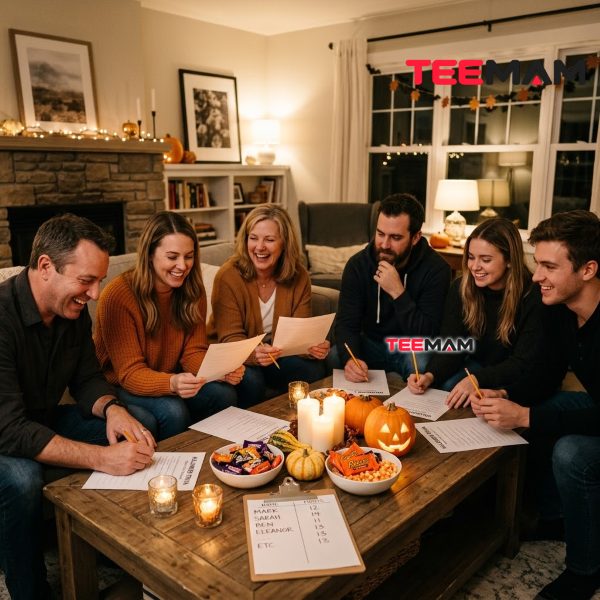
The game starts accessible in round one, then gets progressively harder through the folklore, movie, and expert rounds. You can run through it solo to see how you score, split a table into two teams for a party, or print the questions for a proper trivia night. Every answer comes with context, so you are not just memorizing a fact, you are picking up the story behind it. With six rounds, tie-breakers, and answer explanations, this halloween trivia difficult enough for serious players can comfortably fill a longer trivia session.
How Difficult Is This Halloween Trivia?
Not every question here is meant to stump a room. A good trivia night needs some easy wins early on, or half the players check out before round two. Here is how the difficulty breaks down.
| Level | What to Expect | Suggested Players |
|---|---|---|
| Challenging | Basic Halloween knowledge is enough | Families with kids |
| Difficult | Requires some cultural or historical background | Adults and teens |
| Expert | Obscure details, folklore, and deep pop culture cuts | Serious trivia fans |
Most of these questions land in the difficult-to-expert range, so this is genuinely halloween trivia difficult enough to challenge experienced players without making the entire game feel impossible. The easier questions are mostly clustered in round one so the group can warm up before things get tougher.
Round-by-Round Difficulty and Timing
| Round | Difficulty | Best For | Estimated Time |
|---|---|---|---|
| 1. History | 3/5 | Warm-up, mixed ages | 8 minutes |
| 2. Folklore | 4/5 | Adults and teens | 8 minutes |
| 3. Horror Movies | 4/5 | Pop culture fans | 10 minutes |
| 4. Candy and Food | 3/5 | Mixed groups | 7 minutes |
| 5. Around the World | 4/5 | Advanced players | 8 minutes |
| 6. Expert | 5/5 | Serious trivia fans | 10 minutes |
Those estimates assume a host reads each question aloud, gives players a moment to answer, and shares the short context line before moving on. Add the tie-breaker round and you are looking at roughly 50 to 60 minutes for the full set of halloween trivia difficult questions.
Round 1: Obscure Halloween Origins and History
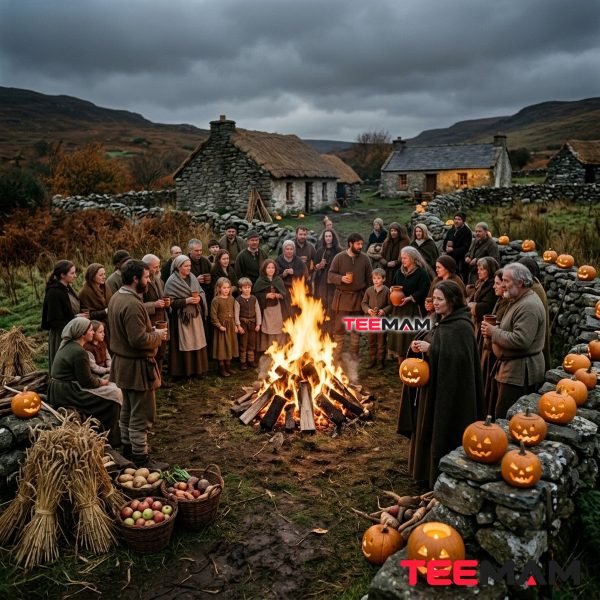
Questions 1 to 15
1. What ancient Celtic festival is widely regarded as an important precursor to Halloween? Answer: Samhain. Samhain marked the end of the harvest and the start of winter for Celtic communities in Ireland and Scotland roughly 2,000 years ago. Modern Halloween developed from Samhain over centuries, blending Celtic, Christian, and later American traditions rather than following a single straight line.
2. Samhain was one of four major Celtic seasonal festivals. What did it divide the year into? Answer: The lighter half of the year and the darker half. Celts saw the year as split between summer and winter, and Samhain marked the pivot point where the darker half began.
3. What does the word “Halloween” literally come from? Answer: All Hallows’ Eve. The name is a contraction of “All Hallows’ Even,” the night before All Hallows’ Day.
4. Which Christian observance became closely associated with the November 1 date, shaping Halloween’s name? Answer: All Saints’ Day, also called All Hallows’ Day. November 1 became associated with All Saints’ Day in the Christian calendar, and the evening before came to be known as All Hallows’ Eve. Over time, that name shortened into “Halloween,” as older seasonal customs and church observances gradually blended together.
5. According to Irish folklore, who was the original jack-o’-lantern named after? Answer: Stingy Jack. Legend says Jack tricked the Devil twice, was barred from both heaven and hell after he died, and was sent into the night with only a burning coal to light his way.
Host’s Note: This is a good early difficulty check. If your group already knows the Stingy Jack story, you can move faster through the rest of round one.
6. What vegetable did people in Ireland and Scotland originally carve for Halloween, before pumpkins? Answer: Turnips. Pumpkins are native to North America, so Irish and Scottish carvers used turnips, and sometimes beets or potatoes, hollowing them out to hold a coal or candle.
7. Why did jack-o’-lanterns switch from turnips to pumpkins? Answer: Irish immigrants found pumpkins easier to carve and more readily available once they arrived in North America. Pumpkins were native to the Americas and far softer to hollow out than a turnip, so the tradition adapted quickly.
8. What was the original purpose of carving a face into a jack-o’-lantern? Answer: To ward off Stingy Jack and other wandering spirits. These early lanterns were not decorative. They were meant as protective charms on the one night the barrier between worlds was believed to be thinnest.
9. What early 20th-century record is often cited as one of the first documented examples of trick-or-treating in North America? Answer: A 1911 newspaper account from Kingston, Ontario. A Kingston report from that year is frequently cited as an early documented instance of children going door to door for Halloween treats. The broader origins of trick-or-treating are murkier and draw on several older European customs rather than a single starting point.
10. What older British and Irish custom is considered a forerunner of trick-or-treating? Answer: Souling, or guising. Children and the poor would go door to door offering prayers or songs for the dead in exchange for small cakes, a custom that predates the American version by centuries.
11. Fire played a major role in Samhain. What did Celtic families traditionally do with their hearth fires before the festival? Answer: They let them burn out. Families extinguished their home fires, then relit them from a shared community bonfire once the harvest work was done, marking the start of the new year together.
12. Why did people wear costumes during Samhain, according to Celtic tradition? Answer: To disguise themselves from spirits. If the dead and other otherworldly beings were walking the earth that night, blending in as one of them was considered a form of protection.
13. Which wave of immigration is most often credited with popularizing Halloween in the United States? Answer: Irish immigration following the Great Famine in the mid-1800s. Irish and Scottish settlers brought Samhain-rooted customs with them, and those traditions blended with existing American harvest festivals to form the holiday’s modern shape.
14. What shift in the early 20th century pushed American Halloween away from vandalism and toward the family-friendly holiday we know today? Answer: Communities organizing trick-or-treating as a structured alternative to pranking. Halloween mischief got out of hand in many American towns during the 1920s and 1930s, and organized trick-or-treating was promoted partly to redirect that energy into something safer.
15. What term do some modern Druid and Wiccan communities still use for their own October 31 observance? Answer: Samhain. While Halloween evolved into a largely secular and commercial holiday in the United States, some pagan and Wiccan communities continue to mark the date with fire rituals and ancestor remembrance rooted in the older festival.
If you want the fuller story behind how a Celtic harvest festival grew into modern Halloween, the history behind Halloween goes into more depth.
Round 2: Folklore and Superstitions That Make This Halloween Trivia Difficult
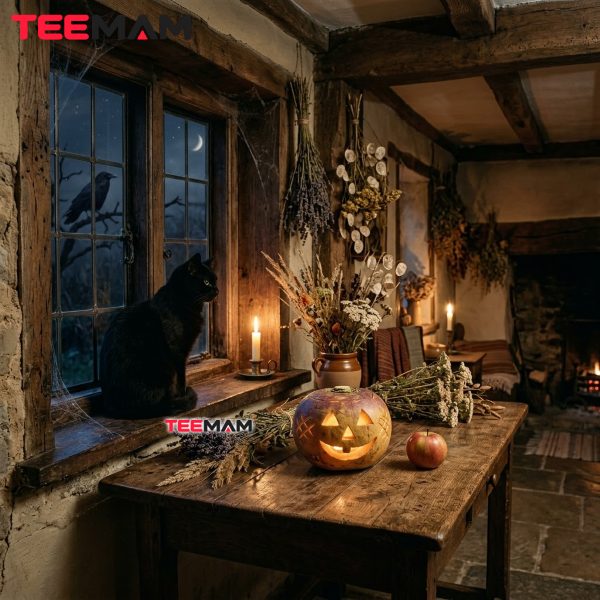
Questions 16 to 28
16. Why are black cats associated with bad luck in Halloween folklore? Answer: Their reputation grew out of centuries of European folklore linking cats, especially black ones, to witches and the supernatural. Medieval religious and folk traditions sometimes portrayed cats as connected to heresy or witchcraft, and those associations later folded into the broader body of superstition around witches. The connection built up gradually over hundreds of years rather than tracing back to any single event.
17. What were “familiars” believed to be in medieval witchcraft folklore? Answer: Animal companions believed to be given to witches by the Devil. Cats, toads, dogs, and even insects were all considered possible familiars, though black cats became the most iconic version in popular imagination.
18. What classic Halloween party game involves trying to grab an apple with your teeth? Answer: Apple bobbing. The game traces back to older courtship and divination customs in the British Isles, where successfully biting an apple was once thought to hint at who you would marry.
19. According to some historical accounts, why was Samhain considered a good time for fortune telling? Answer: Because the boundary between the physical world and the spirit world was believed to be at its thinnest. Some historical sources describe Samhain as a time when Celtic religious figures practiced divination, tied to that same belief about a thinning veil between worlds.
20. What nocturnal flying animal became a lasting Halloween symbol, partly through its ties to darkness and to vampire folklore? Answer: The bat. Bats’ nighttime habits made them an easy fit for a holiday built around darkness and the supernatural, and their later association with vampire legends in fiction only strengthened the connection.
21. What is a “will-o’-the-wisp”? Answer: A ghostly, flickering light sometimes seen over marshes or bogs, caused by a natural phenomenon called ignis fatuus. Some folklorists suggest the Stingy Jack story may have originally been told to explain sightings like these, before it became tied to jack-o’-lantern carving specifically.
22. What did people in parts of the British Isles traditionally leave outside on Samhain night to appease wandering spirits? Answer: Food and drink offerings. Families would set food outside for fairies and spirits, a practice some historians consider a distant ancestor of modern trick-or-treating.
23. What is the folk term for a person, often disguised in costume, who went door to door performing in exchange for food during Samhain and later Halloween? Answer: A guiser. Guising is still the more common term in parts of Scotland and Ireland, and it traditionally required a joke, song, or trick before receiving a treat, unlike the more passive American norm.
24. Which birds are commonly associated with omens and death in European folklore? Answer: Ravens and crows. Their dark color and association with battlefields and carrion in older folklore made both birds an easy fit for Halloween’s death-adjacent imagery, though the exact symbolism varies by region and tradition.
25. What Halloween custom involves peeling an apple in one long strip and tossing it over your shoulder? Answer: An old divination game meant to reveal the initial of a future spouse, based on the shape the peel formed on the ground. Versions of this game show up across British and Irish folklore well before Halloween candy existed.
26. Why do spiders and their webs show up so often in Halloween decorations? Answer: Their association with darkness, decay, and abandoned spaces. Spiders were also linked in older European folklore to witches and bad omens, reinforcing their place in Halloween’s visual language.
27. What is a “corn dolly,” and how does it connect to the harvest season that overlaps with Halloween? Answer: A small figure woven from the last sheaf of harvested grain. In some European harvest traditions, corn dollies were made to symbolically carry the spirit of the harvest through winter, tying them loosely to the same seasonal roots as Samhain.
28. In some folklore traditions, what does it mean if a bat flies into your house on Halloween night? Answer: It is sometimes taken as a sign that the house is haunted, or that death may visit the household. It is one of many small folk omens that grew alongside the same body of superstition that produced black cat and raven lore.
Round 3: Horror Movies and Pop Culture Deep Cuts
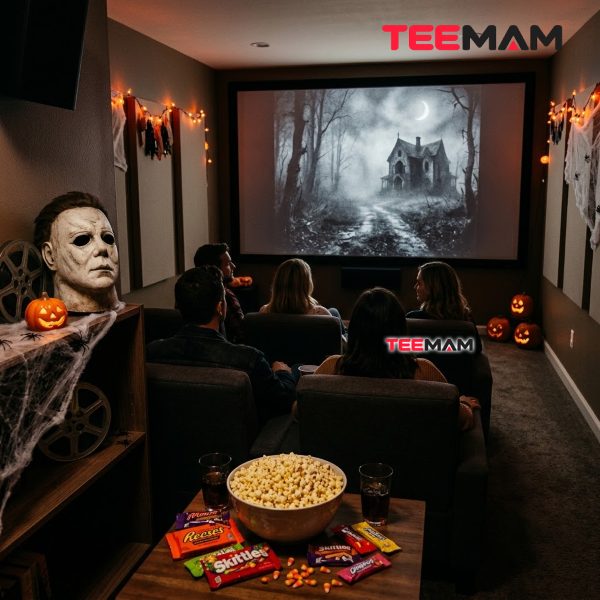
Questions 29 to 42
29. Michael Myers’ mask in the original Halloween (1978) was actually a repainted mask of which pop culture character? Answer: Captain Kirk, from Star Trek. Working on a tight budget, the production crew bought a cheap Captain Kirk mask, widened the eye holes, and spray-painted it white to create the character’s blank, unsettling look.
30. Who played Laurie Strode in the original 1978 Halloween, in what was her feature film debut? Answer: Jamie Lee Curtis. The role launched her career and led to her return as Laurie Strode across several sequels released decades later.
31. What actor played Norman Bates in Alfred Hitchcock’s Psycho (1960)? Answer: Anthony Perkins. His performance as the soft-spoken, deeply disturbed motel owner remains one of the most studied roles in horror history.
32. What 1897 novel by Bram Stoker helped popularize many vampire conventions still used in horror today? Answer: Dracula. Elements like vulnerability to sunlight, garlic, and stakes through the heart were popularized, though not entirely invented, by Stoker’s novel.
33. Who directed The Exorcist (1973), and what earlier work was it based on? Answer: William Friedkin, adapting William Peter Blatty’s 1971 novel of the same name. The film went on to receive an Academy Award nomination for Best Picture, a rare honor for a horror movie.
34. What actor played Freddy Krueger in A Nightmare on Elm Street (1984)? Answer: Robert Englund. Englund reprised the role across nearly every sequel in the original franchise.
35. Which director made his feature debut with A Nightmare on Elm Street, launching one of horror’s biggest franchises? Answer: Wes Craven. Craven went on to reshape the genre again more than a decade later with Scream in 1996.
36. What Stephen King novel, published in 1977, was adapted into Stanley Kubrick’s 1980 film The Shining? Answer: The Shining. King has been famously critical of Kubrick’s adaptation over the years, even though the film is now considered a horror classic in its own right.
37. In the 1993 film Hocus Pocus, what New England town do the Sanderson sisters return to? Answer: Salem, Massachusetts. The setting ties directly into Salem’s real history with the witch trials of the 1690s, which the film draws on for its premise.
38. The Nightmare Before Christmas (1993) was directed by Henry Selick and produced by which filmmaker, whose creative style shapes the whole film? Answer: Tim Burton. Burton originated the story and characters, though Selick directed the stop-motion production itself.
39. Washington Irving’s 1820 short story introduced which iconic Halloween villain? Answer: The Headless Horseman, from “The Legend of Sleepy Hollow.” The story is set in a real region of New York and has inspired countless film and television adaptations since.
40. What 1999 found-footage horror film was famously marketed with a viral campaign suggesting the footage was real? Answer: The Blair Witch Project. Its low-budget marketing strategy, built around convincing audiences the events had actually happened, became a template for horror marketing afterward.
41. Who played Pennywise the Clown in the original 1990 television miniseries adaptation of Stephen King’s It? Answer: Tim Curry. The role was later reimagined by Bill Skarsgård in the 2017 and 2019 film adaptations.
42. What Academy Award did Jordan Peele win for his 2017 directorial debut, Get Out? Answer: Best Original Screenplay. The win made Peele one of the few first-time directors to take home that specific award for a horror film.
Quick fact: Several of these films succeeded despite tiny budgets. Halloween (1978) was reportedly made for around $300,000 and went on to gross tens of millions, proof that a strong premise can outweigh a big budget in horror.
Round 4: Halloween Candy, Food, and Party Culture
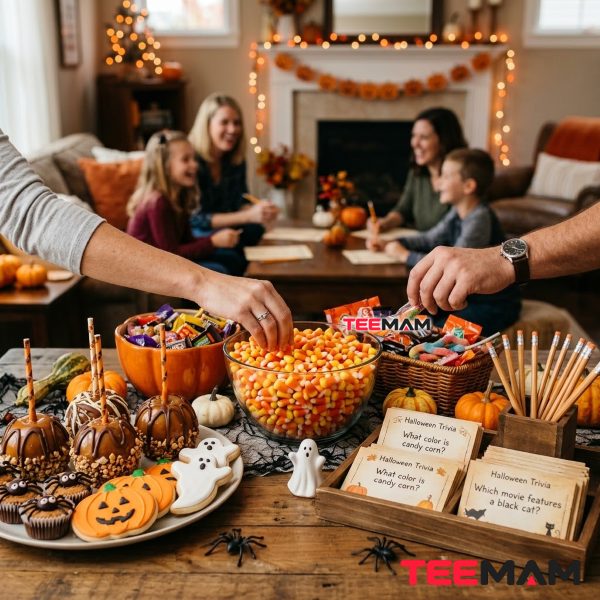
Questions 43 to 53
43. Who is generally credited with inventing candy corn, and roughly when? Answer: George Renninger, an employee of the Wunderle Candy Company in Philadelphia, sometime in the 1880s. Accounts vary slightly on the exact year, but the invention is consistently traced back to Wunderle before another company took the recipe further.
44. What was candy corn’s original marketing name? Answer: “Chicken Feed.” Before World War I, most Americans did not think of corn as human food, so the candy was branded and sold as something closer to a farm-themed novelty.
45. Which company is credited with popularizing candy corn nationally after acquiring the recipe in 1898? Answer: Goelitz Candy Company, now known as Jelly Belly Candy Company. Their early packaging featured a rooster and the slogan “King of the Candy Corn Fields.”
46. According to the National Retail Federation’s 2025 annual survey, roughly how much did Americans plan to spend on Halloween overall? Answer: A record $13.1 billion. That figure marked the highest total in the survey’s history at the time, up from $11.6 billion the year before.
47. Of that 2025 total, roughly how much did the NRF expect Americans to spend on candy alone? Answer: About $3.9 billion. Candy has consistently ranked among the top spending categories in NRF’s annual Halloween survey, alongside costumes and decorations.
48. What was the average per-person Halloween spending figure in the NRF’s 2025 survey, a record at the time? Answer: $114.45. That was nearly $11 more per person than the previous year, reflecting both rising participation and higher prices.
49. What is the “Teal Pumpkin Project,” and what does it signal to trick-or-treaters? Answer: A campaign encouraging households to display a teal-colored pumpkin to show they offer non-food treats. It was created to make trick-or-treating more inclusive for children with food allergies.
50. According to Jelly Belly, roughly how many calories are in a one-ounce serving of candy corn? Answer: About 110 calories. That works out to a bit more than 4 calories per individual kernel, according to the company’s own figures.
51. What Mexican sweet bread, decorated with bone-shaped dough, is associated with a different but overlapping fall holiday? Answer: Pan de muerto, tied to Día de los Muertos rather than Halloween itself. It is a good example of how easy it is to blur two related but distinct holidays that fall around the same time of year.
52. What is the more formal name for trick-or-treating’s British and Irish predecessor, in which children performed a rhyme, joke, or song before receiving food? Answer: Guising, sometimes also called souling depending on the region. Unlike modern trick-or-treating, guising traditionally required some kind of performance in exchange for the treat.
53. According to NRF survey data, which activity has consistently ranked among the most popular Halloween traditions among American celebrants, alongside costumes and decorating? Answer: Handing out candy. It regularly ranks among the top few Halloween activities reported by U.S. consumers, year after year.
Round 5: Halloween Traditions Around the World
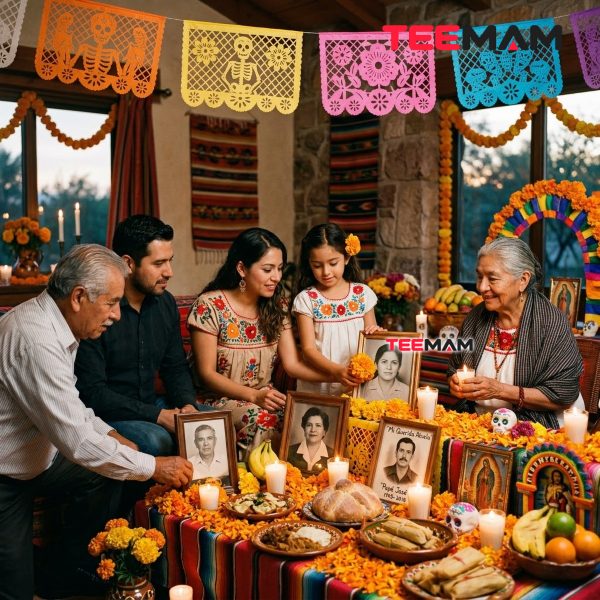
Questions 54 to 62
54. What Mexican holiday, celebrated November 1 and 2, is sometimes confused with Halloween despite having a distinct origin and meaning? Answer: Día de los Muertos, or Day of the Dead. Unlike Halloween’s roots in Celtic harvest folklore, Día de los Muertos blends Indigenous Mesoamerican traditions with Catholic All Souls’ Day observances, and it centers on honoring deceased loved ones with joy rather than fear.
55. In 2008, which international organization recognized Día de los Muertos as part of the Intangible Cultural Heritage of Humanity? Answer: UNESCO. The designation was meant to help preserve the holiday’s Indigenous roots as it gained wider recognition outside Mexico.
56. What are “ofrendas,” central to Día de los Muertos celebrations? Answer: Home altars decorated with photos, marigolds, candles, and the favorite foods of deceased relatives. They are built to welcome the spirits of loved ones back for a brief, joyful visit, a very different emotional tone than Halloween’s spookier traditions.
57. In Scotland and Ireland, what older term is still sometimes used instead of “trick-or-treating”? Answer: Guising. Children traditionally had to perform something, a joke, song, or poem, before collecting their treat, a custom that predates the more passive American version.
58. What Irish fruit bread is traditionally baked around Halloween with small charms hidden inside to predict the coming year? Answer: Barmbrack, known in Irish as báirín breac, or “speckled loaf.” Depending on the household, finders might turn up a ring for marriage, a coin for good fortune, or a pea meaning no wedding that year. Some Irish bakeries still sell a version with a ring baked in today.
59. What is the primary color associated with the marigolds used on Día de los Muertos altars, and what are they believed to do? Answer: Bright orange or yellow, and they are believed to help guide spirits back to their families through their scent and color. The flowers, called cempasúchil, are placed along paths and on altars specifically to lead the dead home.
60. In parts of the Philippines, what All Souls’ Day custom involves families spending time at cemeteries overnight? Answer: Undas, when families gather, clean graves, and hold vigils, sometimes with food and music, to honor deceased relatives. It shares Halloween’s late-October to early-November timing but carries a far more communal, family-centered tone.
61. Why is it inaccurate to describe Día de los Muertos as “Mexican Halloween”? Answer: Because the two holidays have different origins, different tones, and different purposes. Halloween grew out of Celtic harvest and spirit folklore filtered through American commercial culture, while Día de los Muertos is a distinct Indigenous and Catholic-influenced tradition centered on remembrance rather than fright.
62. What phrase have some children in parts of Mexico reportedly adopted during Día de los Muertos season, borrowed directly from Halloween’s trick-or-treating tradition? Answer: “Queremos Halloween,” meaning “We want Halloween.” Researchers studying the two holidays have documented children using the phrase while asking for candy from shops and neighbors, an example of how the two traditions are increasingly blending in parts of Mexico even as many families work to keep them distinct.
For a deeper look at Samhain’s connection to modern Halloween, Samhain’s role in Halloween is covered well by World History Encyclopedia. For the origins of Día de los Muertos specifically, UNESCO’s own record of the Día de los Muertos cultural heritage designation is worth a look.
Turn Trivia Into a Halloween Party Experience
A good question set is only half of a good trivia night. The other half is how you run it.
Set Up a Simple Trivia Station
Keep it low effort. You need question sheets, answer sheets, a timer, something to track scores on, and a few small prizes for the winners. A whiteboard works fine as a scoreboard if you do not want to fuss over anything fancier.
Give Each Team a Halloween Theme
Team names go a long way toward getting a party into the spirit of things. Have each team pick a Halloween-themed name, and if you want to go further, hand out matching accessories or small props so teams feel like a unit rather than a random cluster of chairs.
At TeeMam, we think a matching shirt, mug, or small personalized prize can make a trivia night feel like an actual Halloween event rather than just a stack of printed questions.
Round 6: The Expert Round — Genuinely Halloween Trivia Difficult
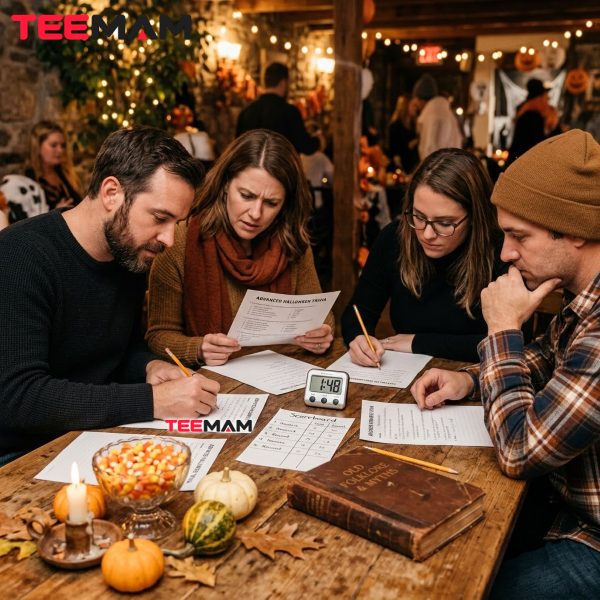
Ready for the questions most players will not know off the top of their head? This is where the set earns its reputation as halloween trivia difficult enough to close out a serious trivia night, since it leans on specific details from history, folklore, and candy trivia already covered earlier.
Questions 63 to 70
63. Which Star Trek character’s mask was repurposed to create Michael Myers’ look in Halloween (1978)? Answer: Captain James T. Kirk. Director John Carpenter has said in interviews that the crew simply could not afford a custom mask, so they modified a cheap Kirk mask from a costume shop instead.
64. What is the name of the 1233 papal document sometimes cited by historians as an early written source linking cats, particularly black cats, to heresy? Answer: Vox in Rama, issued by Pope Gregory IX. It is one of the earliest documented sources historians point to when tracing the long, gradual buildup of black cat superstition in medieval Europe.
65. In the Stingy Jack legend, what object did Jack use to trap the Devil the first time, forcing him to grant a favor? Answer: A silver cross, placed next to a coin the Devil had transformed into. The holy symbol kept the Devil trapped in coin form until he agreed to Jack’s terms, a detail many shorter retellings of the story leave out.
66. What year did the Goelitz Candy Company begin manufacturing candy corn after acquiring the recipe from Wunderle? Answer: 1898. That is roughly a decade after the candy’s likely invention, marking the point where candy corn started becoming a mass-market product rather than a regional novelty.
67. Where in Ireland is the Hill of Ward, and why does it come up in discussions of Samhain’s history? Answer: County Meath, and some historical sources identify it as a site associated with ancient Samhain fire festivals. Modern Samhain revival gatherings have taken place there in recent years, connecting current practice to a specific historical location rather than general folklore.
68. What is the name of the marigold flower traditionally used on Día de los Muertos altars to guide spirits home? Answer: Cempasúchil, also known as the Mexican marigold or Aztec marigold. Its strong scent and bright color are believed to lead spirits along the path from the cemetery back to their family’s home.
69. According to food science researchers at the University of Georgia, roughly how many tons of candy corn are produced in the United States each year? Answer: Approximately 17,000 tons. That figure has been cited by UGA’s food technology program as a rough estimate of annual U.S. candy corn output.
70. What pattern have animal welfare organizations, including the ASPCA, reported regarding black cats in shelters? Answer: Black cats are commonly reported to be adopted at lower rates than cats of other colors. Many shelters and animal welfare groups trace this pattern back to the same superstitions that have followed black cats for centuries.
Which Question Is the Toughest in This Collection?
There is no single, objectively hardest Halloween trivia question, since difficulty depends on what your group already knows. In this collection, question 65 tends to trip up the most people, because it depends on a specific detail from the Stingy Jack legend that most casual retellings leave out. If you want a genuine stumper to close the expert round, that is a solid one to save for last.
Tie-Breaker Questions for a Close Halloween Trivia Game
Questions 71 to 75
Even a set of halloween trivia difficult questions like this one ends in a tie more often than you would expect, especially once the expert round levels everyone’s score back out. These five questions work well because each one has a single, specific correct answer, which makes for a fair closest-guess tiebreaker.
71. How much did Americans spend on Halloween in total in 2025, according to the NRF? Answer: $13.1 billion.
72. In what year did the Goelitz Candy Company begin mass-producing candy corn? Answer: 1898.
73. How much did the NRF estimate Americans would spend on Halloween costumes in 2025? Answer: $4.3 billion.
74. What was the average per-person Halloween spending figure in the NRF’s 2025 survey, down to the dollar? Answer: $114.45.
75. How many years passed between the publication of Bram Stoker’s Dracula (1897) and the release of the original film Halloween (1978)? Answer: 81 years.
How Should You Handle a Tie in Halloween Trivia?
- Read one tie-breaker question aloud to the tied teams only.
- Have each team write down their answer without discussing it out loud.
- Do not allow any further discussion once the question has been read.
- For numeric questions, the closest answer wins.
- Keep two or three backup tie-breakers ready in case the first one also ends in a tie.
A practical host tip: close games often need a second or even a third tie-breaker, so it is worth having a few ready before the game starts rather than scrambling to write one on the spot.
How to Score a Difficult Halloween Trivia Game
Simple Scoring System
Keep the math easy so nobody has to double check a scoreboard mid-party. A workable system: one point per question in rounds one through five, two points per question in the expert round, and tie-breakers used only if the final score is genuinely tied.
Should You Give Bonus Points?
Bonus points work well for the extra context lines, where a team can earn an extra point by adding a correct detail beyond the basic answer. Be careful with this, though. If bonus points get too generous, they can overwhelm the base scoring and make the game feel arbitrary rather than fair.
How Long Should a Halloween Trivia Game Last?
| Game Length | Best For |
|---|---|
| 20 to 30 minutes | A casual, low-key game |
| 30 to 45 minutes | A standard Halloween party |
| 45 to 60 minutes | A full trivia night with multiple rounds and prizes |
If you are running all six rounds plus tie-breakers from this set, plan for something closer to the 45 to 60 minute range, especially if you are pausing to share the context behind each answer.
Halloween Trivia Prizes and Themed Party Ideas
Small Prize Ideas for Winning Teams
Nothing here needs to be expensive. Matching team shirts, a personalized mug for the winning team, tote bags, or a shared bag of good candy all work as prizes without turning the night into a shopping trip.
Make the Prize Table Part of the Decor
Set prizes near the scoreboard so they stay visible throughout the game. Group them by team or by player, label them with simple Halloween tags, and set aside a small “winner’s table” so the end of the game has a clear visual payoff.
More Halloween Games to Keep the Party Going
If trivia wraps up and people still want to play, switching formats keeps the energy up better than running another trivia round back to back. A batch of Halloween riddles for another round works well as a lighter follow-up, since riddles ask people to think differently than straight recall questions do.
Jokes are another easy pivot, especially while scores are being tallied between rounds. A set of funny Halloween jokes for hosts can fill that dead air without anyone feeling like the party has stalled.
How to Use These Halloween Trivia Questions at Your Party
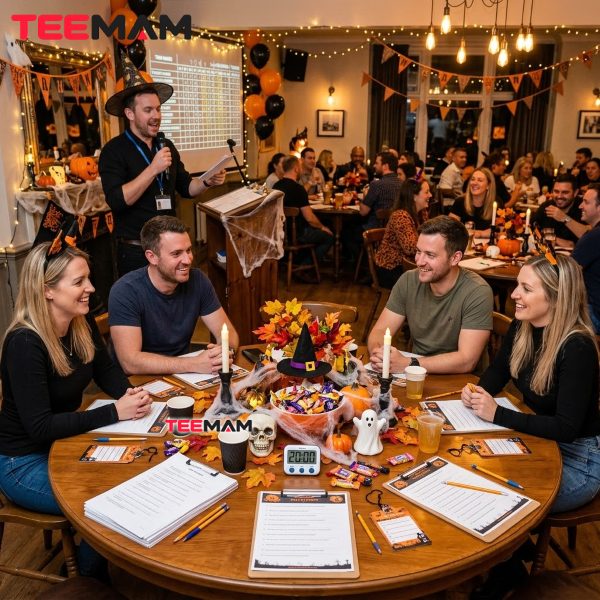
For Small Groups
With two to six players, individual scoring usually works better than teams. Everyone answers on their own, and the format stays fast since there is no group deliberation slowing things down.
For Large Groups
Once you are past six or seven people, split into teams of three to six and appoint one host who reads questions and keeps score, rather than having the host also play.
For a Classroom or Youth Group
Stick to the history, traditions, and pop culture rounds rather than the horror movie section, and skip anything with heavier folklore imagery. Rounds one, two, four, and five translate well to a school or youth setting without much editing.
Halloween Trivia Questions: Quick Answers for Hosts
| Question Type | Best Round | Difficulty |
|---|---|---|
| Halloween origins | History | Hard |
| Folklore and superstition | Traditions | Hard |
| Horror movies | Pop Culture | Difficult |
| Candy and food | Food and Culture | Medium to Hard |
| Global traditions | Around the World | Difficult |
| Deep cuts | Expert | Very Difficult |
Final Challenge: Are You Really a Halloween Expert?
Seventy-five questions is a lot to get through in one sitting, and if you made it through all six rounds without reaching for your phone, you know more about this holiday than most people who celebrate it every year. Genuinely halloween trivia difficult enough to challenge adults is harder to find than it sounds, since most lists online recycle the same dozen or so easy questions about pumpkins and costumes.
Keep a running tally as you go, and pay close attention to how your group does in the expert round. That is usually where the real Halloween know-it-alls separate themselves from everyone else. Whether you are using this halloween trivia difficult question set for a quiet night in or a full trivia party, the questions here are built to be read straight off the page, no extra prep required.
Answers to Common Halloween Trivia Questions
What Is the Hardest Halloween Trivia Question?
There is no single objectively hardest question, since it depends on what each group already knows. In this collection, question 65 is among the most difficult because it asks for a specific detail from the Stingy Jack legend that most casual retellings leave out entirely.
What Are Some Difficult Halloween Trivia Questions for Adults?
If you are specifically after halloween trivia difficult enough for an adult crowd, the expert round and the folklore round tend to work best, since they lean on historical specifics and lesser-known details rather than surface-level facts most kids already know from school or movies.
How Many Questions Should a Halloween Trivia Game Have?
For a 30 to 45 minute party game, 25 to 40 questions is usually enough. For a full trivia night lasting closer to an hour, a set in the 60 to 80 question range, like this one, gives you room for multiple rounds without repeating material.
How Do You Make Halloween Trivia More Challenging?
The short version: build halloween trivia difficult enough to matter by using obscure facts instead of headline trivia, setting a strict time limit per question, skipping multiple choice in favor of open answers, adding tie-breakers for close scores, and requiring exact answers rather than accepting anything close.
What Makes a Good Halloween Trivia Question?
Four things: it needs to be clearly worded, the answer needs to be verifiable rather than a matter of opinion, the difficulty needs to match the audience, and it should be interesting enough that people want to talk about the answer after they hear it, not just move on to the next question.

Hi, I’m Olivia Bennett, a fashion and lifestyle writer at TeeMam with 6 years of experience creating content about fashion, outfits, and lifestyle trends. I enjoy sharing practical style ideas for everyday wear, game days, holidays, and special occasions, helping readers find looks that feel comfortable, fun, and uniquely their own.