The History of Halloween Costumes: From Folklore to Fashion
Halloween costumes trace back to European traditions of disguise tied to Samhain and the medieval customs of souling and guising. The costume you actually recognize today, homemade in the early 1900s, mass-produced by the mid-century, and pop-culture-driven from the 1960s on, took shape gradually across two centuries, not in a single leap from ancient ritual to store shelf.
Every October, closets fill up with capes, fangs, and face paint, and it can feel like this has always been the plan. It hasn’t. The history of Halloween costumes is really several stories stitched together: ancient seasonal traditions, European masking and guising, Victorian fancy dress, homemade American disguises, and eventually a commercial industry shaped by television, film, and character licensing. None of it happened on one date, and a lot of the popular one-line explanations skip several centuries in between. This piece walks through what’s documented, what’s folklore repeated as fact, and how a tradition built around disguise turned into a seasonal industry now worth billions of dollars a year.
The history of Halloween costumes is partly European and partly American. Older traditions supplied the raw ideas, disguise, seasonal ritual, door-to-door performance, while the modern costume industry itself was largely built in the United States, shaped by 19th-century immigration, 20th-century mass manufacturing, television, film licensing, and, more recently, e-commerce.
| Period | Costume Culture |
|---|---|
| Ancient and medieval Europe | Disguise, guising, souling |
| 19th century | Fancy dress and masquerade culture |
| Early 1900s | Homemade American costumes |
| 1930s to 1940s | Community Halloween events and the rise of trick-or-treating |
| 1950s to 1970s | Mass-produced, licensed costumes |
| 1970s to 1980s | Horror and movie-character costumes |
| 1990s to 2000s | Celebrity, TV, and DIY personalization |
| Today | Fandom, nostalgia, and casual Halloween apparel |
When Did Halloween Costumes Begin?
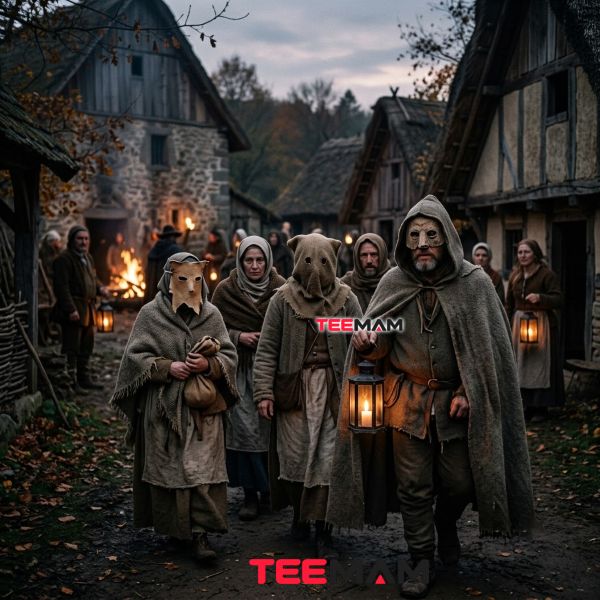
Halloween costumes have roots in older European traditions of disguising oneself during autumn festivals connected to the dead, spirits, and the turning season. The costume culture most Americans recognize today developed much later and far more gradually, through a mix of folk custom, Victorian party culture, homemade disguise, commercial manufacturing, and pop-culture licensing that didn’t really settle into its modern form until the mid-20th century.
Samhain and the Roots of the Disguise Tradition
The story usually starts with Samhain, a Gaelic harvest festival marking the shift from autumn into winter. The Library of Congress notes that Halloween began as this ancient, pre-Christian Celtic festival of the dead. Samhain is commonly described in historical accounts as a festival tied to the turn into winter and to the supernatural, and popular retellings often add that communities believed spirits walked the earth during the festival. Later Halloween traditions preserved and reshaped some of those associations, but the exact link between Samhain-era ritual and modern costume-wearing is more complicated than it sounds in a single sentence.
It’s tempting to draw a straight line from “ancient Celtic communities wore disguises to hide from spirits” to “your neighbor’s kid is dressed as a hot dog.” That line is blurrier than popular Halloween writing usually admits. Historians who study Halloween’s development, including Nicholas Rogers, author of Halloween: From Pagan Ritual to Party Night, have emphasized the broader cultural and supernatural context Samhain gave the holiday, its sense of standing between worlds, while cautioning against treating every modern costume practice as a direct survival of a specific ancient ritual, since detailed evidence of ritual costume practice from that period is thin outside of Samhain’s fire ceremonies. The emotional core of Halloween, spirits, thresholds, the uncanny, is genuinely old. Buying a costume off a rack is a much more recent, and much more American, invention.
Why Did People Wear Disguises?
A few overlapping motives show up across the historical record, and they aren’t mutually exclusive:
- Protection or ritual disguise. Later folklore often explains masking as a way to avoid recognition by spirits, though historians are cautious about treating that explanation as a single, universally documented ancient practice rather than one interpretation among several.
- Cover for mischief. A hidden face gave license for pranks, and pranking has its own long, well-documented history around this time of year.
- Ritual performance. Groups moved door to door performing songs, verses, or blessings in exchange for food, a pattern found across medieval and early modern Europe under names like mumming.
- Temporary social reversal. Across European masking traditions more broadly, disguise could let people temporarily step outside their everyday social role, not just on Halloween specifically.
That last thread connects Halloween disguise to a much broader European tradition of masking and mumming that had nothing to do with the supernatural specifically. Early Halloween costumes weren’t costumes in the modern sense. They were closer to concealment.
How we read the history. Halloween costume history is reconstructed from folklore records, historical photographs, newspaper archives, museum and library collections, and scholarship on European and American Halloween traditions. Some popular explanations, especially ones that connect modern costumes directly and simply to ancient Celtic ritual, are less certain than they’re usually presented. Where the evidence is thin, this article says so rather than smoothing it over.
How Medieval Traditions Shaped Halloween Dressing
All Saints’ Day, All Souls’ Day, and All Hallows’ Eve
The Christian church layered its own observances onto this stretch of the calendar. All Saints’ Day falls on November 1 and All Souls’ Day follows on November 2. Christian missionaries introduced All Souls’ Day in a way that reinforced, rather than replaced, the older idea that the living and the dead came into contact around this time of year. The evening before All Saints’ Day became known as All Hallows’ Eve, later shortened in English to Halloween.
This wasn’t a clean handoff where one religion replaced another overnight. Folk custom and Christian observance ran alongside each other for a long stretch, sometimes borrowing from one another, sometimes simply coexisting. The Halloween recognizable today is the residue of that long overlap, not the product of one decision made in one year.
Souling, Guising, and Early Disguise Culture
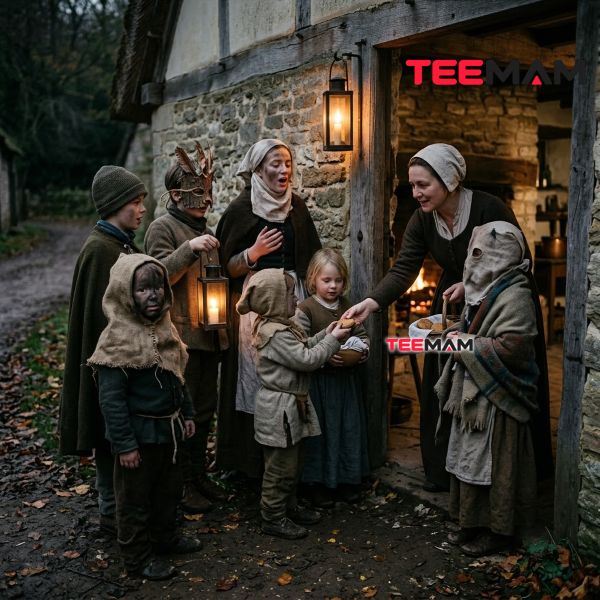
Two related customs matter here, because they’re the closest thing history offers to a direct ancestor of trick-or-treating and costume culture combined.
Souling involved poorer households visiting wealthier ones around All Souls’ Day and receiving small pastries called soul cakes in exchange for a promise to pray for the homeowners’ dead relatives. Guising, a Scottish and Irish practice, involved people, often children, disguising themselves in old clothes or covered faces and performing a song, poem, or trick at the door before receiving food or coins.
Guising is one of the clearest European predecessors of the modern costume-and-treat exchange, because it combined disguise, door-to-door performance, and receiving something in return, all in one custom. Trick-or-treating’s actual roots braid together several traditions, including guising, souling, and later American community organizing, rather than descending from any single practice in a straight line.
For readers who want the fuller thread connecting these medieval customs to the Halloween we know now, we’ve covered it in more depth in our guide to Halloween’s All Hallows’ Eve history.
The Victorian Era and the Rise of Fancy Dress
From Folk Disguise to Fancy Dress
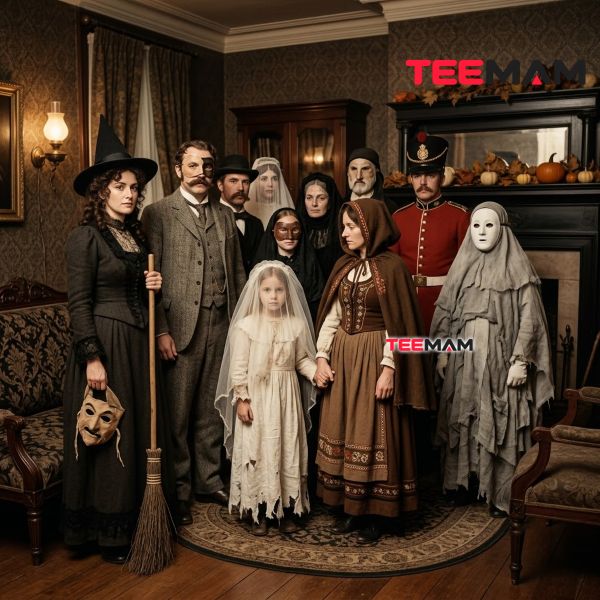
During the 19th century, Halloween increasingly overlapped with a broader culture of masquerades and fancy-dress parties, particularly in Britain and among wealthier Americans. Costume-making in this era depended on whatever fabric, sewing skill, and household materials a family had on hand. Wealthier households could commission elaborate fancy-dress outfits from tailors and theatrical costumers. Everyone else improvised with what was already in the house: old dresses, curtains, shawls, and homemade masks.
What Did Victorian Halloween Costumes Look Like?
Common figures included witches, ghosts, historical characters, and folkloric figures pulled from ballads and fairy tales, typically rendered in dark fabrics, veils, lace trim, and simple handmade masks. These weren’t standardized “Halloween costumes” in the way we think of the term today, with a single recognizable silhouette mass-produced in a factory. They were closer to theatrical fancy dress that happened to be worn on Halloween, borrowed heavily from stage costuming and the broader culture of society parties.
Early 20th-Century America: When a Disguise Became a Costume
Homemade Costumes Were the Norm
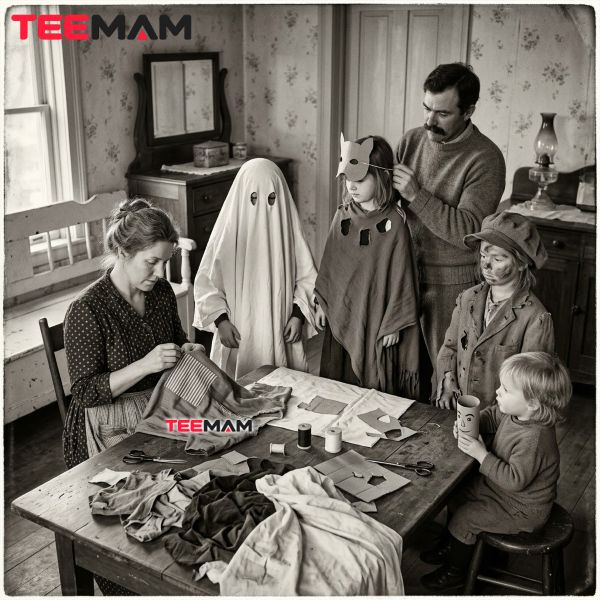
As Halloween took hold as a widely celebrated American holiday in the early 1900s, most costumes were still homemade, and out of necessity rather than style. Families relied on old clothing, paper, cardboard, and basic face makeup. The goal was usually not to portray a specific character. It was to look mysterious, frightening, or simply hard to recognize, which lines up with the older disguise tradition covered above.
Costume photography from this period doesn’t always look like “Halloween” to modern eyes, because the colors, symbols, and silhouettes we now instantly associate with the holiday were still being invented. A century of repetition is what eventually made a witch’s silhouette or a black cat read instantly as Halloween shorthand. In 1910, it didn’t yet.
Why Were Early Halloween Costumes Often Spooky?
Ghosts, witches, black cats, skeletons, devils, bats, and moon-and-shadow imagery dominated early American Halloween costumes. These weren’t randomly chosen. They pulled directly from the older folklore tradition around spirits, harvest, and the supernatural, and decades of repetition across homemade costumes is exactly how that visual vocabulary became recognizable “Halloween” imagery in the first place.
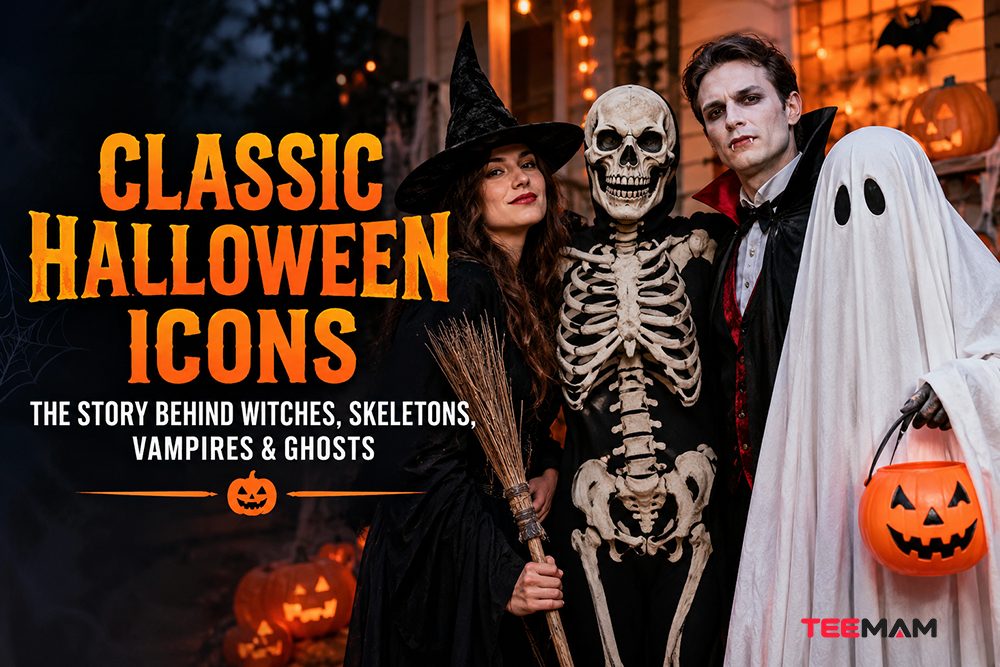
For a closer look at how these specific images became the holiday’s visual shorthand, see our companion piece with classic Halloween icons explained.
When Did a Halloween Disguise Become a Costume?
A disguise and a costume aren’t quite the same thing, and the distinction matters for understanding how Halloween dressing changed. A disguise changes how recognizable you are. A costume communicates what you’re supposed to be. Early Halloween traditions leaned toward concealment and anonymity, a sheet, a smudge of soot, an old coat turned inside out. As commercial costumes entered the picture in the mid-20th century, the emphasis shifted toward recognizable characters instead: a specific superhero, a specific movie monster, a specific brand. That shift, from hiding who you are to announcing who you’re supposed to be, is one of the clearest throughlines in the entire history of Halloween costumes, and it’s a big part of why a modern costume aisle looks nothing like a 1910s Halloween party.
How Did Halloween Costumes Become Popular in America?
Halloween itself arrived in the United States gradually rather than all at once. Irish and Scottish immigration in the 19th century, especially the large wave following the 1840s, helped spread Halloween-related customs in America, where they mixed with existing fall harvest celebrations, local social traditions, and, later, commercial influences, gradually secularizing into something closer to the Halloween recognized today. Community celebrations and costume parties grew through the late 1800s and early 1900s. By the 1920s and 1930s, Halloween mischief had become enough of a problem that towns began organizing parades, parties, and costume contests specifically to channel that energy somewhere safer. World War II briefly interrupted momentum, since sugar rationing left little candy to hand out, but participation expanded again once rationing ended and postwar suburbs gave families safe, walkable routes for trick-or-treating. Television, arriving in millions of American living rooms through the 1950s, gave costume manufacturers their first truly national audience, and that combination, immigration, community organizing, and postwar suburban growth, is what turned Halloween from a regional folk custom into a mainstream national holiday with costumes at its center.
The 1930s and 1940s: Depression-Era Costumes and the Trick-or-Treat Turn
How the Great Depression Changed Costume Making
Money was tight through the 1930s, and that reality shaped Halloween the way it shaped everything else. Families leaned harder into repurposing ordinary clothing, and resourcefulness became a defining visual trait of American Halloween: mismatched fabric, painted cardboard, and household items pressed into service as props.
How Trick-or-Treating Changed Costume Culture
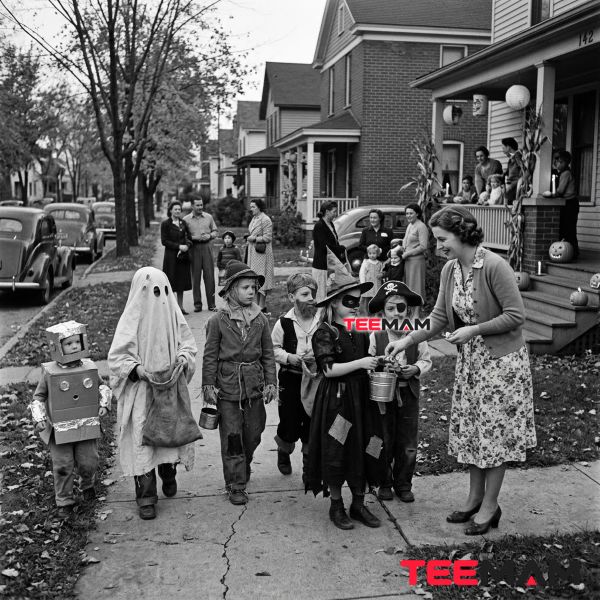
Modern trick-or-treating did not appear fully formed out of ancient Celtic tradition, despite how often that claim gets repeated online. What actually happened is better documented and, frankly, more interesting. By the early 1930s, Halloween pranking in parts of the United States had turned genuinely destructive, with vandalism and property damage serious enough that some communities considered banning Halloween activities outright. Civic groups, schools, and neighborhood families responded by organizing parties, parades, and costume contests specifically to redirect that energy. Historian Lisa Morton has described how this often worked house by house: one home might hand out a sheet to wear as a makeshift ghost costume, the next might offer treats, another might set up a small haunted space in the basement, gradually merging into kids dressing up and moving door to door as a single organized activity.
These community efforts helped normalize organized Halloween celebrations and contributed to the broader environment in which modern trick-or-treating eventually became mainstream, and they’re a big part of why costumes and candy became linked in American Halloween culture. World War II disrupted candy-centered celebrations because of sugar rationing. After rationing ended, trick-or-treating expanded rapidly, aided by the newly built postwar suburbs that gave kids safe routes to walk.
The 1950s to 1970s: When Halloween Costumes Became Commercial
The Rise of Mass-Produced Masks and Boxed Costumes
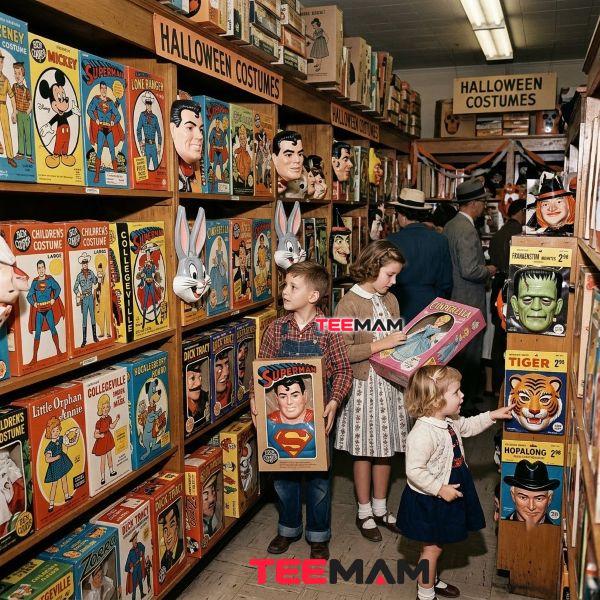
Picture “vintage Halloween costume” and you’re probably picturing this era: a plastic mask on a thin elastic band, paired with a printed vinyl smock, sold in a cardboard box with a cellophane window. Three manufacturers became especially influential in the mid-century American costume market: Ben Cooper, founded in 1937 and eventually one of the three largest Halloween costume companies in the country from the 1950s through the mid-1980s; Collegeville, whose costume business traced back to the early 1920s; and the H. Halpern Company, known as Halco.
The economics of this business depended on scale, and scale meant television. As shows like The Adventures of Superman, Zorro, and Davy Crockett became weekly fixtures in American households through the 1950s, Ben Cooper began securing licenses to the characters kids were already watching. The company’s real advantage wasn’t manufacturing so much as timing: getting a license signed before a character became a phenomenon. Ben Cooper licensed Spider-Man in 1963, just months after the character’s debut in Marvel Comics and before almost anyone recognized the name. Collectors and comic-merchandise historians (per reporting from GamesRadar+, CBR, and archival research published by Spider-Man Crawlspace) widely regard that 1963 costume as the first licensed Marvel product ever made. The company later became the first to license Marvel superheroes more broadly.
Why Did Pop Culture Change Halloween Costumes?
Television helped nationalize costume tastes by giving children across the country access to the same recognizable characters at the same time. A costume company no longer had to guess what kids liked regionally; everyone was watching the same shows and, later, the same blockbuster movies, which made licensing a specific character a far safer commercial bet than it had ever been.
From Ghosts to Characters
The shift is easiest to see as a rough sequence: anonymous spooky disguise gives way to recognizable fictional character, which later expands into celebrity or political-figure costumes and, eventually, fandom-based costumes tied to a specific franchise or subculture. How did pop culture change Halloween costumes, in short? It moved the holiday’s center of gravity away from folklore and toward media identity. Being scary stopped being the whole point. Being recognizable became just as important.
The 1970s and 1980s: Horror Movies Redefined Halloween Style
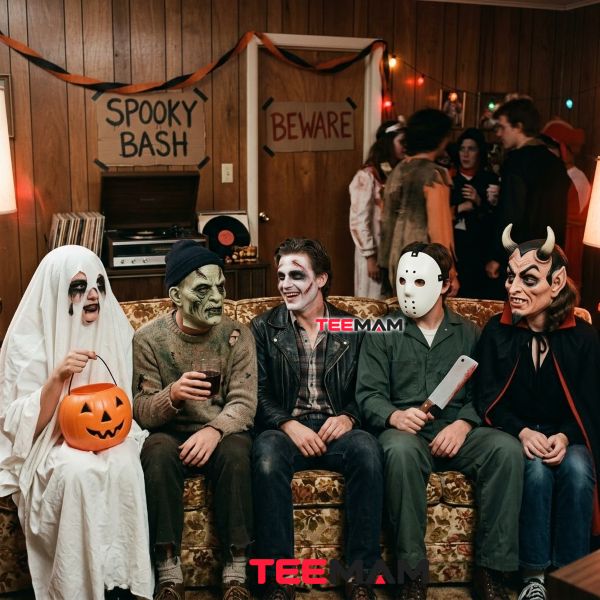
The Rise of Slasher and Horror-Inspired Costumes
The horror genre’s box-office explosion in the late 1970s and 1980s fed directly back into costume culture, and masks in particular became the connective tissue between cinema and Halloween night. A rubber mask wasn’t just a disguise anymore. It was a piece of movie merchandise you could wear.
Why Horror Became a Permanent Part of Halloween Fashion
This period effectively completed a transformation that had been building for a century. One useful way to map the changing sources of Halloween imagery, not as a strict historical sequence but as a conceptual framework, is to separate folklore figures, literary characters, movie monsters, and franchise characters, categories that overlapped in practice far more than they replaced one another cleanly:
Folklore figure → literary character → movie monster → franchise character
A generic witch or devil (folklore) could inspire a specific literary creation like Frankenstein’s monster or Dracula (literary character), which the film industry later gave a face and a body (movie monster), which eventually got locked into a recurring, trademarked, sequel-driven identity (franchise character). Most chronological Halloween costume histories skip straight from “monsters” to “movie characters” without naming these intermediate steps, but the framework is useful because a version of the same pattern shows up again with superheroes and, more recently, with internet-driven pop culture moments.
The 1990s and 2000s: Halloween Costumes Became More Personalized
Television, Celebrities, and Current Events
As cable television, celebrity culture, and eventually the internet fragmented what people were paying attention to, Halloween costumes fragmented along with them. Instead of a handful of nationally dominant characters, costume choices increasingly reflected individual taste: a specific TV character, a musician, a politician, or a piece of internet culture that wouldn’t have made sense as a mass-produced boxed costume a generation earlier. By the late 1990s and early 2000s, adult Halloween retail increasingly included sexualized costume categories marketed toward women. Films like Mean Girls later reflected and satirized that already-established retail trend in a widely quoted scene, rather than creating it, and the movie became cultural shorthand for a costume category that had already been building on store shelves for years. On the horror side, Ghostface, the killer from the Scream franchise, became one of the most recognizable horror-mask designs of the era and remains a perennial adult costume choice decades later.
The Rise of Costume Categories
Halloween costumes sorted increasingly into recognizable style categories that retailers still use today: scary, funny, cute, sexy, nostalgic, fandom-based, historical, DIY, couples, and group costumes. That last category turned Halloween into a coordinated, planned social event rather than a purely individual wardrobe choice.
DIY Became a Form of Self-Expression
Handmade costumes never disappeared, but their meaning changed. What began as economic necessity in the 1930s became, by the 1990s and 2000s, a deliberate creative choice, often a reaction against the sameness of mass-produced options. DIY Halloween costumes today more often signal originality and effort than a lack of resources, which is close to a full reversal of what homemade costumes represented a century earlier.
Which Halloween Costume Traditions Still Survive Today?
| Historical Element | Earlier Meaning | Modern Halloween Expression |
|---|---|---|
| Masks | Disguise and anonymity from spirits | Character masks and horror-franchise masks |
| Witches | Folklore and supernatural fear | A near-universal costume archetype |
| Ghosts | Spirits of the dead | Bedsheet costumes, makeup, graphic apparel |
| Black cats | Folklore and superstition | Costumes, decor, and graphic prints |
| Monsters | Myth and folklore | Movie and franchise characters |
| Handmade costumes | Economic necessity and resourcefulness | DIY creativity and personal expression |
| Fancy dress | Victorian social entertainment | Costume parties and themed events |
How Halloween Costumes Reflect American Culture
From fear to entertainment. The earliest disguise traditions were about managing something genuinely unsettling: spirits, thin boundaries between worlds, an unpredictable harvest season. Modern costumes are overwhelmingly about entertainment, humor, and self-presentation. That shift alone says a lot about how the American relationship with the supernatural has changed over roughly two centuries.
From handmade to mass production, and back again. Costumes went from homemade, to commercially manufactured, to a genuine hybrid where DIY and store-bought coexist, often within the same household in the same year.
From characters to personal identity. Fandom, nostalgia, humor, and topical commentary have all become legitimate costume categories in a way that would have been unrecognizable to a Victorian party guest or a Depression-era trick-or-treater.
A few forces did most of the work behind these shifts:
| Driver | What Changed |
|---|---|
| Immigration | European seasonal customs entered American culture |
| Religion | The Christian calendar reshaped the holiday’s timing and meaning |
| Urbanization | Community events became more organized and safety-focused |
| Mass production | Costumes became cheaper and more standardized |
| Television | Characters became nationally recognizable overnight rather than regionally known |
| Film | Horror and franchise imagery expanded the costume pool |
| The internet | Costume culture became faster-moving and more personalized |
| E-commerce | Niche and fandom-specific costumes became far easier to find |
The Cultural Sensitivity of Halloween Costumes
Not every historical costume practice has aged well, and it’s worth being direct about that instead of glossing over it. Some earlier Halloween traditions, and some costume choices that were common decades ago, are now widely recognized as offensive, particularly costumes that caricature another culture’s dress, sacred symbols, or identity rather than genuinely participating in the holiday. Documenting that these practices existed historically is not the same as endorsing them. Participating in a shared seasonal celebration has long been part of Halloween culture; turning another culture’s identity, clothing, or sacred traditions into a costume is a separate practice with a very different history and a very different set of consequences.
The Modern Evolution of Halloween Costumes: From Disguise to Self-Expression
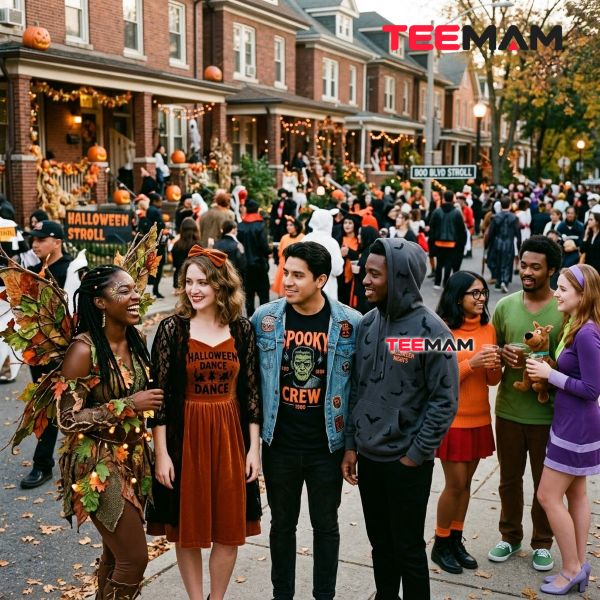
Modern Halloween costumes are no longer limited to disguising the wearer as a supernatural figure. They increasingly function as a form of personal identity, fandom, humor, nostalgia, and seasonal fashion, sometimes without involving a full “costume” at all. Halloween spending in the United States was expected to reach a record $13.1 billion in 2025, according to the National Retail Federation, with an estimated $4.3 billion of that going toward costumes alone, a useful reminder of how far the holiday has traveled from a night of homemade sheets and soot-smudged faces.
Why Casual Halloween Outfits Are Gaining Ground
Not everyone wants to commit to a full costume, especially for a workday or a low-key gathering. Graphic tees, sweatshirts, and hoodies have filled that gap, offering something reusable well beyond a single night and requiring less money and less effort than a full costume. For a lot of shoppers, a Halloween graphic tee or an oversized hoodie printed with a minimalist ghost or pumpkin motif is a lower-effort way to take part in the season without buying something that only gets worn once.
Nostalgia and Vintage Halloween Aesthetics
Vintage-inspired Halloween graphics remain a familiar direction across seasonal apparel: distressed typography, retro monster illustrations, faded pumpkin artwork, and the kind of worn, decades-old look that echoes Victorian fancy dress, early 1900s homemade costumes, and mid-century boxed masks. A shirt built around that aesthetic connects to more than a century of costume history without requiring anyone to do the historical digging themselves.
Halloween Apparel as Everyday Self-Expression
There’s a real difference between a costume, seasonal apparel, and Halloween-inspired fashion more broadly, even though the three overlap. A costume transforms who you appear to be for a night. Seasonal apparel signals participation without transformation. Halloween-inspired fashion borrows visual motifs such as pumpkins, bats, and moody color palettes and works them into pieces people can wear well past October 31.
How Halloween History Influences Modern Holiday Apparel
That historical timeline isn’t just trivia, it’s a genuine design reference point. Traditional symbols like black cats, witches’ hats, and jack-o’-lanterns, along with vintage typography lifted from mid-century costume packaging, continue to shape how contemporary graphic apparel gets designed. A Halloween T-shirt, sweatshirt, or hoodie can carry those visual traditions into everyday clothing rather than functioning as a generic seasonal print. At TeeMam, we use those historical references as design inspiration rather than simply reproducing familiar Halloween graphics. Classic jack-o’-lantern artwork, distressed lettering, retro monster illustrations, and mid-century packaging aesthetics can inform a modern design while still functioning as everyday apparel. Candy became another visual and commercial language of Halloween in its own right, and one treat in particular is a good example of how a simple seasonal product turned into a recognizable piece of Halloween iconography: for that story, see our guide to Candy Corn’s Halloween history.
What Is the Future of Halloween Costume Fashion?
Recent NRF data illustrates how quickly costume trends turn over: its 2025 survey identified Ghostface and costumes inspired by Netflix’s KPop Demon Hunters among that year’s notable trends, alongside longtime staples like witches and superheroes. That pattern suggests a few directions are likely to continue: nostalgia-driven design, pop-culture fandom costumes tied to whatever franchise or streaming hit is dominating the cultural conversation in a given year, continued DIY customization, more sustainable and reusable costume practices, and steady growth in casual Halloween apparel that doesn’t require a full transformation. Halloween fashion increasingly blends costume, entertainment, personal identity, and everyday clothing into one continuous spectrum rather than treating “costume night” and “the rest of the year” as separate wardrobes.
Frequently Asked Questions About Halloween Costume History
What is the history of Halloween costumes?
Halloween costume history runs from ancient Celtic disguise traditions tied to Samhain, through medieval souling and guising, Victorian fancy dress, homemade early-20th-century American costumes, Depression-era safety-driven trick-or-treating, mid-century commercial mask manufacturers like Ben Cooper and Collegeville, pop-culture and horror-movie licensing, and today’s mix of full costumes, DIY creativity, and casual Halloween apparel.
Why do we wear costumes on Halloween?
Costumes originally served a protective and ritual function tied to the belief that spirits walked the earth on this night, and later took on a performative role in door-to-door customs like guising. Over the following centuries, that meaning gradually shifted toward entertainment, social occasion, and personal expression, though the underlying instinct to become someone or something else for one night has stayed remarkably consistent.
When did Halloween costumes become popular in America?
Halloween-related customs were established in parts of the United States by the mid-1800s, carried in large part by Irish and Scottish immigration, but costume culture became far more widespread during the early 20th century and especially after community-organized trick-or-treating spread in the 1930s as a response to Halloween vandalism.
When did Halloween costumes become commercial?
Small-scale commercial Halloween costume manufacturing existed as early as the 1920s, but it became a genuinely big business after World War II, when television gave companies like Ben Cooper and Collegeville a national audience for licensed character costumes.
How did pop culture change Halloween costumes?
Comic books, television, and film gave costume manufacturers a steady pipeline of recognizable characters to license, shifting Halloween costumes away from generic supernatural figures and toward specific, branded identities that changed with each season’s biggest shows and movies.
Were Halloween costumes originally homemade?
For much of early American Halloween history, yes. Homemade costumes were common before inexpensive mass-produced options became widely available in the mid-20th century, with families typically using old clothing, paper, cardboard, and makeup.
What were common Halloween costumes in the early 1900s?
Ghosts, witches, black cats, skeletons, devils, and other supernatural figures dominated early American Halloween costumes, generally aiming for a mysterious or frightening look rather than an identifiable character.
Why are vintage Halloween costumes still popular?
Vintage Halloween costumes tap into genuine nostalgia, over a century of recognizable visual symbolism, and a level of handmade craftsmanship that feels distinct from mass-produced modern options.
From Ancient Disguises to Modern Halloween Fashion
Laid out chronologically, the arc looks like this: ritual disguise, folk tradition, Victorian masquerade, homemade American costume, commercial costume, pop-culture costume, and today’s personalized Halloween fashion. Each transition was driven by something bigger than the holiday itself: religion, economics, television, cinema, and eventually the internet. That’s what makes the history of Halloween costumes worth knowing. It isn’t a fun fact about pumpkins. It’s a fairly accurate miniature history of American technology, entertainment, and culture, filtered through one night a year when everyone gets to be someone else.
What’s the Halloween costume you remember most, the one your family still brings up years later?
Sources & Further Reading
- Library of Congress, Halloween & Día de los Muertos Resources research guide
- Smithsonian Magazine, “The Celtic Origins of Trick-or-Treating”
- HISTORY, “Halloween Was Once So Dangerous That Some Cities Considered Banning It”
- National Retail Federation, 2025 Halloween consumer spending survey
Additional detail on Ben Cooper, Inc.’s 1963 Spider-Man costume draws on reporting from GamesRadar+, CBR, and archival research published by Spider-Man Crawlspace.

Hi, I’m Olivia Bennett, a fashion and lifestyle writer at TeeMam with 6 years of experience creating content about fashion, outfits, and lifestyle trends. I enjoy sharing practical style ideas for everyday wear, game days, holidays, and special occasions, helping readers find looks that feel comfortable, fun, and uniquely their own.