Halloween Meaning in Bible: What Does the Bible Say?
Short answer: The Bible does not mention Halloween by name and does not give Christians a direct command to celebrate or avoid it. Scripture instead addresses issues such as occult practices, conscience, and how believers respond to matters it does not directly command or forbid.
Does the Bible Actually Mention Halloween?
Short answer: no, it doesn’t. Halloween isn’t named anywhere in Scripture. Halloween as a named holiday developed centuries after the biblical texts were written, although some of the seasonal customs later folded into it — bonfires, harvest gatherings, honoring the dead — have much older roots. So if you’re searching for a verse that says “thou shalt not carve a pumpkin,” you won’t find one.
That doesn’t mean the Bible has nothing to say. Scripture speaks directly to themes that sit at the center of the Halloween conversation: darkness versus light, occult practice, personal conscience, and how believers engage with the culture around them. For many readers, the halloween meaning in Bible question is really a question about whether a modern cultural celebration can fit within biblical values — and Scripture answers that indirectly, through principles rather than a direct ruling.
Scripture never gives Christians a verse about October 31. It therefore gives no direct answer to the halloween meaning in Bible question — but it does supply principles Christians can use to evaluate the holiday, especially around conscience, spiritual discernment, and disputed cultural practices.
What Is the Halloween Meaning in the Bible?
There is no single biblical definition of Halloween, because Scripture never establishes the holiday in the first place. The Bible does not mention Halloween by name. People searching for the phrase “halloween meaning in Bible” are usually asking a more specific question: how do biblical principles apply to this particular holiday? That’s a different, and more answerable, question.
It helps to separate a few terms that often get blended together:
- Halloween: the modern, largely secular October 31 celebration involving costumes, candy, and neighborhood traditions.
- All Hallows’ Eve: the older name for the night before All Saints’ Day, from which “Halloween” derives.
- All Saints’ Day: a Christian observance on November 1 honoring the saints.
- All Souls’ Day: a related observance on November 2, when many Western churches pray for and remember the faithful departed.
- Samhain: an ancient Gaelic seasonal festival marking the start of winter, particularly associated with Ireland and Scotland.
For readers who want a working definition to start from, the halloween meaning in Bible discussion boils down to this: Scripture never defines the holiday, but it does define the moral categories — light and darkness, worship and idolatry, conscience and license — that Christians use to evaluate it.
Why Halloween Is Not Named in Scripture
Does the Bible mention Halloween? No. The biblical texts predate the development of Halloween as a named holiday by many centuries. But biblical silence on a specific word isn’t the same as biblical silence on the underlying issues. Scripture doesn’t mention smartphones either, yet it has plenty to say about how believers use their time and words. The absence of the word “Halloween” doesn’t settle how a Christian should approach the day; it just means the answer has to come from somewhere else in the text. The Bible doesn’t mention Halloween by name simply because Halloween developed as a named observance long after the biblical texts were written.
Where Did Halloween Come From?
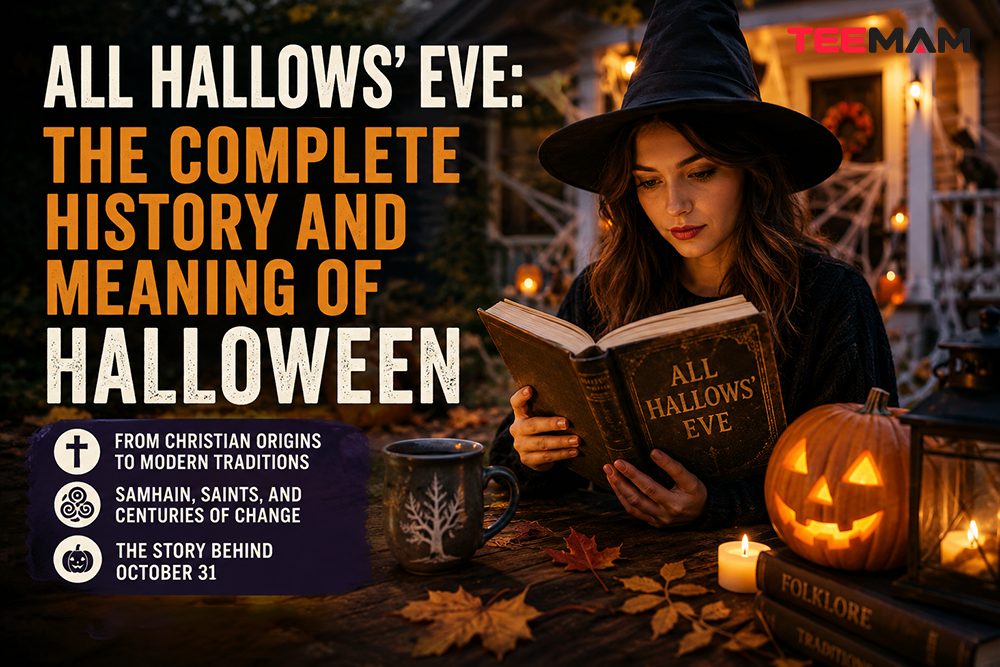
Halloween’s history is often reduced to a simple story about Samhain. The evidence is more complicated, and less settled among historians, than that.
Samhain and the Celtic Tradition
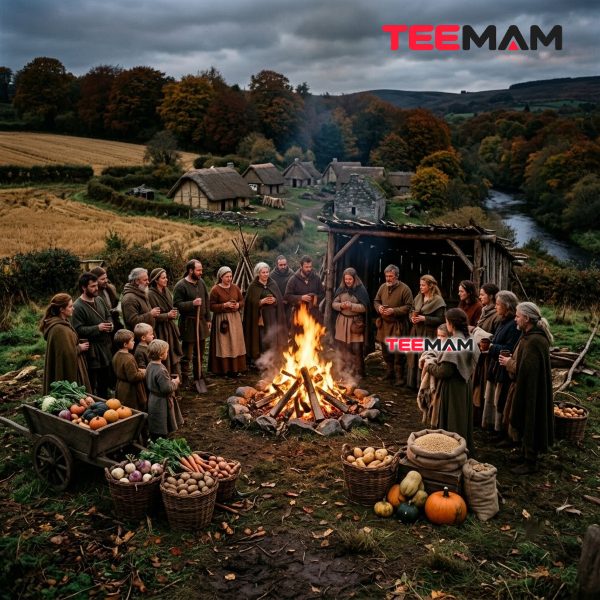
Samhain was a Gaelic seasonal festival, particularly associated with Ireland and Scotland, marking the end of the harvest and the turn toward winter. Samhain was associated in later accounts with the dead as well, though historians disagree about how specific or widespread particular rituals were in the earliest evidence.
The relationship between Samhain and the Christian observances of All Saints’ and All Souls’ Days is more complicated than the popular “Halloween replaced a pagan festival” story suggests. The Library of Congress’s Halloween research guide describes Samhain as a pre-Christian Celtic festival and notes that the church’s November 1 observance developed later, after which some traditions began to overlap. Historians disagree about how directly one grew out of the other.
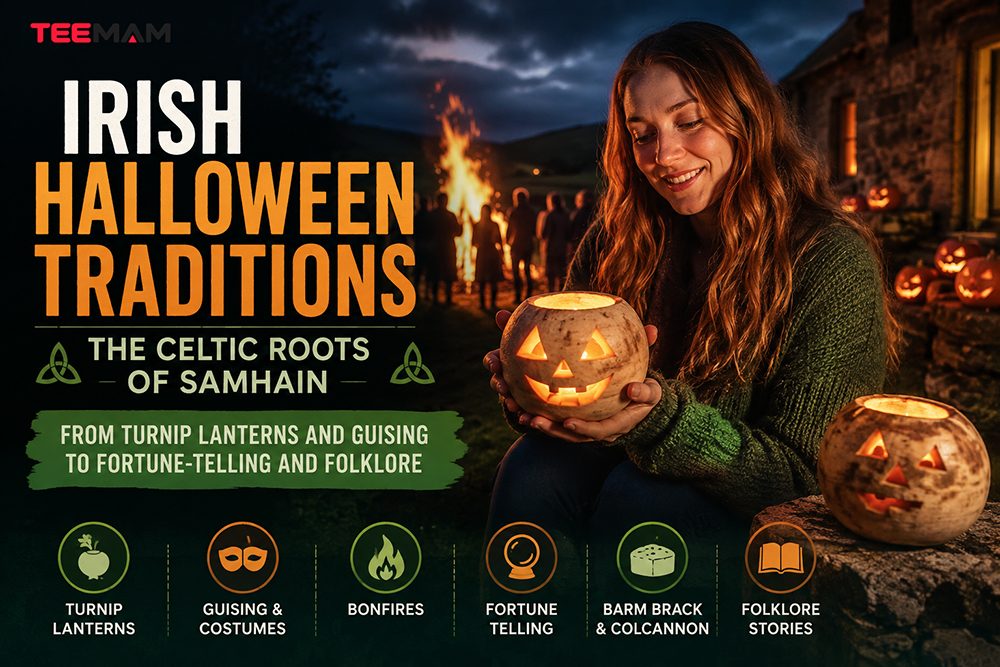
Ronald Hutton’s historical research, widely cited in this debate, argues that the medieval record doesn’t actually support the idea of Samhain as a major, uniform festival observed the same way across Celtic regions, let alone one involving the ghosts, divination, and rituals popular articles now attribute to it. A fair summary sits between the two positions: Samhain was a real and significant seasonal turning point, but exactly how much of its content survived into later Halloween customs, versus being reconstructed or assumed by later writers, is genuinely disputed. Readers interested in the Irish side of the story can explore traditional Irish Halloween customs to see how these older seasonal customs developed before they became tangled up with the modern holiday.
The jack-o’-lantern has its own separate folklore trail worth noting. Irish and Scottish traditions carved turnips and other root vegetables long before pumpkins entered the picture; pumpkins became the familiar choice once the custom took hold in North America. Like most of Halloween’s visual trappings, this belongs to folklore history rather than to anything Scripture commands or forbids.
All Hallows’ Eve and Christian History
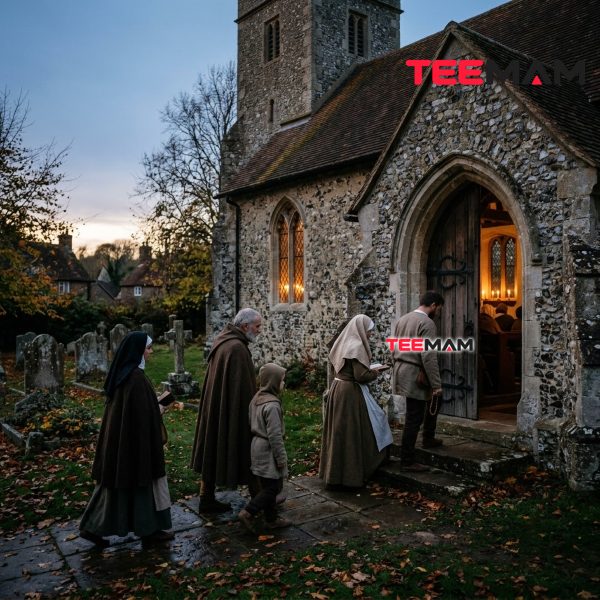
Separately, the Christian church developed its own November observance. In the eighth century, Pope Gregory III dedicated a chapel in Rome to all the saints, associating that dedication with November 1. In the following century, Pope Gregory IV took steps toward a wider observance, and the practice was later adopted more broadly in the Western church. All Souls’ Day, honoring the wider body of the faithful departed, followed on November 2 and became widely observed in subsequent centuries. The evening before All Saints’ Day came to be called All Hallows’ Eve, eventually shortened to Halloween.
Whether the church chose November 1 specifically to replace Samhain, or whether the dates lined up for reasons closer to Rome’s own liturgical calendar, is a real point of scholarly disagreement rather than settled fact. For readers who want the fuller timeline, from Samhain’s Celtic roots through the medieval church calendar and into today’s trick-or-treating, we’ve laid out explore Halloween’s historical background in more depth.
How Halloween Became a Modern Secular Celebration
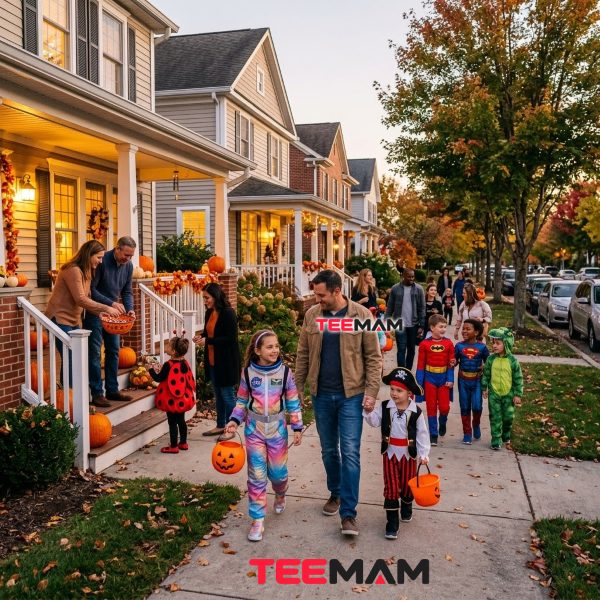
The costumes, trick-or-treating, candy, and pumpkin carving that define Halloween today mostly took their current shape in 19th and 20th century America, shaped by Irish and Scottish immigration, older harvest customs, and later, marketing. Whatever Samhain was or wasn’t, the version of Halloween most American families encounter now is a community and commercial tradition first, with a loose and still-debated thread connecting it back to its pre-Christian roots.
Understanding that history also helps put the halloween meaning in Bible question into context, since modern Halloween isn’t identical to any single ancient Celtic or medieval Christian observance. Whatever its origins, the practical question for most families isn’t archaeological — it’s how to respond to the version of Halloween their kids will actually encounter this October, and that question keeps the halloween meaning in Bible discussion grounded in the present rather than the distant past.
What Biblical Principles Apply to Halloween?
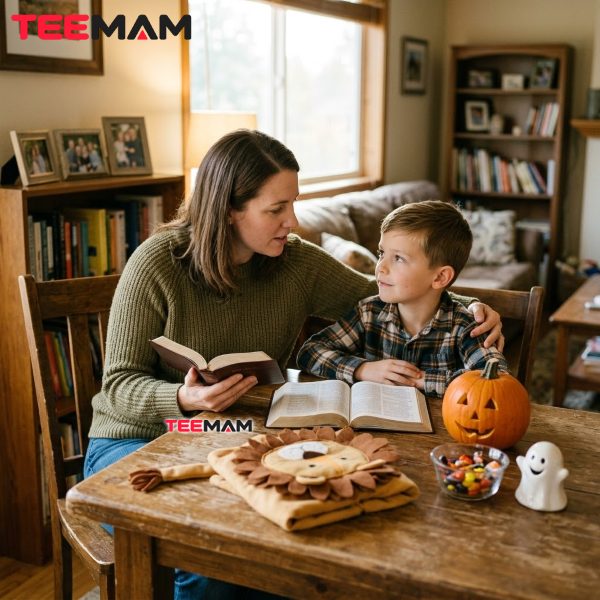
The important point is not simply to quote a verse, but to understand what it says in context before applying it to Halloween.
Ephesians 5:11 and the Works of Darkness
Paul tells believers to have nothing to do with the fruitless deeds of darkness, and instead to expose them. Applied to Halloween, this passage can lead Christians to consider whether a particular activity involves genuine moral compromise or celebrates what Scripture calls evil. It does not, by itself, establish a rule about costumes, nighttime activities, or pumpkin carving. This is an important distinction when weighing the halloween meaning in Bible: the passage addresses sinful behavior, not every symbol loosely associated with darkness. Dressing as a fictional character isn’t “fellowship with darkness” in the sense Paul means; the verse becomes relevant when an activity involves real spiritual harm or glorifying evil for its own sake.
Deuteronomy 18:10-12 and Occult Practices
This passage is direct and specific. It names divination, sorcery, fortune-telling, interpreting omens, casting spells, consulting mediums, and attempting to contact the dead as detestable practices, with no ambiguity about how seriously God’s people were meant to take them.
Deuteronomy 18 is about actual occult practice. It does not place candy, pumpkin carving, or a child dressed as a firefighter in the same category as consulting a medium. A fictional costume and an actual occult practice are not the same thing, and Scripture’s warnings here concern real spiritual practices, not spooky imagery borrowed for a night of trick-or-treating.
Romans 14 and Christian Conscience
Paul’s teaching addresses matters where Scripture gives no direct command, urging believers to act according to conscience and to avoid judging others who land differently on a disputable issue. Many Christians see Romans 14 as a useful framework for the halloween meaning in Bible question, because the passage addresses disputed matters of conscience rather than handing believers a universal rule for every cultural practice. That’s also why two families studying the same Bible can reasonably land in different places.
Christian Liberty and Matters of Conscience
The idea of Christian liberty is worth naming directly here. When Scripture doesn’t issue a direct command about a cultural practice, believers may reach different conclusions while still genuinely seeking to honor God. Romans 14 holds two things together: personal conviction on disputable matters, and a responsibility not to judge fellow believers who land somewhere else. Applied to Halloween, that means a family who skips it entirely and a family who trick-or-treats with clear boundaries can both be acting in good conscience — provided the specific choices don’t involve conduct Scripture clearly condemns, such as the occult practices named in Deuteronomy 18. This is one reason the halloween meaning in Bible question can’t be reduced to a simple yes-or-no rule.
1 Corinthians 10:31 and the Question of Motive
Paul’s instruction to do everything for God’s glory offers a useful filter for Halloween decisions. For Christians working through the halloween meaning in Bible, this verse shifts attention away from the calendar date and toward the motive behind participation: Why are you taking part? What does this specific choice communicate? Does it sit right with your conscience? Answering those questions honestly tends to matter more than any blanket rule.
Philippians 4:8 and What We Choose to Celebrate
Paul encourages believers to fix their minds on what is true, honorable, pure, lovely, and commendable. This verse is often skipped in Halloween articles that focus only on what to avoid, but it offers something more constructive: a positive filter for choosing costumes, decorations, and activities a family can feel good about, rather than just a list of prohibitions. For families anchored in this verse, the halloween meaning in Bible comes down less to a list of rules and more to a simple filter: what’s worth dwelling on, and what isn’t.
Is Halloween a Sin According to the Bible?
The Bible never calls Halloween a sin because it never addresses Halloween by name. It does, however, clearly condemn practices such as divination, sorcery, and consulting mediums. The distinction matters: Scripture evaluates what people do, not the date on the calendar. Christians therefore have to consider the specific activity, its intent, and their own conscience rather than treating October 31 itself as morally decisive. That distinction is central to the halloween meaning in Bible question: Scripture condemns certain practices, not a calendar date.
In other words, Christians need to distinguish between the holiday itself and the individual activities they choose to participate in.
A practical way to test that distinction is to ask what an activity actually involves, not what it looks like on the surface. Pumpkin carving involves seasonal art and decoration; a fortune-telling game asks participants to seek knowledge through a supernatural practice. A fictional witch costume borrows an image; consulting a medium is an actual attempt to contact the dead. Two activities can look equally “spooky” from the outside while raising very different questions under the passages discussed above.
When Halloween Activities Conflict With Biblical Teaching
Activities involving actual divination, attempts to contact the dead, occult rituals, or other practices explicitly condemned in Scripture present a much clearer biblical concern than anything tied to costumes or candy.
When a Halloween Activity May Be Cultural Rather Than Spiritual
Activities that generally fall into a different category include trick-or-treating for candy, carving pumpkins, wearing a non-occult costume, and attending a neighborhood or church gathering. These activities are not, by themselves, the same as practicing divination or consulting a medium. Some families will still choose to skip them, and that’s a legitimate call. But treating candy collection as morally equivalent to consulting a medium isn’t a conclusion the biblical text supports.
The table below lays out how a few common Halloween activities line up against the biblical concerns discussed above:
| Halloween Activity | Biblical Concern | Possible Christian Response |
|---|---|---|
| Trick-or-treating | No direct biblical prohibition | Weigh conscience, safety, and community |
| Pumpkin or jack-o’-lantern carving | No direct biblical prohibition | Generally treated as cultural |
| Non-occult costume (superhero, animal, historical figure) | No inherent biblical prohibition | Family discretion |
| Occult-themed costume or imagery | Raises questions under Ephesians 5:11 | Many families choose to avoid |
| Fortune-telling or divination games | Direct biblical concern (Deuteronomy 18) | Avoid |
| Ouija boards or mediums | Direct biblical concern (Deuteronomy 18) | Avoid |
| Church Trunk-or-Treat or harvest festival | Depends on family and church convictions | Common alternative |
Should Christians Celebrate Halloween?
There is no single verdict Scripture gives for Halloween. Most families aren’t really asking whether Halloween is abstractly good or bad — they want to know what their kids can do, what to avoid, and whether a given choice fits their convictions. That’s the real shape of the halloween meaning in Bible question for most households. Christian families commonly take one of three broad approaches: avoiding Halloween, replacing it with a church or harvest event, or participating selectively while setting personal boundaries.
Choosing Not to Participate
Some families skip Halloween entirely: porch lights off, no candy, no costumes. This reflects a personal conviction, not evidence that a family is “more spiritual” by default. Romans 14 makes room for this choice as one legitimate way to apply conscience to a disputable matter.
Choosing a Christian or Community Alternative
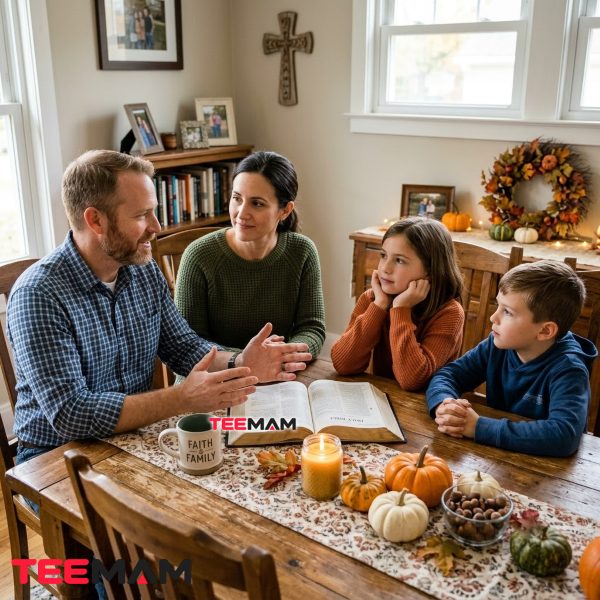
Others prefer a middle path: church-run Trunk-or-Treat events, fall harvest festivals, and family Bible nights give families a way to enjoy the season in a setting that fits their convictions — a practical middle answer to the halloween meaning in Bible question for families who want to stay engaged with their community.
Participating With Clear Boundaries
A third group takes part more directly, using conscience, biblical boundaries, and concern for others to guide what they participate in: no occult-themed costumes, no divination games, age-appropriate content, and a focus on neighborly connection rather than anything darker. Whichever path a family chooses, the halloween meaning in Bible conversation is less about picking the “correct” camp and more about making a considered choice a family can stand behind.
How Can Christian Families Approach Halloween Today?
Talk With Your Children Before Halloween
Once a family has worked through the halloween meaning in Bible for themselves, the next step is talking with children about the choices the family has made. A short conversation beats a last-minute rule. Explain what the day is, what your family has decided, and why, in terms your kids can actually process. Leave room for questions. Frame it around what your family values rather than fear of costumes or candy.
Choose Costumes That Reflect Your Family’s Values
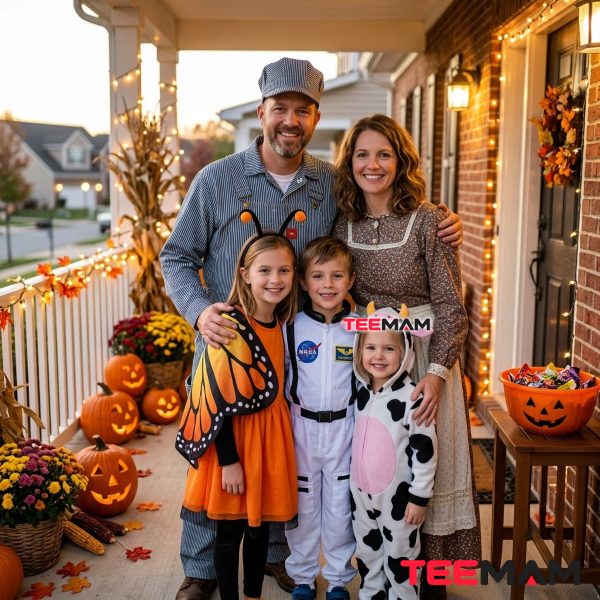
Superheroes, animals, historical figures, favorite storybook characters, funny puns, or matching family costumes let kids join in the fun of dressing up without leaning into occult or overly gruesome imagery. Parents who are still weighing the halloween meaning in Bible for their own household can start here: evaluate the specific costume or activity in front of them rather than making a blanket judgment about the entire holiday.
Create a Welcoming Alternative at Home
Pumpkins on the porch, warm lighting, a bowl of candy for neighborhood kids, a family game night, or a small harvest gathering all let a family lean into the season on their own terms, whether or not they take part in trick-or-treating itself.
Family-Friendly Halloween Apparel and Celebration Ideas
For families who choose to participate, clothing can be another way to reflect those boundaries. Family-friendly graphic tees, fall designs, and coordinated family outfits can keep the focus on fun, family, and community rather than occult imagery.
At TeeMam, we design family-friendly holiday apparel for readers who want to take part in the season’s traditions without leaning into darker or occult imagery — playful, seasonal pieces a family can wear together in good conscience.
Bible Verses to Read and Reflect on Around Halloween
| Verse | Core Principle | Halloween Application |
|---|---|---|
| Ephesians 5:11 | Have nothing to do with fruitless works of darkness; expose them instead | Worth weighing whether a specific activity involves genuine moral or spiritual compromise |
| Deuteronomy 18:10-12 | Condemns divination, sorcery, mediums, and consulting the dead | Draws a firm line around actual occult practice |
| Romans 14:1-4 | Believers shouldn’t judge one another over disputable matters | Different Christians may reach different conclusions about disputable cultural practices |
| Romans 14:13 | Be careful not to put a stumbling block in another believer’s way | Consider how your choices affect others’ conscience, not just your own |
| 1 Corinthians 10:31 | Do everything for God’s glory | A helpful filter for motive, not just activity |
| Philippians 4:8 | Dwell on what is true, honorable, pure, and lovely | A positive standard for choosing what to embrace, not only what to avoid |
Common Questions About Halloween and the Bible
These are the questions that come up most often once a reader has considered the biblical principles above and wants to apply them to a specific situation.
What Bible Verses Talk About Halloween?
The Bible does not contain verses specifically about Halloween, but several passages are commonly considered when Christians evaluate the holiday: Ephesians 5:11, Deuteronomy 18:10-12, Romans 14, 1 Corinthians 10:31, and Philippians 4:8. Each addresses a broader principle — darkness, occult practice, conscience, motive, or what’s worth dwelling on — rather than Halloween itself. For anyone searching for a single-verse answer to the halloween meaning in Bible question, this is why no one passage settles it on its own; the answer comes from reading these principles together.
Does the Bible Say Halloween Is Evil?
No. Scripture never singles out Halloween as evil. It does condemn specific practices sometimes associated with the holiday, such as occultism and idolatry, but those condemnations existed long before Halloween did and apply regardless of the calendar date.
Is Halloween Mentioned Anywhere in the Bible?
No. The Bible doesn’t mention Halloween by name anywhere in Scripture, because the holiday developed as a named observance long after the biblical texts were written.
Is It a Sin for Christians to Dress Up for Halloween?
Not inherently. A fictional costume and an actual occult practice are not the same thing. The relevant question is whether a given costume or activity genuinely represents occult practice or violates your own conscience, not whether it looks spooky.
Can Christians Go Trick-or-Treating?
There’s no direct biblical command either way. Because Scripture does not directly address trick-or-treating, Christians may apply principles of conscience, personal conviction, and consideration for others when deciding whether to participate.
What Does the Bible Say About Witches and Witchcraft?
Scripture consistently condemns witchcraft and divination as genuine spiritual practices, most clearly in Deuteronomy 18. That prohibition concerns real engagement with the occult. It doesn’t automatically extend to a child’s fictional witch costume, any more than reading a fantasy novel with a wizard character amounts to practicing sorcery.
Does Halloween Have Pagan Roots?
Halloween has historical connections to both Gaelic seasonal traditions such as Samhain and the Christian observances of All Saints’ Day and All Souls’ Day. Historians disagree about how directly modern Halloween descends from Samhain, so describing it as simply a renamed pagan festival oversimplifies the evidence. For anyone searching for the halloween meaning in Bible, the more useful point is that Scripture’s warnings target actual spiritual practice, not a holiday’s tangled or disputed ancestry.
Should Christian Parents Let Their Children Celebrate Halloween?
For parents asking about the halloween meaning in Bible in relation to their own kids, the better question usually isn’t a flat yes or no — it’s which specific activities are consistent with Scripture, conscience, the child’s age and maturity, family values, and the surrounding community.
Does Celebrating Halloween Mean Supporting Its Pagan Origins?
Not necessarily. Participating in a modern cultural tradition does not automatically mean endorsing every belief or practice historically associated with it. Christians who take part can still choose which activities they’re comfortable with, just as families who avoid Halloween altogether can do so from sincere conviction.
How Should Christians Decide What to Do on Halloween?
A simple framework, drawn from the principles above, can help with the specific decisions that come up each October:
- Does this activity conflict with Scripture?
- Does it involve occult or spiritual practices?
- Can I participate with a clear conscience?
- Could my participation encourage someone else toward something harmful?
- Can I use the occasion to show love, hospitality, and integrity to my neighbors?
These questions give families a practical way to work through the halloween meaning in Bible without expecting Scripture to answer a question it never directly addresses. When a specific choice comes up — a costume, a party invitation, a neighborhood event — they help a family make a thoughtful decision.
Final Thoughts on the Biblical Meaning of Halloween
At its core, the halloween meaning in Bible question has less to do with finding a verse about October 31 and more to do with applying biblical principles faithfully: reject genuine occult practice, take conscience seriously, extend grace to believers who land somewhere different, and choose activities that reflect what is good and honorable.
None of that adds up to a command to celebrate Halloween, and none of it adds up to a command to avoid it either. Christian families land in different places on this, often for thoughtful reasons, and Scripture makes room for that. What matters more than the specific choice is the discernment, love, and integrity behind it.

Hi, I’m Olivia Bennett, a fashion and lifestyle writer at TeeMam with 6 years of experience creating content about fashion, outfits, and lifestyle trends. I enjoy sharing practical style ideas for everyday wear, game days, holidays, and special occasions, helping readers find looks that feel comfortable, fun, and uniquely their own.