The History of the Jack-O’-Lantern: Why We Carve Pumpkins
If you’ve ever stood in a pumpkin patch trying to pick the “right” one, or spent a Saturday afternoon scraping stringy pumpkin guts into a trash bag while your kids fight over who gets to draw the face, you’ve taken part in a tradition that’s older and stranger than most people realize. The grinning Halloween pumpkin on your porch didn’t start out orange, and it didn’t start out as a pumpkin at all.
It started as a turnip.
Short answer: We carve pumpkins for Halloween because the tradition grew out of Irish and Scottish customs of carving turnips and other root vegetables around Samhain and later All Hallows’ Eve. Irish immigrants brought the practice to America in the 1800s, where pumpkins were larger, more plentiful, and far easier to carve. Over time, the pumpkin replaced the turnip and became one of Halloween’s defining symbols.
That’s the short version. Here’s the fuller story, including how a folk tradition turned into the Halloween pumpkin culture that shows up on porches, in cartoons, and on apparel every October.
What Is a Jack-O’-Lantern, Exactly?
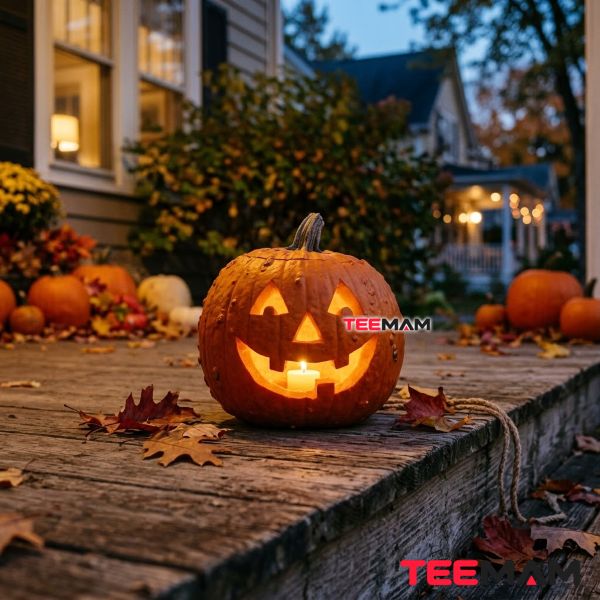
A jack-o’-lantern is a hollowed-out vegetable, most commonly a pumpkin today, carved with a face and lit from within, traditionally by a candle. The name itself is older than the carved pumpkin by a couple of centuries. According to Merriam-Webster, “jack-o’-lantern” has meant a lantern made from a hollowed pumpkin in American English since the 1800s, but the term started out in 17th-century Britain, where “Jack” was a generic name for a man whose real name you didn’t know, so a night watchman carrying a lantern might be called “Jack of the lantern.” Around the same time, the phrase attached itself to something else entirely: the ghostly flickers of light that appear over bogs and marshes at night, caused by gases released from decomposing plant matter. People called these lights will-o’-the-wisps, hinkypunks, or jack-o’-lanterns, and told stories to explain them.
Merriam-Webster is candid about a gap in the record here. We know where the word came from, but exactly how it came to describe a carved pumpkin specifically isn’t fully settled, and lexicographers have proposed a few competing explanations rather than one confirmed answer.
Why Is It Called a Jack-O’-Lantern?
The name has more than one proposed origin, and they overlap rather than compete. In 17th-century Britain, “Jack” was shorthand for an unnamed man, which is how a lantern-carrying night watchman became a “Jack of the lantern.” That same phrase later got attached to the marsh lights known as will-o’-the-wisps. Separately, Irish folklore tells of a wandering figure named Stingy Jack, carrying a glowing ember inside a hollowed turnip. Most historians and lexicographers treat these as overlapping strands of language and folklore that fed into one another over time, rather than a single, provable origin story.
The First Jack-O’-Lanterns Weren’t Pumpkins at All
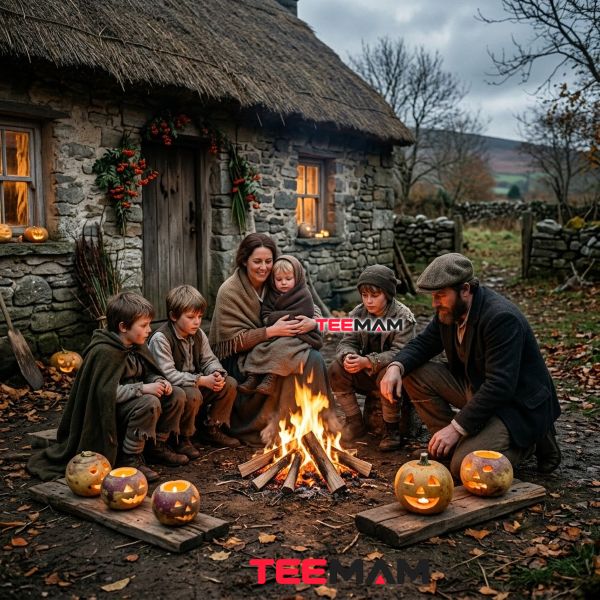
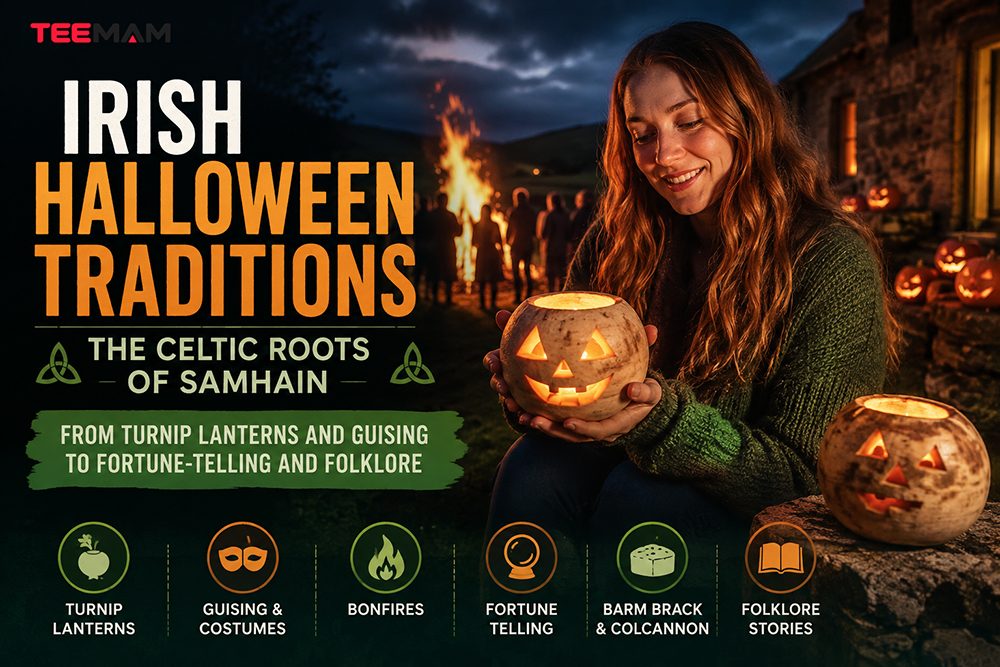
Before anyone carved a pumpkin, people carved what was actually growing in their fields. In Ireland and parts of Scotland, that meant turnips, with beets and potatoes also used in some regions. Smithsonian Magazine ties this vegetable-carving custom to Samhain, a Gaelic festival associated with the end of the harvest and the beginning of winter, when Celtic tradition held that the boundary between the living and the dead grew thin. The hollowed vegetables served a practical lighting purpose (metal lanterns were expensive, so people made do with what they had), and the carved faces also carried protective, folkloric meaning, meant to ward off Stingy Jack and other restless spirits. Over time, Christian observances surrounding All Hallows’ Eve and All Saints’ Day overlapped with these older seasonal traditions; some customs persisted, some changed, and some took on new meaning, including the use of carved vegetable lanterns. The exact path from ancient Samhain ritual to the vegetable lanterns documented in 19th-century Ireland isn’t fully traceable, but historians generally connect the two as part of the same evolving tradition.
The Legend of Stingy Jack
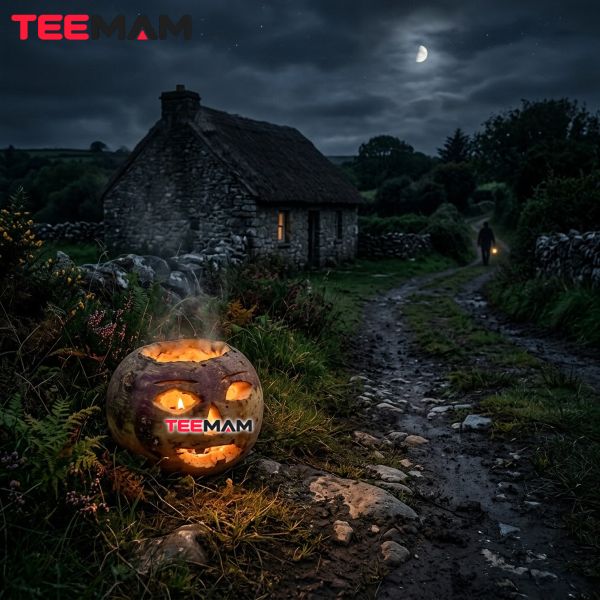
The character most often credited with the jack-o’-lantern’s name comes from Irish folklore. The earliest known printed version of the tale dates to the 19th century, though the story is generally understood to be older, passed down for generations before it was written down.
According to the legend, a cunning, miserly man named Jack tricked the Devil not once but twice. In the most common version, Jack convinced the Devil to turn himself into a coin to pay for a drink, then pocketed the coin next to a silver cross so the Devil couldn’t change back. Jack only released him after extracting a promise that the Devil would never claim his soul. When Jack eventually died, Heaven wouldn’t have him because of how he’d lived, and the Devil, bound by his earlier promise, wouldn’t take him either. Cursed to wander the earth in darkness, Jack was tossed a single burning ember to light his way. He is said to have placed it inside a hollowed-out turnip, and he’s been wandering ever since as “Jack of the Lantern.”
It’s worth being clear about what this story is and isn’t. Stingy Jack was never a real, documented person; he’s a folk character, and the legend is one of several explanations historians and lexicographers point to for how the term “jack-o’-lantern” came to describe a carved lantern. There’s no historical evidence that people began carving vegetables specifically because of the Stingy Jack story. The legend is genuinely useful for understanding the folklore and symbolism people attached to these carvings, but it’s better read as one explanation layered onto an older or parallel lantern tradition than as proof of exactly when or why vegetable carving began.
Why the Original Lantern Wasn’t a Pumpkin
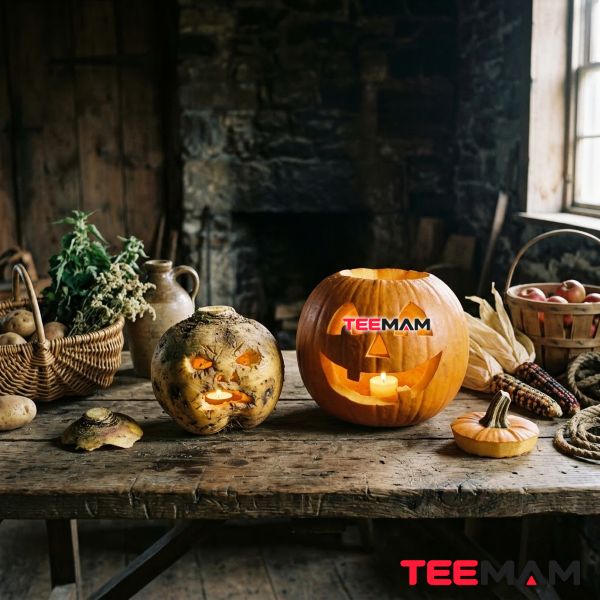
The material difference comes down to geography more than symbolism. Pumpkins are native to the Americas and simply weren’t part of traditional European agriculture before contact with the New World. Turnips, by contrast, were an established, easy-to-grow crop across the British Isles. So when people wanted a carved lantern for Samhain or All Hallows’ Eve, they reached for what was actually available: turnips, and in some regions, beets or potatoes.
| Turnip Lanterns (Ireland/Scotland/England) | Pumpkin Lanterns (America) |
|---|---|
| Native, widely grown crop in the British Isles | Native crop in the Americas |
| Small and dense, genuinely hard to hollow out | Large interior cavity and softer flesh, easier to carve |
| Lit with an ember or candle | Works with candles or, today, battery-powered LEDs |
| Rooted in protective folk custom | Became a decorative and cultural icon in the U.S. |
From Irish Turnips to American Pumpkins
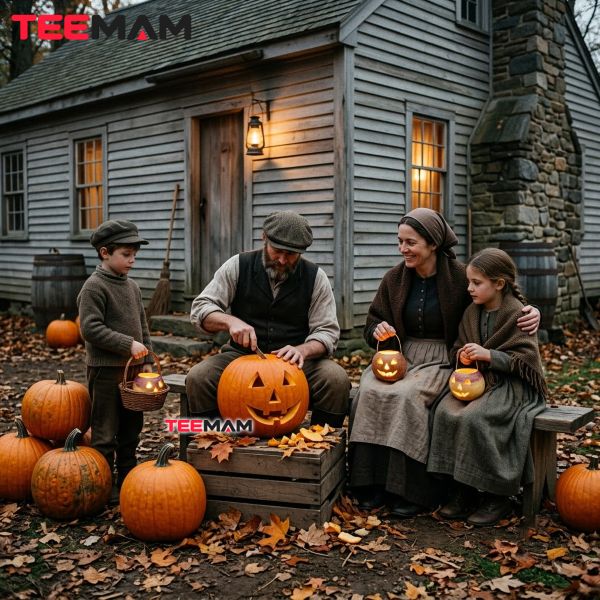
The tradition crossed the Atlantic with Irish and Scottish immigrants, and it changed almost as soon as it landed. The 19th century saw enormous waves of Irish emigration to the United States, driven in large part by the Great Famine that began in 1845. According to History.com, these immigrants helped shift pumpkin carving in America from a general autumn pastime into a custom specifically tied to Halloween. The vegetables immigrants had traditionally carved weren’t available in the same way in America, but pumpkins, native to North America and much larger, offered a far easier surface to carve. This shift is what set the Halloween pumpkin tradition on the path to becoming one of the country’s most recognizable seasonal customs.
When Did Americans Start Carving Pumpkins?
There’s no single confirmed starting date, but the record does have some real landmarks. Nathaniel Hawthorne used the term “jack-o’-lantern” in his 1835 story “The Great Carbuncle,” the earliest known printed use of the phrase according to Merriam-Webster, though that reference describes the flickering-light meaning of the word, not necessarily a carved pumpkin. Hawthorne came closer to the modern image in 1852 with “Feathertop,” which describes a scarecrow with an actual carved pumpkin head. National Geographic cites historian Cindy Ott, author of Pumpkin: The Curious History of an American Icon, for this history: the first known published image of a pumpkin jack-o’-lantern is likely one that appeared in an 1867 issue of Harper’s Weekly.
By the late 1800s, American newspapers were describing pumpkin jack-o’-lanterns as an established part of Halloween entertaining. The Atlanta Constitution, for instance, described an 1892 Halloween party in Atlanta decorated with, in the paper’s words, “smiling lanterns made of pumpkins, cleverly carved with faces.” Taken together, the timeline looks less like a single invention and more like a gradual adoption: the term shows up in the 1830s, the carved-pumpkin image follows by mid-century, and by the 1890s it’s showing up in mainstream American social pages as an expected part of the holiday.
Washington Irving’s The Legend of Sleepy Hollow also played a role in cementing the pumpkin’s place in American Halloween imagery, even though the connection is more indirect than people often assume. In the 1820 story, the Headless Horseman hurls an uncarved pumpkin at Ichabod Crane in the famous climax; there’s no jack-o’-lantern in Irving’s original text. Later illustrations and adaptations reimagined the Horseman carrying a glowing, carved jack-o’-lantern instead, and that image stuck. It’s a good example of how this history rarely comes down to one clean origin point. More often, a story or symbol gets reshaped by each generation that retells it.
Why Pumpkins Became Halloween’s Signature Symbol
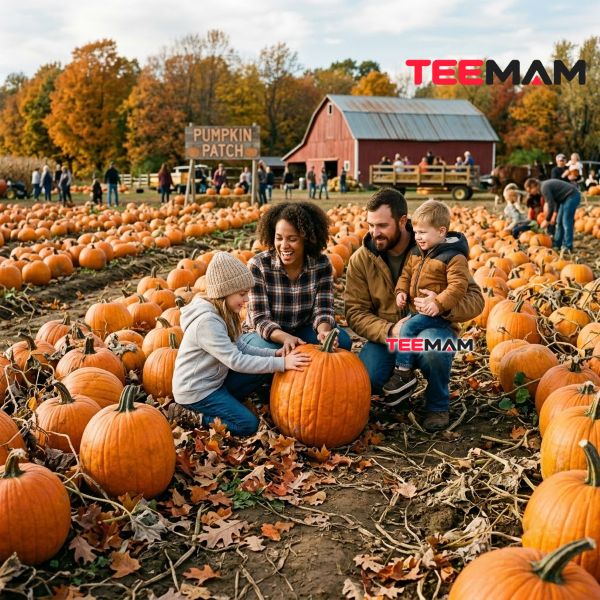
Once pumpkins entered the picture, a few practical qualities turned them into more than just a turnip substitute.
- Size and surface area. A pumpkin’s wide, curved shell gives carvers far more room to work with than a turnip, which opened the door to more expressive, detailed faces.
- Color. The deep orange shade lines up naturally with autumn (falling leaves, harvest season, shortening October light), which helped the pumpkin read as a seasonal symbol, not just a carving material.
- Timing. Pumpkins are harvested in the fall, right around Halloween, making them an easy, obvious seasonal purchase.
- Instant recognizability. A triangle-eyed, jagged-toothed face reads as “Halloween” from across a yard, with zero explanation needed.
That last point is what eventually carried the jack-o’-lantern out of front-yard decoration and into design. A shape that communicates an entire holiday in one silhouette tends to get reused, which is a large part of why the Halloween pumpkin didn’t stay confined to real, rotting produce for long.
Why the Halloween Pumpkin Became So Iconic
As Halloween grew into a shared national holiday through the 20th century, the jack-o’-lantern’s face started showing up in more places than porches: children’s book illustrations, vintage greeting cards, eventually cartoons and packaging, with each version simplifying the shape a little further into fewer carving details, bolder expressions, rounder grins. The look gradually split into two parallel versions, the classic, jagged scowl meant to unsettle, and a friendlier, more rounded face built for kids and casual decoration.
The jack-o’-lantern also happened to make an unusually good graphic. Its round outline, triangular eyes, and jagged mouth stay recognizable even reduced to a few simple lines, which is why the motif reads clearly whether it’s carved into an actual pumpkin, printed small on a greeting card, or flattened into an icon on packaging. That’s also why the symbol outlasted the physical vegetable: a real jack-o’-lantern rots within a week or two, but its visual shorthand travels easily from a porch decoration to a print, a sweatshirt, or a digital illustration, working just as well small on a sleeve as it does three feet tall on a front step.
For readers curious how this fits into the visual language of the season more broadly, our guide to spooky words for Halloween designs looks at the vocabulary that shows up again and again in seasonal graphics, and our roundup of Halloween apparel for seasonal style covers how that visual language translates into clothing.
At TeeMam, we see that visual simplicity as the reason the jack-o’-lantern continues to work so well as a seasonal graphic: its basic shape communicates Halloween instantly, even when reduced to a few lines or stitched into a simple apparel design.
How Americans Keep the Tradition Alive Today
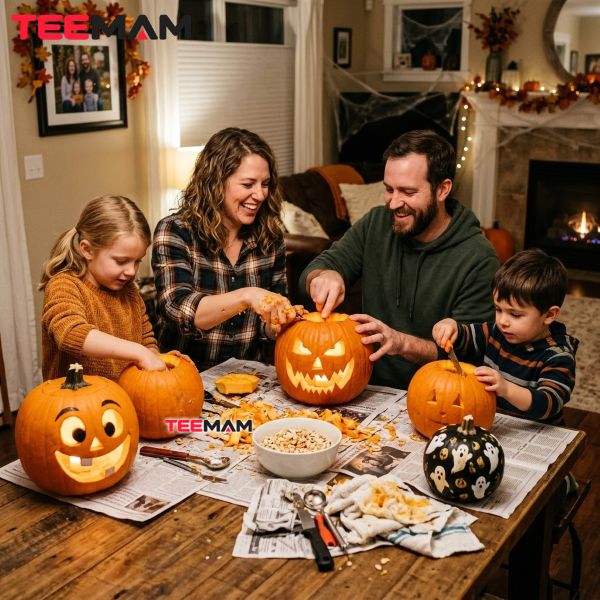
Pumpkin carving today looks a lot friendlier than its turnip-lantern origins, but the core ritual hasn’t really changed: gather, hollow something out, put a face on it, light it up. Families head to pumpkin patches together, carve at the kitchen table with newspaper spread underneath, and set the finished jack-o’-lanterns out for neighbors and trick-or-treaters to see. Carving styles have expanded well past the classic triangle-eyed face, with stencil kits, painted no-carve pumpkins, and battery-powered LED lights now common alternatives to an open flame, especially with kids involved. On any given block in late October, you’ll likely see all of it side by side: a scary carved face, a hand-painted cartoon one, and a plain pumpkin just sitting on the steps because nobody got around to carving it yet.
What the Jack-O’-Lantern Tells Us About How Traditions Survive
Stingy Jack may be the story most people remember, but the more telling historical thread is what happened to the tradition after that. The custom kept its basic shape while nearly everything around it changed. Turnips gave way to pumpkins. Embers and candles gave way to electric lights. A protective folk practice, meant to keep a cursed spirit away from the household, gradually became a front-porch decoration, and later a design motif reused across greeting cards, packaging, and clothing. None of those shifts required abandoning the core idea; the tradition simply adapted to whatever crop, technology, or audience was in front of it at the time.
That adaptability likely explains why the jack-o’-lantern has outlasted plenty of other Halloween customs that came and went. It signals something a little different to a 19th-century Irish immigrant carving a pumpkin for the first time and to a kid doing the same thing this October, while still being, recognizably, the same tradition, still marking a household during a season historically associated with spirits crossing over.
Halloween carried a few other customs along a similar path. Trick-or-treating and its candy culture is one of the most obvious, which you can read more about in our piece on the story behind Halloween candy. And if you want the fuller backstory on the holiday itself, our guide to Halloween’s history and ancient roots and our breakdown of Halloween colors and their meanings cover ground this article doesn’t.
Jack-O’-Lantern History Questions, Answered
Why do we carve pumpkins for Halloween?
The custom traces back to Irish and Scottish folklore, where people carved faces into turnips and other root vegetables to ward off wandering spirits around Samhain and later All Hallows’ Eve. Irish immigrants brought the practice to America in the 1800s, and pumpkins, native, abundant, and far easier to carve, gradually took the place of turnips, giving rise to the Halloween pumpkin tradition as it’s practiced today.
Why is it called a jack-o’-lantern?
The name predates the carved pumpkin. In 17th-century Britain it referred to an unnamed man carrying a lantern, and it was later applied to the flickering marsh lights known as will-o’-the-wisps. Irish folklore separately tells of Stingy Jack, a wandering figure carrying an ember in a hollowed turnip. Historians treat these as overlapping origins rather than one confirmed source.
Why were turnips used before pumpkins?
Turnips were the vegetable actually available in Ireland, Scotland, and England; pumpkins are native to the Americas and weren’t part of European agriculture before contact with the New World. Turnips, along with beets and potatoes in some regions, were hollowed out and fitted with an ember or candle long before anyone in the British Isles had access to a pumpkin.
When did Americans start carving pumpkins?
There’s no single confirmed starting date. The term “jack-o’-lantern” appears in American writing as early as 1835, a carved pumpkin specifically shows up in an 1852 short story, and the first known published image of a pumpkin jack-o’-lantern is likely from an 1867 issue of Harper’s Weekly. By the 1890s, newspaper accounts describe pumpkin jack-o’-lanterns as an established feature of American Halloween parties.
What is the real story behind the jack-o’-lantern?
It’s a folk legend, not documented history. According to Irish tradition, a trickster named Stingy Jack outwitted the Devil twice, was denied entry to both Heaven and Hell after he died, and was cursed to wander the earth with only a burning ember, placed inside a hollowed turnip, to light his way. There’s no evidence this legend caused vegetable carving to begin; it’s better understood as folklore layered onto an existing custom than as its documented origin.
Are jack-o’-lanterns originally Irish?
The carved-lantern folklore, including the Stingy Jack legend, is rooted in Irish tradition, with close parallels in Scotland and parts of England. The pumpkin itself is an American addition; it wasn’t part of the original custom at all until immigrants adapted the tradition after arriving in the United States.
Why are pumpkins specifically associated with Halloween?
Three things lined up: pumpkins are harvested in autumn, right around Halloween; they became widely available in America just as Irish and Scottish immigrants needed a turnip substitute; and their size made them far easier to carve into the kind of expressive carved faces that turnips could rarely accommodate.
The Tradition, Still Glowing
Next time you’re carving a Halloween pumpkin, or just walking past one grinning off a stranger’s porch, it’s worth remembering how far it traveled to get there. A turnip lantern meant to keep a cursed soul away from an Irish farmhouse became, through immigration, improvisation, and more than a century of American Halloweens, one of the most recognizable images the holiday has. The materials and meaning changed along the way, but the basic ritual stayed surprisingly familiar: hollow something out, give it a face, light it from within, and put it where others can see it. That continuity is what makes the Halloween pumpkin feel both ancient and unmistakably American, and it’s exactly what happens on porches across the country every October.

Hi, I’m Olivia Bennett, a fashion and lifestyle writer at TeeMam with 6 years of experience creating content about fashion, outfits, and lifestyle trends. I enjoy sharing practical style ideas for everyday wear, game days, holidays, and special occasions, helping readers find looks that feel comfortable, fun, and uniquely their own.