The Ultimate San Francisco 49ers Fan Guide: Traditions, Levi’s Stadium & Game Day Culture
Show up to Levi’s Stadium without a plan and you’ll find out the hard way: turned away at the gate over a bag that’s an inch too big, sunburned by halftime because you booked seats on the wrong side, or standing silent while 68,000 people around you finish a “Bang! Bang!” chant you’ve never heard. None of that ruins a game day, but all of it is avoidable — and that’s really what this guide is for.
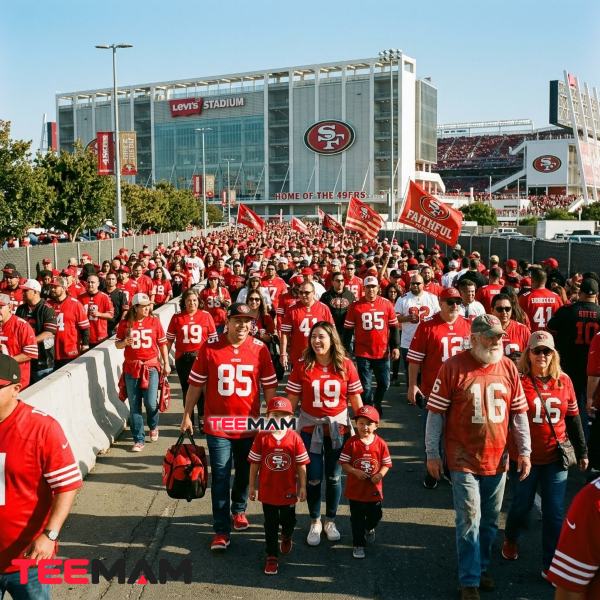
Who this guide is for:
- First-time visitors heading to Levi’s Stadium for a 49ers game
- Traveling fans flying or driving in from outside the Bay Area
- Families planning a first game with kids
- Longtime fans who want the full story behind the traditions they already love
Everything below comes from how a 49ers Sunday actually unfolds in Santa Clara — the parking lot chaos, the light rail shortcut most out-of-towners never hear about, the sun that catches people off guard in September, and the food lines that get long in exactly the same spot every single week.
What Makes the San Francisco 49ers Fan Community So Unique?
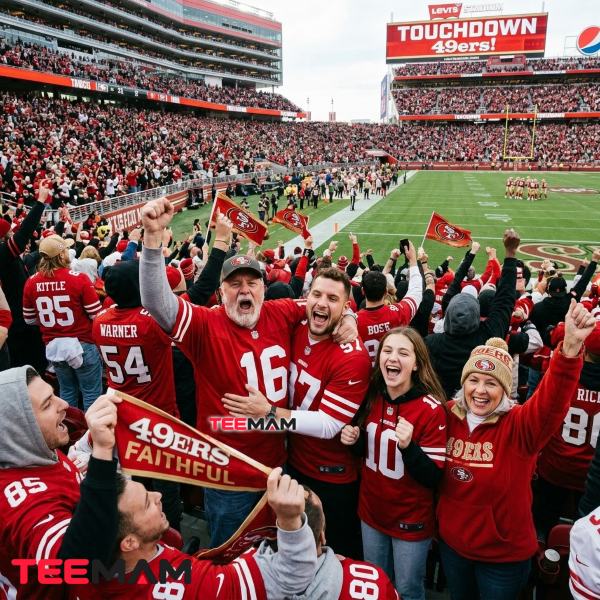
The San Francisco 49ers fan base, known as “The Faithful,” is considered one of the NFL’s most loyal and multigenerational fan communities, built on decades of shared history spanning losing seasons in the 1970s, a dynasty in the 1980s and ’90s, and a modern resurgence under head coach Kyle Shanahan. What separates this fan base from a typical NFL crowd isn’t the win total by itself. It’s the sense that supporting the team is a family inheritance, passed down from grandparents who sat in the fog at Kezar Stadium to grandkids who’ve never known anything but Levi’s Stadium sunshine.
Who Are the Faithful?
The nickname didn’t arrive with a marketing campaign. It grew out of the hardest years in franchise history. Long before Joe Montana ever took a snap, the 49ers stumbled through brutal stretches — including a 2-14 season after head coach Monte Clark was fired — and the fans who kept showing up on cold Sundays at Candlestick Park anyway earned the name honestly. “Faithful” wasn’t a slogan yet. It was just an accurate description of who was left in the stands.
Wider popularity came in the 1980s, once Bill Walsh’s West Coast offense and a young Joe Montana turned the franchise into a dynasty. A wave of new supporters joined during that golden run, and longtime fans wanted a way to separate themselves from the newcomers. “49er Faithful” stuck because it told the truth: some of these people had stayed loyal through years with nothing to show for it.
A second identity entered the rotation more recently. In 2019, Bay Area rapper E-40 popularized the “Bang! Bang!” chant and the “Niner Gang” label as the team surged back into playoff contention, giving younger fans their own rallying cry alongside “Faithful.” Both names get used interchangeably today. Inside Levi’s Stadium, murals created through a collaboration between the 49ers, Adobe, and the design studio BridgeGood pay tribute to the identity directly, and “Faithful Then, Faithful Now” still shows up across stadium signage and merchandise. For the full backstory on how the nickname evolved decade by decade, see our guide to understanding The Faithful nickname.
Why the 49ers Have One of the NFL’s Most Loyal Fan Bases
| Factor | Why It Matters |
|---|---|
| Multi-generation fandom | Season tickets in some Bay Area families have passed down three or four generations since the franchise’s 1946 founding. |
| Five Super Bowl titles | Championships won across the 1981, 1984, 1988, 1989, and 1994 seasons gave an entire generation a golden era every rebuild still gets measured against. |
| Regional football identity | The Bay Area isn’t a year-round football-obsessed market the way Texas or Ohio is, but a 49ers Sunday functions almost like a civic event, built around local food culture and sourdough tradition. |
| National reach | Because the dynasty years predated modern regional broadcast restrictions, fan clubs like the Niner Empire operate well beyond Northern California, with organized chapters as far as Portland, Oregon. |
Why Are They Called the 49ers?
The San Francisco 49ers are named after the “forty-niners” — the prospectors who flooded into Northern California during the 1849 Gold Rush in search of fortune. Founded in 1946 as a charter member of the All-America Football Conference, the franchise reportedly took its name from an idea proposed by Allen E. Sorrell, one of the team’s original partners, as a nod to the event that defined San Francisco’s history. Naming the club after that migration gave it an identity rooted in the region instead of a generic mascot pulled from nowhere in particular.
That Gold Rush connection still shows up everywhere in 49ers branding, from the team’s mascot to its color palette. For the full story — including the lesser-known theories about the name — see our deep dive on the origin of the 49ers name.
A Quick Look at 49ers History Every Fan Should Know
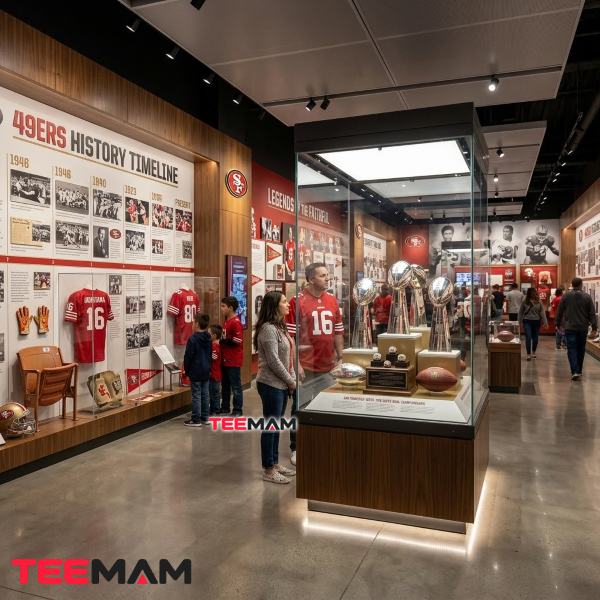
You don’t need a textbook-length history lesson to follow along at a tailgate, but a handful of eras come up in conversation more than others.
Defining Eras That Built the Franchise
For their first three decades, the 49ers were mostly a competitive but frustrated team — strong regular seasons undercut by painful playoff exits, including three straight division titles in the early 1970s that all ended against Dallas. The Pro Football Hall of Fame’s official franchise history traces this stretch back to the team’s charter membership in the All-America Football Conference in 1946, when the 49ers went 39-15-2 without ever quite catching the dominant Cleveland Browns. Everything changed when Bill Walsh arrived in 1979 and installed what became known as the West Coast offense. Paired first with Joe Montana and later Steve Young, that system produced five Lombardi Trophies between 1981 and 1994, featuring names that still headline Hall of Fame conversations: Jerry Rice, Ronnie Lott, Charles Haley, and Fred Dean.
A rebuilding stretch through the 2000s gave way to a modern resurgence, first under Jim Harbaugh, who reached Super Bowl XLVII following the 2012 season, and now under Kyle Shanahan, whose tenure since 2017 has already produced Super Bowl appearances following the 2019 and 2023 seasons — both losses to the Kansas City Chiefs. The current roster, led by quarterback Brock Purdy alongside stars like tight end George Kittle and linebacker Fred Warner, enters recent seasons squarely in Super Bowl contention, and the team’s five Lombardi Trophies are on permanent display inside the 49ers Museum presented by Foxconn at Levi’s Stadium, alongside life-size statues of franchise legends in the Edward J. DeBartolo Sr. 49ers Hall of Fame. Championship windows open and close, but at Levi’s Stadium, that expectation never fully goes away.
The Evolution of the Iconic 49ers Logo
49ers branding has always leaned into Gold Rush identity rather than away from it. Program art from the late 1940s featured a mustached, gun-toting prospector, a look that eventually softened into the interlocking “SF” wordmark fans recognize on today’s helmets, paired with the oval shield logo used across most current merchandise. The shift from literal miner imagery to a cleaner script mark mirrors a broader NFL trend in the 1960s toward simpler, more brandable logos — but the 49ers kept the prospector spirit alive through their mascot rather than retiring it entirely. For a side-by-side comparison of every era, see our complete logo evolution guide.
Levi’s Stadium Guide for First-Time Visitors
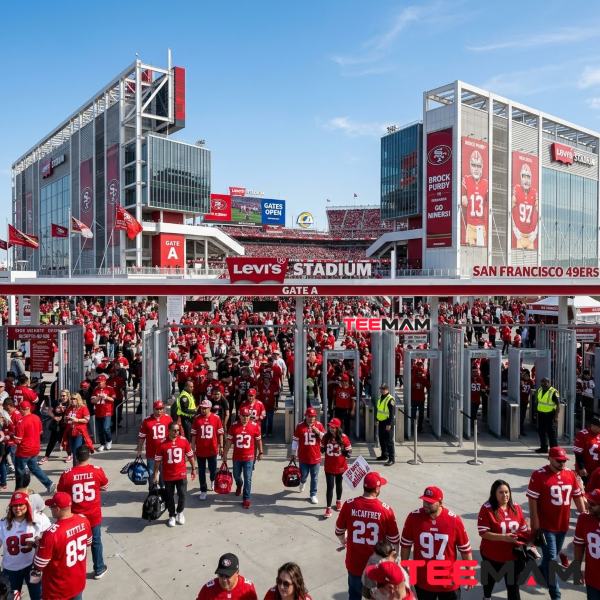
This is the section that matters most if you’re actually planning a trip, so let’s get into the logistics that shape your day.
Where Is Levi’s Stadium?
Levi’s Stadium sits at 4900 Marie P. DeBartolo Way in Santa Clara, California — not in San Francisco itself. It’s roughly 45 minutes south of the city, deep in Silicon Valley, next to the California’s Great America theme park. That distinction trips up a lot of first-timers who assume the stadium is downtown, so plan your route accordingly if you’re staying in San Francisco proper.
Opened in July 2014 at a construction cost of roughly $1.3 billion, the stadium holds an official capacity of about 68,500 — a figure that climbs higher for concerts and marquee events like Super Bowl LX, which was played there in February 2026. It sits near several major freeways, including Highways 101, 237, and 880, which makes driving straightforward on paper but heavy with traffic in reality once game day arrives.
What Is the Levi’s Stadium Bag Policy?
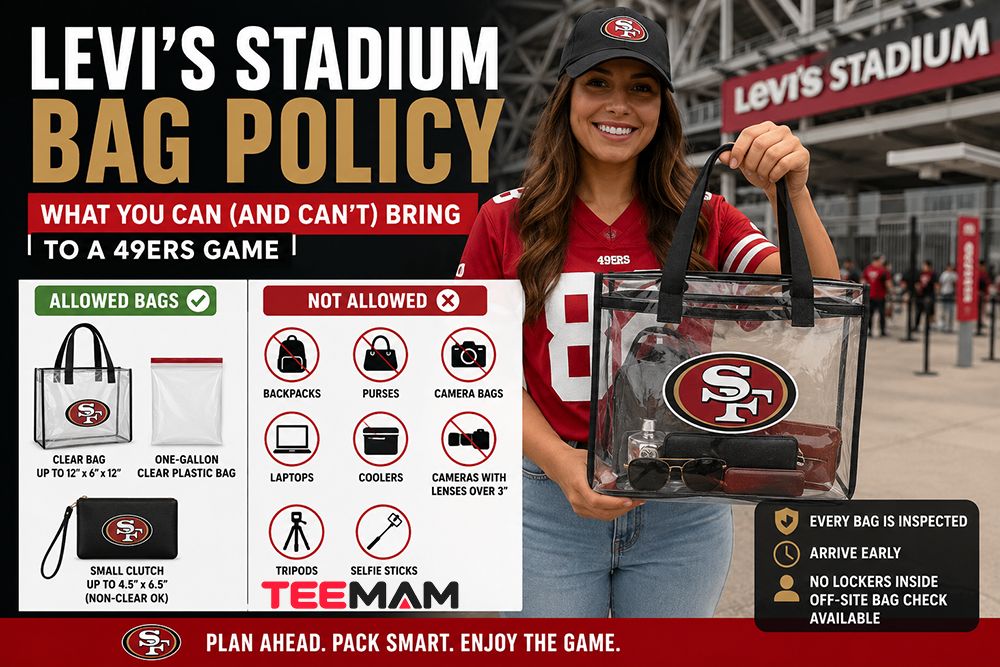
Quick Answer: Levi’s Stadium allows one clear plastic, vinyl, or PVC bag up to 12″ x 6″ x 12″, plus one small non-clear clutch up to 4.5″ x 6.5″. Backpacks, large purses, and camera bags are not permitted, and there is no bag check available at the gates.
A standard one-gallon clear resealable freezer bag also passes inspection. Medically necessary items and diaper bags are allowed after inspection at a designated gate, and strollers get checked at a guest services station rather than carried through security. Because this policy applies to every event at the stadium, not just 49ers games, it’s worth building the habit of leaving anything questionable in the car before you even leave home, and confirming the current rules directly through the official Levi’s Stadium bag policy page before you pack, since venue policies can be updated without much notice. For the complete breakdown of what’s allowed, what’s banned, and how the medical exceptions work, see our full rundown of Levi’s Stadium bag requirements.
Best Ways to Get to the Stadium
| Method | What to Know |
|---|---|
| Driving | More than 21,000 parking spaces sit within walking distance, but expect premium pricing on lots closest to the gates and heavy freeway traffic in the two hours before kickoff. |
| VTA Light Rail | The Green and Orange lines stop at Great America Station, about a one-fifth-mile walk from the gates — often closer than the parking lots themselves. This is the easiest option for most out-of-town fans. |
| Caltrain | Fans coming from San Francisco ride Caltrain to Mountain View or Santa Clara station, then transfer to VTA Light Rail for the final stretch. |
| ACE / Capitol Corridor | Regional rail lines run special game-day service from the Central Valley and East Bay directly into the Great America rail station, next to the light rail stop. |
| Rideshare | Levi’s Stadium designates specific pickup and drop-off zones that shift by event, so check the stadium’s site the week of your game rather than trusting last season’s zone. |
Arriving at least 90 minutes before kickoff isn’t overkill — with roughly one in five fans using public transit and lots filling early, it’s close to mandatory if you want to see warmups and grab food before the anthem.
Which Seats Offer the Best Game Day Experience?
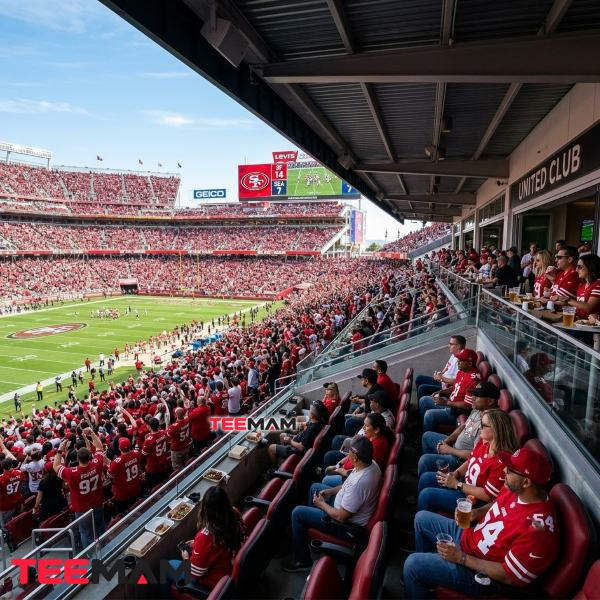
Most guides stop at “lower bowl versus upper deck.” A few details matter more once you’ve actually sat through a full game in each spot.
| Zone | Sun & Weather | Crowd Atmosphere | Best For |
|---|---|---|---|
| West lower bowl | Falls into shade earlier in afternoon games | Loud, close to the sideline action | Fans sensitive to heat and anyone chasing atmosphere |
| East side (lower and upper) | Takes direct sun through most of the first half in day games | More laid-back, easier sightlines | Cooler-weather games and fans who don’t mind the sun |
| End zone sections | Partial sun depending on kickoff time | Extremely vocal during red zone plays and third-down stops | Die-hard fans and chant leaders |
| Premium clubs and suites | Climate-controlled, indoor-outdoor | Calmer, hospitality-focused | Fans prioritizing comfort over crowd noise |
If you’re sitting on the east side for a September or early-October afternoon kickoff, don’t underestimate the sun — Santa Clara’s average high runs around 80°F in that stretch, and direct exposure for two-plus hours catches a lot of first-time visitors off guard. Sunscreen and an extra water before halftime solve most of it. The lower bowl overall holds roughly two-thirds of the stadium’s capacity, which is why the noise concentrates there regardless of which side you pick.
What Food Should You Try at Levi’s Stadium?
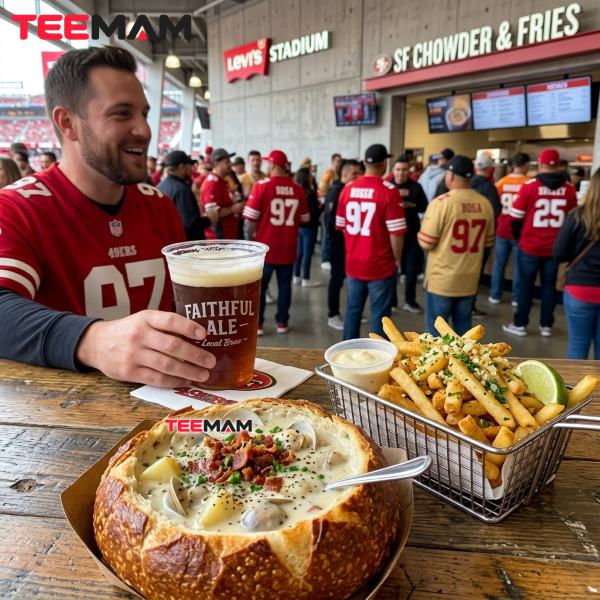
Stadium food has a bad reputation nationally, but Levi’s Stadium leans harder into Bay Area food culture than most NFL venues.
- Clam chowder in a sourdough bread bowl ties directly back to San Francisco’s culinary history — Boudin Bakery has been baking with wild Bay Area yeast since 1849, the same year the Gold Rush began.
- Garlic fries are a Bay Area sports staple, not unique to Levi’s, but expected and consistently good here.
- Local craft beer gets more shelf space at Levi’s Stadium than at a lot of NFL venues, with rotating taps from Northern California breweries.
If you’re buying garlic fries or a bread bowl at halftime, the stands nearest midfield almost always have the longest lines — walking one section over toward the end zones usually cuts the wait by more than half. The stadium runs entirely cashless, so bring a card, or use one of the reverse ATMs that convert cash into a prepaid card if you show up without one. Vegetarian and plant-based stands have expanded section by section in recent seasons; ask any Guest Services team member (branded on-site as a “Playmaker”) if you can’t spot the nearest one.
How to Experience an Authentic 49ers Game Day
If the stadium logistics are the framework, this is the part that actually makes the day memorable.
What Happens Before Kickoff?
A typical 49ers game day follows a rough timeline: tailgating begins mid-morning in the lots surrounding Levi’s Stadium, gates open roughly 90 minutes before kickoff, players take the field for warmups about an hour out, and pregame introductions ramp up in the final 15 minutes. For a 1:05 p.m. kickoff, that usually means lots opening around 9 or 10 a.m., stadium gates opening near 11:35 a.m., and the crowd building to full volume by 12:45 p.m. Night games push the entire window later, but the sequence — tailgate, gates, warmups, anthem, kickoff — stays the same.
How Tailgating Works at a 49ers Game
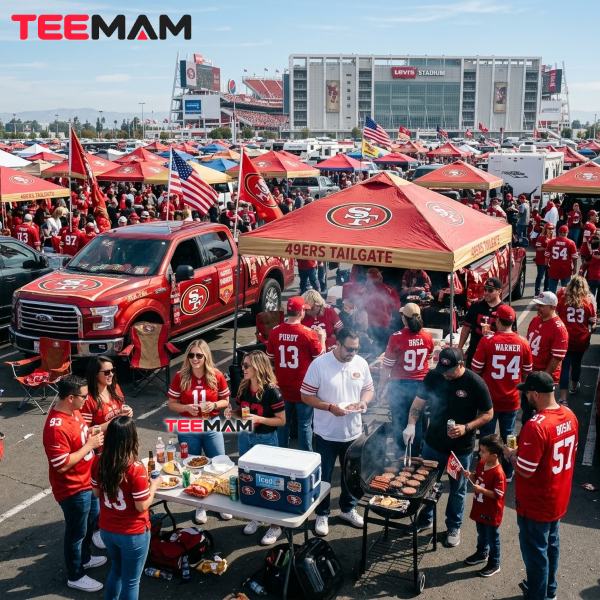
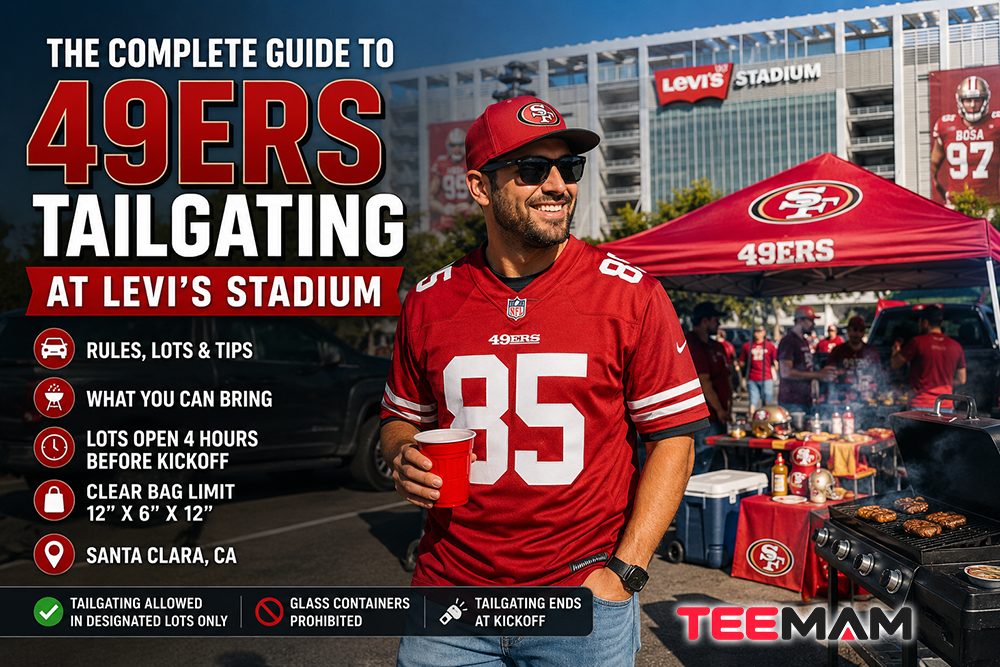
Tailgating happens in the lots directly surrounding the stadium, and it’s more organized than the chaotic reputation some NFL tailgates carry — most lots open a set number of hours before kickoff and close down once the game starts. Grills, canopies, and portable speakers are standard, and it’s common to see multi-generational family setups parked next to louder alumni-style groups in the same row. Levi’s Stadium also runs the Faithful Mile, a free pregame entertainment zone near the west entry gates, and the Red Zone Rally at the Great America Pavilion, both of which give fans without a tailgate spot of their own something to do before kickoff. If you’re new to the tailgate culture itself, courtesy matters more than people expect: sharing food, respecting neighboring setups, and cleaning up before heading inside are unwritten rules that keep the whole scene functional. We put together a full breakdown of dos and don’ts in our official tailgate etiquette guide.
Chants Every New Fan Should Know
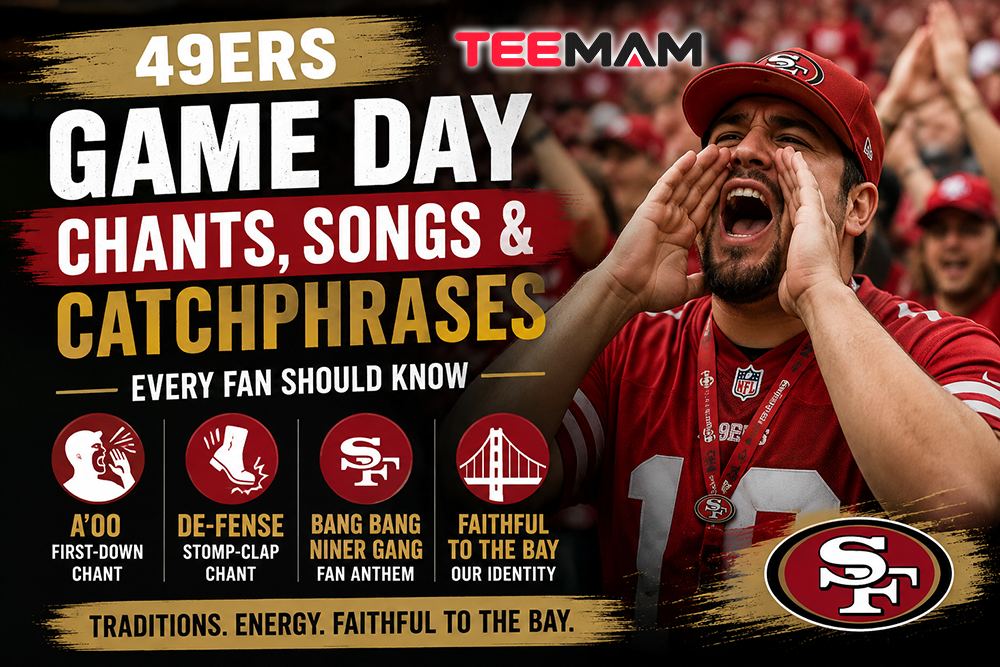
Nothing marks a first-timer faster than staying silent during a chant everyone around them knows by heart. The “Bang! Bang!” call-and-response, popularized by E-40 in 2019, is now the signature crowd chant at Levi’s Stadium, especially after big defensive stops. Beyond that, you’ll hear third-down chants meant to rattle opposing quarterbacks and celebratory calls that erupt after touchdowns. Learning two or three before your first game changes how connected you feel to the crowd around you. We cover the full list, including where each one came from, in our guide to popular 49ers chants explained.
The Story Behind Sourdough Sam
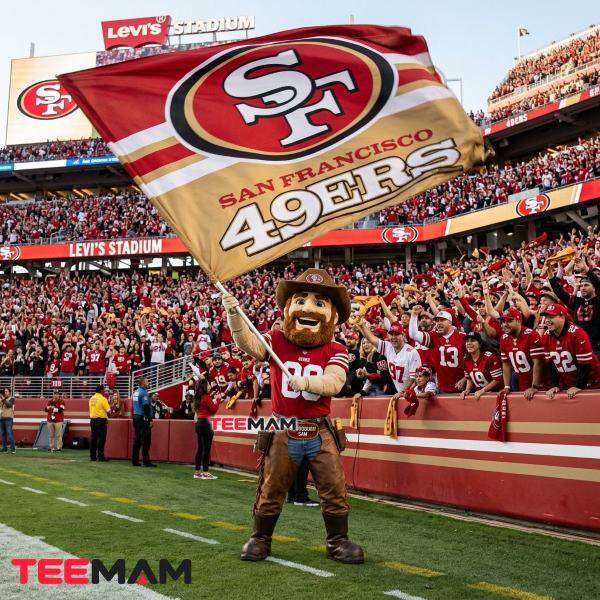
Before Sourdough Sam, the 49ers’ original mascot was a mule named Clementine, who appeared at games through the 1950s and ’60s wearing a red saddle blanket. The gold-miner character that became Sam first showed up in the 1970s, drawing on program cover art created between 1946 and 1949, and the character was formally introduced as the team’s official mascot in the mid-1990s. Today, Sourdough Sam is one of the most physically active mascots in the league, known for sprinting the field with a giant flag and breakdancing on the sideline — a far cry from the mustached, gun-toting prospector of his earliest sketches. His name ties directly to San Francisco’s culinary history: Gold Rush-era prospectors were nicknamed “sourdoughs” because they carried pouches of fermenting starter with them, sometimes keeping it warm against their bodies to keep the yeast alive in the field. The team’s official mascot bio on 49ers.com describes him as “the hardest working mascot in the NFL,” a reputation built on decades of sideline sprints and fan appearances. For the full mascot timeline — Clementine, the early prospector art, and Sam’s modern persona — read our history of Sourdough Sam.
Famous 49ers Touchdown Celebrations
Few moments in NFL history carry more weight than “The Catch” — Dwight Clark’s leaping grab in the back of the end zone that beat the Cowboys in the 1981 NFC Championship Game and effectively launched the Walsh-Montana dynasty. Decades later, the franchise has built a highlight reel of celebration moments fans still reference at tailgates, from Terrell Owens’ iconic Texas Stadium star celebration to the explosive-play touchdown reactions that have become a staple of the Shanahan-era offense. For a full rundown of the moments that defined different eras of the franchise, check our list of memorable touchdown celebrations.
What Should You Wear to a 49ers Game?
This question gets asked constantly, and the honest answer depends more on kickoff time than on the calendar month.
How the Santa Clara Weather Changes Throughout Game Day
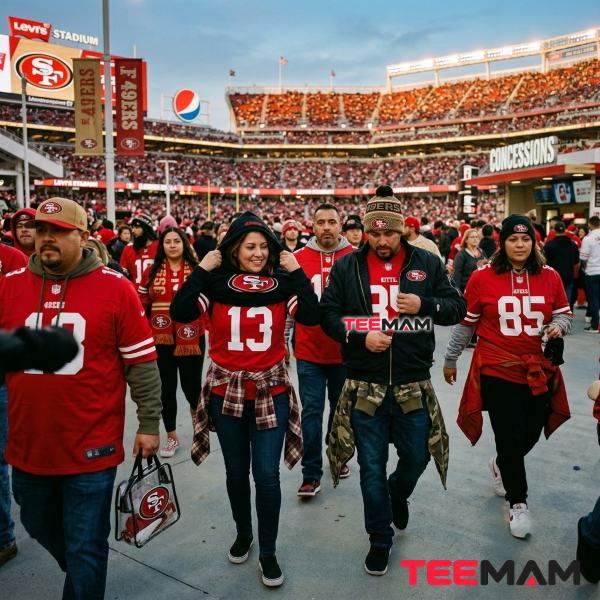
Santa Clara’s climate is deceptive for out-of-town visitors. Based on typical seasonal averages, here’s roughly what to expect:
| Month | Average Afternoon High | Average Evening Low | What It Means for Game Day |
|---|---|---|---|
| September | ~83°F | ~55°F | Hot in direct sun, cool once the sun drops for late games |
| October | ~77°F | ~53°F | Comfortable afternoons, a real chill after sunset |
| December | ~58°F | ~42°F | Cold enough for real winter layers, especially at night |
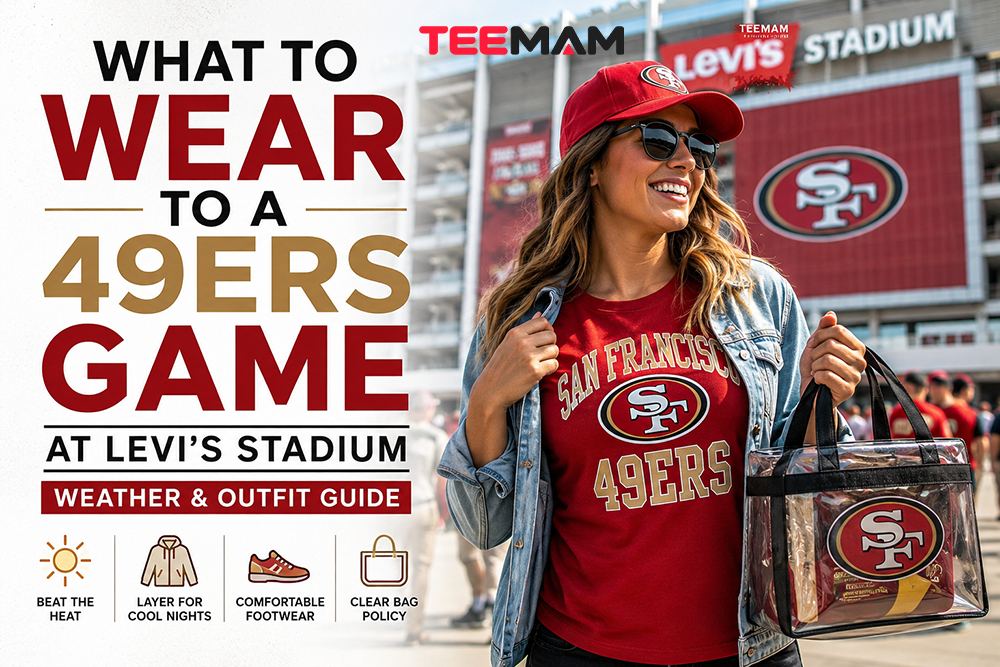
Even outside of winter, a warm afternoon can drop 15 to 20 degrees within a few hours once the marine layer rolls in off the Bay, and evening wind picks up right along with it. The smart move is layering: something breathable for the first half, something warmer packed away for the second, since a folded jacket is one of the few oversized items you can actually bring given the clear bag restrictions on everything else.
Practical Outfit Ideas for Different Seasons
- Early season (September–October) day games: Breathable jerseys or team tees, sunglasses, and a hat for sun protection, with a packable light layer for the temperature drop after sunset.
- Late season / winter games: Thermal layers under your jersey, a real jacket rather than a hoodie alone, and gloves if you plan on actually holding onto food and a drink through a cold fourth quarter.
- Night games: Treat these like winter games no matter the calendar month — Bay Area night air off the water is consistently colder than out-of-town fans expect.
- Rain games: Waterproof outer layers over team gear, and a compact, clear-enough poncho, since large umbrellas can block sightlines for fans behind you.
If you want outfit breakdowns matched to specific kickoff times and weather scenarios — including vintage-inspired looks for fans who want something beyond a standard jersey — our complete game day outfit guide covers exactly this.
Comfortable Footwear and Accessories
Whatever you wear on top, don’t underestimate how much walking a Levi’s Stadium trip involves — from parking lot to tailgate to gate to your section, often totaling well over a mile before you even sit down. Broken-in sneakers beat anything stiff or new, tailgating means standing on asphalt for hours, and a small crossbody or clutch bag that already meets the clear bag policy beats anything you’d otherwise have to carry awkwardly through a packed concourse.
How Fans Show Their Team Pride Beyond the Jersey
Game Day Traditions That Unite the Faithful
Scarlet and gold isn’t just a color scheme — it’s close to a uniform requirement on Sundays across Santa Clara and the wider Bay Area. Rally towels get waved during key defensive stands, face paint shows up on everyone from toddlers to grandparents, and fan flags fly from truck beds in the tailgate lots hours before kickoff. None of it is coordinated by the team; it’s just what decades of shared ritual look like once a fan base takes its colors seriously.
Finding Apparel That Fits Your Fan Style
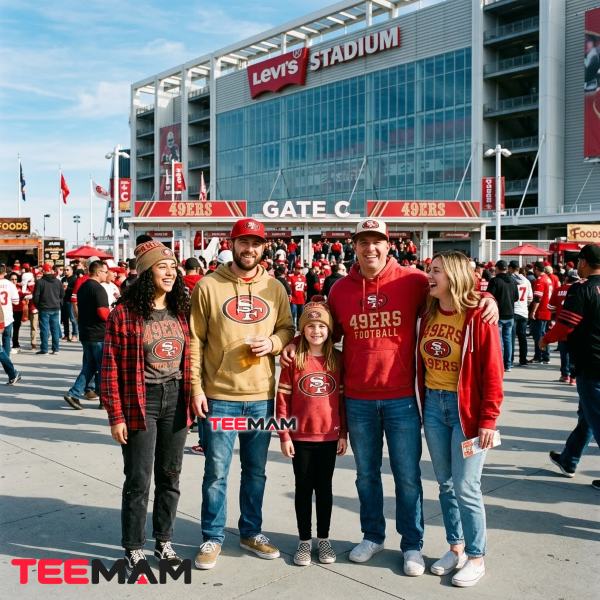
You don’t need an official, stiff, $150 jersey to look the part — especially if you’re standing over a grill in a sunny parking lot for three hours before kickoff. A lot of the Faithful trade the official pads for softer, vintage-style tees, breathable hoodies, and layers that actually handle the Santa Clara temperature swings described above. If you’re putting together a game day wardrobe rather than a single outfit, browsing fan inspired game day apparel is a solid starting point for locking in that red-and-gold look without sacrificing comfort.
Biggest 49ers Rivalries Every Fan Should Understand
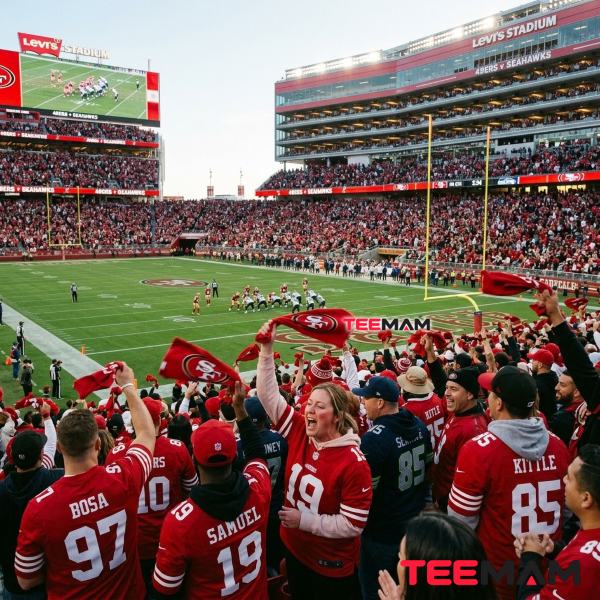
Division football is where 49ers fandom gets its edge, and four rivalries in particular define the modern era.
The 49ers’ most significant rivalries are with the Los Angeles Rams, Seattle Seahawks, Dallas Cowboys, and Green Bay Packers, each shaped by decades of playoff history and division title races.
| Rival | Rivalry Since | What Defines It |
|---|---|---|
| Los Angeles Rams | 1950 | Bitter NFC West battles through the 1970s; re-ignited after the Rams’ 2016 move back to Los Angeles, including a physical 2021 NFC Championship the Rams won on their way to a Super Bowl title. |
| Seattle Seahawks | 2002 (division realignment) | The most consistently heated matchup on the schedule; Seattle dominated through the mid-2010s, San Francisco answered with a six-game win streak from 2022–2024, and Seattle regained control with a lopsided 41–6 win over the 49ers in the January 2026 NFC Divisional Round on its way to a Super Bowl LX title. |
| Dallas Cowboys | 1960s | Defined by legendary 1980s and ’90s NFC Championship battles, including “The Catch.” San Francisco currently holds a four-game win streak dating back to 2022. |
| Green Bay Packers | 1950 | One of the oldest matchups on this list, with San Francisco holding the postseason edge, including a 2019 NFC Championship win that sent the team to Super Bowl LIV. |
For a deeper breakdown of how each rivalry developed and where it stands heading into the current season, our guide to historic NFL rivalries explained covers all four in detail.
Where to Watch 49ers Games If You Cannot Visit Levi’s Stadium
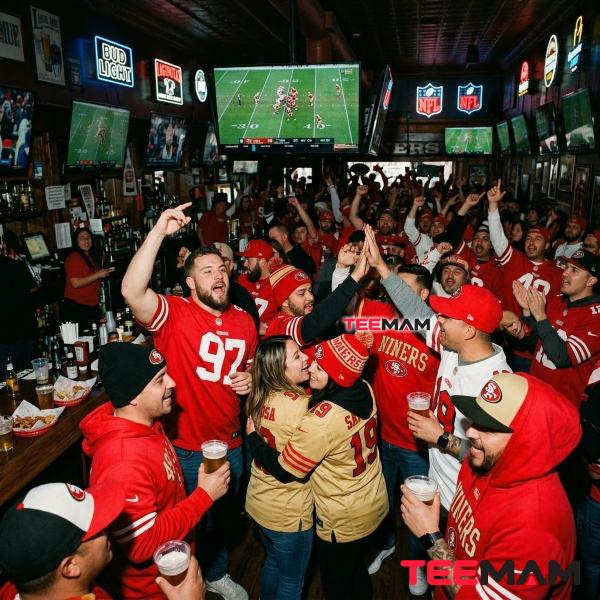
Not every Faithful fan lives within driving distance of Santa Clara, and that’s fine — the fan culture extends well beyond the stadium gates. Bay Area sports bars in neighborhoods like the Mission District, SoMa, and across the East Bay routinely fill to capacity on game days, with several running official watch-party events tied to the team. Fan clubs like the Niner Empire organize satellite watch parties in cities across the country, including chapters as far as Portland, giving displaced fans a version of the tailgate experience without the actual parking lot. Setting up a solid home viewing setup instead? A good sound system and a big screen go further than people expect toward recreating stadium atmosphere, though nothing fully replaces 68,500 people reacting in real time. For specific bar recommendations by city, see our list of best places to watch games.
How to Create a Memorable 49ers Game Day at Home
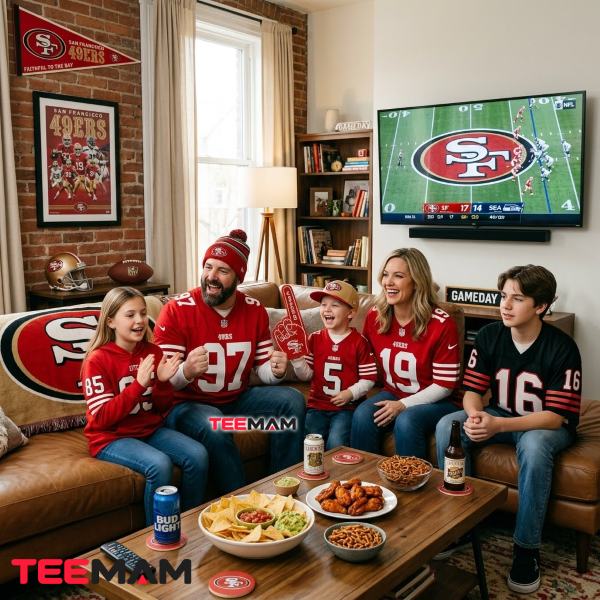
If Levi’s Stadium isn’t in the cards this week, a well-built home game day still captures a lot of the ritual. Lean into the same food culture the stadium does — clam chowder bread bowls, garlic fries, tri-tip if you want to go full Bay Area — and decorate with the same scarlet and gold that fills the parking lots on Sundays. The traditions that matter most usually aren’t complicated: the same friends showing up every week, the same lucky jersey worn regardless of how it smells by December, kids inheriting a fandom the same way they would at the actual stadium.
Making Your Own Fan Sign
Handmade signs have become a genuine tradition at Levi’s Stadium, especially for birthday shoutouts, marriage proposals, and player tributes that occasionally get picked up by the in-stadium cameras. If you’re building one for a watch party or planning ahead for an actual stadium trip, keep lettering bold enough to read from a distance and keep the message short — the best signs get read in under two seconds. We’ve put together specific templates and design tips in our guide to creative game day sign ideas.
Quick Answers Every New 49ers Fan Wants to Know
Can anyone join a 49ers tailgate? Generally, yes — tailgate culture at Levi’s Stadium tends to be welcoming, especially in lots where the same fans set up the same spot week after week. That said, it’s still someone else’s private setup, so the polite move is to introduce yourself, bring something to share, and never assume access without asking first.
How early should fans arrive before kickoff? Plan to arrive at least 90 minutes before kickoff if you’re driving and want reasonable parking, or a bit earlier if you’re tailgating beforehand. Fans using VTA Light Rail can typically arrive closer to gate-opening time since the walk from Great America Station is short.
What colors should I wear to a 49ers game? Scarlet and gold are standard, and wearing them isn’t just aesthetic — it visibly signals you’re part of the crowd rather than a neutral visitor, which matters more during division games against rivals like the Rams or Seahawks.
Can I bring food into Levi’s Stadium? Small amounts of food are allowed if cut into pieces and carried in a compliant clear bag, along with factory-sealed plastic water bottles under 24 ounces. Large coolers, outside alcohol, and bulk food items are not permitted.
Is Levi’s Stadium family friendly? Yes. The stadium offers designated family sections in several areas, along with nursing rooms and stroller check services at guest services stations, making it workable for fans bringing young kids.
Which games have the best atmosphere? Division matchups against the Seahawks, Rams, and Cowboys consistently bring the loudest, most charged crowds, along with any late-season game that still has playoff seeding on the line.
Is tailgating worth it for first-time visitors? Yes, if you have the time before kickoff. It’s genuinely one of the best ways to feel like part of the community rather than a spectator, and most tailgate lots have a welcoming, low-pressure atmosphere for newcomers.
What should I pack for game day? A compliant clear bag, a portable phone charger, cash or a card for the cashless stadium, sunscreen, layers for the temperature swing, and a fully charged phone camera for whatever chaos unfolds in the fourth quarter.
Your First 49ers Game Checklist
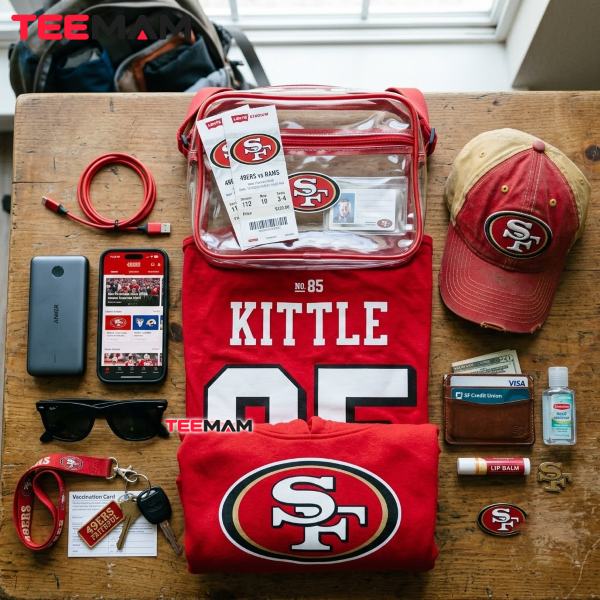
- Tickets downloaded and accessible in your ticket app (screenshots may not scan at the gate)
- Parking reserved in advance, or a VTA Light Rail route mapped out
- Transportation timing planned with at least a 90-minute buffer before kickoff
- Clear bag (12″ x 6″ x 12″ max) or an approved small clutch
- Weather checked for both the start and end of the game, not just kickoff
- Portable phone charger, fully charged
- Payment card ready, since Levi’s Stadium runs entirely cashless
- Scarlet and gold fan gear, layered for temperature swings
- A rough tailgate plan, even if it’s just meeting friends in a specific lot
- Stadium map saved offline in case cell service gets spotty in a packed concourse
Final Thoughts
A 49ers game day is never really just about the final score. It’s the tailgate that runs long, the chant you finally learn the words to, the sourdough bread bowl that’s somehow always better than you remember, and a community of Faithful who show up whether the team is chasing a sixth Lombardi Trophy or rebuilding from scratch. Whatever brings you to Levi’s Stadium — your first game, your fiftieth, or a watch party a thousand miles away — the traditions are what turn a football schedule into something people build an entire year around.
If you’re still prepping for your trip, our full cluster of guides covers everything from bag policy details to the history behind the name on the jersey, so you can walk into Santa Clara ready for whatever game day throws at you.

Hi, I’m Olivia Bennett, a fashion and lifestyle writer at TeeMam with 6 years of experience creating content about fashion, outfits, and lifestyle trends. I enjoy sharing practical style ideas for everyday wear, game days, holidays, and special occasions, helping readers find looks that feel comfortable, fun, and uniquely their own.