What Does “49ers Faithful” Mean? Inside the San Francisco Fanbase
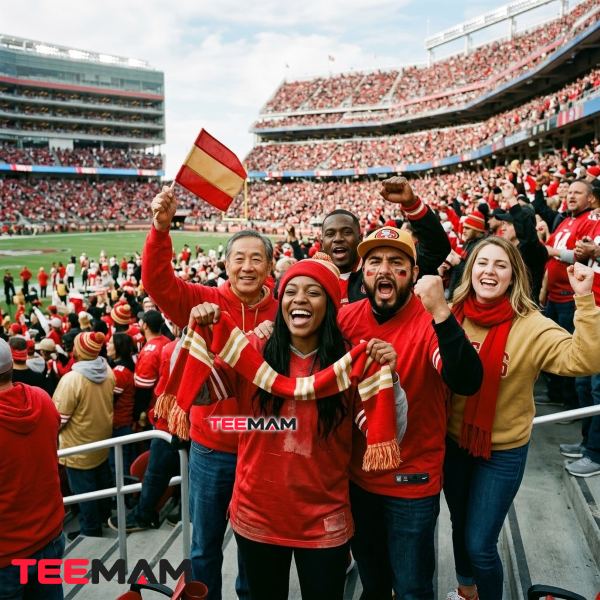
“49ers Faithful” is the nickname for San Francisco 49ers supporters known for staying loyal through Super Bowl runs, rebuilding years, and every losing streak in between. It wasn’t invented by the front office. It was earned, one cold Sunday at a time.
| Question | Answer |
|---|---|
| What is 49ers Faithful? | Nickname for San Francisco 49ers supporters loyal through wins and losses |
| Who coined it? | Sports promoter Dick Berg, early 1980s |
| What does it represent? | Commitment to the team regardless of the scoreboard |
| Related slogan | Faithful to The Bay (FTTB) |
| Related chant | Bang Bang Niner Gang, popularized in 2019 |
| Era that built the identity | Candlestick Park, 1971–2013 |
Why Are 49ers Fans Called the Faithful?
Sports promoter Dick Berg — the same man who named the San Jose Earthquakes — coined “49er Faithful” in the early 1980s. Longtime San Francisco Chronicle columnist Glenn Dickey noted the label was applied at a time when the team’s fans were anything but faithful. The name came first. The loyalty caught up later, tested during the wind and fog of Candlestick Park before it ever had a Lombardi Trophy to celebrate.
The Candlestick Park Era Built Generations of Loyal Fans
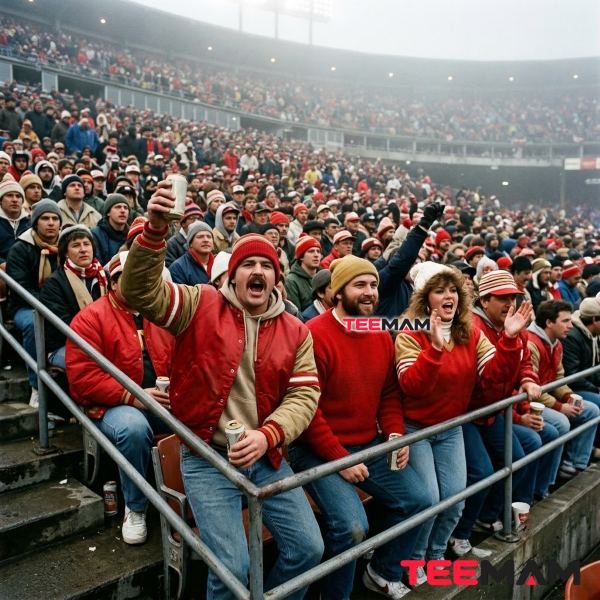
Before Levi’s Stadium, the team played at Candlestick Park from 1971 to 2013, and before that, Kezar Stadium from 1946 to 1970. Candlestick was brutal — swirling wind off the Bay, fog that rolled in mid-game, seats that felt more like an endurance test than a football venue. The fans who sat through the losing seasons of the 1970s in that weather are the ones who gave the nickname something real to attach to.
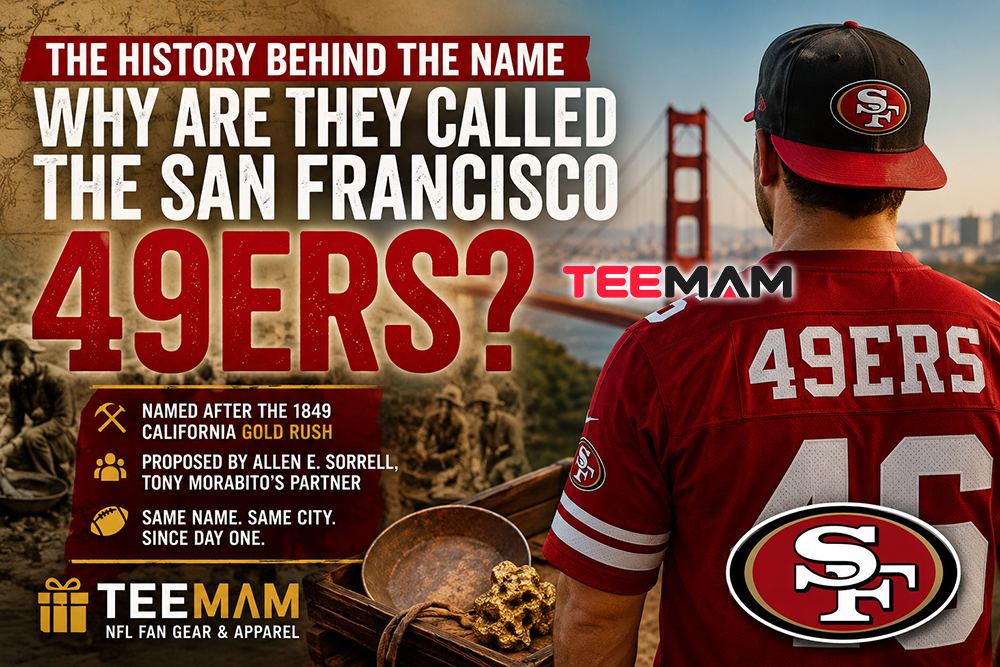
The resilience forged in those freezing stands adds a deeper layer of cultural weight to the history of why they’re called the 49ers, proving the modern fanbase is just as enduring as the prospectors the team is named after.
Bill Walsh, Joe Montana, and Jerry Rice Turned the Identity Into a Dynasty
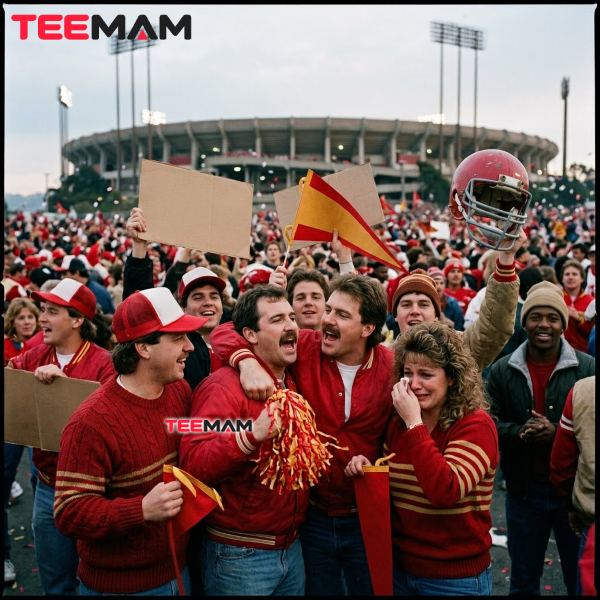
Everything changed in the 1980s. Under head coach Bill Walsh’s West Coast offense, quarterback Joe Montana and receiver Jerry Rice built an NFL dynasty, winning five Super Bowl titles between the 1981 and 1994 seasons. Owner Eddie DeBartolo Jr. funded the culture that made it possible — a level of investment fans still point to as the foundation of the modern organization. Steve Young carried the quarterback torch forward after Montana, keeping a new generation tied to what being Faithful meant.
The dynasty didn’t create the Faithful — the name predates the trophies. What the championships did was put a regional nickname on a national stage, pulling in fans across Northern California, southern Oregon, and northwestern Nevada.
“The Catch” and the Moments That Built the Culture
Some plays outgrow the highlight reel. Dwight Clark’s leaping touchdown grab from Joe Montana in the 1981 NFC Championship Game at Candlestick Park is the clearest example — fans who were in the stands, or watching on a small TV at home, can still tell you exactly where they were standing. Moments like that get passed from parent to kid long after the game itself is forgotten, and they’re a big reason the Faithful identity outlasted any one era of the roster.
How the Faithful Show Loyalty on Game Day
History explains where the name came from. The stadium parking lot on a Sunday morning is where you actually see it.
Red and Gold as a Handshake Between Strangers
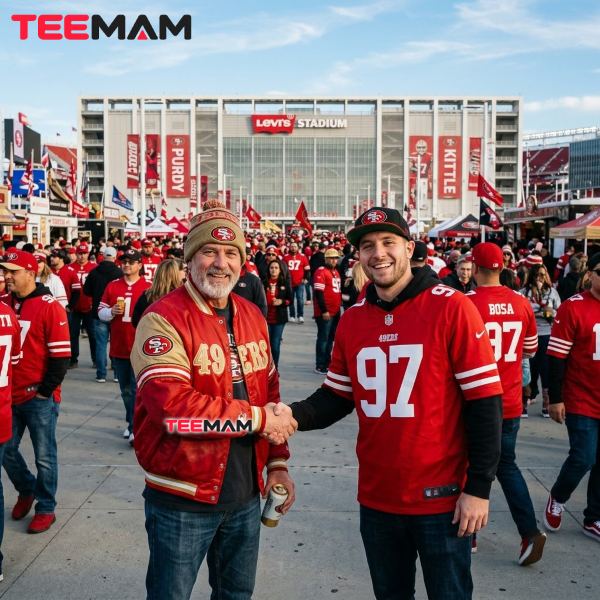
A red jersey or a gold satin jacket does the talking before a word gets said: I’m one of you. Older fans lean on throwback pieces from the Candlestick years specifically to signal they’ve been around longer than the current roster — a scuffed 1980s license plate frame, a faded snapback, a jacket with the leather sleeves cracked from decades of use.
There’s a real difference in how that jersey feels on you walking out of Levi’s after a blowout loss versus a last-second win — same colors, same crowd, completely different weight on your shoulders. Fans who’ve worn it both ways are the ones who earn the name.
Vintage Memorabilia and Modern Apparel
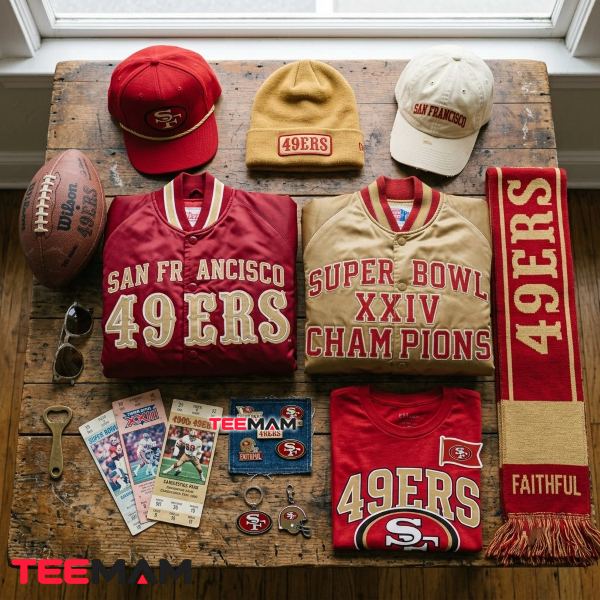
Collectors still hunt eBay and estate sales for original Faithful jackets, pins, and license plate frames from the Montana-Rice years. A gold Starter satin jacket from that era carries more weight than anything mass-produced today, because it’s tied to a specific memory — a specific game, sometimes a specific seat number a family held for decades. That same instinct now shows up in demand for vintage-inspired 49ers gear and tailgate outfits built around the team’s older logos and colorways, rather than whatever’s newest on the rack.
Tailgate Culture
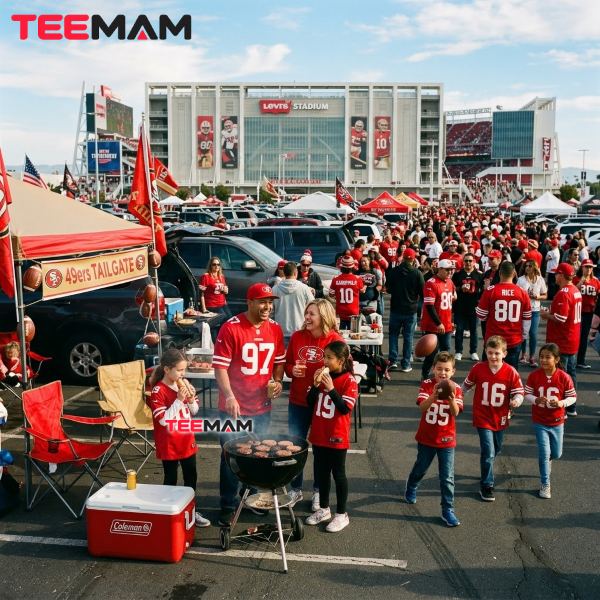
Walk a Levi’s Stadium tailgate lot a few hours before kickoff and the pattern is obvious fast: the same families grilling the same recipes every home game, the same crews claiming the same parking spots season after season, game day outfits planned almost like a uniform. Part cookout, part reunion, running on a loop that’s been going for decades.
These fiercely protected 49ers tailgate traditions transform the stadium parking lots into a second home for the Faithful.
Bang Bang Niner Gang vs. The Faithful
Related, not identical.
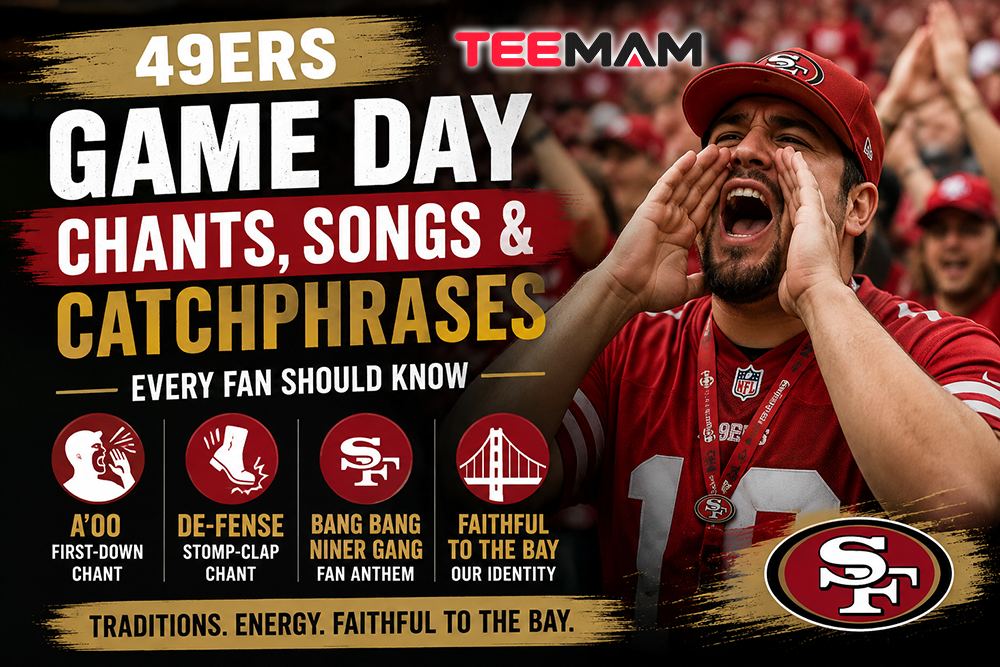
The “Bang! Bang!” chant took off in 2019 when the team returned to playoff contention after a rough stretch. Bay Area rapper E-40 popularized it, and it spread fast on social media and inside Levi’s Stadium. It’s loud, high-energy, built for the moment — a battle cry more than an identity.
| Term | Meaning |
|---|---|
| Faithful | Decades-old loyalty identity, including the hard years |
| Niner Gang | Modern, high-energy pride tied to the “Bang Bang” chant |
Every fan chanting Niner Gang on a Sunday is part of Faithful culture. Not every longtime member of the Faithful uses the newer chant. One’s a decades-old identity. The other’s a current-era expression of it.
Faithful to The Bay
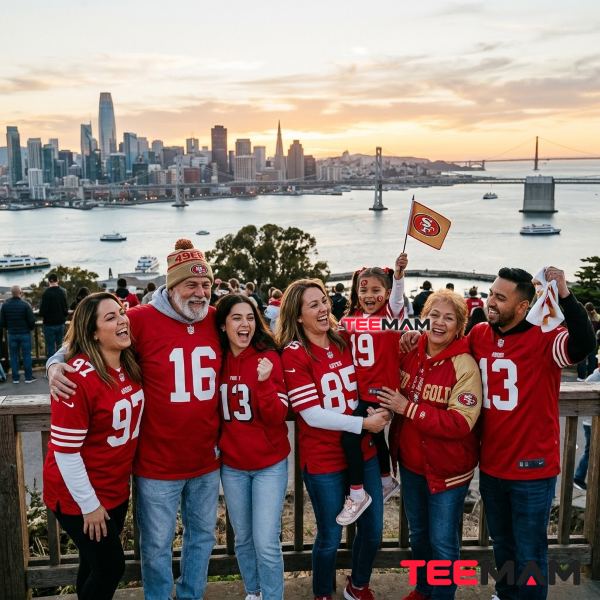
“Faithful to the Bay,” shortened to FTTB, ties the fanbase to its geography — San Francisco, Santa Clara, and everywhere between. Younger fans turned it into a hashtag as much as a slogan, and the fanbase now stretches internationally through streaming and social media in a way that wasn’t possible during the Candlestick years.
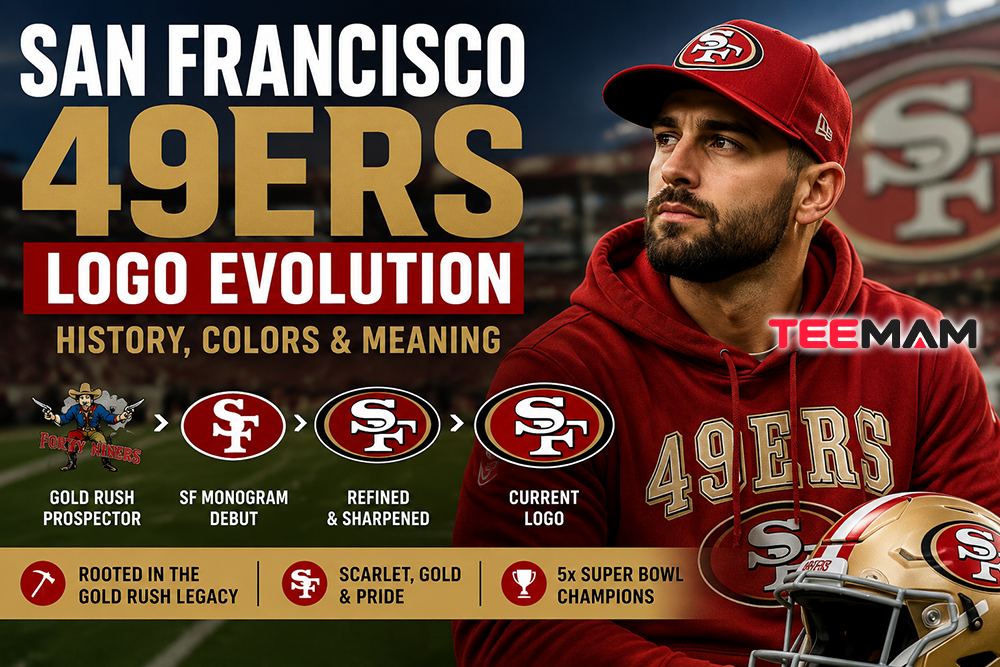
Sourdough Sam, the team’s gold-miner mascot, bridges those generations — he’s hyped up crowds at every home game since officially joining the 49ers in 1994. His look pulls from the franchise’s original 1940s program artwork of a prospector, tying today’s fans to the Gold Rush-era name the team has carried since 1946 — a heritage perfectly embodied by the story behind Sourdough Sam and his evolution on the sidelines.
What the Name Adds Up To
Three things keep this identity alive after 40-plus years. It’s historical — coined during a stretch of genuine struggle, not celebrated success, which is why it’s outlasted plenty of other fan nicknames. It’s communal — a shared identity strangers recognize in each other before anyone says a word. And it’s cultural — chants, wardrobe choices, and tailgate rituals passed down inside families for generations.
Why Game-Day Apparel Carries Weight for the Faithful
For the Faithful, game-day apparel isn’t just about sporting team colors — it’s a wearable archive of personal history. A faded red hoodie might commemorate a muddy game at Candlestick, while a custom graphic tee often nods to a specific inside joke or a defining era of the franchise. That emotional connection is what turns everyday clothing into fan armor, letting supporters carry the spirit of the Bay Area wherever they go.
Songs and Chants That Bring the Faithful Together
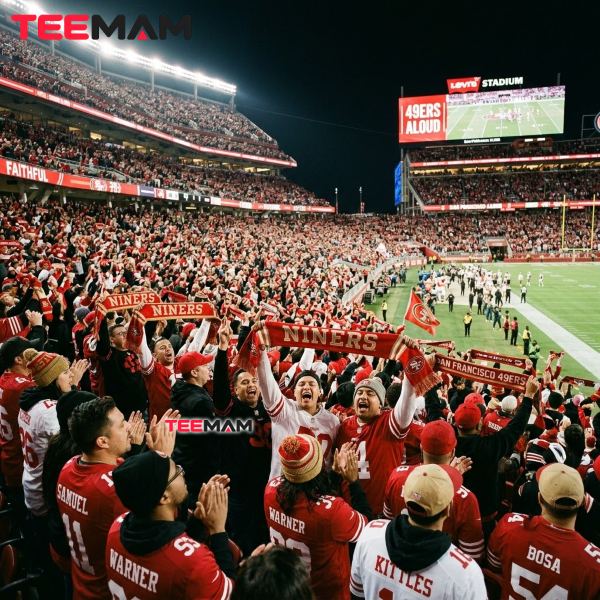
Every fanbase has its noise, but San Francisco’s has real staying power. The duo known as the Niner Knuckleheads has written dozens of original 49ers jingles over the decades, some dating back to the Candlestick years, and those songs still get sung section by section at Levi’s Stadium today. Sixty thousand fans singing the same words turns into one crowd for three hours — a scoreboard can’t do that.
From retro jingles to modern anthems, these popular 49ers chants and songs act as the heartbeat of Levi’s Stadium, ensuring the culture is heard just as loudly as it is seen.
FAQ
Why are 49ers fans called the Faithful? Sports promoter Dick Berg coined the term in the early 1980s. Fans embraced it and turned it into a loyalty identity built through both winning and losing seasons.
Is Faithful an official 49ers nickname? Not officially — “Niners” is the registered nickname — but it’s used so widely by the team, media, and fans that it functions as one.
What does Faithful to The Bay mean? It ties fan loyalty to the Bay Area as a region — San Francisco, Santa Clara, and everywhere between — not just the team itself.
What’s the difference between Niner Gang and Faithful? Faithful is the decades-old loyalty identity. Niner Gang, tied to the “Bang Bang” chant from 2019, is a newer, higher-energy expression of the same pride.
How do 49ers fans show their team pride? By showing up regardless of the standings, wearing red and gold, keeping tailgate traditions alive, singing decades-old fan songs, and passing those rituals down.
Conclusion
Being part of the 49ers Faithful was never about championship banners. It started as a nickname aimed at fans during a rough patch and became one of the most recognized loyalty identities in the NFL. From the wind at Candlestick to the energy at Levi’s, from Bill Walsh’s dynasty to whatever comes next, the throughline hasn’t moved: show up when the lights are brightest, and show up just the same when the road gets hard.

Hi, I’m Olivia Bennett, a fashion and lifestyle writer at TeeMam with 6 years of experience creating content about fashion, outfits, and lifestyle trends. I enjoy sharing practical style ideas for everyday wear, game days, holidays, and special occasions, helping readers find looks that feel comfortable, fun, and uniquely their own.