The History Behind the Name: Why Are They Called the San Francisco 49ers?
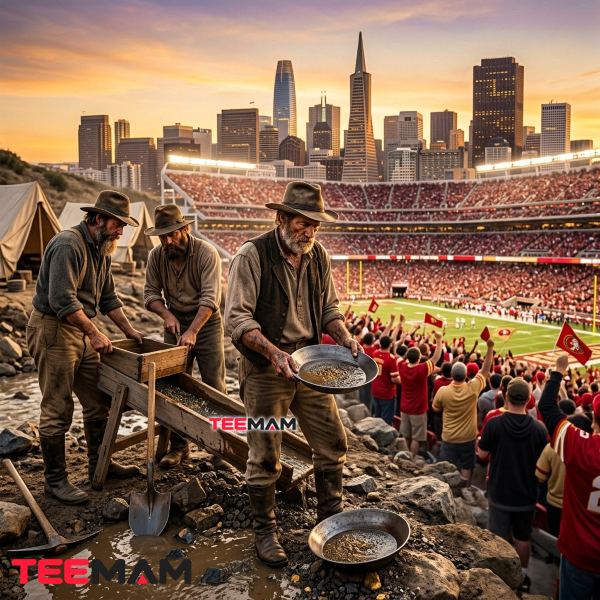
The San Francisco 49ers are called the “49ers” because the franchise’s founders named the team after the prospectors who flooded into Northern California during the Gold Rush of 1849. When lumberman Tony Morabito launched the club in 1946, his business partner Allen E. Sorrell suggested the nickname to honor the fortune-seekers who reshaped San Francisco just a century earlier. It stuck immediately, and it remains the only franchise nickname this club has ever worn — a rare case among NFL franchise names, most of which reference an animal, a color, or a generic regional term instead of a specific historical event.
Key Takeaways
- The name honors the prospectors of the 1849 California Gold Rush, not the year the team was founded.
- Allen E. Sorrell, co-owner and Tony Morabito’s lumber-business partner, proposed the name in 1946.
- The 49ers started in the All-America Football Conference (AAFC) and joined the NFL in 1950 without ever changing their nickname.
- Sourdough Sam, the team mascot, and the club’s red-and-gold colors both trace back to Gold Rush-era imagery.
That’s the direct answer. The San Francisco 49ers name origin sits in California’s Gold Rush, not in the history of professional football itself — which is part of what makes it unusual. The fuller story, the one most fan sites skim past, involves a lumber yard on the San Francisco waterfront, a rejected NFL expansion bid, a rival league willing to take a chance on the West Coast, and a piece of American frontier history that still shows up on jerseys, in mascot costumes, and in how supporters talk about the team eight decades later.
What Does “49ers” Actually Mean?
The simple definition
“49ers” is shorthand for the roughly 300,000 people who migrated to California between 1848 and the early 1850s chasing gold. They became known as forty-niners because 1849 was the single busiest year of arrivals, even though the gold discovery itself happened a year earlier and the wave of migration kept building into the 1850s. So the honest answer to “what does the name mean” has two layers: it points to one specific year, and it stands in for a whole era of high-risk westward migration that turned California into a fixture of American frontier history.
Quick facts at a glance
| Question | Answer |
|---|---|
| What does “49ers” mean? | A nickname for the Gold Rush prospectors who arrived in California, most heavily in 1849 |
| Why 1849 specifically? | It was the peak year of migration following the 1848 gold discovery |
| When was the team founded? | 1946, as a charter member of the All-America Football Conference |
| Who proposed the name? | Allen E. Sorrell, Tony Morabito’s business partner |
| Has the name ever changed? | No — same name, same city, since day one |
The California Gold Rush That Changed American History
Gold discovered before the rush began
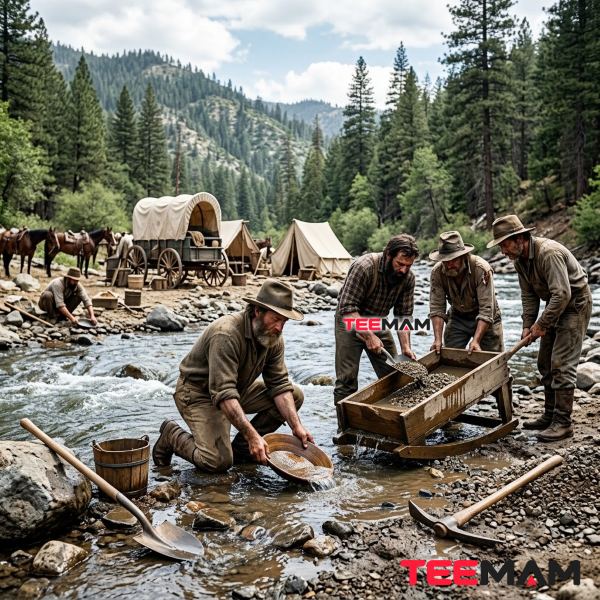
To understand the name, it helps to start a year earlier than most people expect. In January 1848, James W. Marshall — a carpenter building a sawmill for landowner John Sutter along the American River near Coloma — spotted flecks of gold in the water. News traveled slowly at first, since California was remote and largely disconnected from the rest of the country, but within a year it had reached the East Coast and overseas, triggering one of the largest voluntary migrations in American history.
Why thousands came in 1849
By 1849, the trickle had turned into a flood. People arrived by wagon train across the Sierra Nevada and the plains, by ship around Cape Horn, and by a punishing shortcut through Panama. Most came from the eastern United States, but the rush also pulled in prospectors from Mexico, Chile, China, Australia, and parts of Europe, making California one of the more ethnically diverse regions in the country almost overnight. Very few of these newcomers actually struck it rich. What they did do, collectively, was build towns, roads, and an economy from almost nothing in a matter of months — momentum that helped push California to statehood in 1850, barely two years after Marshall’s discovery.
Did you know? California went from a sparsely populated Mexican Cession territory to a U.S. state in under two years, almost entirely because of the population surge the Gold Rush created.
How the Gold Rush transformed San Francisco
One detail that’s often overlooked in name-origin explainers is how directly the Gold Rush reshaped San Francisco itself, and that transformation is exactly what makes “49er” a source of civic pride instead of just a historical footnote. Before 1848, San Francisco was a small settlement of a few hundred people. By the end of 1849, it had ballooned into a chaotic port city of tens of thousands, packed with warehouses, saloons, and makeshift housing thrown up faster than anyone could plan for it. The harbor filled with abandoned ships, since crews had jumped overboard to join the gold hunt, and the hulls were repurposed as buildings, storerooms, and even a jail. Banking, shipping, and wholesale trade all took root in this period because someone had to move goods and money in and out of a boomtown with no real infrastructure. That scramble to build a functioning city out of raw ambition is baked into San Francisco’s identity, and it’s exactly what the 49ers nickname was meant to evoke a century later.
Readers who want the fuller picture of how this era shaped Bay Area sports culture around the team can dig into the complete 49ers fan history, which traces the connection in more depth.
How the Football Team Got Its Name in 1946
Tony Morabito’s vision
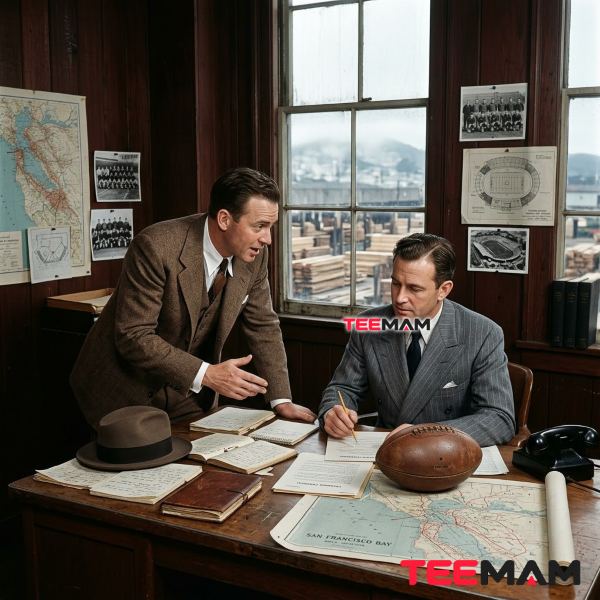
Tony Morabito was a Santa Clara University graduate who ran a lumber-hauling business on the San Francisco docks, not a football executive by trade. He’d wanted to bring a professional football team to the West Coast for years, reasoning that once commercial air travel matured, coast-to-coast rivalries would become practical for the first time. The NFL rejected his expansion pitches more than once in the mid-1940s; at the time, the league didn’t stretch past Chicago. So when the All-America Football Conference formed as a rival league in 1944, Morabito secured a San Francisco charter franchise for its inaugural 1946 season.
Why “49ers” was chosen instead of other names
Morabito ran the club alongside his brother Victor and his lumber-business partners, Allen E. Sorrell and E.J. Turre. When it came time to settle on a name, the ownership group wanted something distinctly tied to San Francisco instead of a generic animal mascot borrowed from another market. Sorrell’s suggestion connected the new professional football team directly to the city’s founding myth: the gold-seekers who’d turned a sleepy port into a boomtown almost overnight. It was regional, it was memorable, and no other pro sports franchise was using it.
Who suggested the name?
Credit for the name goes to Allen E. Sorrell, according to the team’s own official history. Here’s how the sequence of events actually played out:
| Year | Milestone |
|---|---|
| 1848 | James Marshall discovers gold at Sutter’s Mill near Coloma |
| 1849 | Peak year of Gold Rush migration into California |
| 1944 | Tony Morabito secures a charter franchise in the newly formed AAFC |
| 1946 | The San Francisco 49ers play their first game and debut a gold-miner logo |
| 1950 | The 49ers join the NFL after the AAFC folds, keeping the name unchanged |
In short: the franchise adopted “49ers” to celebrate California’s pioneering history, not to pick a convenient regional mascot the way many teams do.
Why the Name Still Fits the Franchise Today

Eighty years later, the nickname still feels surprisingly current, because it represents persistence and reinvention instead of just commemorating a date on a calendar. The 49ers have built two separate championship dynasties three decades apart, under different front offices, wearing the same name the entire time. There’s a natural parallel between a prospector betting everything on a claim with no guarantee of a payoff and a football franchise that has rebuilt itself from the ground up more than once. Long before Bill Walsh’s coaching staff turned Joe Montana, Jerry Rice, and Steve Young into Hall of Fame names under owner Eddie DeBartolo Jr., the club’s identity had already been rooted in that same Gold Rush gamble: arrive with nothing, work for something better. Bay Area sports culture, with its long history of betting on unproven ideas across mining, shipping, and technology, keeps that frontier mindset relevant instead of turning it into a museum piece.
What’s easy to miss is why the name never needed to change in the first place. Plenty of professional sports franchises have rebranded over the decades to modernize their image or distance themselves from an outdated mascot. The 49ers have never faced that pressure, because the Gold Rush isn’t a dated reference — it’s still treated as one of the defining chapters of California history, taught in schools and marked by state landmarks around Sutter’s Mill and the Sierra Nevada foothills. A name tied to that kind of enduring public memory doesn’t age the way a sponsor’s name or a generic mascot eventually does.
Why the 49ers Name Is Unique Among NFL Teams
Most NFL franchise nicknames come from one of a few familiar sources: an animal, a regional trait, or, in a handful of cases, a sponsor’s business. The 49ers stand out because their name references a specific historical event and a specific year, which very few other teams can claim.
- The Green Bay Packers were named after the Indian Packing Company, the local meatpacking business that funded the club’s first uniforms and equipment in 1919 — a name born from sponsorship, not symbolism.
- The Pittsburgh Steelers started out as the Pittsburgh Pirates and only adopted their current name in 1940, as a tribute to the city’s steel industry.
- The Minnesota Vikings lean on the Scandinavian heritage of their home state instead of any single historical event.
- The Dallas Cowboys draw on a broad regional identity, Texas ranching culture, instead of one specific year or incident.
The 49ers’ nickname is narrower and more literal than any of these: it points to one migration, one year, and one origin story that hasn’t needed a rebrand in eighty years. That specificity is part of why the name still functions as a genuine piece of California history instead of a marketing category.
How the Gold Rush Shaped the Team’s Identity
Why red and gold became iconic
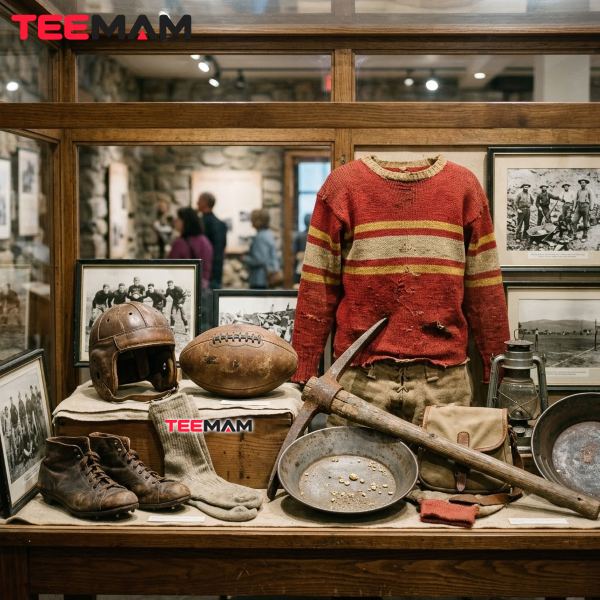
Every part of the color palette traces back to the Gold Rush story, at least in part. Gold clearly references the mineral that drew prospectors west in the first place, while the team’s signature shade of red has simply become an enduring part of the franchise’s visual identity over the decades, carried through every version of the uniform since 1946.
The story behind Sourdough Sam
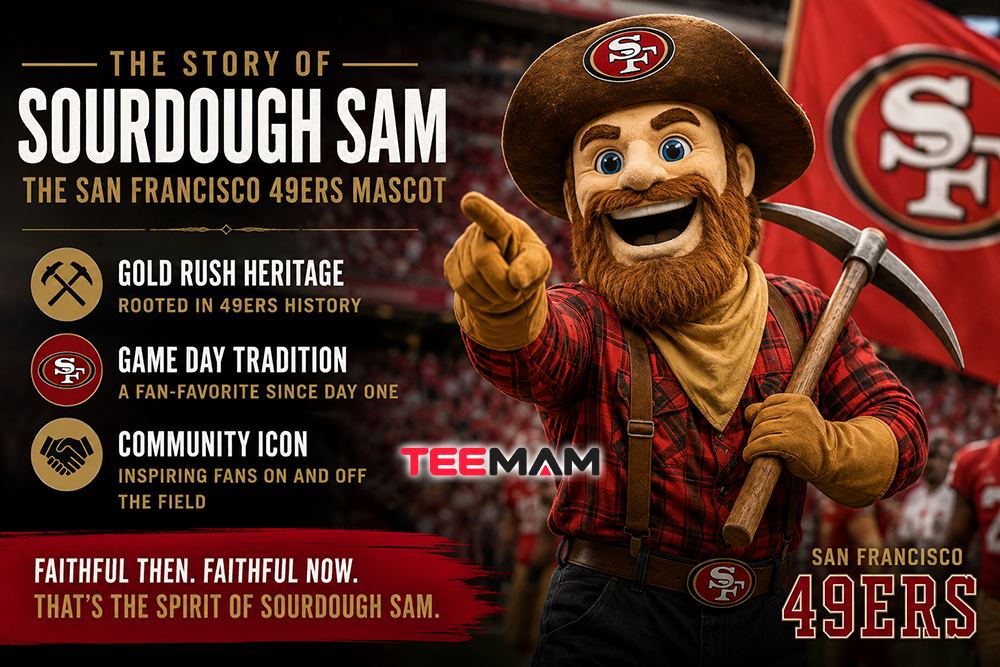
The team’s mascot draws on a different piece of Gold Rush trivia: sourdough bread. Many prospectors carried sourdough starter into the gold fields because it could be kept alive without commercial yeast, some reportedly held it close to their bodies for warmth, which made it practical for life in remote mining camps far from any supply chain. That food became so associated with California miners that “sourdough” turned into slang for an old-timer prospector, and San Francisco’s own sourdough bread tradition traces back to the same period. The costumed miner character now known as Sourdough Sam became the team’s official mascot in the 1990s, but the prospector imagery itself is much older, a direct descendant of the original 1946 team logo, which depicted a gold miner firing two pistols in celebration.
Expert note: Very few NFL mascots connect this directly to a food tradition. Sourdough Sam isn’t just a miner costume; his name is a specific callback to what actual Gold Rush prospectors carried into the Sierra Nevada foothills.
Heritage beyond the logo
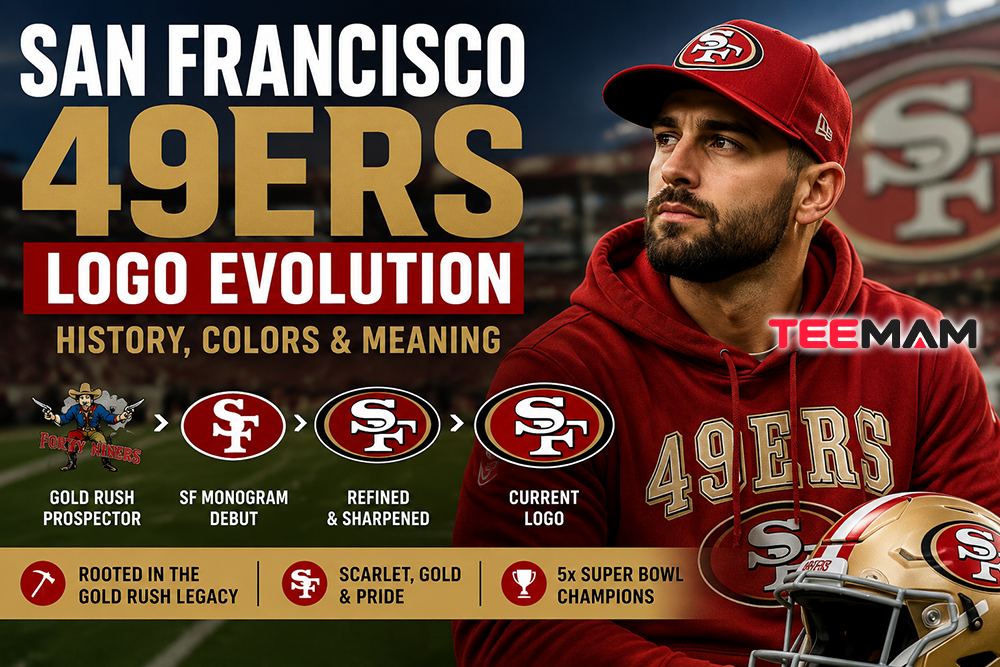
The Gold Rush theme shows up in smaller ways too, from stadium signage to throwback promotions to the vocabulary fans use to describe the team’s grit. It’s less a marketing device and more a running thread that connects Kezar Stadium, Candlestick Park, and today’s Levi’s Stadium in Santa Clara under one continuous story. Readers curious about how the visual identity evolved across those eras can see the evolution of the iconic emblem for a closer look at each redesign.
Why Fans Call Themselves “The Faithful”

“The Faithful” is the name 49ers supporters have adopted for themselves, and it captures something the Gold Rush framing alone doesn’t: loyalty through long stretches without a payoff, much like prospectors who kept digging with no guarantee of ever finding gold. It’s distinct from a few related terms fans sometimes use interchangeably:
- 49ers refers to the franchise itself
- Niner Gang is a more casual, social-media-era term for the fanbase
- The Faithful carries the specific connotation of sticking with the team through losing seasons as well as championship runs
- Faithful to the Bay leans into regional pride, emphasizing that the fanbase is rooted in Bay Area identity specifically, and not just wherever fans happen to live now
Fans wanting a deeper dive into how this identity took hold can explore the meaning behind Faithful tradition, which traces the phrase back through different eras of the fanbase.
Common Misconceptions About the 49ers Name
Were the players actual gold miners?
No. The name is symbolic, honoring prospectors who arrived nearly a century before the team existed. No player has ever been required to know a pickaxe from a pan.
Is the team named after the year 1949?
Close, but not quite. The name references 1849, the peak year of Gold Rush migration, not 1949, which has no connection to the franchise’s 1946 founding.
Is there any connection to Charlotte 49ers?
None historically. Charlotte’s “49ers” teams take their name from UNC Charlotte’s 1946 founding year, which happens to overlap numerically with San Francisco’s franchise but comes from a completely separate origin story.
Did every Gold Rush miner arrive in 1849?
No. Migration continued well into the 1850s, and the initial discovery happened in 1848. The nickname simply reflects the single largest wave of arrivals, not a strict cutoff date.
The Name’s Role in One of the NFL’s Most Historic Rivalries
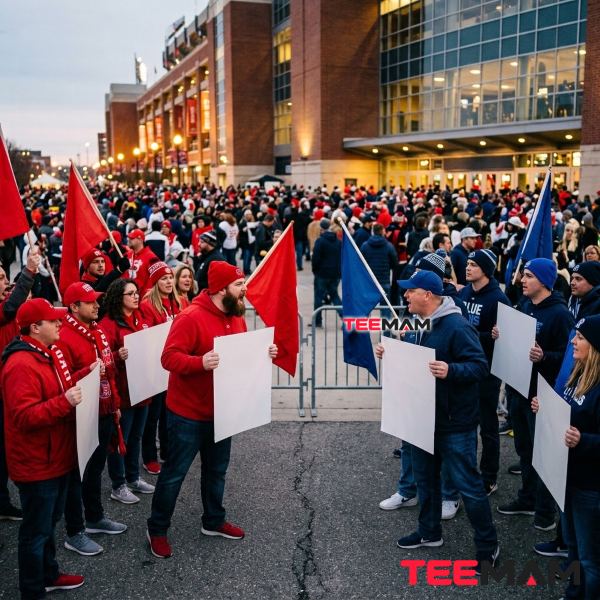
A franchise name this tied to place naturally sharpens rivalry storylines. Matchups against the Dallas Cowboys, the Los Angeles Rams, and the Seattle Seahawks carry an extra layer when one side is explicitly branded around regional pioneer history and the other isn’t. Rivalries built purely on shared conference history are common across professional football; rivalries where one franchise’s name doubles as a regional creation myth are rarer, and that gives 49ers–Cowboys or 49ers–Rams games a bit more texture than a typical divisional clash. Fans wanting a fuller breakdown of how these matchups developed can check the historic rivalry moments explained, which covers the key flashpoints across both series.
How the Legacy Lives On Through Modern Fan Traditions
Fans visiting Levi’s Stadium on game day often notice how much Gold Rush imagery surfaces around them: tailgate chants referencing “striking gold,” throwback jerseys pulling from the 1946–1962 prospector-logo era, and signage that leans on mining-town visual language instead of anything modern. Plenty of supporters specifically seek out gear tied to that older identity instead of whatever the current season’s uniform happens to be, treating the history itself as a form of fandom separate from just rooting for this year’s roster.
Choosing Apparel That Celebrates 49ers Heritage
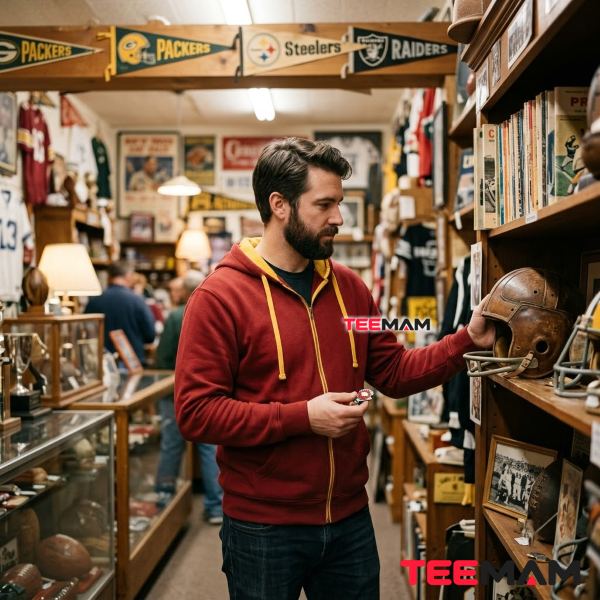
For fans who care about where the colors and imagery actually come from, that history is worth factoring into what gets worn to games. Retro color-blocking, Gold Rush-themed graphics, and designs that reference the franchise’s earliest visual identity tend to hold more meaning, and often more resale value, than generic seasonal merchandise. Many longtime supporters prefer apparel that reflects the franchise’s history instead of seasonal trends. We take the same approach at TeeMam by creating designs inspired by defining moments in 49ers history instead of short-lived hype. Fans looking for that kind of piece can browse the heritage inspired fan apparel collection, or personalize a custom 49ers hoodie design built around that same older identity.
Key Questions Fans Often Ask
Why are they called the San Francisco 49ers?
The franchise was named in 1946 after the prospectors who rushed to California during the 1849 Gold Rush, on the suggestion of co-owner Allen E. Sorrell.
What does the number 49 represent?
It represents 1849, the peak year of the Gold Rush migration into California, not a jersey number or a founding date.
Who named the San Francisco 49ers?
Allen E. Sorrell, a lumber-business partner of founder Tony Morabito, proposed the name.
Was the team founded during the Gold Rush?
No. The Gold Rush ran from roughly 1848 to the mid-1850s; the team was founded in 1946, nearly a century later, and named in tribute to that era.
Why are the team colors red and gold?
Gold references the mineral that drove the Gold Rush, while red has become the franchise’s signature complementary color over decades of uniform history.
What does Sourdough Sam represent?
He’s a costumed gold-miner mascot referencing the sourdough bread prospectors carried into the gold fields, and he descends visually from the original 1946 team logo.
Why are fans called The Faithful?
The nickname reflects loyalty through both winning and losing seasons, echoing the persistence of prospectors who kept digging without any guarantee of striking gold.
Is the 49ers name unique in American sports?
Yes. Unlike the Packers’ sponsor-derived name or the Steelers’ industry tribute, the 49ers reference one specific historical event and year, which is part of why it has never needed to change.
Conclusion
Strip away the merchandise and the mascot costume, and the 49ers name still comes down to one decision made in 1946 by a group of lumbermen who wanted their new professional football team to mean something to the city it represented. Instead of just being a franchise nickname, “49ers” preserves one of the more consequential chapters in American history, and it turns every home game into a small echo of the risk-taking that built San Francisco in the first place.

Hi, I’m Olivia Bennett, a fashion and lifestyle writer at TeeMam with 6 years of experience creating content about fashion, outfits, and lifestyle trends. I enjoy sharing practical style ideas for everyday wear, game days, holidays, and special occasions, helping readers find looks that feel comfortable, fun, and uniquely their own.