Sourdough Sam: The Story Behind the San Francisco 49ers Mascot
Sourdough Sam is the official mascot of the San Francisco 49ers, a gold miner character who has been firing up crowds at home games since 1994. He’s not a guy in a generic team-colored suit. He’s a walking piece of San Francisco history, pickaxe and all, named after the same “forty-niners” who rushed to California in 1849 and gave the franchise its name in the first place. That’s part of why fans have stuck with him for three decades: introduced in 1994 at Candlestick Park, he represents California’s Gold Rush heritage and still works as the team’s main game-day ambassador at Levi’s Stadium, at community events, and across the franchise’s youth programs today.
Who Is Sourdough Sam?
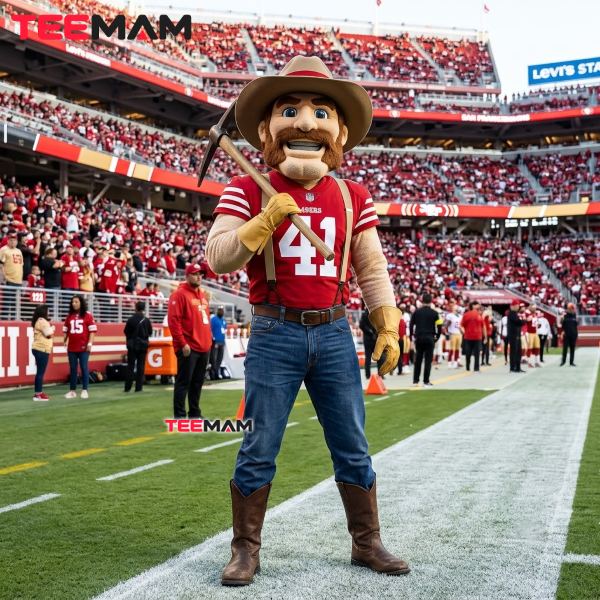
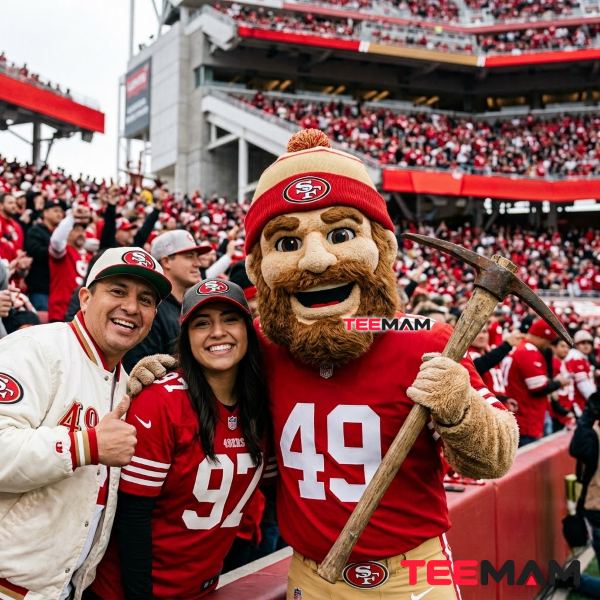
Sourdough Sam is a 6-foot-6 gold prospector mascot who has represented the 49ers since the 1994 season. He’s the franchise’s only official mascot, and unlike a static team logo, he actually has a backstory, a wardrobe, and a personality that the 49ers’ game presentation staff keeps alive year-round through his own social accounts. Behind the costume, the mascot performer coordinates closely with that same game presentation team to time entrances, halftime bits, and fan meet-and-greets throughout each home game, which is a bigger production than most fans realize while they’re watching him goof around on the sideline.
What does Sourdough Sam represent?
He’s built to embody three things at once: California’s Gold Rush heritage, the grinding determination the 49ers name is supposed to stand for, and the frontier optimism that drew thousands of prospectors west in the first place. When the team introduces him at youth camps or charity events, that’s the pitch they lean on, not “he’s a football fan,” but “he’s the spirit of the people who built this state.” That framing carried through the Bill Walsh era, through the Joe Montana and Steve Young championship years, and through every rebuild since, because it was never tied to a specific roster to begin with.
Why is he called Sourdough Sam?
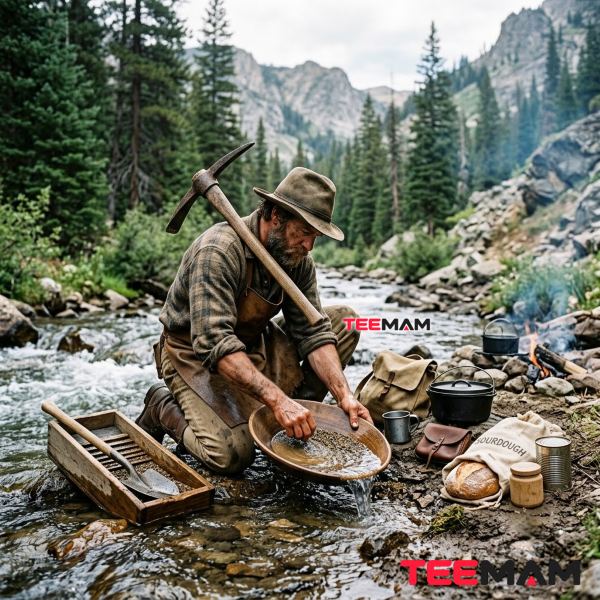
The name isn’t random branding. Sourdough bread became a Gold Rush staple because miners could carry the fermented starter with them on long expeditions, sometimes tucked close to the body to keep it warm in cold weather, and bake bread wherever they set up camp in the Sierra foothills and Gold Country mining towns. Prospectors were literally nicknamed “sourdoughs” because of it, and San Francisco’s Boudin Bakery is often credited with popularizing the sourdough loaf that same era. Pair that with a football team already named after 1849 prospectors, and “Sourdough Sam” was less a creative leap than an obvious connection someone finally made official.
Why Is the 49ers Mascot a Gold Miner?
The Gold Rush Roots of the “49ers” Name
The name comes straight from 1849, the peak year of the California Gold Rush, when tens of thousands of fortune-seekers flooded into Northern California hoping to strike it rich. Those arrivals became known as “forty-niners,” and when San Francisco’s football franchise formed in 1946 as a charter member of the All-America Football Conference (AAFC) before joining the NFL in 1950, the name stuck as an obvious nod to the city’s defining historical moment. A gold miner mascot wasn’t a stretch. It was almost the only option for a franchise identity built entirely around one historical event.
Why the Miner Theme Still Fits
A nineteenth-century prospector and a modern NFL franchise sound like an odd pairing until you actually think about what both are chasing. Miners dug through failure after failure hoping for one strike. The Faithful sit through long, ugly seasons hoping for one deep playoff run. Same stubborn streak, just a different tool in hand. That’s the DNA the mascot leans on, and it’s why the miner theme has outlasted every coaching staff and roster turnover since 1946.
The History of Sourdough Sam
Early mascot appearances
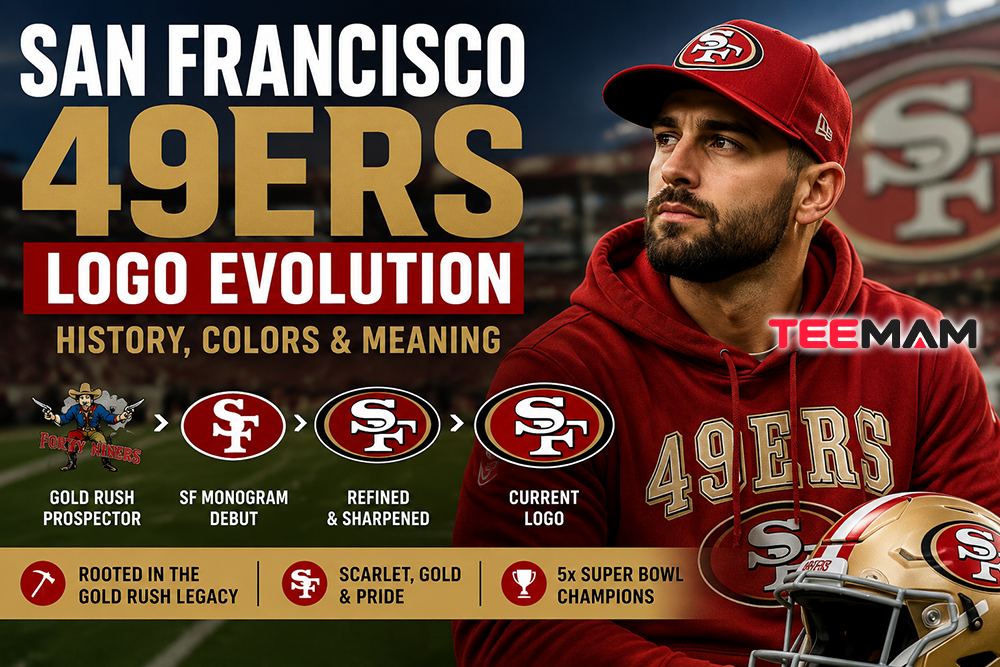
Before there was a person in a miner costume, there was a mule. Clementine, named after the folk song “Oh My Darling, Clementine,” served as the 49ers’ first mascot through the 1950s and 1960s, appearing at Kezar Stadium in a red saddle blanket and reportedly braying whenever the team scored. She made her final appearance in December 1967 and passed away the following year. The team didn’t rush to replace her with another live animal; instead, the miner concept that would eventually become Sourdough Sam traces back further, to program cover artwork drawn by illustrator William Kay between 1946 and 1949, back when the 49ers still played in the AAFC. Kay’s covers featured a bushy-mustached prospector firing two pistols in mid-jump, an image that later shaped the team’s early logo and, eventually, its human mascot.
Changes during the Candlestick Park era
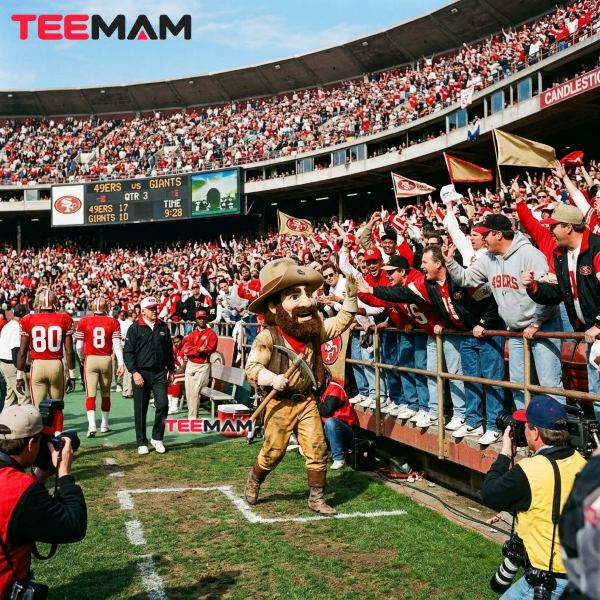
Costumed miner characters started showing up at games in the 1970s, but they were rough drafts by today’s standards, a large man in an oversized football helmet and plaid shirt, more awkward than charming by most accounts. It wasn’t until 1994, at Candlestick Park, that the team introduced a fully developed character under the name Sourdough Sam, first performed by Paul P. Harris. That launch put the 49ers in step with a wider league shift: NFL Properties was rolling out its own mascot program around the same period, pushing more franchises toward full-time, personality-driven characters instead of static logos or live animals.
Sourdough Sam at Levi’s Stadium today
Since the 49ers moved to Levi’s Stadium in 2014, Sourdough Sam has taken on a bigger media presence. That same year, Levi Strauss & Co. gave him a custom pair of jeans, replacing the unbranded pair he’d worn for roughly 60 years, complete with promotional photos of him inside the Levi’s Taylor Shop watching his new pants get made. If you’re heading to a game and want to know where he tends to show up, when the tunnel walk happens, or how the tailgate lots are laid out around the stadium, the complete Levi’s Stadium fan guide covers all of that in more detail than we can fit here.
Sourdough Sam’s Timeline at a Glance
| Era | What Changed |
|---|---|
| 1946 to 1949 | William Kay draws the prospector program artwork that later inspires the mascot’s look |
| 1950s to 1960s | Clementine the mule serves as the team’s first mascot at Kezar Stadium |
| 1970s | Costumed gold miner characters appear at games, still unnamed and inconsistent in design |
| 1994 | Sourdough Sam officially debuts at Candlestick Park, performed by Paul P. Harris |
| Pre-2006 season | Redesign introduces a clean-shaven gold panner look with blue eyes |
| 2014 | Team moves to Levi’s Stadium; Sam receives his first branded Levi’s jeans |
| 2020 to present | Constantine Abramson takes over as the primary performer |
How Sourdough Sam Has Changed Over the Years
Costume evolution
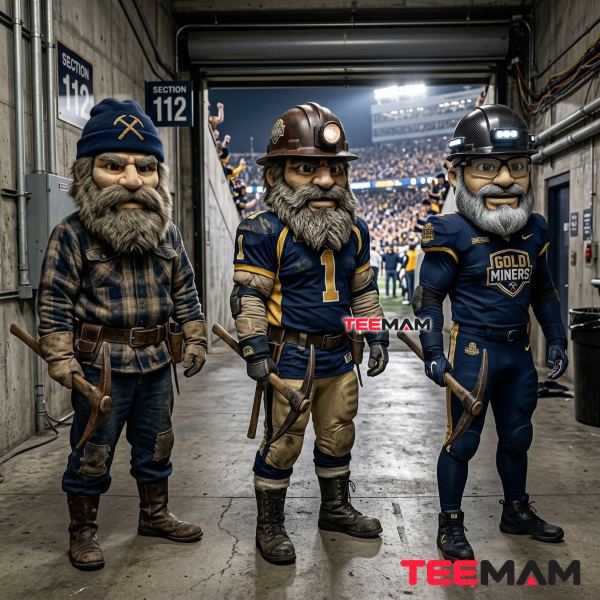
The character has gone through at least three distinct visual phases. The earliest version wore a plaid shirt and an oversized helmet, directly copying the 1940s William Kay artwork. A later redesign swapped the helmet for a wide-brimmed ten-gallon hat with a chunk missing from the brim, gave him a longer brown beard, and added brown eyes. Ahead of the 2006 season, the team cleaned him up again into a clean-shaven gold panner with blue eyes and a less rugged overall look. Today’s version splits the difference: cardinal jersey, white long-sleeve shirt underneath, brown gloves, a gold handkerchief, dark brown boots, and jeans held up by suspenders, with a pickaxe as his signature prop.
From cartoon character to modern entertainment mascot
What started as a static illustration on game programs is now a full-time entertainer who dances, juggles, drums, and runs QB target-practice bits with kids on the field. NFL mascots across the league made the same jump around the same period, from background decoration to a core part of how franchises market themselves to families, especially once social media gave every mascot a direct line to fans instead of just a stadium PA announcement.
Which version do longtime fans remember most?
Ask anyone who grew up going to games at Candlestick, and the scruffy-bearded, ten-gallon-hat version is usually the one that sticks. It’s not the most polished design in the mascot’s history, but it’s tied to a specific stadium and a specific era of the franchise, and that’s exactly why vintage collectors still hunt down old game programs and memorabilia featuring that look.
What Does Sourdough Sam Do on Game Day?
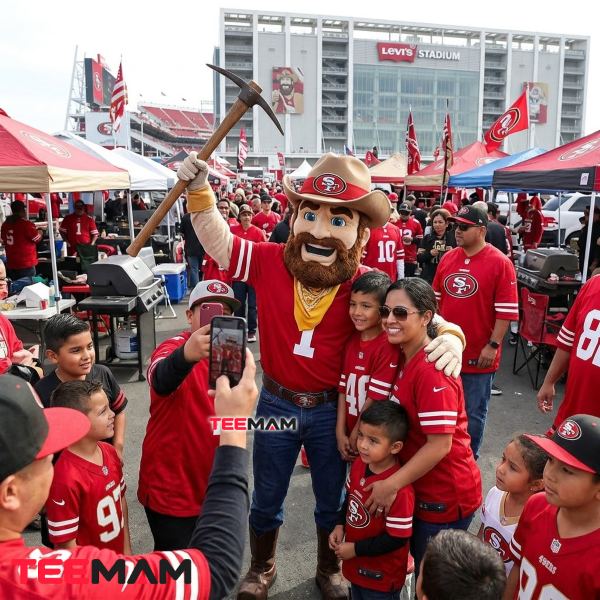
Pregame activities
Sam typically works the tailgate lots and stadium entrances well before kickoff, posing for photos, greeting families, and hyping up the crowd as they file in. Tailgate culture around Levi’s Stadium runs deep, and Sam working those lots is as much a ritual as the parking-lot grills and team flags.
During the game
Once the game starts, his job shifts to sideline entertainment: leading cheers during lulls, celebrating touchdowns with the pickaxe raised, and working the sidelines for in-game camera moments that end up on the jumbotron and on his own social accounts afterward.
Community events beyond football
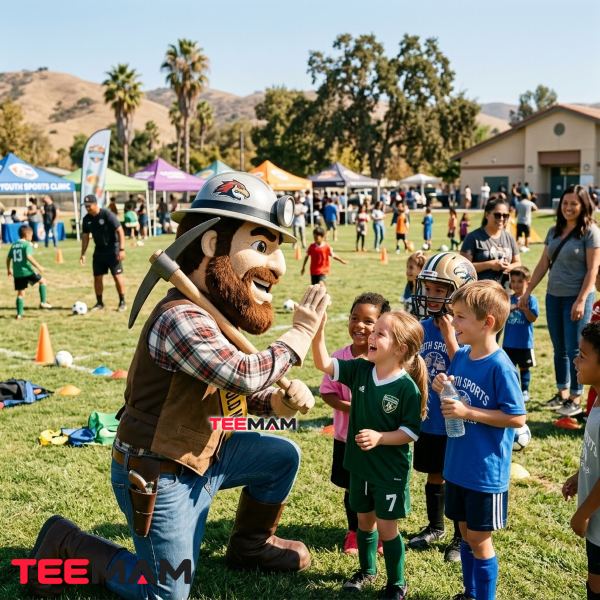
Sourdough Sam’s schedule doesn’t stop at football season. He regularly appears at 49ers youth camps, schools, birthday parties, military appreciation events, NFL Experience activations, and charity fundraisers. During the pandemic, he even led a virtual workout session for the team’s PREP youth fitness program, which says something about how far the “mascot” job description has stretched over three decades.
Why Sourdough Sam Means More Than Just a Mascot
A symbol of The Faithful community
“The Faithful” is what 49ers fans call themselves, and Sourdough Sam is basically the mascot version of that identity, loyal, a little rough around the edges, and always around no matter how the season is going. If you’ve ever wondered where that nickname actually came from and why it stuck so hard in Bay Area sports culture, the meaning behind The Faithful goes into that history in full.
Connecting generations of fans
Because he’s been around since 1994, Sourdough Sam is now something parents who grew up watching him at Candlestick get to introduce to their own kids at Levi’s Stadium. Talk to season ticket holders who’ve held seats since the Steve Young years, and plenty will tell you their kids know Sourdough Sam before they know most of the current roster. A brand-new mascot can’t manufacture that kind of handoff. It only works because the character has stuck around long enough to become a shared family memory rather than a marketing refresh.
Sourdough Sam and Modern 49ers Traditions
His role during touchdown celebrations
Every touchdown celebration at Levi’s Stadium gets a boost from Sam pumping up the section closest to him, pickaxe in the air, and it’s become as much a part of the in-stadium ritual as the scoreboard flashing. For a full rundown of the chants, songs, and stadium traditions fans lean on during those moments, the favorite touchdown celebration traditions cover it stop by stop.
Social media and fan experiences
Sourdough Sam runs active accounts across Instagram and X, posting in the first person as if Sam himself is typing the captions. His Instagram account has built a following in the tens of thousands, and mascot engagement rankings have placed him among the more active NFL mascot accounts for fan interaction, thanks to a steady mix of game-day hype clips, holiday posts, and behind-the-scenes content from team events and corporate partner activations.
Why Vintage Sourdough Sam Designs Are Popular Again
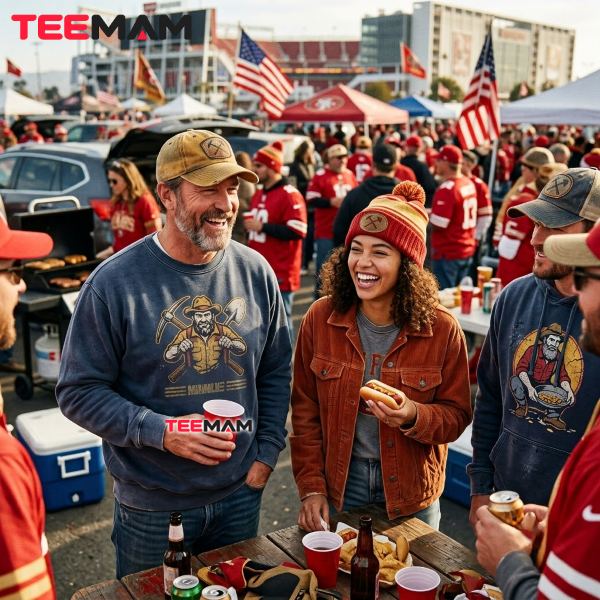
Walk through the parking lots before kickoff at Levi’s Stadium today and you’ll spot it fast: faded crewnecks featuring the old bearded, ten-gallon-hat version of Sam, worn long before anyone bothers to check out the newest sideline merchandise. That’s not nostalgia for its own sake. Wearing an older mascot design has quietly become a way of signaling you’ve followed this franchise for decades, not just since the last playoff run.
Part of the appeal is practical, too. Most mascot redesigns drift toward safer, rounder, more generic cartoon proportions over time. Sourdough Sam’s early versions were rougher and stranger looking, tied to a specific place and a specific moment in football history. That history has turned old program covers into surprisingly sought-after collectibles among 49ers fans.
How Sourdough Sam Compares to Other NFL Mascots
Not every NFL mascot has a real origin story. Some came out of front-office marketing programs with little tie to team history, while others, like Sam, grew directly out of the franchise’s own name and regional identity.
| Mascot | Team | Debut Year | Origin |
|---|---|---|---|
| Sourdough Sam | San Francisco 49ers | 1994 | Grew from 1940s program artwork tied to the Gold Rush-era “forty-niners” name |
| Rowdy | Dallas Cowboys | 1996 | Developed by NFL Properties as part of the league’s mid-1990s mascot program |
| Blitz | Seattle Seahawks | 1998 | Inspired by the team’s bird identity rather than a historical figure |
| Freddie Falcon | Atlanta Falcons | 1984 | Replaced earlier live falcons used as team mascots in the 1960s and 1970s |
That comparison is a big part of why Sourdough Sam holds up as a rare case in NFL mascot branding: he’s one of the few characters whose entire look, name, and props trace back to the actual reason his team is called what it’s called.
Bringing Sourdough Sam’s Legacy Into Everyday Fan Style
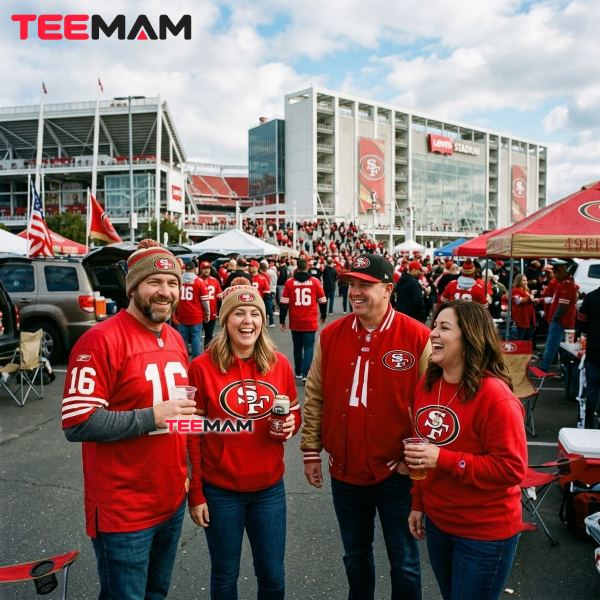
Game-day fashion these days isn’t really about the newest jersey drop. It’s about telling people how long you’ve been riding with this team. Retro-leaning designs, like the old bearded Sourdough Sam swinging his pickaxe, have quietly become a kind of insider language among longtime 49ers fans, a way to signal “I was there before this” without saying a word. If you’re chasing that same throwback feel for your next tailgate, the classic fan gear collection pulls together pieces built around that same Gold Rush heritage, from The Faithful’s earliest eras straight through today.
Interesting Facts About Sourdough Sam
| Fact | Detail |
|---|---|
| Height | Roughly 6 feet 6 inches tall in costume, not counting the hat |
| Birthday | April 9, matching the 4/9 date format tied to his jersey number |
| Debut | 1994 at Candlestick Park, replacing mule mascot Clementine |
| Jeans | Received his first Levi’s-branded pair in 2014 after roughly 60 years in unbranded denim |
| Signature prop | A pickaxe, plus a gold pan for select community appearances |
| Original performer | Paul P. Harris, from 1994 to roughly 2004 |
| Current performer | Constantine Abramson, since 2020 |
| Media appearances | Fox, Monday Night Football, ESPN’s SportsCenter, MTV, and Nickelodeon |
Common Questions About Sourdough Sam and the 49ers Mascot
Who created Sourdough Sam?
Illustrator William Kay drew the original prospector artwork on team programs between 1946 and 1949. The fully costumed “Sourdough Sam” character debuted in 1994, first performed by Paul P. Harris.
Has Sourdough Sam always looked the same?
No. He’s had at least three major redesigns: an oversized-helmet miner in the 1970s, a bearded ten-gallon-hat prospector, and the clean-shaven gold panner look introduced ahead of the 2006 season.
Why is the mascot based on a gold miner?
Because the team is named after the “forty-niners” of the 1849 California Gold Rush, so a prospector mascot is a direct extension of the franchise name, not an unrelated marketing idea.
Does Sourdough Sam travel with the team?
Mostly no. He’s focused on home games and Bay Area community events, with select appearances at league-wide activations like NFL Experience and partner promotions.
Can fans meet Sourdough Sam at every home game?
Yes. He’s a regular presence at Levi’s Stadium on game days, working tailgate lots, sideline moments, and fan photo opportunities before and during the game.
Why is Sourdough Sam important to 49ers culture?
He’s one of the only tangible links between the franchise’s Gold Rush namesake and the modern in-stadium experience, giving fans an actual character to rally around instead of just a logo on a jersey.
Conclusion
Sourdough Sam works because he isn’t decoration bolted onto the 49ers brand after the fact. He grew out of the team’s actual name, out of real Gold Rush history, and out of program artwork dating back to the franchise’s earliest years in the AAFC. From a red-blanketed mule at Kezar Stadium, through the Walsh-Montana-Young championship years, to a fully costumed prospector at Candlestick Park and now a pickaxe-swinging fixture at Levi’s Stadium, the thread never changed. More than thirty years after his official debut, Sourdough Sam still reminds every generation of The Faithful that this franchise’s story started long before the first kickoff.
Sources referenced for factual verification: San Francisco 49ers official mascot biography (49ers.com), Wikipedia entries on Sourdough Sam and List of NFL mascots, Collectors Weekly (“Before the NFL: Sourdough Sam’s Swagger”), Mascotpedia and Grokipedia mascot history entries, and 24/7 Wall St. and Sports Illustrated NFL mascot rankings for comparison data on Rowdy, Blitz, and Freddie Falcon.

Hi, I’m Olivia Bennett, a fashion and lifestyle writer at TeeMam with 6 years of experience creating content about fashion, outfits, and lifestyle trends. I enjoy sharing practical style ideas for everyday wear, game days, holidays, and special occasions, helping readers find looks that feel comfortable, fun, and uniquely their own.