Rudolph the Red-Nosed Reindeer: The Story Behind the Song
Every December, somewhere between the tree lights and the cookie trays, Rudolph comes back into the holiday soundtrack. What makes his story unusual is the path he took to get there: a department-store booklet in 1939 became a hit record in 1949, then a landmark television special in 1964, and eventually a fixture of American Christmas design.
Quick answer: Rudolph the Red-Nosed Reindeer first appeared in 1939, when Montgomery Ward asked copywriter Robert L. May to create a Christmas story for shoppers. Ten years later, May’s brother-in-law Johnny Marks turned the story into a song, and Gene Autry’s 1949 recording made it a Christmas standard. That history is why Rudolph still shows up everywhere from christmas songs with rudolph playing on holiday radio to television specials, decorations, and seasonal design.
Rudolph Started as a 1939 Montgomery Ward Christmas Story
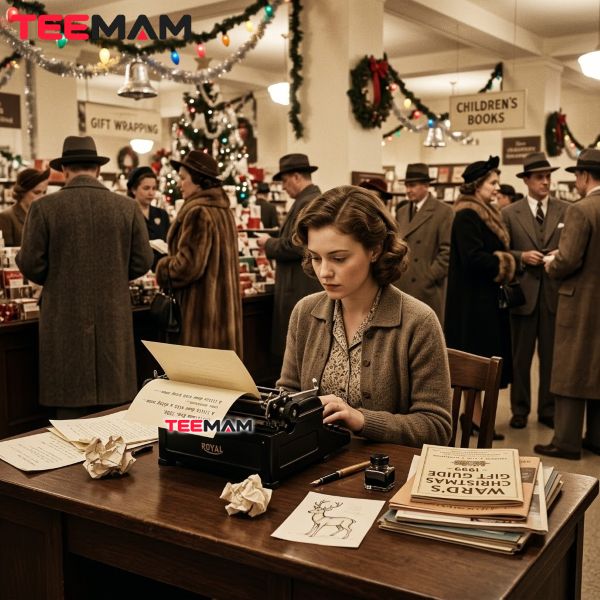
Robert L. May and the Original Rudolph Story
Robert L. May wasn’t a songwriter. He was a copywriter at Montgomery Ward in Chicago, and in 1939 the store asked him to write an original children’s story it could give away free at Christmas, instead of continuing to buy and hand out coloring books every year, according to the Smithsonian’s National Museum of American History. May wrote the tale, illustrated by fellow Montgomery Ward artist Denver Gillen, and the store distributed roughly 2.4 million copies of the booklet in its first year alone. There was no song yet — Rudolph, at this stage, was purely a marketing character.
Why Rudolph Was Different From the Other Reindeer
The premise was simple and a little melancholy: a young reindeer is mocked for his unusually shiny red nose and left out of the other reindeer’s games. Only when a foggy Christmas Eve threatens to ground Santa’s sleigh does Rudolph’s “flaw” turn out to be exactly what’s needed. That arc — difference, exclusion, then being needed for the very trait that made him an outsider — is a big reason the story resonated with children in a way most promotional booklets never do.
A 1947 Turning Point Most Retellings Skip
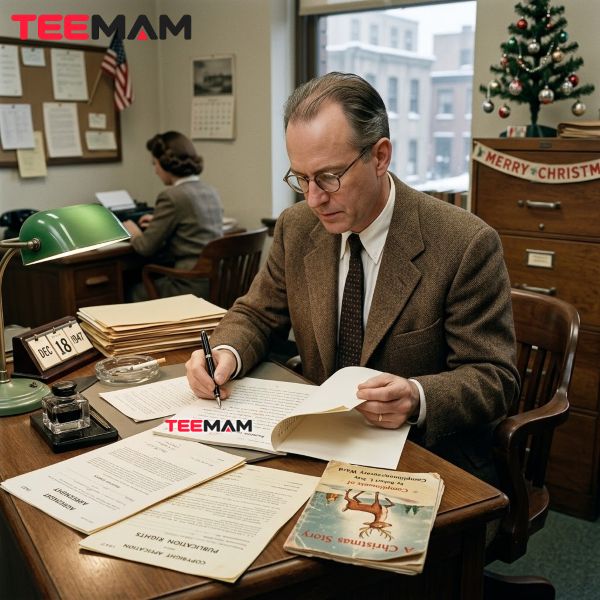
Most versions of Rudolph’s history jump straight from 1939 to the song. One lesser-known detail explains why the story didn’t just stay a Montgomery Ward giveaway: May had created Rudolph as a work-for-hire employee, with no rights to the character, until 1947, when the Library of Congress notes he convinced Montgomery Ward to hand him the rights to the book. That gave May a personal stake in Rudolph’s future just two years before Marks turned the story into a song — a small legal detail that helps explain why Rudolph could keep growing well beyond the store that created him. That shift, from commercial character to a familiar part of American Christmas culture, echoes how so many Christmas traditions have evolved from practical origins into something families now treat as timeless.
Who Wrote the Rudolph Christmas Song?
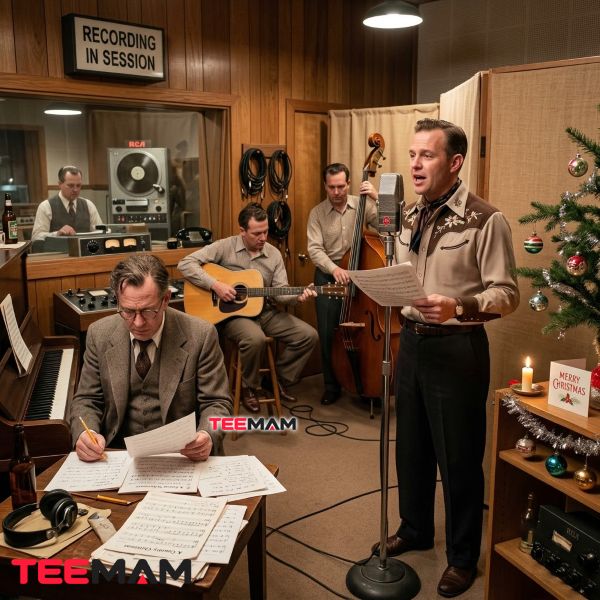
May created the 1939 story, Marks wrote the 1949 song, and Gene Autry made the recording famous — three people, three roles, and, notably, only two pivotal years between them. That distinction matters for the wider history of christmas songs with rudolph, because Rudolph existed as a character for a full decade before he was ever set to music.
Johnny Marks Turned the Story Into a Song
Marks was already an established songwriter when he set his new brother-in-law’s story to music in 1949, according to the Library of Congress. He would go on to write several more Christmas standards, including “Rockin’ Around the Christmas Tree” and “A Holly Jolly Christmas” — Rudolph turned out to be the start of an entire career built on Christmas hits.
Why Gene Autry’s Recording Changed Rudolph’s Future
Gene Autry was reportedly reluctant to record the song at first; according to the Library of Congress, it was his wife who convinced him to give it a try. The recording became an immediate hit — the National Museum of American History notes that roughly 1.75 million copies sold in its first year alone — and turned Rudolph from a promotional character into one of the most recognizable figures in Christmas music. For readers searching specifically for christmas songs with rudolph, the trail still leads back to that 1949 Johnny Marks song. Read the fuller authorship and recording story in the Library of Congress account.
Which Christmas Songs Feature Rudolph?

The best-known Christmas song featuring Rudolph is Johnny Marks’ “Rudolph the Red-Nosed Reindeer,” written in 1949 and first made famous by Gene Autry’s recording. Gene Autry’s version was only the beginning: the National Museum of American History notes that the song has since been recorded by artists including Bing Crosby, Dolly Parton, Chuck Berry, Ray Charles, Ringo Starr, the Jackson 5, and DMX. Rudolph has also turned up in later holiday albums, television productions, and children’s records, but Marks’ original song remains the definitive answer whenever people search for christmas songs with rudolph.
How the Rudolph Song Became a Christmas Classic
The song is easy to remember for a simple reason: almost anyone can join in after hearing it once or twice, with no complicated bridge or key change to trip up a car full of kids. Before 1949, Rudolph belonged mainly to a printed story; after Autry’s hit, he earned a permanent slot among the christmas songs with rudolph that families return to every December.
The lyrics, without quoting them directly, tell an easy story to summarize: Rudolph is excluded for how he looks, Santa needs him on a night when visibility is dangerously low, and the trait that got him mocked becomes the reason he’s chosen to lead. That’s naturally read as a story about difference, rejection, and belonging — though that’s an interpretation rather than a stated lesson, since the original material doesn’t frame itself as a formal moral. That emotional simplicity is a big reason these christmas songs with rudolph keep working across generations rather than feeling tied to the era they were written in.
How the 1964 TV Special Changed Rudolph Forever
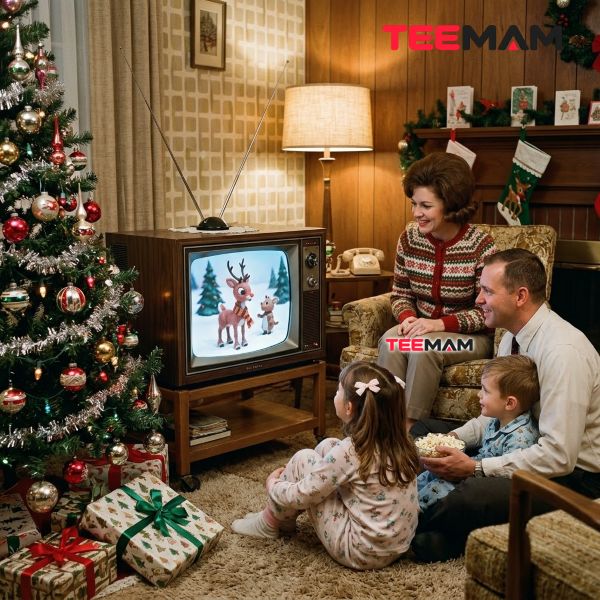
If the song made Rudolph famous, the 1964 Rankin/Bass television special is what fixed his image for generations — a separate milestone from May’s story and Marks’ song, not another version of either. Produced with a pioneering stop-motion technique called Animagic and narrated by Burl Ives as Sam the Snowman, the special premiered on NBC on December 6, 1964, sponsored by General Electric. Smithsonian magazine reports it has been rebroadcast every year since its debut and describes it as the longest-running Christmas special in American television history.
Rudolph had actually appeared on screen once before, in a 1948 Montgomery Ward theatrical short, but the 1964 broadcast was his first animated television version — and by far the more influential one. It also introduced characters that don’t appear in May’s story or Marks’ song at all: Hermey the elf, Yukon Cornelius, and the Island of Misfit Toys were creations of the television adaptation. Together with its puppets and sets, they gave later generations a specific version of Rudolph to picture, one that could live on through television, toys, and decorations independent of any recording. Read more in Smithsonian’s account of the production.
Why Rudolph Became a Christmas Design Icon

Rudolph works especially well in holiday graphics because he can be recognized from just a few elements: small antlers, a rounded reindeer silhouette, and that unmistakable red nose, set against a palette already built around red, green, and white. Those cues are enough to make Rudolph recognizable across sweaters, mugs, ornaments, and stockings without any explanatory text — the same visual shorthand that makes him memorable in christmas songs with rudolph also makes him effective as a design motif. Retro holiday graphics have made a strong comeback in recent seasons, and Rudolph sits right in the middle of that trend: nostalgic to adults who grew up on the 1964 special, simply fun to kids seeing him for the first time, and an easy fit for matching family pajamas and holiday sweaters either way.
Rudolph in Modern Christmas Traditions
Rudolph’s red nose fits naturally into the red, green, and white palette that’s defined Christmas decorating for generations — you can see where that pairing comes from in our guide to what Christmas colors traditionally mean. He also shows up in the small rituals families build their Decembers around: a movie night with the 1964 special, a singalong in the car, a bedtime story before the tree goes up. For a lot of households, hearing one of these christmas songs with rudolph is one of the small signals that the season has officially started.
Because Rudolph is nostalgic without being tied to a single generation, he works as a gift idea for almost anyone — kids, parents, grandparents, even a coworker in a Secret Santa exchange, as our creative Secret Santa gift ideas guide shows. That same spirit of generosity — Rudolph is remembered, after all, for helping deliver presents on a night the weather nearly stopped everything — connects him to other playful family traditions like the Elf on the Shelf tradition.
At TeeMam, we see holiday design as storytelling first: familiar characters and traditions become part of how families celebrate, decorate, and pass the season down to the next generation.
The Rudolph Timeline, at a Glance
| Year | What Happened |
|---|---|
| 1939 | Robert L. May, a Montgomery Ward copywriter, creates Rudolph for a free promotional Christmas booklet; about 2.4 million copies are distributed in the first year. |
| 1947 | May persuades Montgomery Ward to hand him the rights to the book version, having originally created it as a work-for-hire employee. |
| 1949 | Johnny Marks adapts the story into a song; Gene Autry’s recording sells roughly 1.75 million copies in its first year and becomes a national hit. |
| 1964 | The Rankin/Bass stop-motion television special premieres on NBC on December 6, sponsored by General Electric. |
| Modern era | Rudolph remains a fixture of Christmas music, television, decorations, and family holiday traditions. |
What Makes the Rudolph Song Last?
Rudolph’s staying power, and the enduring appeal of christmas songs with rudolph generally, comes from a few specific things working together, not just nostalgia in general:
- A memorable character — one distinctive visual trait (the nose) that’s instantly recognizable.
- A simple, singable story — short enough for kids to follow, catchy enough for a car singalong.
- A message about belonging — rejection followed by being needed, a theme that resonates well beyond childhood.
- A strong visual identity — reinforced by television long after the original booklet was forgotten.
Rudolph Song Facts You Can Share at Christmas
A quick reference for the history behind christmas songs with rudolph:
- Rudolph originated in 1939 as a Montgomery Ward Christmas giveaway, illustrated by Denver Gillen.
- Robert L. May, a Montgomery Ward copywriter, created the original character and story.
- Roughly 2.4 million copies of the original booklet were distributed in its first year, according to the Smithsonian.
- May didn’t hold the rights to Rudolph until 1947, when Montgomery Ward returned them to him.
- Johnny Marks, May’s brother-in-law, wrote the song version in 1949 — a decade after the original story.
- Gene Autry’s 1949 recording sold about 1.75 million copies in its first year and became a national hit.
- The Rankin/Bass stop-motion television special first aired on NBC on December 6, 1964.
- The special has aired every holiday season since 1964 and is described by Smithsonian as the longest-running Christmas special in U.S. television history.
The Rudolph Story Still Shines Every Christmas
Rudolph’s staying power comes from more than one recording. The character has been passed from a printed booklet to a hit record, a television special, and decades of decorations and family traditions, and his place among christmas songs with rudolph is really just one chapter of that much longer story. He’s lasted this long not because of one clever ad campaign, but because the underlying arc — difference, rejection, usefulness, belonging — keeps finding new ways to reach families every December.
So this year, when it comes on, it’s worth asking which version of Rudolph actually made him yours — the record, the TV special, or the ornaments that come out of the storage box every December.
Questions Readers Still Ask About Rudolph
Who originally created Rudolph the Red-Nosed Reindeer? Robert L. May, a copywriter at Montgomery Ward, created the original Rudolph story in 1939 as a promotional Christmas booklet.
Who wrote the Rudolph Christmas song? Johnny Marks, May’s brother-in-law, wrote the song version in 1949 — ten years after May’s original story.
When was the Rudolph song first released? Johnny Marks wrote the song in 1949, and Gene Autry recorded and released his famous version that same year. The recording became a major Christmas hit during the 1949 holiday season.
Did Gene Autry write Rudolph the Red-Nosed Reindeer? No. Gene Autry recorded the famous 1949 hit version of the song, but Johnny Marks wrote it and Robert L. May created the original story.
Is Rudolph based on a true story? Rudolph is a fictional character, but his origin is rooted in a real commercial assignment: a Montgomery Ward copywriter was asked to write an original Christmas story for the store’s shoppers.
Why is Rudolph’s nose red? In the original story, Rudolph’s glowing red nose is what makes him different from the other reindeer — and it’s ultimately reframed as the very thing that saves Christmas on a foggy night.
Why is Rudolph associated with Christmas? Rudolph moved from a 1939 promotional story to a 1949 hit song to a 1964 television special, and each stage folded him deeper into how American families celebrate the season.
What are the most famous Christmas songs with Rudolph? The best-known song featuring Rudolph is “Rudolph the Red-Nosed Reindeer,” written by Johnny Marks in 1949 and famously recorded by Gene Autry. Later recordings by artists from Bing Crosby to the Jackson 5 have expanded Rudolph’s place in holiday music, but Marks’ song remains the central Rudolph Christmas standard.

Hi, I’m Olivia Bennett, a fashion and lifestyle writer at TeeMam with 6 years of experience creating content about fashion, outfits, and lifestyle trends. I enjoy sharing practical style ideas for everyday wear, game days, holidays, and special occasions, helping readers find looks that feel comfortable, fun, and uniquely their own.