What Are the 12 Days of Christmas? The Real Story
The 12 Days of Christmas traditionally begin on December 25 and run through January 5, with Epiphany following on January 6. They aren’t a countdown to Christmas — they’re the celebration that comes after it. The mix-up is understandable: Advent calendars, holiday sales, and weeks of “days until Christmas” countdowns train most of us to think everything wraps up on the 25th. Historically, that date was the starting point, not the finish line.
So what are the 12 days of Christmas, exactly, and why does the counting trip so many people up? Below is the full picture — the dates, where the season comes from, how the famous song fits in, and why one popular story about that song doesn’t hold up against the historical record.
At a glance
- Start: December 25, Christmas Day
- End: January 5, in the common Western count
- Twelfth Night: January 5 in that count (some traditions use January 6 instead)
- Epiphany: January 6
- Advent: the season of preparation before Christmas, not part of the twelve days
- Song first printed: 1780, in a children’s book
- Familiar modern tune: popularized by composer Frederic Austin in 1909
- Catholic-code theory behind the song: not supported by historical evidence
Quick Answer: What Are the 12 Days of Christmas?

The 12 Days of Christmas run from December 25, Christmas Day, through January 5, the eve of Epiphany, in the counting most commonly used across the U.S. and in Anglican and Lutheran tradition. This period is also known as Christmastide or, more specifically, Twelvetide. Epiphany, observed January 6, follows the twelve days rather than being counted as one of them — though as you’ll see below, not every tradition draws that line in the same place.
Here’s the sequence:
- December 25 — Day 1
- December 26 — Day 2
- December 27 — Day 3
- December 28 — Day 4
- December 29 — Day 5
- December 30 — Day 6
- December 31 — Day 7
- January 1 — Day 8
- January 2 — Day 9
- January 3 — Day 10
- January 4 — Day 11
- January 5 — Day 12 (Twelfth Night)
- January 6 — Epiphany
If you’re curious how Christmas itself took shape as a holiday, our Christmas history and origins guide covers that separately.
When Do the 12 Days of Christmas Start and End?
The 12 Days Run From December 25 to January 5
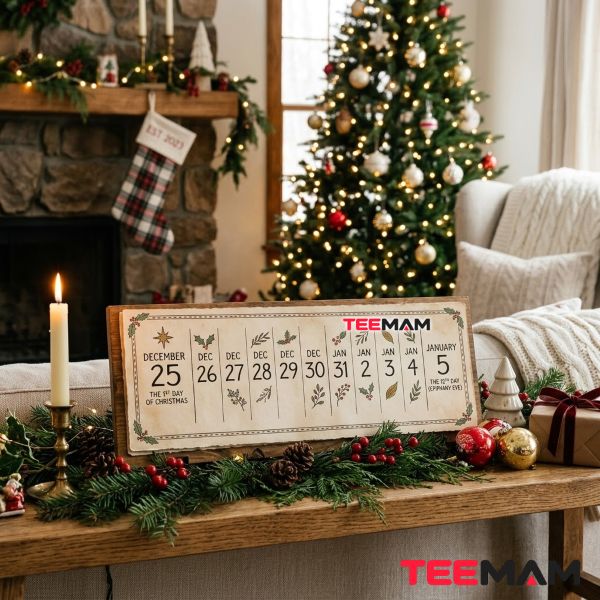
| Day | Date | What It Marks |
|---|---|---|
| 1 | December 25 | Christmas Day |
| 2 | December 26 | Second Day of Christmas |
| 3 | December 27 | Third Day |
| 4 | December 28 | Fourth Day |
| 5 | December 29 | Fifth Day |
| 6 | December 30 | Sixth Day |
| 7 | December 31 | New Year’s Eve |
| 8 | January 1 | New Year’s Day |
| 9 | January 2 | Ninth Day |
| 10 | January 3 | Tenth Day |
| 11 | January 4 | Eleventh Day |
| 12 | January 5 | Twelfth Night |
This is the framework most U.S. calendars and Anglican or Lutheran sources use. It isn’t universal, though — customs vary by denomination, region, and even by how a particular calendar defines when a liturgical day begins.
What Happens During the Twelve Days?
Several of the days inside the twelve carry their own observances on the traditional Christian calendar. December 26 is St. Stephen’s Day, December 27 honors St. John the Evangelist, and December 28 is Holy Innocents’ Day. December 31 and January 1 double as New Year’s Eve and New Year’s Day in the secular calendar. The season then closes with Twelfth Night on January 5 and Epiphany on January 6.
Why Do Some People Count January 6 as One of the 12 Days?
The confusion usually comes down to treating Twelfth Night and Epiphany as if they were the same date. In the common Western count used across most of the U.S., Twelfth Night falls on the evening of January 5 — the twelfth night after Christmas — and Epiphany is January 6, the day after. But that labeling hasn’t been applied consistently everywhere. New Orleans is a good real-world example: local tradition there refers to January 6 itself as Twelfth Night, marking the official opening of Carnival season. Older liturgical calendars, which often began a new day at sunset, add another layer of variation, and some Eastern Christian traditions follow the Julian or revised Julian calendar rather than the Gregorian one, which can put their Christmas and Epiphany observances on different civil dates altogether.
Are the 12 Days Before or After Christmas?
Traditionally, they come after Christmas Day, not before it. They aren’t the twelve days leading up to the holiday. Modern retail calendars and Advent countdowns run the opposite direction, which is a big part of why so many people assume the reverse.
What Does “Twelvetide” Mean?
Twelvetide refers specifically to the twelve-day period that begins on Christmas Day and ends on the eve of Epiphany. Christmastide is a broader term for the wider Christmas season and is often used interchangeably with Twelvetide, though depending on the source, Christmastide can stretch further, through the Sunday after Epiphany. The two terms overlap heavily in everyday use, even if they aren’t always exact synonyms.
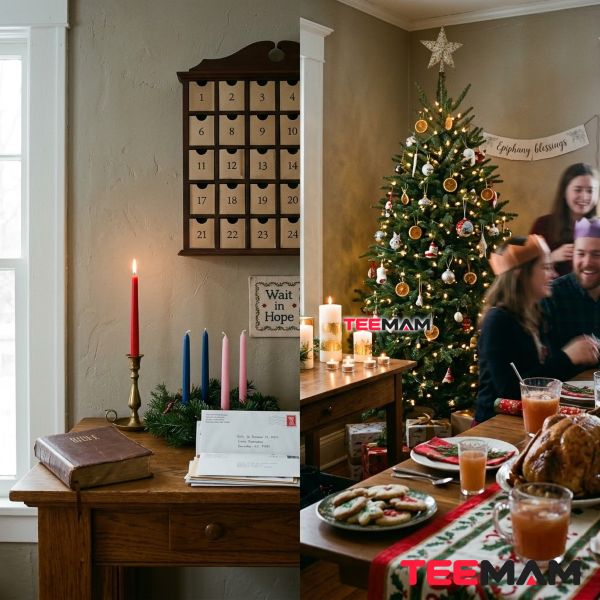
Twelvetide vs. Advent: What Is the Difference?
| Advent | Twelvetide (12 Days) |
|---|---|
| Leads up to Christmas | Begins on Christmas Day |
| A season of preparation | A season of celebration |
| Falls before December 25 | Runs December 25 – January 5 |
Advent is the run-up. Twelvetide is what follows it. Mixing the two together is probably the single most common misconception about this whole tradition.
Why Are There 12 Days of Christmas?
There’s no single tidy origin story. The twelve-day framework reflects the traditional Christian liturgical calendar, in which Christmas Day opens a festive season that runs to Epiphany on January 6 — and when December 25 is counted as day one, January 5 lands as the twelfth day. The customs that filled that framework, though, developed unevenly: feasting, music, and gift-giving took different shapes in different places and periods rather than arriving as a finished tradition all at once.
How Christmas and Epiphany Became Connected
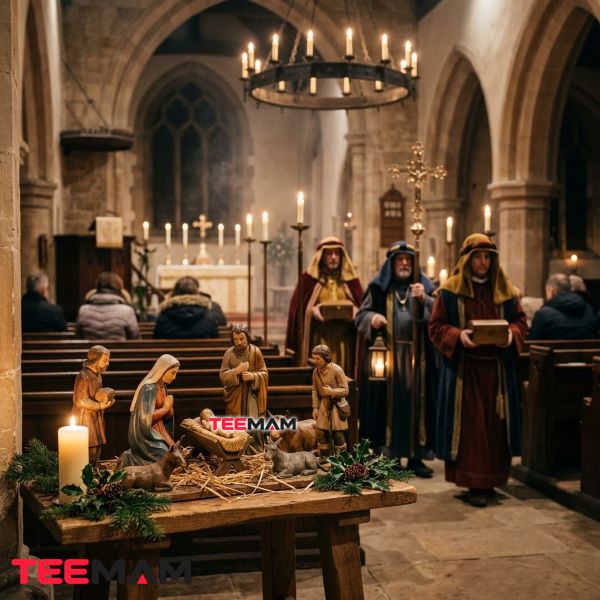
In Western Christianity, Epiphany is traditionally tied to the Magi’s visit to the infant Jesus. In many Eastern Christian traditions, the corresponding feast — often called Theophany — also emphasizes Christ’s baptism, giving it a somewhat different emphasis even though it falls around the same point on the calendar.
How the Tradition Changed Over Time
What began as a religious observance picked up secular momentum over the following centuries. At the Tudor court and among wealthy English households in particular, Twelfth Night celebrations could turn into elaborate affairs — feasting, music, games, and theatrical entertainment were all part of marking the close of the season, long before the tradition trickled down into the more modest household customs most people associate with it today.
The Famous Song: How Does It Relate to the 12 Days?
When Was “The Twelve Days of Christmas” First Published?
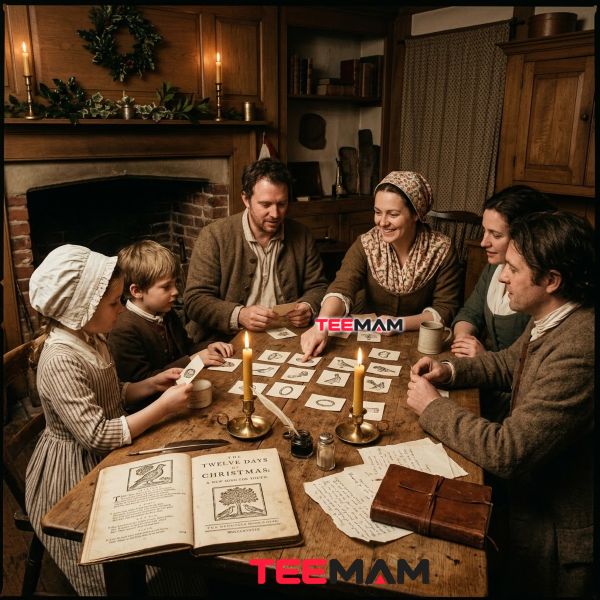
The earliest known printed version of the lyrics appeared in London in 1780, in a children’s book titled Mirth without Mischief, presented as a memory-and-forfeits game rather than a carol — a leader would sing a verse, the group would repeat it, and a new verse would be added each round, with a small penalty for anyone who slipped up. The song’s exact origin remains uncertain, though French connections have long been proposed by historians studying its structure and imagery. The familiar modern version most people know — including the drawn-out “five go-o-old rings” — was popularized by English composer Frederic Austin’s 1909 arrangement, which helped fix the wording and melody that stuck.
Why Does the Song Repeat Earlier Gifts?
It’s built as a cumulative song, the same structural trick used in rhymes like “There Was an Old Lady Who Swallowed a Fly.” Day two repeats day one and adds something new. Day three repeats days two and one, then adds another gift, and so on through day twelve, when you’re singing the entire list in one breath. It started life as a party game built around memory, not a hidden message.
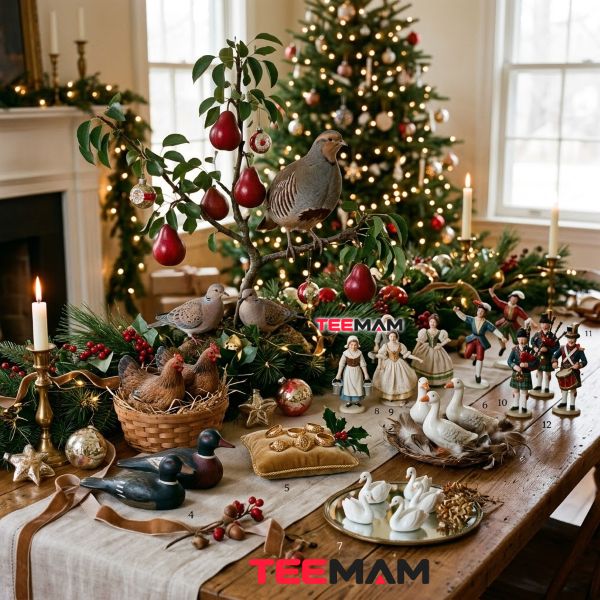
What Are the 12 Gifts in the Song?
| Day | Gift |
|---|---|
| First | A partridge in a pear tree |
| Second | Two turtle doves |
| Third | Three French hens |
| Fourth | Four calling birds |
| Fifth | Five golden rings |
| Sixth | Six geese a-laying |
| Seventh | Seven swans a-swimming |
| Eighth | Eight maids a-milking |
| Ninth | Nine ladies dancing |
| Tenth | Ten lords a-leaping |
| Eleventh | Eleven pipers piping |
| Twelfth | Twelve drummers drumming |
Was the 12 Days of Christmas Song Really a Catholic Code?
There’s no solid historical evidence that the song was written as a coded Catholic catechism. It’s one of the most persistent pieces of Christmas folklore online, and it doesn’t hold up against the documented history of the song.
Where Did the Catholic Code Story Come From?
The modern version of this theory is commonly traced to a 1979 article by Canadian hymnologist Hugh D. McKellar, who proposed that the song was created to help persecuted English Catholics teach children the faith in secret, during the long era of anti-Catholic penal laws in England — restrictions that began under Elizabeth I in the 16th century and were gradually dismantled over the following centuries, culminating in Catholic Emancipation in 1829. A couple of other writers floated similar versions of the idea around the same period. None of them cited historical documentation connecting the song to that use; the theory was presented as a plausible reading, and it spread from there, picking up new “hidden meanings” with each retelling.
What Can We Actually Prove About the Song?
The fact-checking organization Snopes has examined this claim directly and rates it false, noting that most of the supposedly coded teachings — the eight beatitudes, the gifts of the Spirit, and so on — were shared beliefs between Catholics and Anglicans at the time, which undercuts the idea that the song functioned as a secret, exclusively Catholic teaching tool. The documented history is far less dramatic: a popular English cumulative song and party game, first printed in 1780, with likely French roots that predate that printing. The catechism story is a later interpretation layered on top, not something the historical record supports.
What Do the Twelve Gifts Mean?
Religious Interpretations of the Gifts
Because the catechism theory circulated so widely for so long, plenty of people still enjoy reading spiritual meaning into individual gifts — the partridge as Christ, the turtle doves as the Old and New Testaments, and so on. There’s nothing wrong with finding personal meaning in that. It’s just worth being clear that these are later interpretations layered onto the song, not something documented in its origins.
Why the Gifts Became Cultural Symbols
Regardless of where they came from, the twelve gifts turned into some of the most recognizable Christmas imagery around — the partridge and pear tree, the golden rings, the dancing ladies, the pipers and drummers. They show up on cards, ornaments, wrapping paper, and holiday apparel because each one reads as unmistakably “Christmas” even without any context.
How Americans Can Bring the Twelve Days Into Modern Family Life
For many people in the U.S., Christmas is culturally concentrated into December 24 and 25, which makes the older twelve-day season easy to overlook. That leaves plenty of room for families who want to stretch the holiday out a little, without treating it like some kind of historical obligation to recreate.
You don’t need twelve brand-new traditions. The easiest approach is to spread a few things your family already enjoys across the days instead of inventing something new every night:
Gather. A second family dinner built around the leftovers a few days later, a run of holiday movie nights instead of one marathon, a visit to relatives you couldn’t see on the 25th.
Give. A thank-you note actually written, instead of rushed out on December 26. A day set aside for donating. One small gesture repeated through the week. None of this is an ancient Twelve Days custom — it’s a modern way to use the calendar as a frame for something worth doing anyway.
Close the season on purpose. Plan an actual Twelfth Night gathering for January 5, and let it double as the moment the tree comes down, rather than letting the season just trail off sometime in early January.
A little context tends to make any of this land better. A second family dinner means more once the kids know why January 5 matters, and a Twelfth Night gathering feels less random once everyone understands it once marked the real close of the Christmas season, not just an ordinary Tuesday in early January.
Decor can carry that same thread through the stretch. Instead of taking everything down the day after Christmas, a family can keep a simple color palette going and let it evolve gradually toward Twelfth Night. Our guide to Christmas colors and their meanings breaks down where the symbolism behind the most familiar holiday colors actually comes from.
For households that still keep a religious frame around the season, the phrase means something more specific: the liturgical stretch from the Nativity to Epiphany. For everyone else, it’s turned into something looser — a useful excuse to slow down after Christmas Day, keep the lights up a little longer, and save one more small celebration for January 5. Neither version is more “correct” than the other, and there’s nothing stopping a household from borrowing pieces of both.
What Is Twelfth Night and Why Does It Matter?
When Is Twelfth Night?
In the common Western count, Twelfth Night falls on the evening of January 5, the twelfth night after Christmas Day. Some traditions instead associate the term with January 6 — New Orleans is a well-known example, where January 6 is celebrated locally as Twelfth Night — which is why you’ll see both dates referenced depending on the source.
Traditional Twelfth Night Customs

Historically, Twelfth Night meant feasting, music, party games, and often a special cake with a hidden bean, coin, or trinket baked inside — whoever found it was crowned “king” or “queen” for the night. At the Tudor court and among wealthy households, these gatherings sometimes grew elaborate enough to include full theatrical performances. Shakespeare’s play Twelfth Night was probably written around 1601, and its earliest recorded performance took place on February 2, 1602, at Middle Temple Hall in London — a date noted in the diary of a law student who attended. The title reflects the holiday tradition the play was written to entertain, even though that particular performance fell on Candlemas rather than Twelfth Night itself.
What Does Twelfth Night Mean Today?
In New Orleans, Twelfth Night still marks the traditional opening of Carnival season, including the start of king cake season and the city’s first parades of the year. For most other American families, it’s a quieter kind of bookend — the night the tree comes down, one last real gathering of the season, a small nod to a tradition that used to last twice as long as it does now.
Simple Ways to Celebrate the 12 Days of Christmas at Home

A few starting points, spread across the days rather than crammed into one:
- Turn Christmas Day leftovers into a second family dinner a few days later.
- Pick a different holiday movie each night instead of one marathon session.
- Write thank-you notes properly, instead of rushing them out on December 26.
- Visit family members you couldn’t see on the 25th.
- Set aside one day specifically for donating or giving back.
- Keep the holiday playlist running instead of switching to New Year’s music early.
- Make a DIY ornament together as a family activity.
- Host one themed dinner sometime during the stretch.
- Set aside an evening for older relatives to share their own Christmas memories.
- Keep a simple seasonal centerpiece going through the whole stretch — poinsettias work especially well here since they’re so strongly tied to the season, and our piece on poinsettia symbolism at Christmas explains how that association developed.
- Plan an actual Twelfth Night gathering for January 5, and let the decorations come down that night rather than the day after Christmas.
- Close the season with one last family celebration before routine resumes.
Bringing the Twelve Days Into Your Holiday Style
The visual language of the Twelve Days lends itself naturally to holiday clothing, mostly because each gift — a partridge, a golden ring, a drummer — reads as instantly recognizable Christmas imagery on its own, without needing any explanation.
For readers who want to carry that visual tradition into a Twelfth Night gathering, there’s a lot to play with: an ugly Christmas sweater with a partridge on it, a graphic tee referencing the song, matching family pajamas for the season’s last big get-together, or something quieter with just a subtle nod to the twelve gifts. At TeeMam, we design holiday apparel around familiar seasonal imagery like this, keeping the designs playful enough for a Twelfth Night gathering without making them feel like costumes. Our Christmas apparel for the season collection is built around those same recognizable motifs.
You don’t need a full twelve-piece wardrobe to make the theme feel intentional — even loosely tying one outfit or small gift to a specific day, like gold for day five or a drummer graphic for day twelve, is enough to carry the idea through.
Questions People Ask About the 12 Days of Christmas
Are the 12 days of Christmas before or after Christmas? After. They run from December 25 through January 5, not the twelve days counting down to the holiday.
What date is the first day of Christmas? December 25, Christmas Day itself.
What date is the last of the 12 days of Christmas? January 5, traditionally known as Twelfth Night in the common Western count.
Is January 6 part of the 12 days of Christmas? Not in that count — January 6 is Epiphany, the feast that follows the twelve days. Some local traditions, like New Orleans’s, use January 6 as their Twelfth Night instead, so you’ll occasionally see the date handled differently.
What is the meaning of the 12 days of Christmas? Historically, it’s the liturgical season between the Nativity and Epiphany. Culturally, it grew into a season of feasting and celebration, and more recently into an extended holiday window that families use however suits them.
Is the 12 Days of Christmas song really a Catholic code? No — the historical record doesn’t support that theory. It’s a widely shared piece of Christmas folklore rather than a documented fact.
How can families celebrate the 12 days of Christmas? Spread activities across the whole stretch instead of packing everything into December 25 — an extra family dinner, a run of movie nights, thank-you notes, a day of giving back, and a Twelfth Night gathering to close things out.
What to Remember About the 12 Days of Christmas
A few things worth keeping straight: the traditional season starts December 25, runs through January 5 in the common Western count, and January 6 belongs to Epiphany rather than being counted as one of the twelve days — though local traditions like New Orleans’s show that “Twelfth Night” hasn’t always meant the same date everywhere. The famous song is connected to the season culturally, but its real history — a cumulative English party game first printed in 1780, likely older with French roots, and popularized musically by Frederic Austin in 1909 — has nothing to do with the popular but unsupported theory that it was secretly religious code.
Once the actual timeline is clear, the twelve days start to feel less like trivia and more like an invitation: a stretch of the season most people cut short on December 26 without realizing there was more of it left. Whether that means an actual Twelfth Night dinner, one more round of funny Christmas jokes to share around the table, or just leaving the lights up a little longer, there’s more holiday on the calendar than most people give it credit for.

Hi, I’m Olivia Bennett, a fashion and lifestyle writer at TeeMam with 6 years of experience creating content about fashion, outfits, and lifestyle trends. I enjoy sharing practical style ideas for everyday wear, game days, holidays, and special occasions, helping readers find looks that feel comfortable, fun, and uniquely their own.