Classic Christmas Symbols and What They Mean
Every December, the same objects come out of storage boxes and go back up on doors, mantels and trees, and most of us never stop to ask why. A wreath goes on the front door. A star goes on top of the tree. A candy cane ends up hooked over the rim of a mug of cocoa. One of the easiest things to notice during the holidays is how quickly a room changes once these objects appear. A bare doorway becomes festive with a wreath. A plain tree suddenly reads as “Christmas” the moment a star and a string of lights go on it.
Christmas symbols are objects, decorations and images associated with the religious, cultural and seasonal traditions of Christmas. Common examples include the Christmas tree, wreath, star, lights, holly, mistletoe, candy cane, bells, stockings, gifts and the nativity scene. Their meanings vary by history, faith and family tradition: some Christmas symbols incorporate older winter customs, others developed within Christian practice, and a few emerged much later than most people assume, as Christmas spread across Europe and North America.
That last part is worth sitting with, because it’s the piece most quick roundups skip. A few of the “ancient” stories people repeat every year, about druids, choirmasters and supposedly “first” Christmas trees, turn out to be far newer, or far less certain, than the retelling suggests.
What Are the Most Common Christmas Symbols?
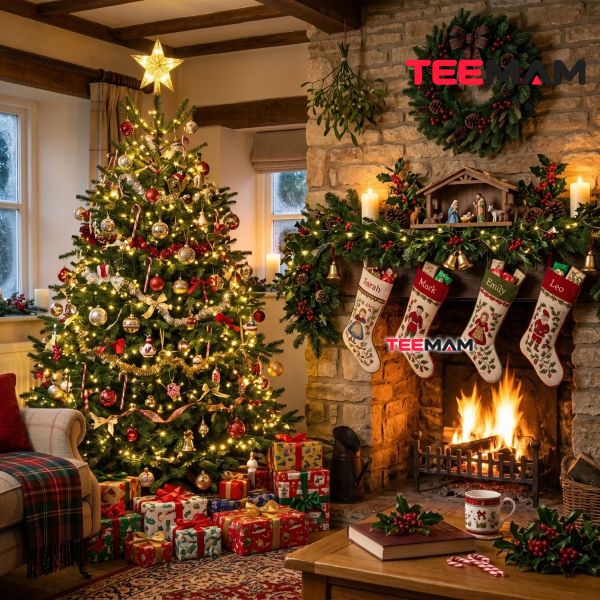
Christmas symbols generally fall into a few broad groups: symbols of nature and renewal, like the tree and wreath; symbols of light and faith, like the star and candles; and symbols of giving and celebration, like gifts, stockings and the candy cane. Each group tells a different part of the same larger story.
| Christmas symbol | Common meaning |
|---|---|
| Christmas tree | Life, renewal and celebration |
| Wreath | Eternity, continuity and welcome |
| Star | Guidance and hope |
| Lights | Light, hope and faith |
| Holly | Life, protection and Christian symbolism |
| Mistletoe | Love, peace and seasonal tradition |
| Candy cane | Giving, childhood and Christian symbolism |
| Bells | Joy and announcement |
| Stockings | Generosity and giving |
| Gifts | Love and generosity |
| Poinsettia | Beauty, celebration and modern Christmas décor |
| Nativity | The Christian story of Jesus’s birth |
Christmas Symbols of Nature and Everlasting Life
The Christmas Tree: Life in the Middle of Winter
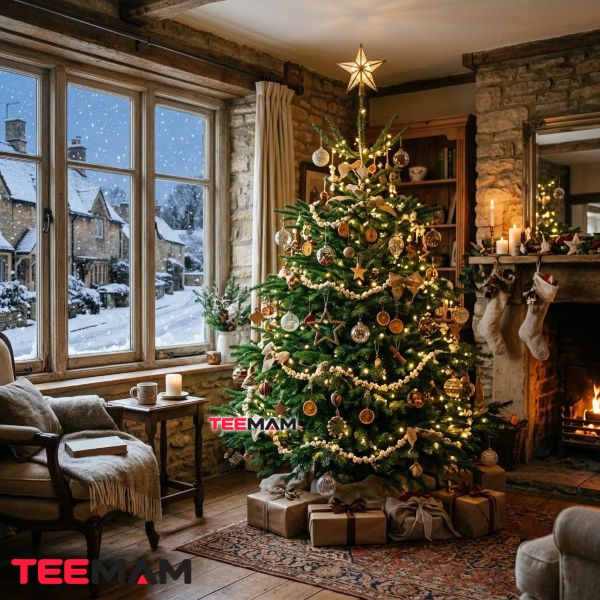
Long before anyone strung a single light, people across northern Europe brought evergreen branches indoors during the darkest weeks of the year, a way of keeping something green in the house while everything outside had gone bare. The modern Christmas tree has a more specific starting point. One important strand in its history comes from 16th-century German Christian traditions, including Paradise Plays performed on Christmas Eve, in which a decorated evergreen could represent the Garden of Eden. The Christmas tree remains one of the most recognizable Christmas symbols today because it combines several ideas at once: life, light, celebration and family tradition.
Martin Luther is popularly credited with adding lit candles to a tree after being struck by the sight of stars glowing through evergreen branches on a winter walk. The story is widely repeated, but historians treat it as legend rather than firmly documented history, and the earliest confirmed records of decorated trees in German churches and guild halls date to the decades after Luther’s death in 1546.
The custom reached the British royal court through Queen Charlotte, who introduced a decorated tree to royal Christmas celebrations in the late 18th century. It took another 60 years, and one very famous picture, to turn the tree into a household fixture: an 1848 engraving in the Illustrated London News showing Queen Victoria, Prince Albert and their children gathered around a candlelit tree at Windsor Castle. That single image, documented by the Royal Collection Trust, helped turn the Christmas tree from a royal curiosity into a familiar household tradition across Britain and, eventually, the United States.
The same pattern shows up again and again with these symbols: a tradition can have one historical starting point, and a very different meaning for the people who use it today. If you want the fuller backstory, we go deeper in our guide to the history behind Christmas traditions.
The Christmas Wreath: Why the Circle Represents Continuity
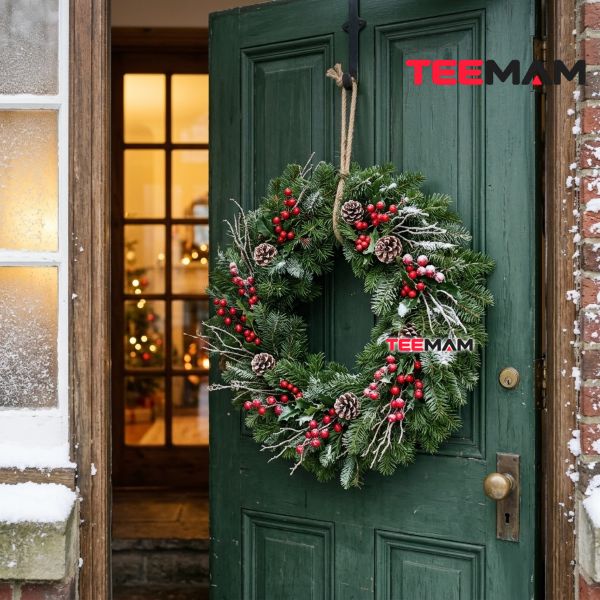
A Christmas wreath is commonly associated with eternity, continuity, renewal and welcome. The circular shape has no beginning or end, which is why it’s often read as a symbol of an unbroken year, while the evergreen foliage carries the same “life persists through winter” idea as the tree itself. Hanging it on the front door adds a third layer: it’s a visible sign to anyone approaching that they’re welcome to knock.
There isn’t a single, well-documented origin story for the wreath the way there is for the Windsor Castle tree, so it’s worth being upfront about that instead of inventing a tidy legend where none exists.
Holly, Mistletoe and the Poinsettia: From Winter Greenery to Christmas Staples
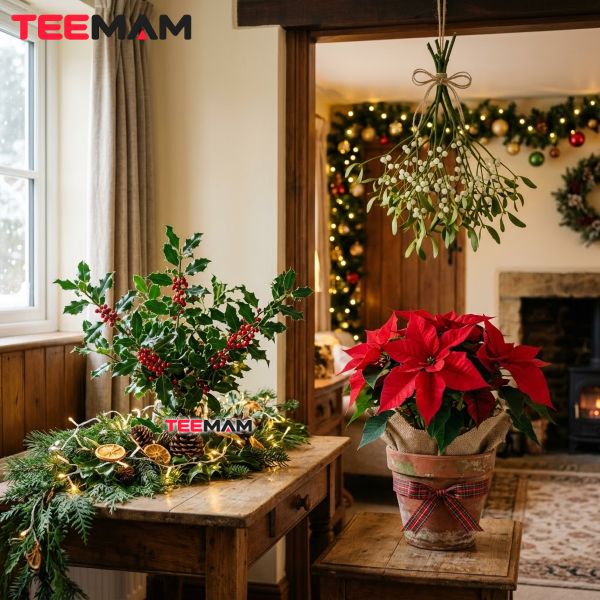
Holly, mistletoe and poinsettias all became part of Christmas greenery, but each arrived there through a very different historical path.
Holly. Its sharp, waxy leaves and bright red berries made it a natural choice for winter decoration long before Christmas absorbed it. Later Christian tradition read the leaves’ points as a reference to the crown of thorns and the berries as drops of blood, turning a piece of winter greenery into a devotional object as well as a decorative one.
Mistletoe. This one is harder to trace cleanly. Some popular stories connect it directly to ancient druids, but the surviving evidence doesn’t support that simple version. According to English Heritage’s history of Christmas greenery, the Roman writer Pliny the Elder described druids in Gaul ceremonially harvesting mistletoe from oak trees, but Pliny never mentioned Britain or Christmas specifically. In the 19th century, antiquarians connected those details to Britain and to Christmas, which is largely how the popular druid-Christmas story took shape. The earliest known written link between mistletoe and Christmas actually comes from a 17th-century poem by Robert Herrick, and the specific custom of kissing under it wasn’t recorded in England until the late 18th century. English Heritage is candid that historians simply don’t know whether the Christmas association is a 17th-century invention or an older custom that was never written down. For the fuller version of how the kissing tradition developed from there, see our guide to the story behind mistletoe.
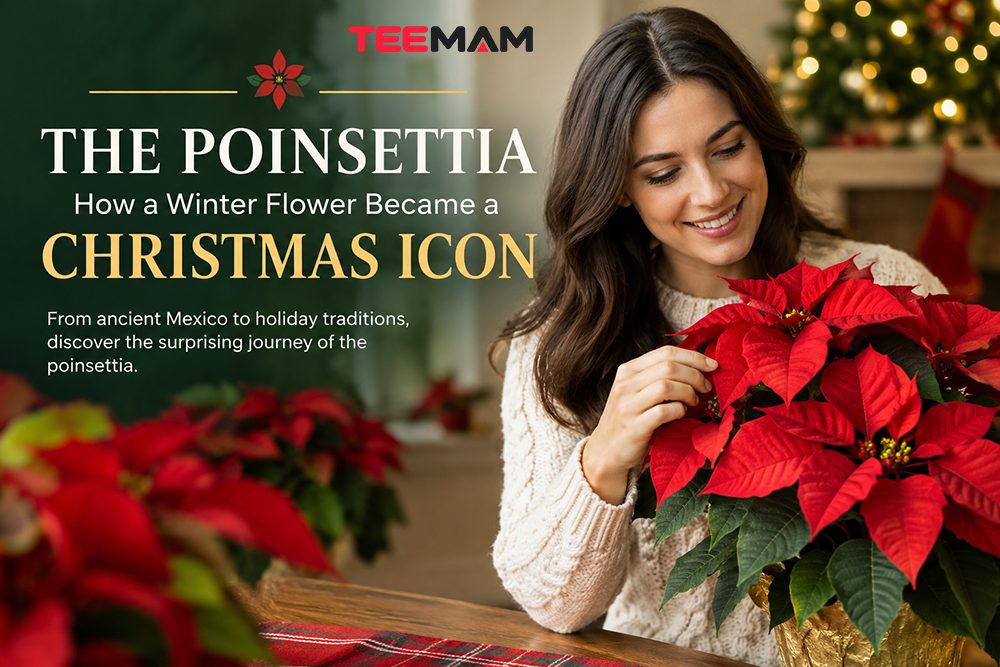
Poinsettia. This one has a shorter and better-documented history than either. Native to Mexico, the plant carries a Christian legend from Mexican folk tradition about a child who had no gift for the Nativity and offered weeds that bloomed into red flowers on the altar. Its association with American Christmas décor took hold much more recently, in the early 20th century, once growers began marketing the plant specifically for the holiday season. It’s a newer Christmas symbol than most on this list, but by now it’s just as recognizable.
Christmas Symbols of Light, Faith, and Guidance
The Christmas Star: What Does It Represent?
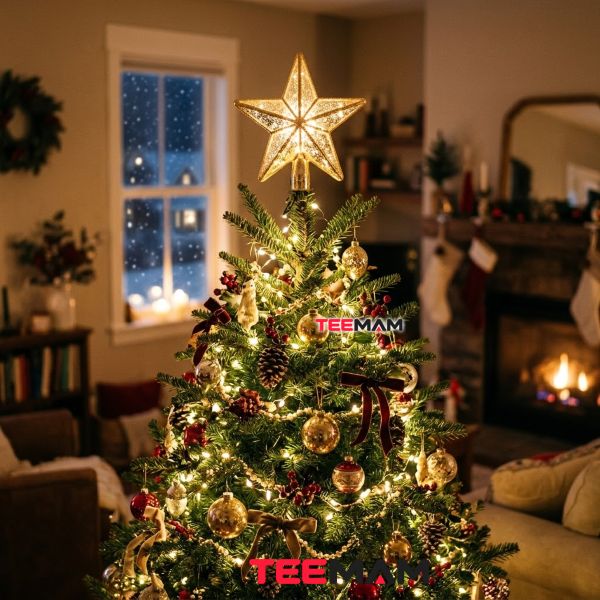
The Christmas star represents the Star of Bethlehem from Christian tradition, the star said to have guided the Magi to the newborn Jesus. Placed at the very top of the tree, it functions almost like a compass point for the whole display, pulling the eye upward and standing in for the ideas of guidance and hope that run through the nativity story.
That’s also why the star topper became such a durable habit even in households that treat Christmas mainly as a cultural, rather than religious, holiday. It doesn’t need much explaining; a star at the top of a tree reads as “Christmas” almost instantly, regardless of what it originally represented to the person putting it there.
Christmas Lights and Candles: Why Light Matters

Before electricity, candles served two purposes on a Christmas tree at once: decoration, and a genuine light source during the darkest weeks of the year. Christian tradition later added its own layer, connecting light with the idea of Christ as “light of the world.” Modern LED strings have removed the fire risk but kept the underlying instinct intact, which is why even a strictly secular household is likely to string up lights without thinking twice about where the habit came from.
Angels and the Nativity: Symbols of the Christmas Story
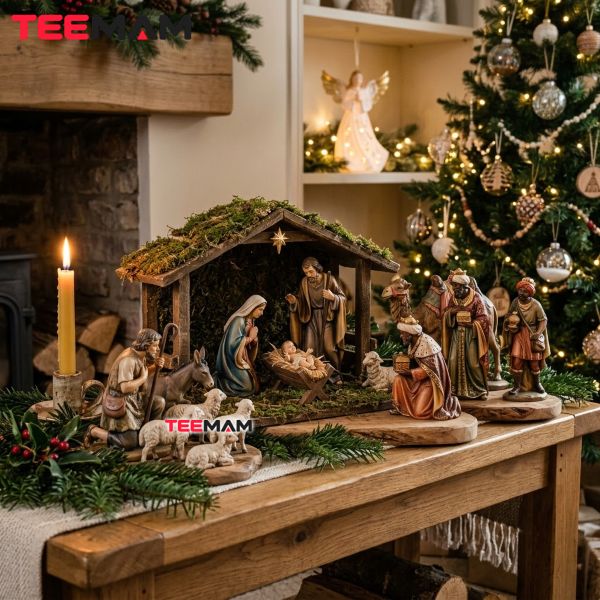
Star and tree tend to dominate these lists, but the angel and the nativity scene deserve more space than they usually get. In the Christian narrative, angels are messengers who announce the birth to shepherds in the fields, and that’s the role they still play visually on trees and cards, wings spread, arms often raised mid-announcement.
The nativity scene represents the Christmas story in miniature. Depending on the tradition, a set may include the manger, Mary and Joseph, shepherds, animals and the Magi. In many Christian households, the pieces are added one at a time in the days leading up to Christmas, which turns the nativity set into less of a static decoration and more of a small, repeating family ritual.
Christmas Symbols of Joy, Giving, and Childhood Wonder
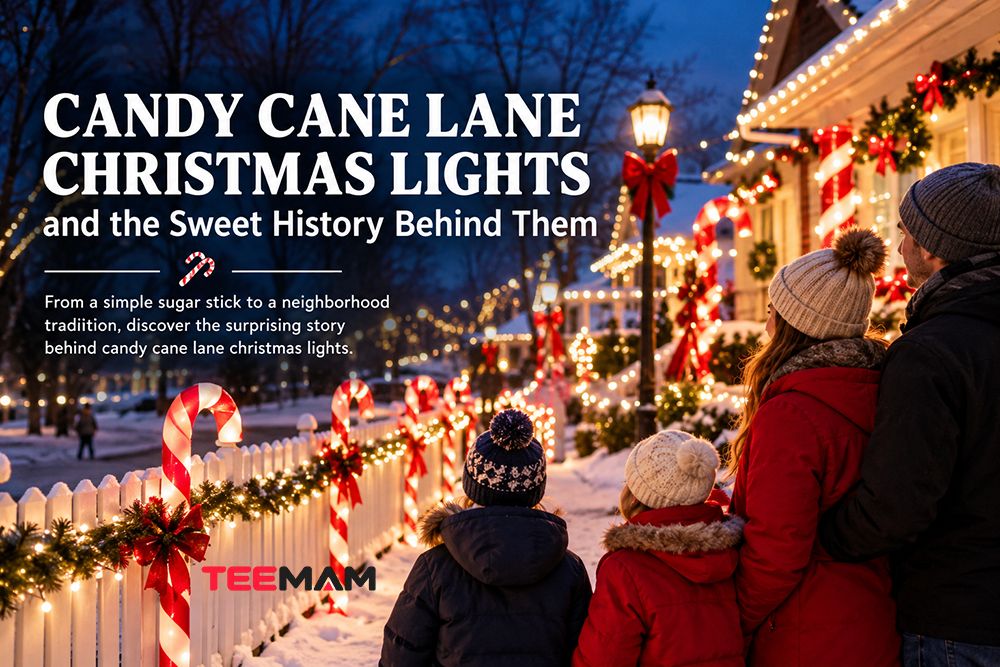
Why Is the Candy Cane Associated With Christmas?
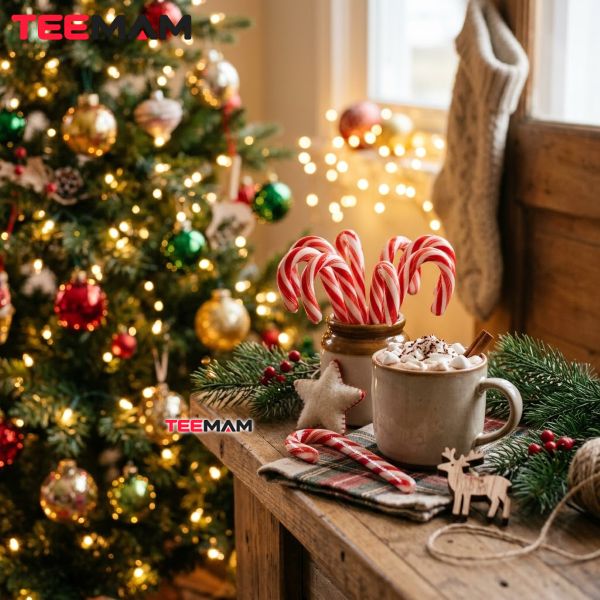
Candy canes became linked to Christmas through 17th-century German confectionery, later folklore, and their spread to American Christmas customs in the 1800s. The most commonly repeated origin story says a choirmaster at Cologne Cathedral handed out hooked white sugar sticks to his young choristers in 1670 to keep them quiet during a long nativity service, shaping the candy like a shepherd’s crook to tie it to the Christmas story. Food historians who have researched the claim generally agree that pulled-sugar candy sticks were genuinely popular in 17th-century Germany, but the specific choirmaster anecdote doesn’t appear in writing until the 20th century, which makes it difficult to treat as documented history rather than a story that grew up around a real candy.
One well-known early American example comes from August Imgard, a German immigrant in Wooster, Ohio, who decorated a blue spruce with paper ornaments and homemade candy canes in 1847. Local tradition once credited Imgard with bringing the first Christmas tree to the United States, and even the first in Ohio. Historians later disproved both claims: as the Wooster Digital History Project documents, researchers found evidence of decorated trees in Massachusetts and Pennsylvania as early as the 1830s, and possibly in Cincinnati before that. What historians have upheld is Imgard’s local significance in Wooster and his early role in pairing candy canes with a decorated tree, a detail preserved in the town’s local history. The red-and-white striped version most people picture today became the familiar commercial form in the decades that followed, well after the plain white sticks Imgard would have used. If you want to see how this Christmas symbol went from church anecdote to modern holiday staple, we walk through it in our guide to the candy cane’s Christmas tradition.
Christmas Bells: A Symbol of Celebration and Announcement
Bells carry sound across distance in a way no other decoration can, which is likely why they became shorthand for celebration and announcement long before Christmas claimed them specifically. In Christian tradition they’re often read as announcing the birth of Christ, echoing the same messenger role angels play visually. Today that meaning has thinned into something more general, but the bell still shows up everywhere from door wreaths to sweater patterns as an instantly recognizable piece of Christmas visual language.
Christmas Stockings: The Tradition of Giving
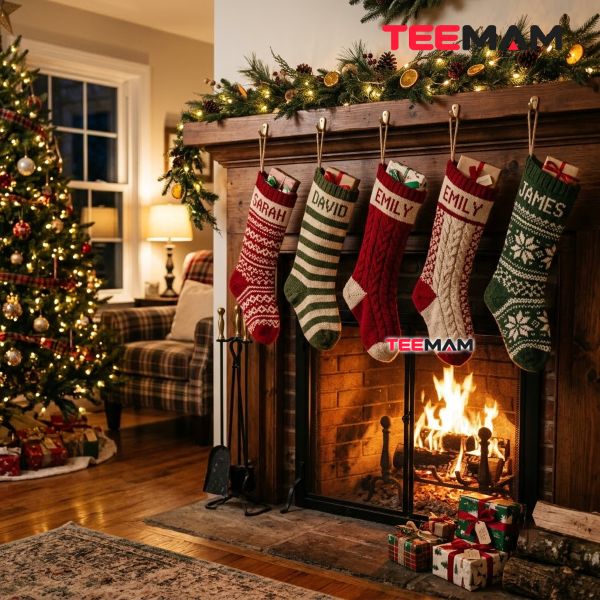
The stocking tradition traces back to Saint Nicholas legends, most often a story about a poor man’s three daughters who each received a bag of gold coins secretly left in stockings hung to dry by the fireplace. The details shift depending on which version is told, and it’s fair to treat it as popular legend rather than settled history, a distinction Smithsonian Magazine has also drawn in tracing how the custom took hold in American Christmas culture over the 19th century. What’s mattered more than the specific story, ever since, is what the stocking still represents: giving without expecting anything in return, and a small nightly ritual that turns Christmas Eve into something children remember for decades.
Christmas Gifts: Why Giving Became a Symbol
Gift-giving at Christmas is often traced to the Magi presenting gold, frankincense and myrrh to the infant Jesus, an act read as an expression of honor and generosity. Over time the custom broadened well beyond its religious roots into something closer to a universal seasonal habit, tied less to any single story and more to the general idea that Christmas is a time to think of others before yourself.
What Christmas Symbols Mean in Modern Life
Knowing where a tradition began is only half the story. The more interesting question is why families keep repeating it, sometimes without knowing its original meaning at all.
From Decorations to Family Traditions
Part of the answer is repetition itself. An ornament collection built up one piece at a time, a decoration passed down from a grandparent, the same order of operations every year, tree first, then lights, then whatever ornament always goes on last. None of that is really about the symbol’s original meaning anymore. It’s about the fact that doing it again, the same way, is what makes a house feel ready for Christmas.
Why These Symbols Show Up in Fashion and Gifts
That same visual language has also spread well past the living room. Tree, star, candy cane, bells and wreath show up constantly on sweaters, T-shirts, mugs, cards and gift wrap, which says something about how compact and instantly readable these Christmas symbols have become. That ability to communicate an entire season at a glance is part of what makes Christmas symbols so durable. Even a single embroidered wreath is enough to signal the season without a single word of text. At TeeMam, we see these familiar motifs as a way to turn Christmas memories into something people can wear and share during the season.
Making These Symbols Part of Your Own Traditions
Choose One Symbol for a Simple Look
Sometimes less is more effective than a crowded design. A single star, a single tree outline or one wreath motif is often enough to carry the whole message, since these Christmas symbols are recognizable enough on their own without needing anything else around them.
Combine Classic Icons for a Nostalgic Holiday Look
Layering a few symbols together, tree and star and candy cane in a repeating pattern, tends to read as more traditional and nostalgic, especially in the classic red, green and cream palette most people associate with old-fashioned Christmas décor. If you want to carry that visual language into what you wear, you can browse classic Christmas apparel for traditional holiday motifs.
Make the Symbol Part of a Ritual, Not Just a Decoration
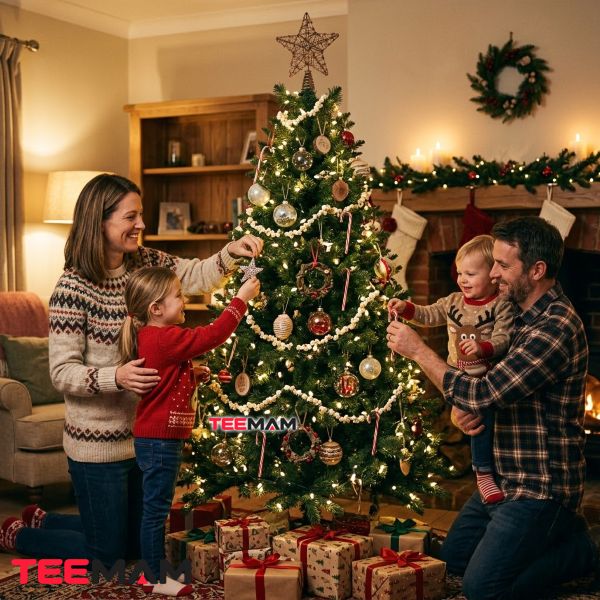
A symbol becomes personal when a family gives it a place in a recurring tradition: matching sweaters worn on the same night every year, a decorating day everyone shows up for, a piece worn specifically on Christmas Eve. These small repeated choices are what turn a piece of clothing or décor into a marker of time passing. If you’d rather make something yourself, our DIY ugly Christmas sweater guide walks through how to build a design around the Christmas symbols that mean the most to your family.
A few habits tend to make that kind of tradition stick:
- Pick one symbol that already means something to your family, rather than trying to cover all of them.
- Spend ten minutes learning where it actually came from, together, rather than assuming everyone already knows.
- Make or decorate something built around it, even something simple.
- Repeat it the following year, on purpose, so it becomes an expectation rather than a one-off.
- Explain the meaning to younger family members in your own words, not a copied definition.
Which Christmas symbol carries the most weight in your house? For some families it’s the tree everyone decorates together. For others it’s a stocking that’s been used for three generations, or a wreath that only comes out once everyone is finally home.
Common Questions About Christmas Symbolism
The questions below cover the details people most often want to know about Christmas symbols, from which one is most common to how their meanings connect to one another.
What Is the Most Common Christmas Symbol?
The Christmas tree is one of the most widely recognized Christmas symbols, though there’s no single “official” answer, since which symbol feels most central often depends on culture, religion and personal family tradition.
What Do the Traditional Christmas Symbols Represent?
Common interpretations include: the tree for life and renewal, the star for guidance and hope, the wreath for continuity, lights for hope and faith, gifts for generosity, bells for celebration, and the candy cane for Christmas tradition and, in some readings, Christian symbolism tied to the shepherd’s crook.
What Does a Christmas Wreath Symbolize?
A Christmas wreath is commonly associated with eternity, continuity, renewal and welcome. Its circular shape is often interpreted as representing an unbroken cycle, while the evergreen foliage reflects the idea of life persisting through winter.
Why Do We Use Candy Canes at Christmas?
Candy canes became associated with Christmas in 17th-century Germany, most likely as an offshoot of the pulled-sugar sticks popular at the time. The shepherd’s-crook story involving a Cologne choirmaster in 1670 is the most commonly repeated explanation, but historians note it isn’t documented in writing until centuries later, which makes it more folklore than confirmed fact.
Why Do Christmas Symbols Include Stars, Trees, and Lights?
Stars, trees and lights form the visual backbone of most Christmas symbols because together they tell a coherent story: guidance, life and hope, all expressed through a handful of shapes people can recognize from across a room.
Bringing the Meaning of Christmas Into Your Celebration
Christmas symbols have rarely been just decoration. Many carry layers of religious tradition, winter custom, folklore and family meaning that have built up over time. Understanding the history behind these Christmas symbols can make familiar traditions feel a little more meaningful, whether that history traces back to Christian scripture and church tradition, an older winter custom, or a piece of folklore that hardened into “fact” over a few centuries. What ties all of them together now is less about where they started and more about what modern families keep choosing to do with them.
The next time you hang a wreath or reach for a candy cane, you may notice that the decoration carries more history than it first appears to.

Hi, I’m Olivia Bennett, a fashion and lifestyle writer at TeeMam with 6 years of experience creating content about fashion, outfits, and lifestyle trends. I enjoy sharing practical style ideas for everyday wear, game days, holidays, and special occasions, helping readers find looks that feel comfortable, fun, and uniquely their own.