Dallas Cowboys Ownership History: From the Murchison Family to Jerry Jones
Jerry Jones is the answer most fans give when you ask who owns the Dallas Cowboys, and that answer has been correct since February 25, 1989. But the full ownership story runs back almost three decades further, and it explains a lot about why the Cowboys look and operate the way they do today. Clint Murchison Jr. helped secure an NFL franchise for Dallas in 1960, alongside Bedford Wynne. H.R. “Bum” Bright took over when the Murchison era ended in 1984, inheriting a franchise that was already showing signs of financial and competitive decline. Jones bought that trouble for $140 million and turned it into what Forbes now ranks as the world’s most valuable sports franchise.
This guide walks through all three eras: who has owned the Dallas Cowboys, when control changed hands, why each sale happened, and how ownership decisions, not just wins and losses, shaped the team’s identity, its business model, and the roughly $17 billion valuation Forbes assigned to the team in 2026.
Dallas Cowboys Ownership at a Glance
Here’s how the ownership timeline breaks down:
| Ownership Era | Approximate Period | Key Significance |
|---|---|---|
| Clint Murchison Jr. and Bedford Wynne | 1960 to 1984 | Secured and built the franchise |
| H.R. “Bum” Bright-led partnership | 1984 to 1989 | Managed the team through decline and financial strain |
| Jerry Jones | 1989 to present | Rebuilt the franchise’s football and commercial operations |
Owner of Dallas Cowboys: Jerry Jones has been the controlling owner since February 25, 1989.
Who has owned the Dallas Cowboys? The Cowboys have had three principal ownership eras since 1960. Clint Murchison Jr., alongside co-holder Bedford Wynne, led the team from its founding until 1984. An 11-member partnership headed by H.R. “Bum” Bright owned it from 1984 to 1989. Jerry Jones has owned the Cowboys since February 1989.
Ownership Isn’t Quite as Simple as Three Names
Boiling the history down to Murchison, Bright, and Jones is the clearest way to understand the franchise, but it does smooth over some detail. When the NFL awarded Dallas a franchise in January 1960, the license went to Murchison and a co-holder, Dallas attorney Bedford Wynne, together. When the Murchison family sold in 1984, the buyer wasn’t Bright alone; it was an 11-member limited partnership that he headed as general partner, with Cowboys president Tex Schramm designated managing general partner. Jones is the exception in terms of control. He has been the franchise’s controlling owner and principal decision-maker since acquiring the team in 1989, which is part of why his tenure looks so different from the two that came before it.
Clint Murchison Jr. and the Birth of the Cowboys
Why Clint Murchison Jr. Became the Cowboys’ First Owner
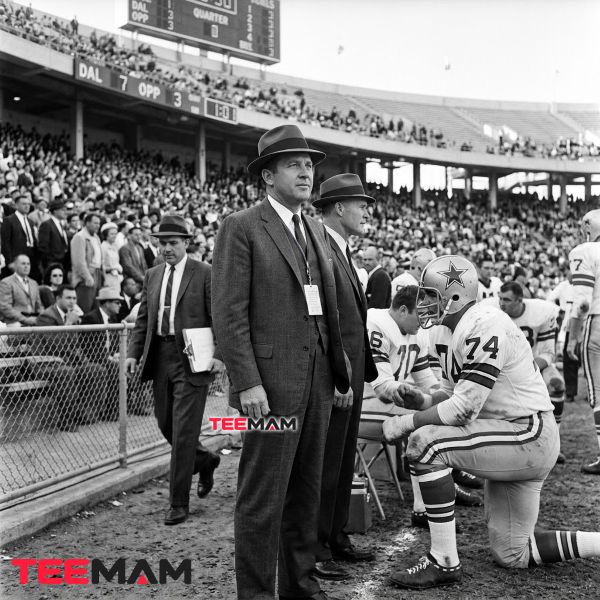
The Cowboys entered the NFL partly because Dallas had become a battleground between the NFL and the upstart AFL. Lamar Hunt, another Dallas businessman, had already launched a rival league, the American Football League, and placed a team of his own in the city. Rather than cede the Texas market, NFL owners approved a Dallas franchise on January 28, 1960, awarding the license to Clint Murchison Jr. and Bedford Wynne. Murchison, a Dallas-born, Duke-trained engineer who had previously tried and failed to buy the Washington franchise and relocate it, finally had his team.
It did not start well. Playing out of the Cotton Bowl, the 1960 Cowboys finished 0-11-1, and the early seasons were rough both on the field and financially, a stretch the franchise didn’t fully shake until the mid-1960s.
Building the Foundation of Cowboys Identity
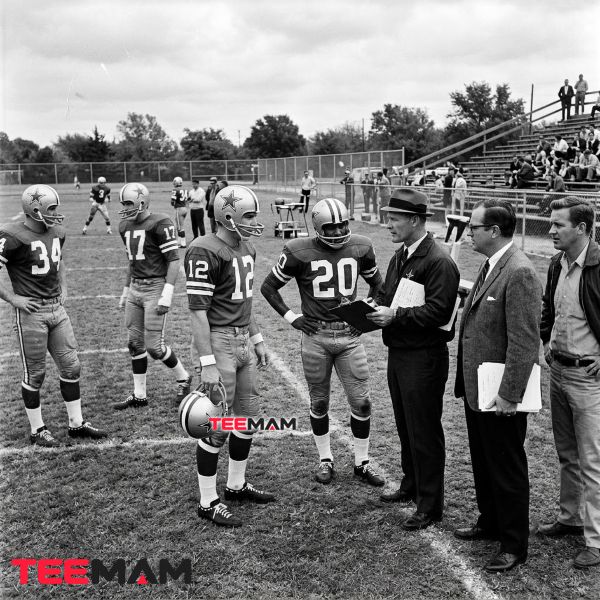
One of Murchison’s most consequential decisions was how much authority he gave his football executives. His first move as the new owner of the Dallas Cowboys was hiring Tex Schramm as general manager, and Schramm brought in Tom Landry as head coach and Gil Brandt to run player personnel. Murchison gave that trio real authority, and they used it to build scouting and coaching systems that made the Cowboys one of the NFL’s most respected organizations by the early 1970s.
The team’s visual identity took shape during this stretch too. Jack Eskridge, hired as the Cowboys’ equipment manager before the franchise’s first season in 1960, is credited with designing the lone blue star that has appeared on the team’s helmets ever since, later adding the white outline that gives it a three-dimensional look. There’s a deeper story behind that design choice, covered in the meaning behind the Dallas Cowboys star logo. That distinctive look, paired with strong national television exposure and consistent winning through the 1970s, helped build the national profile that later made the “America’s Team” nickname stick.
The 1960 launch, and the string of near-misses that came before it, gets a full account in the Dallas Cowboys founding and origin story, including the details of Murchison’s earlier attempt to buy his way into the league through Washington.
How the Cowboys Became a National Franchise
How Ownership Helped Shape Cowboys Culture
Murchison owned the Cowboys for 24 seasons, and Landry stayed on as head coach for the entire stretch and beyond, which gave the organization a rare continuity. That stability, combined with playoff runs through the 1970s and Super Bowl titles after the 1971 and 1977 seasons, is what turned a regional team into a national one. Strong television exposure did the rest, and Murchison never got in the way of it. He let Landry’s steady image and Schramm’s front-office innovation define the brand, a restraint that outlasted his ownership by decades.
The deeper cultural throughline from Landry-era discipline to today’s fan base is covered in Dallas Cowboys history and heritage, for anyone who wants the fuller arc beyond ownership dates.
H.R. “Bum” Bright and the Cowboys’ Difficult Transition
Why Bum Bright Bought the Cowboys
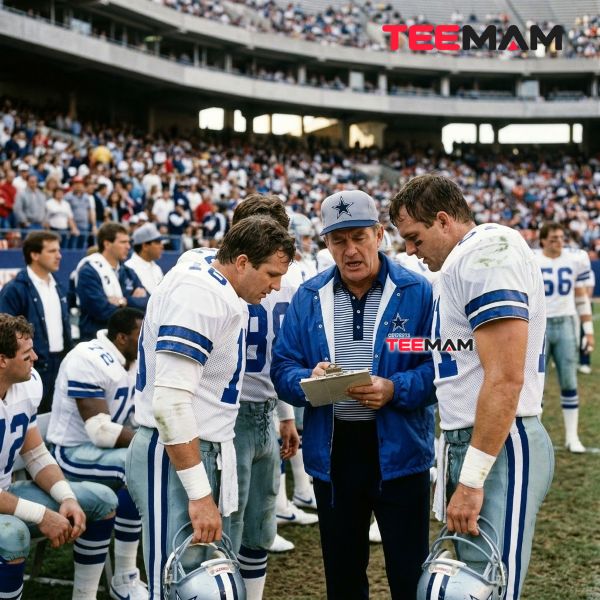
By the early 1980s, Murchison’s health was declining, and in March 1984 he sold the franchise. The buyer was an 11-member limited partnership headed by Dallas businessman H.R. “Bum” Bright, in a deal reported at the time at roughly $80 million, split between the team itself and the rights to Texas Stadium’s lease. Bright took over as general partner while Cowboys president Tex Schramm was designated managing general partner, a structure Bright said would mirror how Murchison had run things.
What Went Wrong During the Bright Era?
Bright took control just as the Cowboys were entering a prolonged competitive and financial decline. His wider business interests in oil, banking, and real estate were also exposed to the broader economic pressures that hit Texas during the mid-1980s savings and loan crisis. On the field, the Cowboys slid from a playoff appearance in his first season to a 3-13 finish by 1988. Off the field, multiple contemporary reports pegged the team’s losses at roughly $1 million a month by the late 1980s. Bright also clashed publicly with the front office, pushing as early as 1987 to fire Landry, a move Schramm blocked for two more years.
None of that makes Bright the villain of this story. He inherited a team past its competitive peak, ran it during one of the worst regional financial downturns in modern Texas history, and made a rational business decision to sell when the numbers stopped working.
Who owned the Cowboys before Jerry Jones? H.R. “Bum” Bright and his partnership group did, from 1984 until they sold to Jones in February 1989.
Jerry Jones Buys the Cowboys for $140 Million
When Did Jerry Jones Buy the Cowboys?
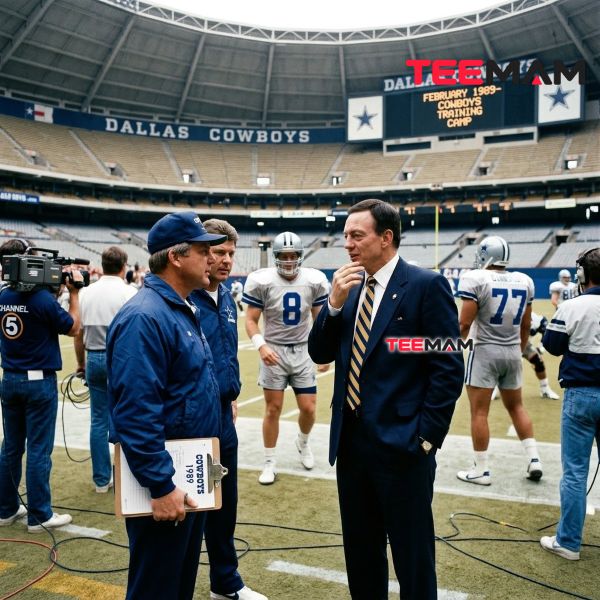
On February 25, 1989, Jerry Jones, a 46-year-old Arkansas oil and gas businessman, closed on the purchase of the Dallas Cowboys from Bright’s ownership group for a reported $140 million, roughly $65 million for the team and $75 million for the rights to Texas Stadium. NFL owners approved the sale about a week later. It was the first time any professional sports franchise had sold for more than $100 million.
Why Was the Purchase Considered a Risk?
This was not a safe bet. Jones put in about $90 million of his own cash, nearly everything he had, and borrowed the rest against everything he owned. He was buying a team coming off a 3-13 season and losing roughly $1 million a month, while Bright’s wider business empire was still under pressure from the Texas economic downturn. Jones later said the deal felt like stringing a tightrope between two skyscrapers with no net underneath.
Jones approached the franchise differently from Bright right from the start. At his introductory press conference, he said he intended to have “an understanding of jocks and socks,” signaling he would run the Cowboys as a hands-on operator rather than a passive investor. The next day, he fired Tom Landry, the only head coach the franchise had ever had, and replaced him with Jimmy Johnson, his former teammate at the University of Arkansas who had just won a national title at the University of Miami.
The Early Jones Years and the Rise of the Cowboys
Johnson’s first Cowboys team went 1-15. It didn’t stay that way. The Herschel Walker trade to Minnesota brought back a haul of draft picks that helped rebuild the roster, and the 1989 draft delivered Troy Aikman first overall. Add Emmitt Smith and Michael Irvin, and by 1992, 1993, and 1995, that core, covered in full in the Triplets era, had delivered three Super Bowl titles in four years. By the early 1990s, Jones had established the Cowboys as both a championship contender and a commercially powerful franchise.
How Jerry Jones Changed the Cowboys From a Team Into a Global Brand
The Business Fight That Changed the NFL’s Economics
Winning built Jones’ credibility. A legal fight built his business legacy. In 1995, Jones signed independent sponsorship deals with Nike, Pepsi, and American Express through Texas Stadium’s own corporation, bypassing NFL Properties, the league’s centralized marketing arm that split sponsorship revenue evenly among all 32 teams. The NFL sued Jones and the Cowboys for $300 million over what it called “ambush marketing.” Jones countersued for $750 million, arguing the league’s revenue-sharing rules violated antitrust law. Both suits were settled in 1996, with Jones retaining his existing sponsorship arrangements. The dispute became an important moment in the NFL’s shift toward greater team-level control of sponsorship and licensing, though it was only one factor in the league’s long-term commercial growth.
From Football Franchise to Cultural Brand
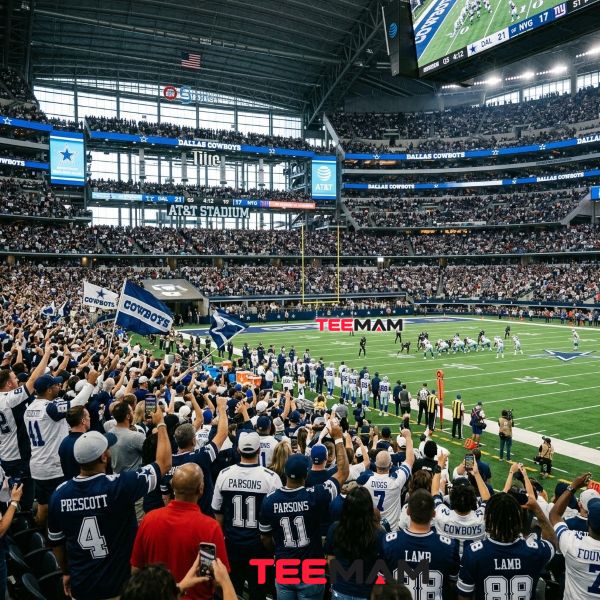
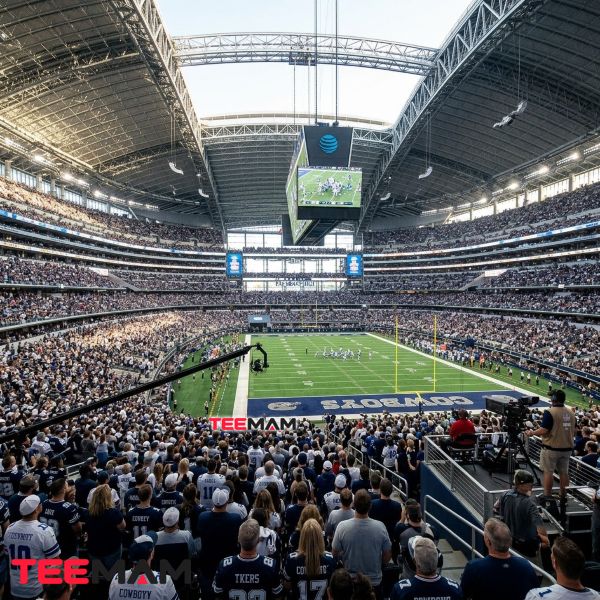
The star Jack Eskridge designed and the “America’s Team” identity built under Murchison and Schramm were already strong assets. Jones scaled them, aided directly by the sponsorship rights he’d fought to keep. AT&T Stadium, which opened in 2009, extended that model beyond football, hosting Cowboys home games, concerts, major college football events, and Super Bowl XLV in 2011.
Here at TeeMam, what stands out to us is how the 1995 sponsorship fight connected an ownership decision to the way fans actually experience the Cowboys brand. It shows how decisions made in a boardroom can eventually shape how a team presents itself beyond the field.
How Cowboys Franchise Value Changed Under Different Owners
From a $140 Million Purchase to the World’s Most Valuable Sports Franchise
The increase in franchise value is substantial. Jones paid $140 million for the Cowboys in 1989. Forbes valued the team at $5.7 billion in its 2020 NFL team valuations, $13 billion in 2025, and a record $17 billion in its 2026 rankings, a 31 percent jump driven by roughly $1.28 billion in franchise revenue, the largest sports-team revenue total Forbes has ever measured. That growth traces back to national broadcast rights, sponsorship, stadium economics, and a brand built up over more than six decades, not any single deal.
Valuation figures shift by publication and year, so treat any specific number as tied to its source and date rather than a fixed fact. A closer breakdown of how those numbers built up over nearly four decades lives in Dallas Cowboys franchise valuation history.
Comparing the Three Dallas Cowboys Ownership Eras
| Era | Owner(s) | Main Contribution | Defining Challenge |
|---|---|---|---|
| 1960 to 1984 | Murchison-led ownership | Founded the franchise and its early identity | Building a new NFL team from scratch |
| 1984 to 1989 | Bright-led partnership | Kept the franchise running through a rough stretch | Financial strain and declining performance |
| 1989 to present | Jerry Jones | Rebuilt the roster and scaled the business | Balancing football results with commercial ambition |
Murchison built the foundation. Bright inherited a team already past its peak and a regional economy in trouble. Jones took over a financially troubled organization in 1989 and expanded its scale far beyond football. Each owner of the Dallas Cowboys faced a genuinely different set of problems, and the franchise today carries the fingerprints of all three.
The Cowboys’ Ownership Legacy and What Comes Next
Murchison’s 24 years established the Cowboys as a legitimate NFL franchise with a recognizable identity, one that eventually grew into the America’s Team nickname fans still use today. Bright’s five years, uncomfortable as they were, kept the team intact through a financial storm and set up the conditions for Jones’ arrival. Jones’ more than 37 years of ownership represent the longest and most transformative era in franchise history.
Succession questions have circulated for years around Jones’ children, Stephen, Charlotte, and Jerry Jr., all of whom already hold senior roles within the organization. As of 2026, the Cowboys have not publicly announced a formal transfer of controlling ownership from Jerry Jones, and any specific succession plan should be treated as speculation until the team or the league confirms it.
More Ways to Explore Cowboys History and Fan Culture
Ownership decisions only explain part of why the Cowboys resonate the way they do. For a deeper look at the moments and personalities that built that connection, Best Dallas Cowboys documentaries to watch is a good next stop.
What the Dallas Cowboys Ownership Story Reveals About the Franchise
Murchison established the franchise, Bright navigated its most difficult transition, and Jones transformed its scale. The Cowboys’ ownership history is therefore more than a list of names and sale prices. It’s a story about how control of a sports franchise can shape its football operations, its commercial strategy, and its place in American sports culture.
Answers to Common Cowboys Ownership Questions
Who is the current owner of the Dallas Cowboys? Jerry Jones, who has owned the team since February 1989 and also serves as president and general manager.
Who owned the Cowboys before Jerry Jones? H.R. “Bum” Bright and his 11-member ownership partnership, who bought the team from the Murchison family in 1984.
When did Jerry Jones buy the Dallas Cowboys? February 25, 1989.
How much did Jerry Jones pay for the Cowboys? A reported $140 million, roughly $65 million for the team and $75 million for the Texas Stadium lease, making it the first sports franchise sale to top $100 million.
Who was the first owner of the Dallas Cowboys? Clint Murchison Jr. was the principal owner and driving force behind the franchise’s founding, holding the license alongside co-holder Bedford Wynne when the NFL awarded Dallas a team in January 1960.
How many owners have the Dallas Cowboys had? Three principal ownership eras: the Murchison family, the Bright partnership, and Jerry Jones. Control of the franchise has changed hands only twice since 1960.
Sources
- Pro Football Hall of Fame: Dallas Cowboys Team History
- Pro Football Hall of Fame: Long Shot Pays Off for “America’s Team”
- NFL.com: Jack Eskridge, Designer of Dallas Cowboys’ Logo, Dies
- DallasCowboys.com: Spagnola — Jerry’s Hall-Worthy Contributions Molded Today’s NFL Landscape
- Forbes: The NFL’s Most Valuable Teams 2026

Hi, I’m Olivia Bennett, a fashion and lifestyle writer at TeeMam with 6 years of experience creating content about fashion, outfits, and lifestyle trends. I enjoy sharing practical style ideas for everyday wear, game days, holidays, and special occasions, helping readers find looks that feel comfortable, fun, and uniquely their own.