The Triplets Era: Aikman, Emmitt Smith & Irvin’s Dallas Cowboys Dynasty
Troy Aikman, Emmitt Smith and Michael Irvin turned a franchise that had bottomed out at 1-15 into three-time Super Bowl champions in the span of six seasons. Cowboys fans call them the Triplets, and more than thirty years later, that trio still defines how people talk about Dallas football.
The Dallas Cowboys Emmitt Smith era, alongside Aikman under center and Irvin at wide receiver, produced one of the most complete offensive cores in NFL history. Aikman took over as quarterback in 1989, Smith joined the backfield in 1990, and Irvin had already been on the roster since being drafted in 1988. Their importance went beyond individual stat lines. Each player’s success depended on the other two, which is exactly why the nickname stuck.
Who Were the Dallas Cowboys’ “Triplets”?
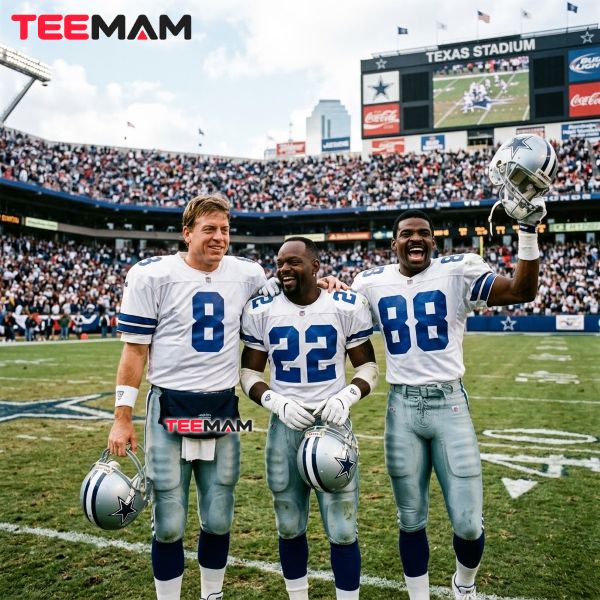
The Dallas Cowboys Triplets were Troy Aikman, Emmitt Smith and Michael Irvin, the three-player offensive core that led Dallas to Super Bowl titles following the 1992, 1993 and 1995 seasons. Aikman ran the huddle, Smith carried the ball, and Irvin stretched the field, and together they became the central offensive core of one of the NFL’s defining teams of the 1990s.
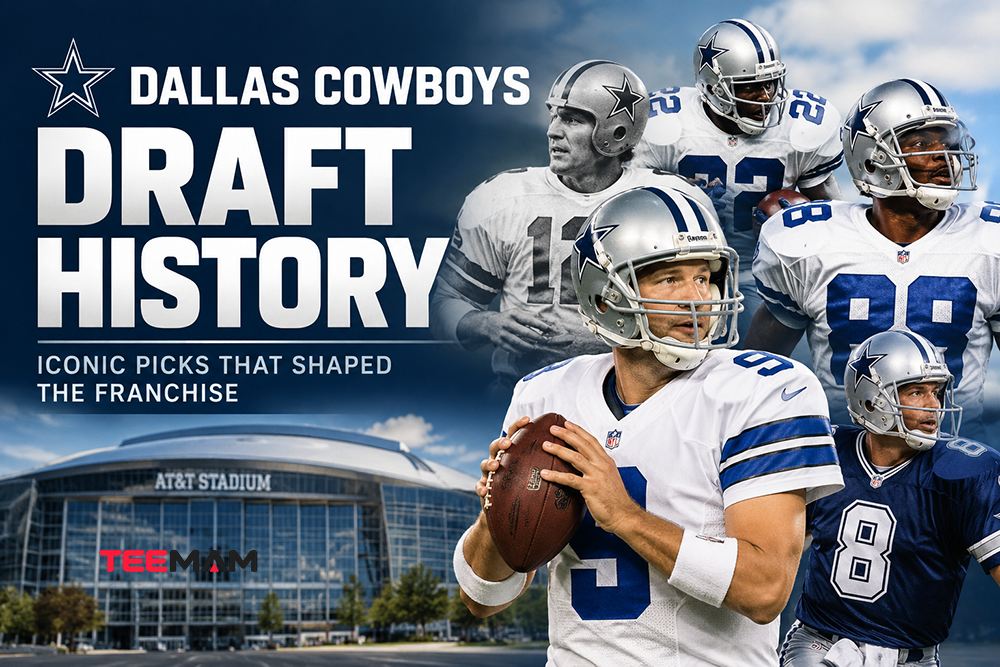
Irvin arrived first, taken in the first round of the 1988 draft out of Miami. Dallas was already fading by then; the Cowboys finished 3-13 in 1988, Tom Landry’s final year as head coach. Jerry Jones bought the team in 1989, fired Landry, and hired Jimmy Johnson, who used the No. 1 overall pick that year on Aikman. The rebuild got worse before it got better: Dallas finished 1-15 in Johnson’s first season, a record that still ranks among the worst in modern NFL history, as Britannica’s account of Johnson’s rebuild confirms. Smith arrived a year later, in 1990, taken 17th overall out of Florida after a training-camp holdout delayed his debut. That sequence, three draft classes producing one offensive core, is an overlooked part of the Emmitt Smith and Cowboys story that gets skipped most often in favor of the championship highlights.
For readers digging into the franchise’s broader history, our Dallas Cowboys history and heritage guide covers how that 1989 collapse set up the next decade. Anyone looking at Smith’s early career can see the same pattern: the worse things got in 1989, the more draft capital Dallas banked for 1990 and beyond.
How the Cowboys Built a Championship Core
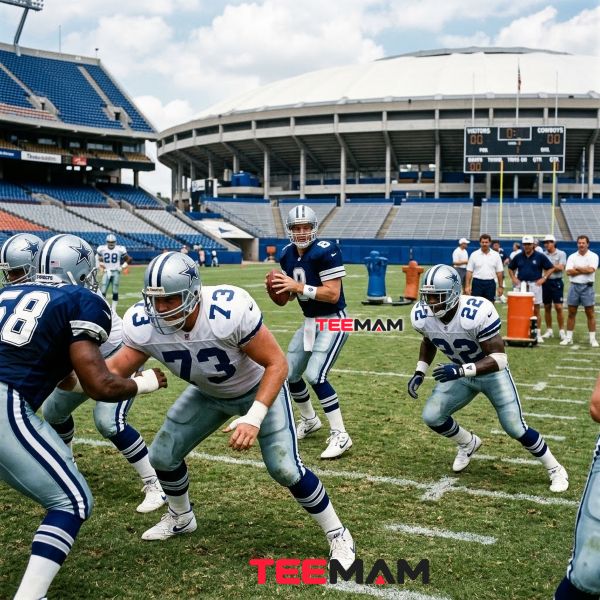
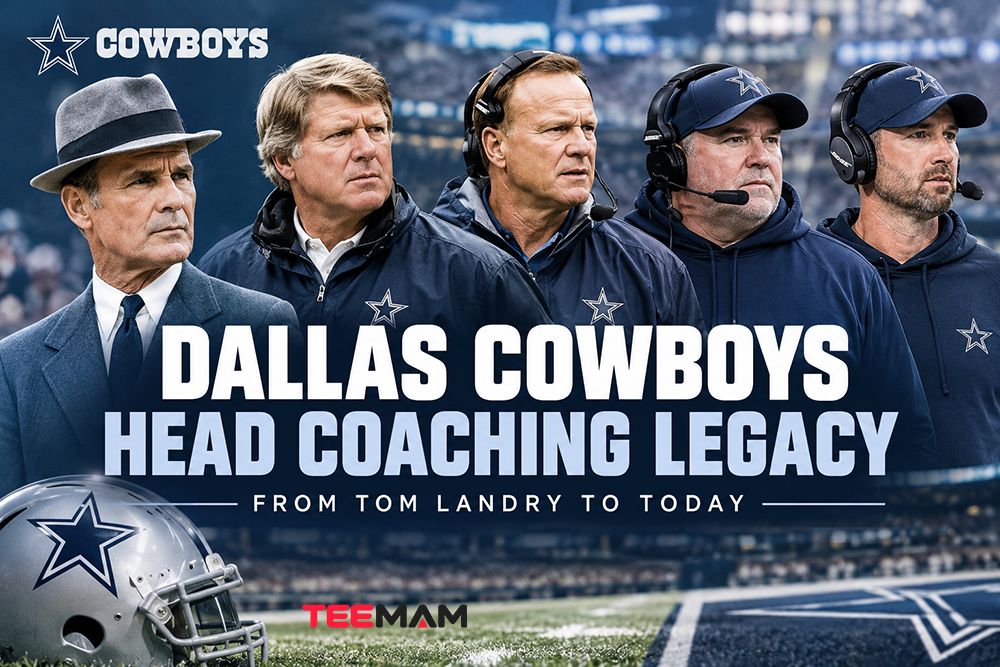
That’s the backdrop for how the Dallas Cowboys Emmitt Smith era actually got built, one draft class at a time. Johnson’s early rebuild, a coaching tenure the Pro Football Hall of Fame credits with reshaping Dallas’s roster, took place before the modern NFL salary-cap era began in 1994, so the draft and trades were especially important tools for reshaping Dallas’s roster. The biggest asset in that strategy came from the October 1989 trade that sent star running back Herschel Walker to the Minnesota Vikings for a package that eventually produced multiple first-round picks. Those selections became starters across the roster, including on an offensive line that grew into one of the best units in the league.
That line, known around Dallas as the Great Wall of Dallas, featured tackles Mark Tuinei and Erik Williams, guards Nate Newton and Larry Allen, and center Mark Stepnoski. Their run-blocking gave Smith room to work, and their pass protection kept Aikman upright long enough to develop into a three-time Super Bowl winner. Offensive coordinator Norv Turner, who joined the staff in 1991, built the scheme that tied all of it together, using play-action and downfield shots to Irvin to keep defenses from loading the box against Smith.
A short timeline shows how the pieces came together:
- 1988: Michael Irvin drafted out of Miami; Dallas finishes 3-13 under Tom Landry
- 1989: Jimmy Johnson takes over and drafts Troy Aikman No. 1 overall; the Herschel Walker trade reshapes the draft board; Dallas finishes 1-15
- 1990: Emmitt Smith joins the backfield; Dallas improves to 7-9
- 1991: Norv Turner becomes offensive coordinator; Dallas returns to the playoffs at 11-5
- 1992: Dallas goes 13-3 and wins Super Bowl XXVII
- 1993: Dallas repeats as champion in Super Bowl XXVIII
- 1995: Dallas wins Super Bowl XXX, its third title in four seasons
Why Emmitt Smith Became the Engine of the Dynasty
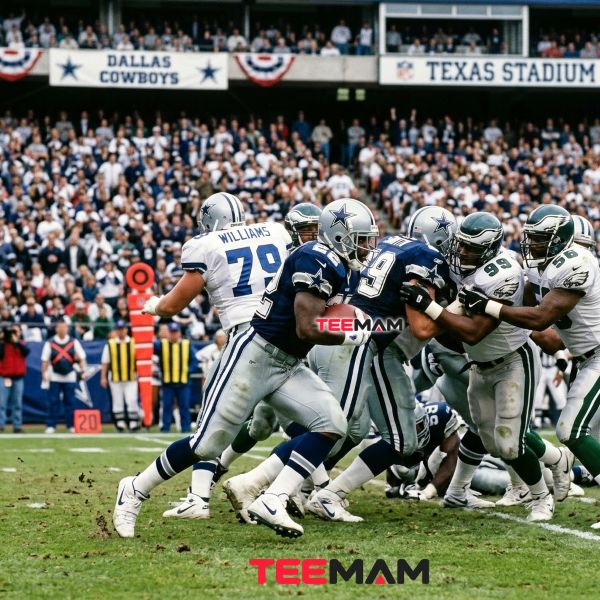
Smith’s running style wasn’t built on breakaway speed. It relied on vision, patience behind the line, and a willingness to grind out yards that kept opposing defenses on the field and Dallas’s own defense rested. Highlight reels of Smith cutting off his blockers don’t look explosive at first glance, and that’s the point: he made hard yards look routine. Those seemingly simple cuts explain why Smith’s game still holds up decades later.
The record books back up the eye test. According to Emmitt Smith’s official Pro Football Hall of Fame profile, he retired with 18,355 rushing yards and 164 rushing touchdowns, both NFL records at the time, and he won four league rushing titles. His 1993 season was his best: he led the NFL in rushing, won the league MVP award, and then earned Super Bowl MVP honors after Dallas beat Buffalo in Super Bowl XXVIII.
The clearest evidence of what he meant to that offense came on January 2, 1994, in the regular-season finale against the New York Giants, with the NFC East title on the line. Smith separated his right shoulder on a 46-yard run late in the first half. Head coach Jimmy Johnson offered to bring in a backup, and Smith told him, “let me play until I can’t play.” He stayed in, finished with 168 rushing yards and 10 catches, and helped Dallas win 16-13 in overtime, a performance the Pro Football Hall of Fame still cites among the defining moments of his career. It’s the kind of moment that defines the Dallas Cowboys Emmitt Smith reputation as much as any statistic does.
Troy Aikman and Michael Irvin Completed the Formula
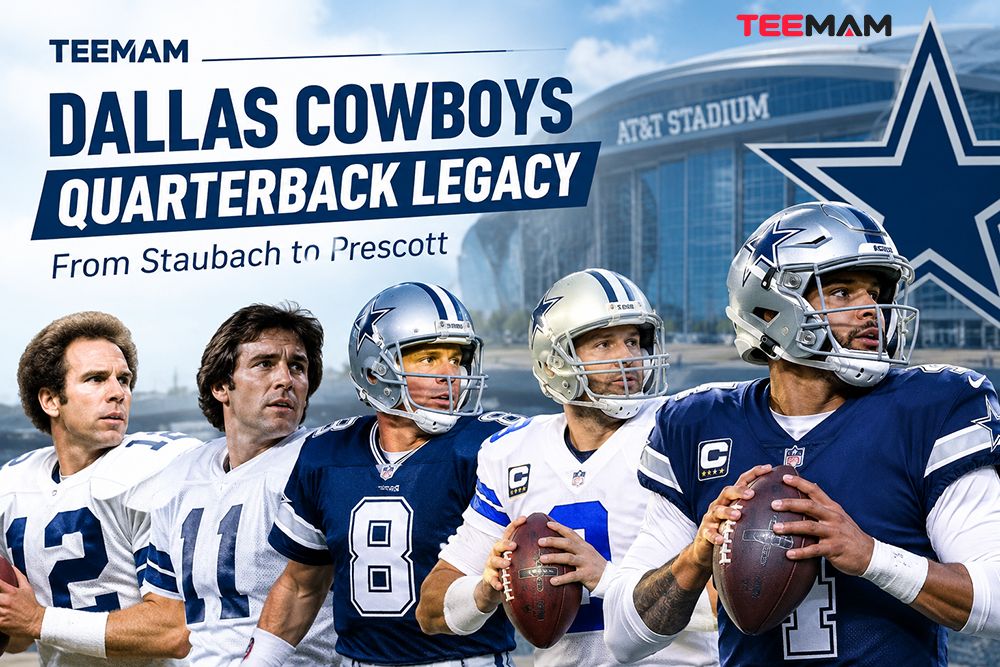
Judging Aikman purely on passing yardage misses what he actually did for Dallas. His value showed up in decision-making, ball security in big games, and directing an offense that didn’t need to force throws because Smith controlled tempo on the ground. Aikman started and won three Super Bowls in four seasons, a run only a handful of quarterbacks in league history can match. Read more on Troy Aikman’s quarterback legacy.
Irvin supplied the physicality that pulled the formula together. Nicknamed “The Playmaker,” he ran routes with an edge, fought through contested coverage, and set an emotional tone in the locker room that Johnson and, later, Barry Switzer leaned on in close games. His timing with Aikman, built over years of shared practice reps before either was a household name, forced safeties to respect the deep ball, which opened running room for Smith underneath. Remove one piece, and defenses could change the way they attacked the other two.
Three Super Bowls in Four Seasons Defined the Dynasty
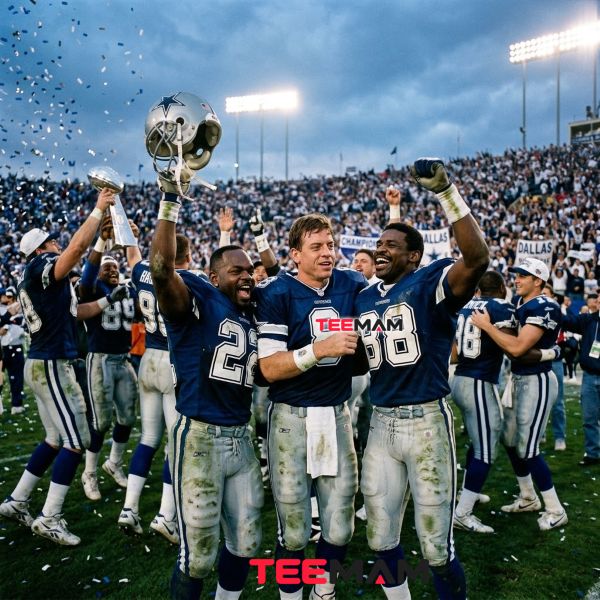
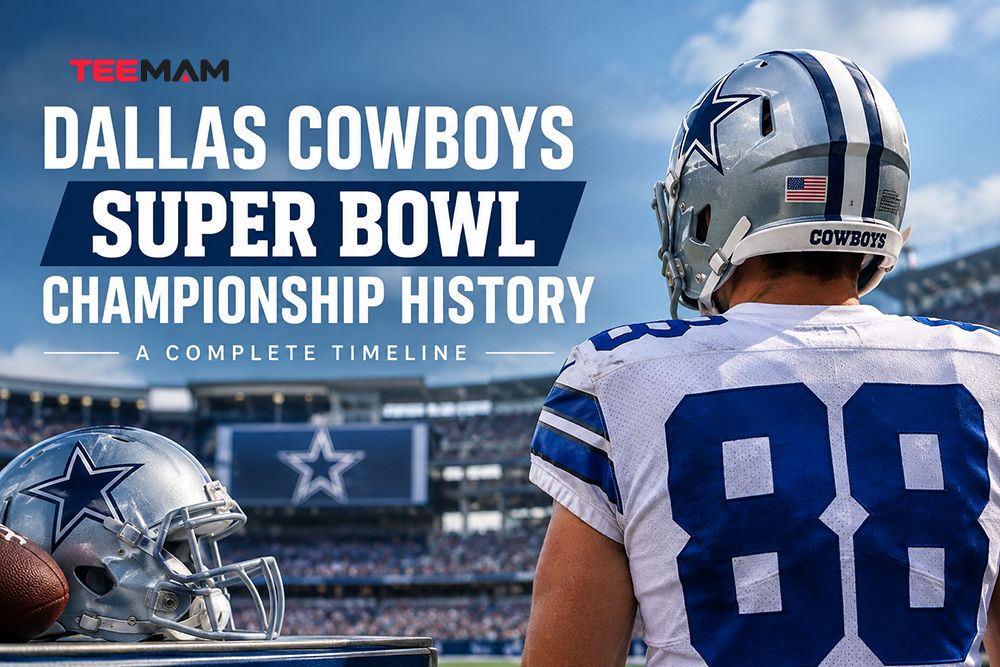
Aikman, Smith and Irvin led the Cowboys to three championships: Super Bowl XXVII, Super Bowl XXVIII and Super Bowl XXX, across the 1992, 1993 and 1995 seasons.
Super Bowl XXVII, played in January 1993, was the breakthrough: Dallas routed Buffalo 52-17, announcing that Johnson’s rebuild was finished. A year later, Super Bowl XXVIII was a rematch with the Bills, and Dallas won again, 30-13, with a Dallas Cowboys Emmitt Smith-led ground game controlling the fourth quarter. Super Bowl XXX, following the 1995 season, closed the loop with a win over the Pittsburgh Steelers and gave the Triplets their third ring in four years. For a deeper breakdown of that stretch, see Dallas Cowboys Super Bowl championship history.
How many Super Bowls did the Triplets win? Three: XXVII, XXVIII and XXX, spanning the 1992, 1993 and 1995 seasons.
What Made the 1990s Cowboys More Than a Football Team?
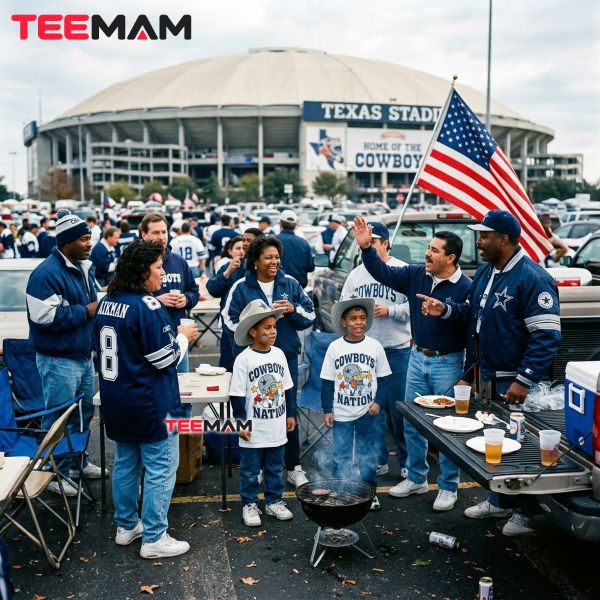
Dallas had carried the “America’s Team” label since the 1970s, but the Triplets era turned that nickname into a genuine national brand. Weekly television exposure, big personalities and a dominant product combined in a way few franchises have matched since.
Fans who followed the Cowboys during Smith’s peak years remember Sunday afternoons at the stadium as a family event, not just a football game. Texas Stadium became part of that identity too. Its famous “hole in the roof” became one of the most recognizable features in Cowboys history, and linebacker D.D. Lewis is credited with the long-running joke that the opening was there “so God could watch His team play,” a line that stuck for decades. Game days at Texas Stadium extended into the parking lots, where tailgates became part of the weekend for North Texas families, and the blue-and-silver color scheme became one of the most recognizable identities in American sports, showing up on jerseys, jackets and graphic tees well beyond Texas.
From Dynasty to Cultural Legacy
The Triplets changed what the Cowboys meant to the league and to their own fan base. A franchise that had bottomed out in 1989 became one of the NFL’s defining teams of the decade, and each player became a standalone cultural figure. Ask a longtime fan about numbers 8, 22 or 88, and you won’t need to say a last name.
But the Triplets weren’t playing 3-on-11. Larry Allen, Darren Woodson, Charles Haley and Jay Novacek all played major roles, and the 1995 title in particular leaned on a defense strengthened by free-agent cornerback Deion Sanders, who signed with Dallas that September and helped push the secondary to one of the league’s best. By 1995, the Cowboys were no longer simply a young offense growing together; the roster had matured around the original core, and additions like Sanders gave the defense another elite playmaker. That distinction matters when judging the dynasty: the Triplets were its defining offensive identity, but the championship teams became complete because the roster around them kept evolving. That’s the arc that turned Dallas Cowboys Emmitt Smith highlights into some of the most replayed clips in NFL history.
Recreating that formula today is genuinely difficult. The salary cap and modern free agency make it harder for any team to keep several homegrown stars together through their prime years, especially once those players reach second contracts at different times. Dallas managed it for a stretch because Johnson drafted well in a short window and had cheap, young talent absorbing roster spots while the Triplets developed. For more on the players who filled out those championship rosters, see Cowboys legends who shaped the franchise.
The 90s Cowboys Throwback Era and Modern Fan Style
Retro NFL graphics and vintage color-blocking have become a real category in fan apparel rather than a niche throwback, and Cowboys imagery from the Triplets years benefits more than most, since so much of it, the silver star, the blue and white, the Triplets themselves, is still instantly recognizable. That’s part of why Dallas Cowboys Emmitt Smith throwback pieces keep resurfacing every football season. Today’s throwback style reworks those references through 1990s color schemes, oversized graphics and Emmitt Smith-inspired looks that connect the dynasty era with modern fan culture.
At TeeMam, we approach football-inspired apparel as a way to preserve the visual energy and nostalgia surrounding iconic eras such as the 1990s Cowboys dynasty. That same throwback language shows up in our Cowboys inspired fan apparel, built around the same colors and era referenced throughout this piece.
What Made Aikman, Smith and Irvin Such a Great Trio?
| Player | Position | Core Strength | Dynasty Role |
|---|---|---|---|
| Troy Aikman | QB | Accuracy and composure | Directed the passing game and protected the ball |
| Emmitt Smith | RB | Vision and durability | Controlled the clock and powered the run game |
| Michael Irvin | WR | Physicality and route-running | Stretched defenses and created explosive plays |
When researching Dallas Cowboys Emmitt Smith, the obvious starting point is his rushing record. But the trio’s real legacy is complementarity, not any one player’s dominance. None of the three needed to be the single best player at his position in league history, though Smith arguably was. They needed to cover each other’s weaknesses, and for the better part of six seasons, they did.
Questions Fans Still Ask About the Cowboys Triplets
Why were they called the Triplets? The nickname reflected how closely Aikman, Smith and Irvin’s success was tied together. Their individual production depended on the other two performing well, which set them apart from stars who simply carried a team alone.
How many Super Bowls did Aikman, Smith and Irvin win together? Three: Super Bowl XXVII, XXVIII and XXX, spanning the 1992, 1993 and 1995 seasons.
Who was the most important Triplet? There’s no clean answer. Aikman ran the huddle and delivered in January, Smith set the tempo on the ground, and Irvin supplied the big plays and the edge. Remove any one and the offense looks noticeably different.
What made the 1990s Cowboys dynasty different? Three championships in four years, an offense built around three complementary stars rather than one, and a level of national visibility that turned Dallas into a genuine pop-culture presence, not just a winning team.
Is Emmitt Smith still the Cowboys’ most important running back? By the numbers, yes. No Cowboys running back since Smith has approached his career rushing total, rushing touchdowns or postseason production, and the franchise made that status official with his induction into the Dallas Cowboys Ring of Honor. The Dallas Cowboys Emmitt Smith era remains the benchmark for the position in franchise history.
Why the Triplets Era Still Defines the Dallas Cowboys
Aikman’s precision, Smith’s consistency and Irvin’s physicality built an offense that won three Super Bowls in four seasons and turned Dallas into the most talked-about team in football. Their legacy was never simply three Hall of Fame-level talents sharing a locker room. It was the way the Cowboys built an offense in which each star made the other two harder to defend. That combination of results and personality is why the 1990s Cowboys still show up in Hall of Fame speeches and in the closets of fans who weren’t even born when it happened.
Which of the three was the most important piece of the dynasty: Troy Aikman, Emmitt Smith or Michael Irvin?
Sources
- Emmitt Smith’s career stats and Hall of Fame profile, Pro Football Hall of Fame
- Jimmy Johnson’s coaching record with the Cowboys, Pro Football Hall of Fame
- Emmitt Smith’s Cowboys Ring of Honor record, DallasCowboys.com
- Jimmy Johnson’s rebuild and the 1988-89 seasons, Encyclopaedia Britannica

Hi, I’m Olivia Bennett, a fashion and lifestyle writer at TeeMam with 6 years of experience creating content about fashion, outfits, and lifestyle trends. I enjoy sharing practical style ideas for everyday wear, game days, holidays, and special occasions, helping readers find looks that feel comfortable, fun, and uniquely their own.