Why the Dallas Cowboys Are the Most Valuable Sports Team in the World
A franchise that last won the Super Bowl in January 1996 is now worth more than any other sports team on the planet. That gap between what happens on the field and what happens on the balance sheet is central to the dallas cowboys worth story, and it helps explain why the number keeps climbing no matter how the season ends.
As of September 2026, Forbes values the Dallas Cowboys at $17 billion, making them the most valuable sports team in the world and the NFL’s most valuable franchise for the 20th consecutive year, a title Forbes has attached to Dallas every year since 2016. Neither streak has much to do with a single playoff run. It reflects the economics of the NFL, AT&T Stadium, national sponsorships, media exposure, and one of the most recognizable brands in American sports.
How Much Are the Dallas Cowboys Worth in 2026?
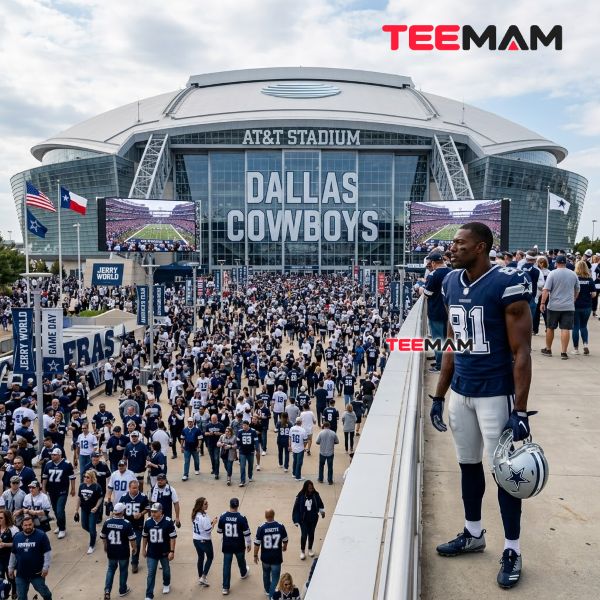
Forbes’ 2026 NFL valuations put the Cowboys’ enterprise value at $17 billion, a 31% jump from the $13 billion figure the team carried in 2025, the largest single-year increase of any team in the league.
| Financial metric | 2026 figure |
|---|---|
| Team value (enterprise value) | $17 billion |
| Annual revenue | ~$1.278 billion |
| Operating income | ~$677 million |
| Year-over-year value growth | +31% (vs. $13B in 2025) |
| Owner | Jerry Jones (acquired 1989 for $150 million) |
| Home stadium | AT&T Stadium, Arlington, TX (capacity up to 100,000) |
For context, the average NFL team is now worth about $9.5 billion, itself up 34% from a year ago. Dallas is not just above that average; at $17 billion, its valuation is nearly 1.8 times the league average. Ten NFL franchises now clear the $10 billion mark, and Dallas is still $3.5 billion ahead of the Los Angeles Rams, the league’s No. 2 team.
What Does “Worth” Actually Mean?
This is where a lot of casual conversation about dallas cowboys worth gets muddled. That $17 billion figure is not Jerry Jones’ personal net worth, and it is not the same thing as the team’s yearly revenue or profit. Forbes calculates enterprise value (equity plus net debt) built around the team’s current stadium economics, while specifically excluding the AT&T Stadium real estate itself and separate ventures like The Star, the Cowboys’ Frisco headquarters and training complex. Revenue is what comes in every year. Operating income is what’s left after paying players, coaches, and running the business. Valuation is a different question entirely: what the whole enterprise would fetch if it changed hands today.
Why Are the Dallas Cowboys So Valuable?
Five business forces explain most of the Cowboys’ current valuation: NFL-wide revenue sharing, a stadium built to generate money well beyond football, national sponsorship deals, constant media exposure, and a brand that keeps fans engaged through winning seasons and disappointing ones alike.
A Record-Setting Revenue Engine
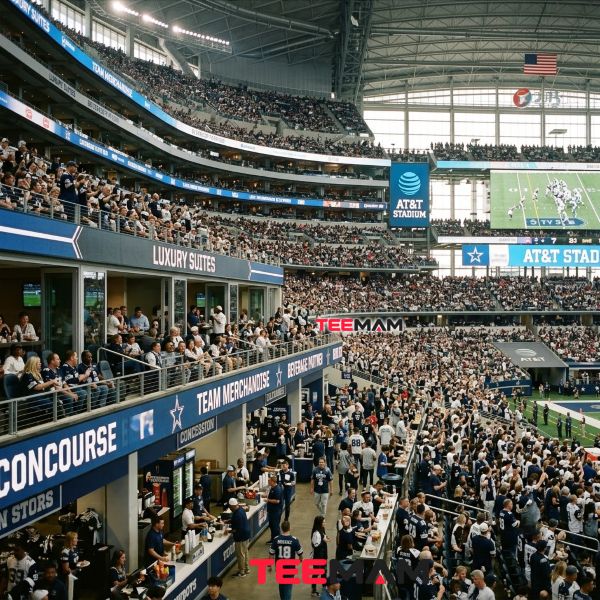
Dallas generated an estimated $1.278 billion in revenue during the 2025 season, the highest total Forbes has ever measured for any sports team, edging out Real Madrid’s $1.27 billion from the 2024-25 season. Operating income, a cleaner measure of profitability, came in around $677 million, about $342 million ahead of the next-best NFL franchise. That profitability gap helps show why Dallas is such an unusually powerful business, though Forbes’ valuation methodology weighs the team’s broader future economics rather than any single financial metric.
AT&T Stadium Runs Year-Round, Not Just on Sundays
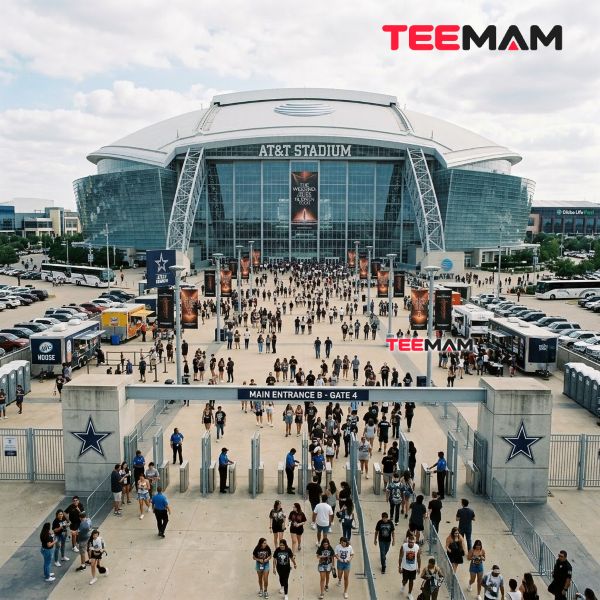
AT&T Stadium opened in Arlington in 2009, with capacity that expands up to 100,000 for major events, and its calendar extends well beyond Cowboys home games. It has hosted college football’s Cotton Bowl, an NBA All-Star Game, WrestleMania, and nine matches during the 2026 FIFA World Cup. That broader event calendar gives the Cowboys additional stadium-related revenue beyond the regular-season schedule, one reason stadium economics factor so directly into the franchise’s overall valuation.
The naming-rights deal adds another layer. AT&T and the Cowboys never disclosed exact terms when the agreement was announced in 2013, but reporting from ESPN at the time put the deal in the range of $17 million to $19 million per year, a modest figure by today’s stadium-naming standards, though it has held steady for over a decade.
Want the fuller story of how a $150 million purchase turned into the league’s biggest business? Explore the Cowboys’ ownership history breaks down the deals and decisions along the way.
The Jerry Jones Fight That Reshaped NFL Sponsorship
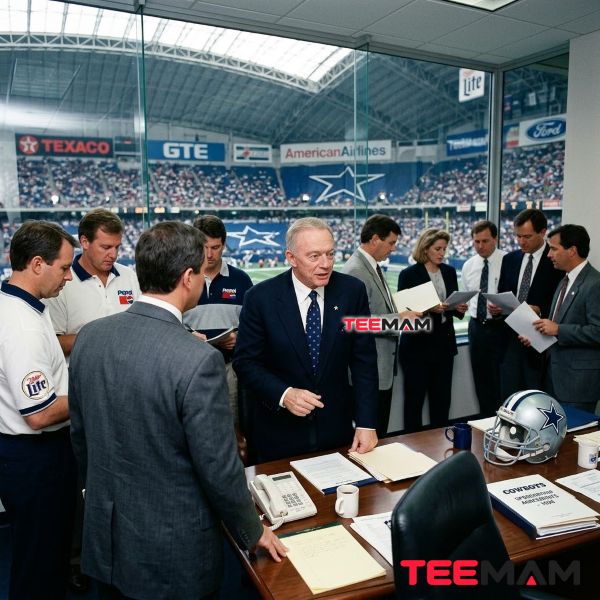
Jerry Jones bought the Cowboys in 1989 for $150 million, a record price for an NFL team at the time and a figure that looks small next to today’s $17 billion valuation. Less well known is how much of that growth traces back to a fight Jones picked with his own league. In 1995, he signed independent stadium sponsorship deals with Nike and Pepsi, sidestepping the NFL’s centralized approach to sponsorship and its existing league-wide contracts with rival brands. NFL Properties responded with a lawsuit seeking more than $300 million in damages, and Jones later filed a $750 million antitrust countersuit. The dispute was eventually settled, with Jones keeping his deals. The episode became an important turning point in how the NFL approaches stadium sponsorships, helping clarify the line between team-specific and league-wide commercial rights, and it’s a meaningful part of why Dallas built such an early commercial advantage.
How the Cowboys Turned a Nickname Into a Global Brand
The “America’s Team” Label Started as an Editing Choice, Not a Marketing Plan
“America’s Team” wasn’t dreamed up by a Cowboys executive. NFL Films writer Bob Ryan coined the phrase in 1978 while producing the team’s season highlight reel, describing Dallas that way in a line later delivered by longtime narrator John Facenda. Ryan has said he noticed how many Cowboys jerseys and pennants showed up in the stands at road games across the country and wanted the film to reflect that national following. Head coach Tom Landry reportedly wasn’t thrilled with the label at first, worried it would give opponents extra motivation. It stuck anyway, and nearly five decades later it still shapes how sponsors, broadcasters, and casual fans think about Dallas relative to the other 31 franchises. It’s hard to attach a specific dollar figure to a nickname, but its role in keeping the Cowboys in the national conversation, playoff appearance or not, is difficult to argue with.
Fan Loyalty That Doesn’t Depend on the Standings
Financial statements only tell part of this story. Cowboys fans keep buying jerseys, filling AT&T Stadium, and tuning in nationally regardless of what happens in January, and that isn’t really about win totals; it’s about identity. For a lot of fans, wearing the star has more to do with where they grew up and who raised them as a fan than with the current roster. That emotional layer isn’t something you’ll find broken out in a Forbes spreadsheet, but anyone who has spent a Sunday in a sports bar full of Cowboys fans has seen it in action. Love them or hate them, NFL fans rarely feel neutral about Dallas. Either way, the team remains impossible to ignore.
Where Does the Cowboys’ Money Actually Come From?
| Business factor | Role in the Cowboys’ economics |
|---|---|
| NFL shared revenue | League-wide media rights and licensing income split among all 32 teams |
| Stadium operations | Game-day and non-NFL event revenue at AT&T Stadium |
| Sponsorships | Corporate partnership income |
| Tickets and premium seating | Direct game-day revenue |
| Merchandise and licensing | Consumer-facing brand monetization |
National media rights provide a substantial revenue base shared across all 32 franchises, and that league-wide money makes up a large share of value for many teams. Dallas stands out because so much of its remaining value comes from local, team-specific revenue that most franchises simply don’t generate at the same scale.
Sponsorships and Corporate Partnerships
Forbes’ current team profile lists AT&T, American Airlines, Bank of America, Ford, PepsiCo, Keurig Dr Pepper, and UnitedHealth Group among the Cowboys’ major partners. That roster reflects a brand that reaches well past football fans, which is exactly what large national advertisers pay a premium for. Sponsorship is one piece of the broader financial picture; it doesn’t explain the $17 billion figure on its own, but it’s a meaningful multiplier on top of everything else.
Does the Cowboys’ Value Depend on Winning?
Dallas last reached the Super Bowl after the 1995 season, beating the Pittsburgh Steelers in Super Bowl XXX that January. The team hasn’t returned to an NFC Championship Game since. Yet Forbes’ own numbers show the franchise climbing from $5 billion in 2018 to $17 billion in 2026, more than tripling in value during a period in which it did not return to a conference title game.
Does winning Super Bowls determine how much an NFL team is worth? Not directly. Media rights, stadium economics, market size, and brand strength all move largely independent of the scoreboard, which is exactly why a franchise with a three-decade championship drought can still lead the league in value.
How the Cowboys Compare With Other Valuable Franchises
Dallas’ $17 billion valuation puts real distance between the Cowboys and the rest of the league. The Los Angeles Rams sit second at $13.5 billion, followed by the New York Giants at $12 billion and the New England Patriots at $10.6 billion. A $3.5 billion gap between first and second place is significant even in a league where every team is now worth at least $8 billion, and the Cowboys’ NFL franchise valuation remains roughly 79% above the league average.
Curious how that financial dominance lines up against the team’s actual win-loss history? This review of the Cowboys’ all-time record lays out the full picture, championship droughts included.
What Makes the Dallas Cowboys Brand So Durable?

The Cowboys’ commercial staying power isn’t one factor; it’s a handful of things reinforcing each other over decades. Texas identity is the most obvious: the star logo and the silver-and-blue color scheme have become shorthand for Texas football nationally, not just regionally. Generational fandom compounds that effect, since plenty of Cowboys fans didn’t choose the team so much as inherit it, along with the tailgates, the Sunday rituals, and the closets full of hand-me-down gear. National media exposure keeps the cycle going; between prime-time scheduling and near-constant sports coverage, Dallas rarely disappears from the conversation, win or lose. And everyday fan apparel, from jerseys to hoodies to game-day gear, is what turns all of that into something people actually wear on a random Tuesday, not just during football season.
For the deeper history behind how that identity took shape over six-plus decades, this guide to the Cowboys’ heritage and history is worth a read.
How Fan Apparel Reflects Cowboys Brand Value

Apparel is one of the clearest places where team identity leaves the stadium and becomes part of everyday life. A jersey worn at a Sunday tailgate is the same jersey that shows up at a backyard barbecue three states away, months after the season is over, and that kind of everyday visibility is part of what keeps a brand like this one culturally relevant between game days. At TeeMam, we see fan apparel as one practical form of sports storytelling, a way for team identity to move from game day into everyday life and family traditions.
What Could Keep the Cowboys’ Valuation Climbing?
Predicting an exact future number would be irresponsible, but a few forces are worth watching: continued growth in NFL media rights deals, the scarcity of NFL ownership (the league has held at 32 teams, and owners rarely sell), further sponsorship expansion, ongoing stadium economics, and the strength of the Dallas-Fort Worth market itself. Forbes has pointed to that scarcity as a major driver behind rising franchise values leaguewide, not just for Dallas. None of that guarantees a specific dollar figure down the road; it simply outlines the forces that have gotten the Cowboys this far.
What Is the Dallas Cowboys Worth Today?
The dallas cowboys worth figure makes more sense once you see it as the sum of several businesses operating under one franchise: NFL-wide economics, a stadium that works overtime, national sponsorships, media exposure, and a brand identity that survived, and arguably strengthened during, three decades without a championship. The lack of a recent Super Bowl appearance hasn’t erased those commercial advantages. If anything, that contrast is what makes the Cowboys’ business story genuinely unusual in American sports.
Questions Fans Ask About Cowboys Value
How much are the Dallas Cowboys worth in 2026? Forbes values the Dallas Cowboys at $17 billion as of September 2026, making them the NFL’s most valuable franchise for the 20th consecutive year and the most valuable sports team in the world.
Why are the Dallas Cowboys worth so much? Their value comes from NFL-wide revenue sharing, stadium economics at AT&T Stadium, major national sponsorships, constant media exposure, the size of the Dallas-Fort Worth market, and a fan base that stays engaged regardless of the team’s playoff results.
Are the Cowboys the most valuable sports team in the world? Yes. Forbes has ranked Dallas as the world’s most valuable sports franchise every year since 2016, and its 2026 valuation of $17 billion keeps that streak intact.
How much revenue do the Dallas Cowboys generate? Approximately $1.278 billion for the 2025 season, according to Forbes’ 2026 valuation report, the highest revenue figure Forbes has ever measured for any sports team.
How much did Jerry Jones pay for the Cowboys? $150 million in 1989, a record price for an NFL team at the time and a fraction of what the franchise is worth today.
Sources
- Forbes NFL Valuations 2026 List: Most Valuable Football Teams, Forbes, September 2026
- Dallas Cowboys on the Forbes NFL Team Valuations List, Forbes, updated September 2026
- Cowboys Stadium Now Called AT&T Stadium After Deal, ESPN, July 2013
- NFL, Cowboys Settle Suits, The Washington Post, December 1996
- NFL Properties Sue Cowboys, Jones, UPI, September 1995
- Hot Air: Catching Up With NFL Films’ Bob Ryan, the Man Who Dubbed the Cowboys “America’s Team”, The Dallas Morning News, November 2016

Hi, I’m Olivia Bennett, a fashion and lifestyle writer at TeeMam with 6 years of experience creating content about fashion, outfits, and lifestyle trends. I enjoy sharing practical style ideas for everyday wear, game days, holidays, and special occasions, helping readers find looks that feel comfortable, fun, and uniquely their own.