The Naughty or Nice List: Where Santa’s Famous List Comes From
Quick answer: The Father Christmas naughty or nice list has no single inventor or starting date. Its modern form grew from Saint Nicholas traditions, European folklore about rewarding and punishing children, 19th-century Santa imagery, and 20th-century popular culture. The key distinction is that the list itself is fairly modern, while the tradition of rewarding good behavior and punishing bad behavior around winter gift-giving is much older.
Every December, someone in the family threatens to call Santa about somebody else’s behavior. It’s such a normal part of the season that most of us never stop to ask where the Father Christmas naughty or nice list actually came from. It feels timeless, as if it has always been part of Christmas. In reality, Santa’s famous list is a patchwork of much older customs, several different folk characters, one widely heard 1934 radio performance, and a 19th-century political cartoonist who never set out to invent a Christmas tradition at all.
When Did the Naughty or Nice List Start?
There’s no founding date for the father Christmas naughty or nice list, the way there is for a national holiday. The tradition did not emerge all at once. Different customs appeared in different places and periods before later Christmas culture brought them together.
The tradition took shape in three broad stages: European folklore, 19th-century Santa imagery, and later popular culture. Each stage added something the others didn’t have.
The Older Roots Behind Santa’s Behavior List
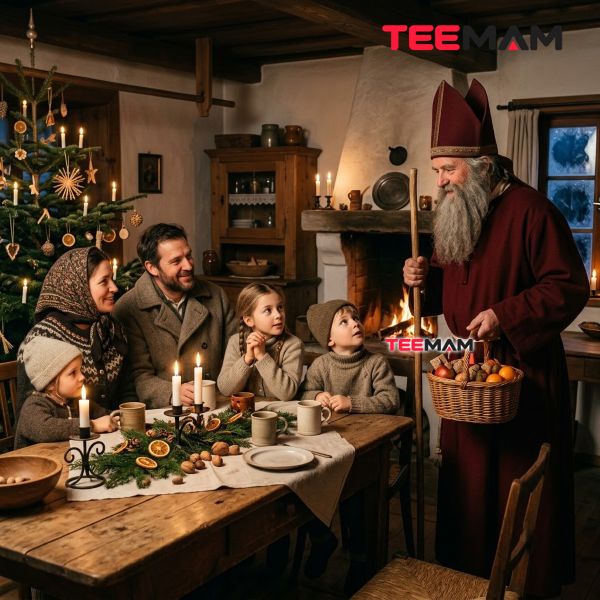
Long before Coca-Cola ads or department store Santas, European communities already linked gift-giving to good behavior. Historical evidence about Saint Nicholas himself is limited (he was a real fourth-century bishop from Myra, in present-day Turkey), but later legends built around his name emphasized generosity toward children, and he became the model for a gift-giver who rewarded well-behaved kids on his feast day. In many German, Austrian, and Dutch communities, that reward came with a flip side: a companion figure who dealt with children who hadn’t behaved, often through a real visit and a real question about the past year’s conduct.
Thomas Nast and the Evolution of Santa’s Image
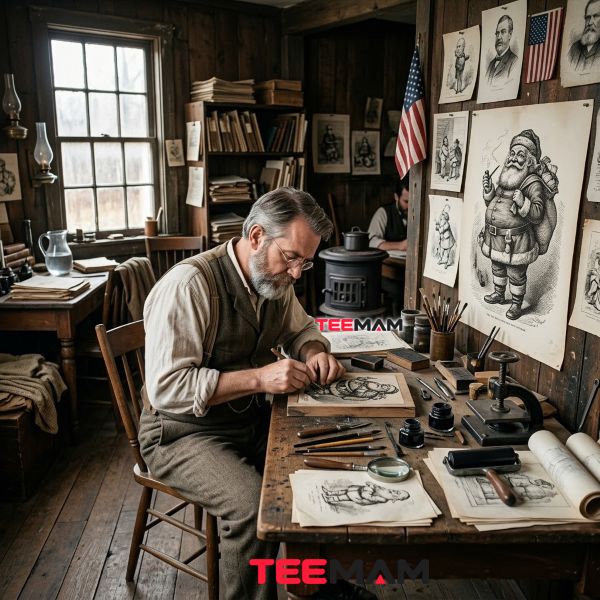
The Santa Americans picture today, round, jolly, white-bearded, dressed for cold weather, owes an enormous amount to one illustrator: Thomas Nast. Nast, a German-born political cartoonist best known for his Civil War-era work at Harper’s Weekly, introduced his first major Santa image, titled “Santa Claus in Camp,” in the magazine’s 1862 Christmas issue, published on January 3, 1863. According to the Metropolitan Museum of Art, which holds the original print, Nast combined European Saint Nicholas traditions with folk images of elves from his native Germany to create the gift-giving figure now associated with Christmas. Over the following decades, Nast produced dozens more Christmas illustrations and helped popularize details that became central to the modern Santa image, including the North Pole setting.
One distinction matters here: Nast did not draw a literal naughty or nice list, and no evidence shows that he coined that exact phrase. What his illustrations did was more foundational: they helped establish Santa as a recognizable American Christmas figure, creating a visual foundation that later storytellers could build the list concept onto.
Saint Nicholas, Father Christmas, and the Origins of the Tradition
It’s easy to use “Saint Nicholas,” “Santa Claus,” and “Father Christmas” interchangeably, but they started as three separate figures from three separate cultural traditions that only merged over time to shape today’s father Christmas naughty or nice list.
Saint Nicholas and Rewarding Good Behavior
The historical Saint Nicholas was venerated across the Christian world for his kindness, particularly toward children, though most of the specific stories about him come from later legend rather than documented biography. European St. Nicholas Day customs, still celebrated on December 6 in parts of Germany, Austria, and the Netherlands, helped preserve the behavioral idea that later became associated with the Father Christmas naughty or nice list, centuries before the American Santa Claus emerged.
How Father Christmas Became a Modern Christmas Figure

Father Christmas developed as an English personification of Christmas, originally associated more with midwinter feasting and merriment than with the modern image of a gift-bringing Santa. As American Santa Claus imagery spread internationally through advertising, film, and media over the 19th and 20th centuries, Father Christmas gradually took on many of the same gift-bringing characteristics. In modern English-language culture, the two figures now share many traits, though “Father Christmas” remains especially common in Britain while “Santa Claus” dominates American usage. If you’re curious how this kind of cross-cultural blending shows up across other Christmas customs, explore the history of Christmas origins for more background on how the holiday took its current shape.
Krampus, Belsnickel, and the Darker Side of Christmas Folklore
Modern Christmas marketing leans almost entirely on warmth and reward, but the folklore behind the father Christmas naughty or nice list has always had a harder edge. Reward and punishment were often treated as a package deal in Central Europe.
Krampus and the Punishment Tradition

In parts of the Alpine region of Austria, Germany, and neighboring countries, Saint Nicholas has traditionally traveled with a companion named Krampus, a horned, goat-like figure who, according to Britannica, punishes misbehaving children rather than rewarding them. Krampus is associated with the night of December 5, known as Krampusnacht, the evening before the Feast of St. Nicholas. In some regional traditions, Krampus is depicted carrying birch rods and threatening badly behaved children, though the details vary by region. That pairing captures an older Christmas idea: generosity and punishment could exist side by side in the same seasonal tradition.
Belsnickel and the Naughty-or-Nice Concept
German immigrants brought a related figure to Pennsylvania, where Belsnickel, a fur-clad character believed to know exactly how each child had behaved that year, was established among Pennsylvania Germans by the early 19th century. Children were often quizzed on their conduct, then rewarded with candy and nuts or threatened with a switch. It’s a folk tradition that offers a striking historical parallel to today’s naughty or nice framework, even without Santa’s list, sleigh, or workshop.
Why Coal Became a Symbol of Being Naughty
The exact origin of coal as a Christmas punishment is unclear. One practical explanation is that coal was an ordinary household fuel that could easily be found near the fireplace, making it a natural, slightly comic contrast to a real present. Whatever its precise origin, coal eventually became a familiar symbol of disappointment for children who landed on the naughty side of the list, rather than a punishment most households actually carried out.
How Santa’s Naughty or Nice List Became a Pop Culture Tradition
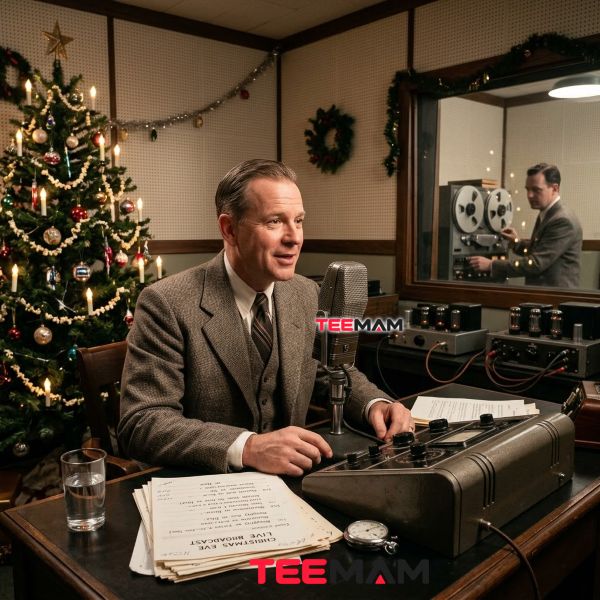
One of the most important moments in popularizing the naughty-or-nice idea was a song. Written by J. Fred Coots and Haven Gillespie, “Santa Claus Is Comin’ to Town” was published in 1934 and gained enormous attention after Eddie Cantor performed it live on his radio broadcast that November. According to a history published by the Catholic University of America’s library, 100,000 copies of the sheet music sold within 24 hours of the broadcast, with another 300,000 copies sold by Christmas. The song didn’t invent the underlying folklore, but it helped shape the modern Father Christmas naughty or nice list in popular culture and turned “naughty and nice” into a household phrase.
What once functioned in many traditions as a way of encouraging good behavior has, over the decades, drifted into something much lighter. Today it shows up mostly as a running joke: coworkers joke about who’s landing on the naughty list after a chaotic office party, couples tease each other about it, and pet owners put their dogs on the list for chewed-up decorations. A child might be “nice” for helping decorate the tree while the family dog earns a playful “naughty” label for stealing a cookie off the counter. The list became less about discipline and more about anticipation, humor, and the small rituals families repeat each Christmas.
How Families Keep the Naughty or Nice Tradition Fun
The phrase also works visually because its meaning is immediate: naughty or nice, coal or gift, red or green. That contrast is part of why the father Christmas naughty or nice list translates so naturally into family Christmas photos and holiday apparel, from matching shirts with one sibling labeled “naughty” and another “nice” to ugly Christmas sweaters and stocking tags built around the joke. Holiday traditions also gain meaning from smaller visual symbols, from greenery and stockings to the holly often associated with Christmas; you can learn Christmas holly symbolism if you want to see how another symbol carries that same kind of built-in meaning.
At TeeMam, we see this playful side of Christmas as part of what makes familiar traditions feel personal, whether they show up in a family photo, matching outfits, or an inside joke shared around the holidays. For more on how Christmas imagery carries meaning beyond decoration, discover the meaning behind Christmas symbols.
A few low-effort ways families keep the tradition alive without making it feel like an actual verdict on anyone’s character:
- Hold a lighthearted family vote. Let everyone weigh in on who’s been “naughty” or “nice” that year, keeping the categories silly rather than pointed.
- Plan a themed photo. Matching sweatshirts or shirts, a couple of stockings, and a Santa hat go a long way toward a memorable holiday card.
- Turn it into a party game. Superlative-style awards, like “most likely to get coal” or “repeat naughty-list offender,” work well at office parties or family gatherings.
- Carry the theme into small gifts. Personalized stockings, gift tags, or matching family apparel are an easy way to give the joke a physical form. For gift inspiration built around the season, find Christmas wish list ideas to plan ahead.
Naughty or Nice Through the Years: A Simple Christmas Timeline
| Period | Development |
|---|---|
| 4th century | Saint Nicholas becomes the historical figure behind later gift-giving traditions |
| Medieval and early modern Europe | Regional Saint Nicholas customs connect gifts, generosity, and children’s behavior |
| 19th century | Thomas Nast’s illustrations help establish a recognizable American Santa Claus |
| 1934 | “Santa Claus Is Comin’ to Town” helps popularize the naughty-and-nice idea in American popular culture |
| 20th century | The naughty or nice list becomes a familiar part of Christmas storytelling |
| Today | The idea is widely used for family humor, cards, holiday apparel, and entertainment |
Is Santa’s Naughty or Nice List Based on a Real Tradition?
No single historical document created the Father Christmas naughty or nice list. It’s a blend of several real traditions: Saint Nicholas customs supplied the reward side, Central European folk figures like Krampus and Belsnickel supplied the judgment and punishment side, and Thomas Nast’s illustrations gave Santa his visual identity before the 1934 song helped popularize the phrase.
What Does the Father Christmas Naughty or Nice List Mean Today?
Historically, the list functioned as genuine moral guidance: a way to encourage good behavior using a beloved, slightly mysterious authority figure. Today, its meaning has shifted almost entirely toward storytelling and anticipation rather than actual discipline. Most families treat it as symbolic, a fun narrative device that builds excitement before Christmas morning rather than a literal accounting of anyone’s behavior.
Common Questions About Santa’s Naughty or Nice List
When did the Naughty or Nice List become popular?
It gained mainstream popularity after the 1934 release of “Santa Claus Is Comin’ to Town,” which used the phrase “naughty and nice” and reached a huge national audience after Eddie Cantor performed it on his radio program that same year.
Did Santa really invent the Naughty or Nice List?
Not as a single character or single moment. The father Christmas naughty or nice list developed gradually from centuries of European folklore about reward and punishment, long before “Santa Claus” existed as a fixed character.
Why does Santa give coal to naughty children?
Coal’s exact origin as a Christmas punishment isn’t fully documented, but it was a common, inexpensive household item that made a pointed contrast to an actual present, and over time it became a recognizable symbol of disappointment.
What song made the Naughty or Nice idea famous?
“Santa Claus Is Comin’ to Town,” written by J. Fred Coots and Haven Gillespie and popularized through Eddie Cantor’s 1934 radio performance, is widely credited with making the phrase a household staple.
Are Krampus and Santa part of the same tradition?
They’re related but distinct. In Alpine folklore, Krampus traditionally accompanies Saint Nicholas as a punishing counterpart, but Krampus and the American Santa Claus developed along separate cultural paths that only loosely overlap today.
The Enduring Appeal of Santa’s Famous List
So where does the naughty or nice list actually come from? Not from one inventor, and not from one country. It’s the product of Saint Nicholas folklore, Central European punishment traditions like Krampus and Belsnickel, a 19th-century cartoonist who gave Santa his visual identity, and a 1934 song that helped make the naughty-and-nice idea a household phrase. The familiar Father Christmas naughty or nice list isn’t based on one historical document or a single inventor. It remains popular because it means different things to different generations: for children, it’s still about anticipation and good behavior; for adults, it’s a piece of Christmas humor families reach for every December, whether they’re teasing a sibling, dressing up for a photo, or just building anticipation before the presents get opened.
Sources: Metropolitan Museum of Art, Thomas Nast, “Santa Claus in Camp”; Catholic University of America Libraries, “The American Christmas Songbook: Santa Claus is Comin’ to Town (1934)”; Britannica, Krampus

Hi, I’m Olivia Bennett, a fashion and lifestyle writer at TeeMam with 6 years of experience creating content about fashion, outfits, and lifestyle trends. I enjoy sharing practical style ideas for everyday wear, game days, holidays, and special occasions, helping readers find looks that feel comfortable, fun, and uniquely their own.