The Meaning Behind Halloween’s Orange and Black Colors
The traditional Halloween colors are orange and black: orange tied mainly to autumn, harvest, pumpkins, and firelight, and black tied to night, death, mystery, and the supernatural. As a designer who spends most of the year staring at color swatches, October is the one month when the palette decision is basically made for me. Almost overnight, storefronts, porches, and product pages shift to two dominant extremes: bright, earthy orange and near-total black. Most people accept that pairing as automatically as they accept red and green in December, without asking why those two colors and not some other combination. While putting together this year’s fall lineup, that question kept nagging at me, so I went looking for the actual answer. It turns out Halloween’s signature palette wasn’t handed down whole from ancient tradition. It was pieced together over more than a century, part seasonal symbolism, part folklore, and part surprisingly deliberate American marketing. Understanding that mix makes the whole spooky season aesthetic a lot more interesting, whether you’re decorating a porch or just picking out a fall wardrobe.
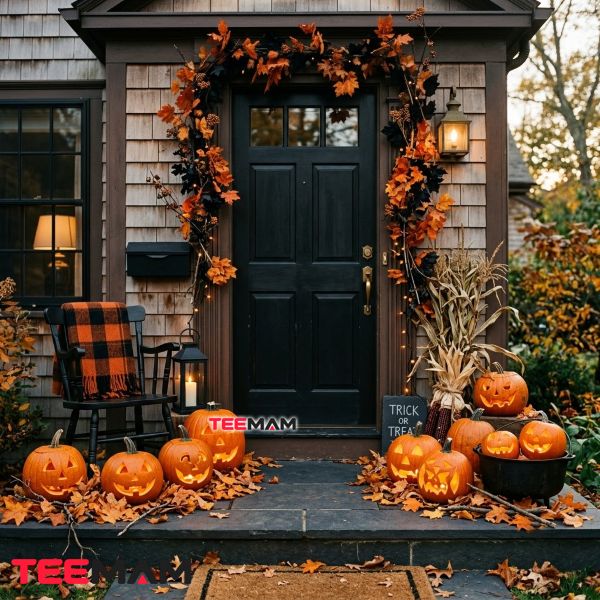
Why Are Orange and Black the Traditional Halloween Colors?
Orange and black became Halloween’s defining colors because orange reflects the autumn harvest, firelight, and eventually the jack-o’-lantern, while black reflects night, death, and the supernatural themes that grew up around the holiday. Neither color has one single origin story. Each built up gradually, through folklore on one side and American commercial culture on the other, until the pairing became the shorthand it is today.
Orange: Harvest, Fire, and the Jack-o’-Lantern Effect
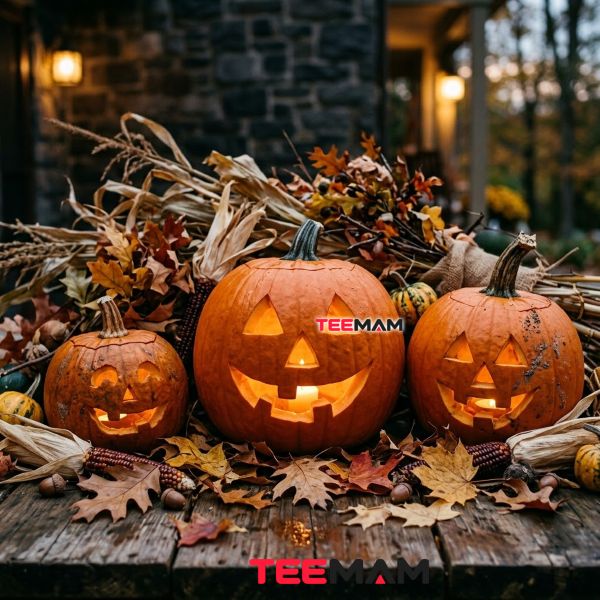
Orange is the natural color of the season itself: turning leaves, dried cornstalks, ripening squash, low autumn light. Interestingly, orange wasn’t even the first choice for early American Halloween celebrations. Halloween historian Lisa Morton, author of Trick or Treat: A History of Halloween, has pointed out that party guides from the early 1900s sometimes called for yellow and brown instead, tied to corn and hay rather than pumpkins.
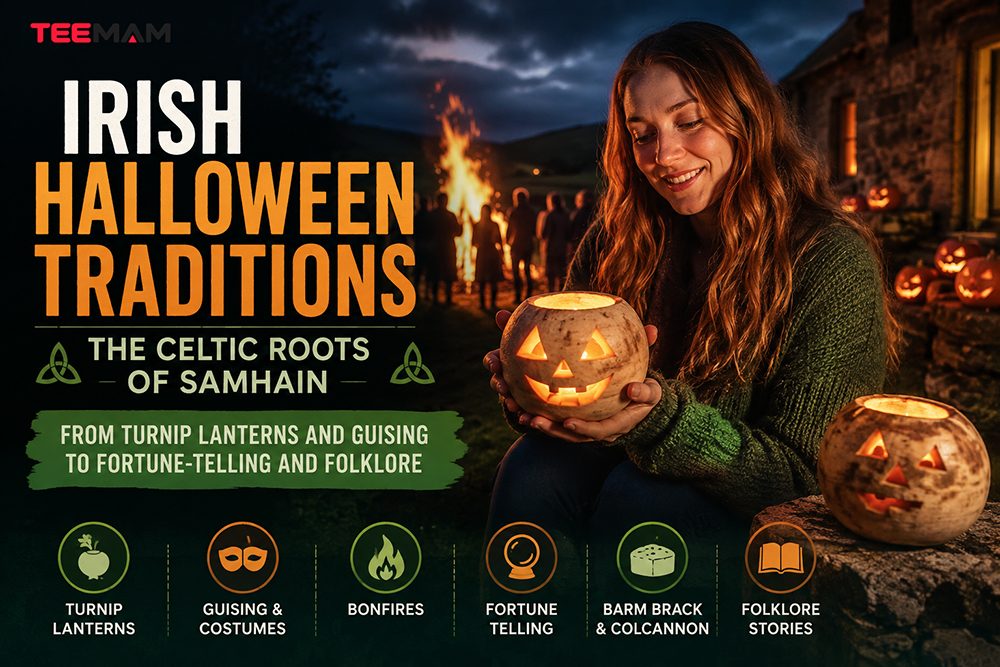
The color’s real anchor is the jack-o’-lantern, and that tradition has a much older backstory than most people realize. It traces to an Irish folk tale about a trickster known as Stingy Jack, who supposedly outwitted the devil twice, then died and was turned away from both heaven and hell, left to wander in darkness with only a burning ember inside a hollowed turnip to light his way. A later Irish and Scottish folk tradition connected that legend to the practice of carving turnips and other root vegetables into lanterns, with some accounts tying the custom to warding off spirits and others treating it more simply as seasonal craft. When Irish immigrants brought the custom to the United States in the 19th century, pumpkins, native to North America and far easier to carve, replaced the turnip. According to Morton, the carved pumpkin became a fixture of U.S. Halloween culture around 1910, largely on the strength of its popularity in postcards and advertising. Once the jack-o’-lantern took over as Halloween’s visual mascot, orange followed it into candy wrappers, decorations, and costumes. For the full story behind that shift, see the history of jack-o’-lantern traditions.
Black: Darkness, Death, and the Supernatural
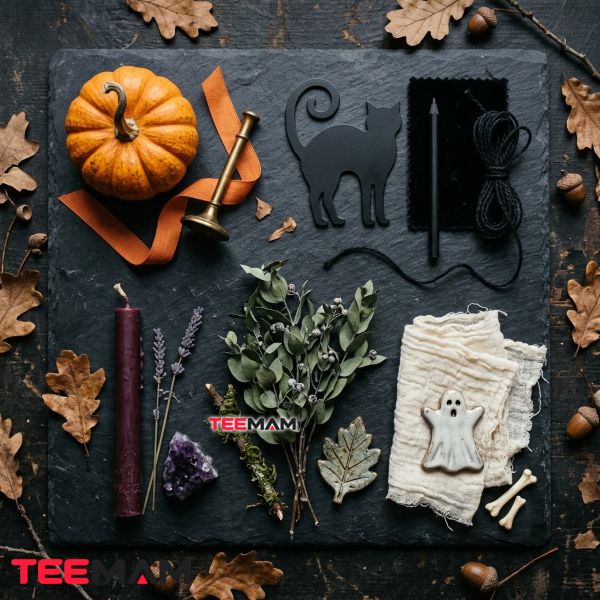
Black’s role is harder to pin to a single source. It lines up naturally with the shortening days of autumn and with Halloween’s long-standing association with death, spirits, and the boundary between the living and the dead. Black cats and bats seem to have done as much as anything to lock black into the Halloween palette, since both were staples of early Halloween party decorations and postcard art. Rather than one clean origin, black’s place among Halloween colors looks like the accumulation of several overlapping ideas: night, mourning, and superstition, all pointing the same direction at once.
Why the Contrast Works
Put orange next to black and the eye reacts immediately. Orange reads as warm and prominent; black reads as its opposite, dark and grounding. That contrast is a big part of why the pairing feels spooky at a glance, before anyone consciously thinks about a specific pumpkin or ghost. It’s also why the combination keeps showing up on everything from porch lights to graphic tees: it doesn’t need explaining to register as Halloween.
How Samhain Shaped Halloween’s Color Symbolism
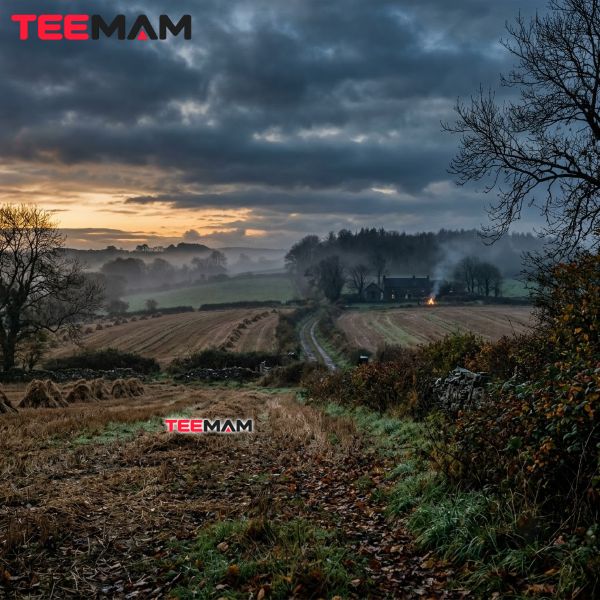
Halloween has real historical ties to Samhain, a Gaelic festival marking the transition from the lighter half of the Celtic year into the darker half. According to the Encyclopaedia Britannica, Samhain was observed around November 1st and was considered a time when the world of the gods became visible to people, a period treated as genuinely dangerous rather than simply festive, with rituals meant to protect against the dangers of the season. That’s worth being precise about, because the modern holiday didn’t evolve in a single straight line from Samhain. Halloween as it’s celebrated today also absorbed Christian traditions tied to All Saints’ Day and All Souls’ Day, plus centuries of European and American folk customs, before becoming the holiday recognized now.
What Samhain does give us is context, not a color chart. There’s no solid historical record that the ancient Celts used orange and black as a fixed decorative scheme; that pairing came together much later, largely through American commercial Halloween culture. The popular image of a “thinning veil” between worlds at Samhain is a familiar shorthand today, but it simplifies a much richer and more complicated set of beliefs and rituals. What Samhain reliably explains is the mood Halloween inherited: a seasonal turning point wrapped in themes of harvest, darkness, and the supernatural, which 20th-century decorators and advertisers later translated into a specific visual language. Historical background on Samhain covers the festival’s origins in more depth, and the history of Halloween and All Hallows’ Eve traces the fuller path from that ancient festival to the holiday celebrated across the U.S. today.
What Do Other Halloween Colors Mean?
Orange and black get most of the attention, but the modern Halloween color palette has quietly expanded well beyond those two.
Purple: Mystery, Magic, and the Supernatural
Purple’s Halloween connection is mostly a 20th-century development. Historian Lesley Bannatyne has noted that some Halloween postcard illustrators in the early 1900s used purple, or occasionally red, for witches’ dresses, with green reserved for jack-o’-lanterns in the same artwork. Similar colors later showed up across candy packaging, costumes, and other commercial Halloween imagery, helping widen the palette beyond the original orange-and-black pairing. Purple never carried the harvest or death symbolism that orange and black did; its place in the palette is closer to a modern shorthand for fantasy and witchcraft.
Green: Monsters and the Unnatural
Green reads as eerie and inhuman, and film gets a lot of credit for that. Morton has suggested that Margaret Hamilton’s green-skinned performance as the Wicked Witch of the West in the 1939 film The Wizard of Oz became one especially influential image behind green’s association with witches and monsters. Before the film, many popular depictions of witches used ordinary human skin tones or other colors rather than the now-familiar green face. It’s one influential data point rather than the single cause, since green horror imagery had other cultural roots too, but it’s a well-documented piece of the story.
White: Ghosts, Spirits, and Bones
White fills in for moonlight, bedsheet ghosts, and bare bone, the palest and most otherworldly note in the lineup. Like purple, it’s an extension of the modern Halloween aesthetic rather than a color tied to any specific historical tradition.
A Quick Reference: Halloween Color Meanings
| Color | Common Halloween association |
|---|---|
| Orange | Harvest, pumpkins, autumn, firelight |
| Black | Night, darkness, death, mystery |
| Purple | Magic, witches, the supernatural |
| Green | Monsters, unnatural, eerie imagery |
| White | Ghosts, spirits, bones |
How Halloween Colors Evolved Through Popular Culture
The Halloween colors people recognize today owe as much to manufacturing and marketing as they do to folklore. Bannatyne has traced some of the earliest mass-produced Halloween decorations to the Dennison Manufacturing Company, whose Bogie Book catalogs of party supplies began appearing in 1909, featuring witches, cats, and bats printed largely in black alongside harvest imagery printed in orange. Dennison didn’t invent that pairing so much as standardize and popularize it: once orange and black were sitting on store shelves together year after year, the combination stuck in the American imagination. Details on that period of commercial Halloween history are outlined in this historical overview from Halloween historian Lesley Bannatyne.
From there, movies, cartoons, greeting cards, and retail displays kept adding to the palette instead of replacing it. Green picked up momentum through horror films and witch imagery, purple through costumes and candy packaging, white through ghost illustrations in cartoons and party decor. That evolution is part of what makes today’s Halloween culture, including songs built entirely around its imagery, worth a closer look. The meaning behind “This Is Halloween” digs into how one of the most recognizable pieces of modern Halloween pop culture leans on this same visual language. The historical meaning behind orange and black hasn’t disappeared under all of that; it’s simply been layered under more than a century of commercial reinforcement.
What Makes Orange and Black Feel So Spooky?
Some of it comes down to straightforward visual contrast. Orange generally reads as a warm, attention-grabbing hue, especially next to a dark neutral like black, which makes the brighter color look even more vivid and the overall combination feel darker as a whole. The rest comes down to repetition. Decades of pumpkins, black cats, party decorations, and October advertising have trained a strong mental association between these two colors and the season, to the point where seeing them together in almost any context reads as “Halloween” before a person consciously registers a single symbol. It’s worth being cautious about turning that into a universal claim about color psychology, since individual reactions to color vary, but the visual impact and the decades of cultural reinforcement behind orange and black are well documented, and together they explain a lot of why the pairing still works.
How to Style Halloween Colors Without Looking Like a Costume

You don’t need the full Halloween color palette to bring a little seasonal spirit into an everyday outfit. A few adjustments go a long way.
Reach for Burnt Orange Instead of Bright Orange
Burnt orange or rust reads as an autumn color palette choice rather than costume-bin orange. It pairs easily with black, denim, brown, and cream, and it holds up as a genuinely wearable fall shade well past October 31st.
Pick One Accent Color, Not the Whole Palette
Black paired with a single accent, whether that’s orange, purple, or a muted green, carries the mood without tipping into costume territory. If you want a more everyday look, lean on one or two Halloween shades against a neutral base instead of building the whole outfit around the seasonal palette.
Let Graphic Apparel Do the Talking
A subtle graphic tee or hoodie is often enough to nod to the season without going full costume. The choice of background color actually matters more than most people expect: a bold orange design lands with much more impact printed on black or charcoal fabric than the same artwork printed on light gray, even though the illustration itself hasn’t changed at all. That’s the same contrast principle at work behind the entire Halloween palette, just applied at the scale of a single shirt. When our design team at TeeMam develops Halloween apparel for spooky-season style, we often use this same contrast to let the color combination establish the seasonal mood before the graphic does, so the pieces still look like real clothes instead of a costume.
Choose Halloween Colors by the Mood You Want
Burnt orange keeps a look grounded in fall, while black makes the same outfit darker and more understated. Add purple and the mood shifts toward fantasy and mystery; a muted green pushes it somewhere stranger, more creature-inspired. Matching the color to the mood is a simple way to turn everyday Halloween outfits into something that actually reflects personal taste, rather than grabbing whatever happens to be on the seasonal display.
Do Halloween Colors Work Beyond October?
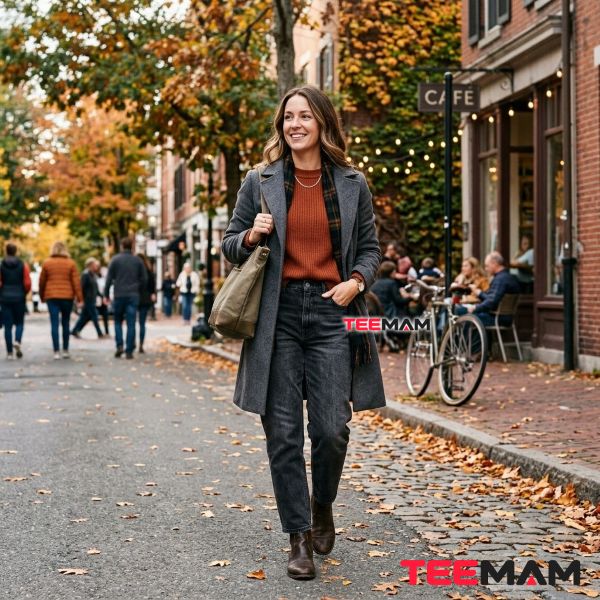
Some of them, absolutely. Burnt orange, charcoal, and muted purple slide easily into everyday fall fashion because they’re really autumn colors that Halloween borrowed in the first place, not the other way around. Black, obviously, works year-round regardless of season. The neon-bright, saturated versions of these colors are the ones that read as costume once November arrives; the muted, natural versions hold up as ordinary cold-weather color choices well into winter.
What Do the Colors of Halloween Really Represent?
What does orange symbolize on Halloween?
Orange represents the autumn harvest, pumpkins, fire, and warmth, a nod to the season’s abundance before winter sets in. It became the dominant color among Halloween colors largely through the rise of the jack-o’-lantern in the early 1900s.
What does black symbolize on Halloween?
Black is commonly associated with Halloween through imagery of night, darkness, mourning, death, and the supernatural. Its foothold in the palette is tied closely to black cats and bats, both staples of early Halloween decorations and postcard art.
Are purple and green traditional Halloween colors?
Not in the historical sense. Orange and black remain the most recognizable and longest-standing pairing among Halloween colors. Purple and green became prominent later, largely through early 1900s postcard art, 20th-century movies, and decades of Halloween marketing, rather than through any ancient tradition.
Halloween Colors Carry More History Than You’d Expect
Orange and black didn’t come from one tidy ancient rulebook. They came from a blend of seasonal symbolism, the mood inherited from Samhain, and a wave of early 20th-century American marketing, particularly Dennison’s paper decorations, that happened to lock in a color pairing that still works today. The jack-o’-lantern gave orange its strongest Halloween association, while the older legend of Stingy Jack adds a much deeper layer of folklore underneath it. Black became inseparable from cats, bats, and the darker, supernatural imagery that grew up around the holiday. Purple, green, and white came along later, as postcard artists, Hollywood, and candy aisles kept widening the palette. None of that makes these Halloween colors any less fun to decorate with or dress in. If anything, knowing where the palette actually came from makes it more interesting to play with, whether that shows up on a porch, in a party spread, or in a fall wardrobe that leans into the season without going full costume.

Hi, I’m Olivia Bennett, a fashion and lifestyle writer at TeeMam with 6 years of experience creating content about fashion, outfits, and lifestyle trends. I enjoy sharing practical style ideas for everyday wear, game days, holidays, and special occasions, helping readers find looks that feel comfortable, fun, and uniquely their own.