The Story Behind Gingerbread Houses and Christmas
There’s a particular smell that shows up in kitchens every December: ginger, cinnamon, a little clove, right before someone spills a bag of gumdrops across the counter and the icing starts hardening faster than anyone planned for. If you’ve ever stood over a lopsided gingerbread roof trying to keep it from sliding off the walls, you already know that gingerbread houses and Christmas go together in a way that feels almost obvious.
The short answer: the connection between gingerbread houses and Christmas developed gradually, not through a single event. German gingerbread traditions, seasonal markets, the folklore of Hansel and Gretel, and the later migration of German customs to America all played a role. There was no single inventor and no one moment when the tradition suddenly became a Christmas custom, which, once you dig into the history, is really the more interesting part of the story.
Where Did Gingerbread Come From?
Ginger’s Long Trip to Europe
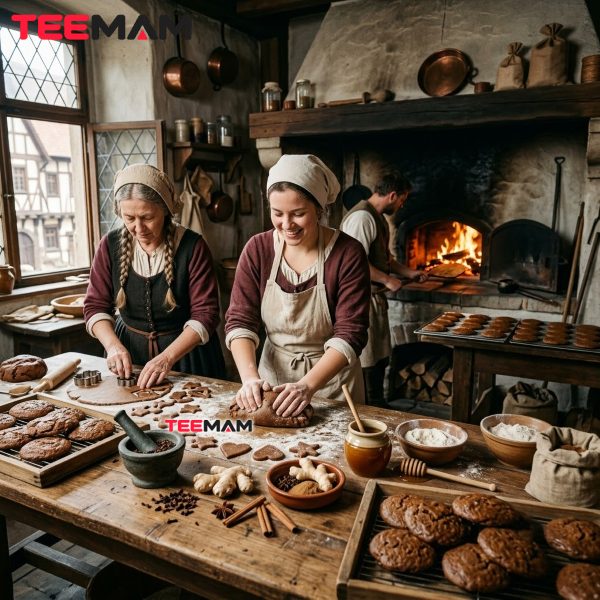
Ginger itself originated in Asia, while gingerbread’s route into Western Europe is less certain. Historical accounts often place its arrival in medieval Europe, with the recipe and even the meaning of the word “gingerbread” evolving considerably over the centuries. Spices grew more widely available across Europe as trade routes expanded between roughly the 15th and 17th centuries, but ginger and spiced honey-breads were already known on the continent well before that period; cost and availability simply varied by place and era.
Why Germany Became Gingerbread’s Home Base
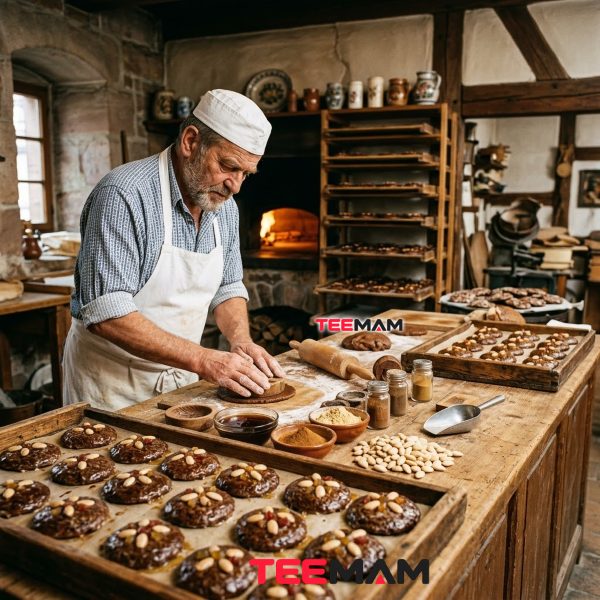
If one country gets to claim gingerbread as a cultural signature, it’s Germany, and specifically Nuremberg. Some historical accounts credit medieval monks and nuns in the Franconia region with helping develop early spiced-honey confections as early as the 14th century, though the full picture is more layered than a single origin story. What’s well documented is that Nuremberg’s bakers built a serious trade around it, organized into their own guild, with the city officially recognizing the craft by the mid-1600s. Nuremberg’s position at the crossroads of major spice-trading routes, combined with abundant honey from the surrounding forests, gave its bakers unusually easy access to both ingredients and customers.
That local specialty is known as Lebkuchen, a dense, spiced treat made with honey, ginger, cinnamon, nutmeg, and often almonds. It’s still protected today: since 1996, Nürnberger Lebkuchen has held EU Protected Geographical Indication status, meaning the protected name is reserved for Lebkuchen that meets the defined geographical production requirements associated with Nuremberg.
When Did Gingerbread Houses and Christmas Become Connected?
Gingerbread houses and Christmas were not always linked. Some historical accounts date gingerbread houses to the 1600s in German-speaking Europe, while other accounts place the recognizable cottage-building tradition later; the exact timeline remains difficult to establish. What’s less disputed is that their close association with Christmas developed gradually, through seasonal markets, holiday customs, and later popular culture, well before the story most people credit for inventing the tradition altogether.
The German Lebkuchenhaus
Historical accounts describe German bakers shaping gingerbread into elaborate forms for centuries, and some place the emergence of small architectural pieces, walls, roofs, chimneys, held together with a thick, fast-setting icing, as early as the 1600s. The exact point at which bakers began building recognizable houses is hard to pin down, but the result became known in German as a Lebkuchenhaus, literally “gingerbread house.” If the earlier dating holds, it means the craft was established well before anyone had written down the fairy tale most people associate with it today.
Why the Exact Origin Is Hard to Pin Down
Food history and literary history don’t always move in lockstep. A baking tradition can exist in one region for generations before anyone writes it down, and a folk tale can circulate orally long before it’s published in a fixed version. Historians who study the subject genuinely disagree about whether the fairy tale influenced the houses or the houses influenced a detail in the fairy tale, and both are plausible. Both existed in the same corner of German-speaking Europe, feeding into each other over roughly the same centuries.
Did Hansel and Gretel Invent Gingerbread Houses?
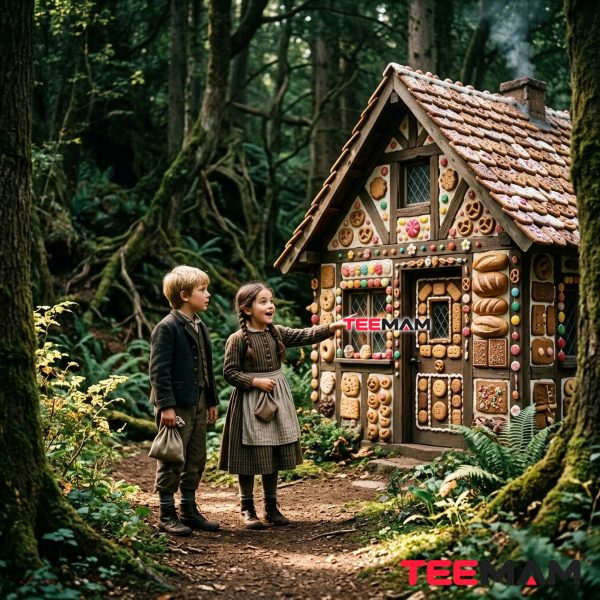
No. Gingerbread houses did not start with the Brothers Grimm; they predate the tale’s publication by roughly two centuries. That’s a point worth stating plainly, since it’s one of the most common misconceptions about the tradition, and one Smithsonian Magazine has specifically called out in its own reporting on gingerbread history.
The Witch’s Candy House in the Grimm Tale
Jacob and Wilhelm Grimm published their now-famous version of Hansel and Gretel in 1812, as part of their collection Children’s and Household Tales. In the story, two children lost in the woods stumble on a house built from bread, cake, and sugar, decorated in a way that’s impossible to resist when you’re starving. The tale didn’t invent the gingerbread house; it gave an existing tradition a story to attach to. Smithsonian Magazine’s own history of the tradition confirms that gingerbread houses date to the 1600s, a few centuries after gingerbread itself first appeared and well before the Grimms ever put pen to paper.
Once families started connecting that vivid image to the fairy tale, decorating a gingerbread house stopped being just a baking exercise and became a small piece of storytelling you could eat.
Why Did Gingerbread Houses Become a Christmas Tradition?
Gingerbread wasn’t originally a Christmas-only food. The connection built up over time, as gingerbread moved from year-round fairs and festivals into a fixture of German Advent markets, and from there into the broader Christmas traditions that spread across Europe and eventually the United States.
From Everyday Baking to Holiday Ritual
For a long stretch of its history, gingerbread showed up at fairs, festivals, and market days scattered throughout the year rather than being reserved for December. Its pull toward the holiday season happened gradually, tied to the same instincts that shape a lot of winter traditions: warming spices during cold months, a reason to gather people together, and a treat elaborate enough to feel worth the extra effort of a special occasion. That history helps explain why gingerbread houses and Christmas are connected today, even though gingerbread itself was never exclusively a Christmas food.
How Nuremberg’s Christmas Market Reinforced the Tradition
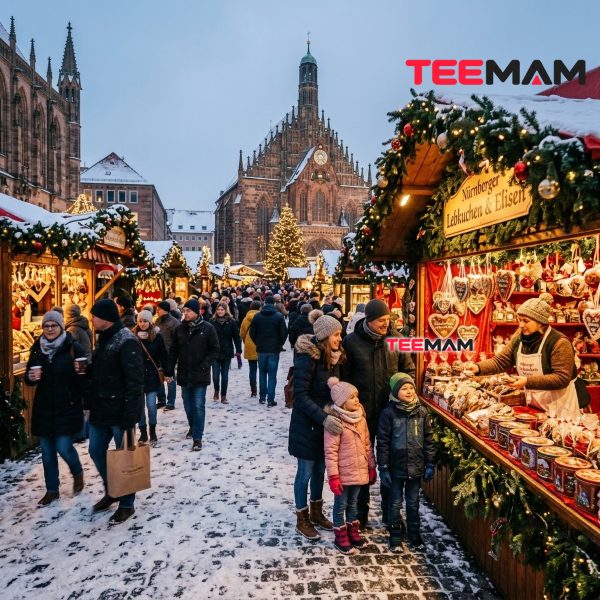
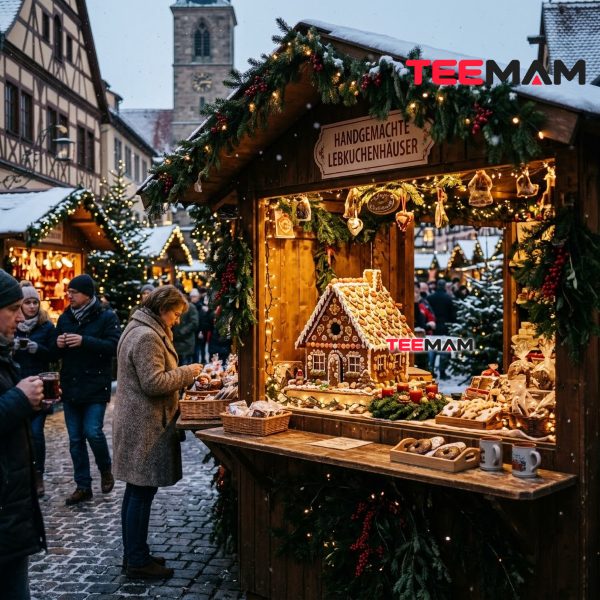
Germany’s Christmas markets helped lock in that association. The Nuremberg Christkindlesmarkt, one of the country’s oldest, was first documented in 1628, with roots the city’s own tourism office traces back even further, possibly to the mid-16th century. Lebkuchen has been sold there for centuries alongside mulled wine, roasted almonds, and handmade ornaments, and it remains one of the market’s signature foods today. That kind of repeated, seasonal exposure, gingerbread as the thing you smell and buy at the Christmas market year after year, likely helped reinforce the association between gingerbread houses and Christmas in European holiday culture, long before the tradition ever crossed the Atlantic.
How Did Gingerbread Houses Reach America?
German Immigrant Communities in Pennsylvania
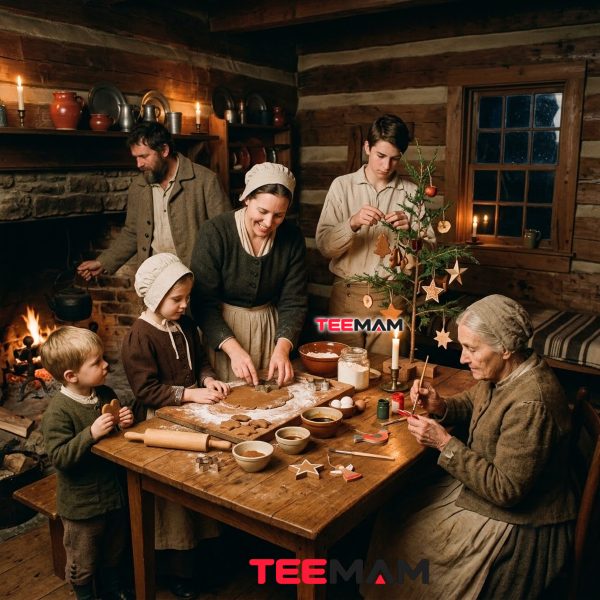
The broader tradition crossed the Atlantic largely through German-speaking immigrants who settled heavily in Pennsylvania starting in the 1700s. Immigrants from Germany, along with Swedish, Dutch, French, Welsh, and Scots-Irish settlers, brought a wide range of Christmas customs into the region between the 17th and 19th centuries. German-speaking communities in particular held onto Christmas as a major family and religious occasion at a time when, in parts of Puritan New England, the holiday was viewed with suspicion and its public celebration was at times discouraged. Pennsylvania German families, often called Pennsylvania Dutch, preserved customs like decorated trees, home baking, and folk figures such as the Belsnickel. It’s this broader package of German holiday customs, more than any single documented “first” gingerbread house on American soil, that created the cultural setting in which German-style gingerbread, and eventually gingerbread houses, could take root in American Christmas life. If you’re curious how the wider holiday took shape once it crossed the Atlantic, you can explore the history of Christmas in America more broadly.
From Commercial Craft to Family Custom
The tradition also changed shape as it moved. As German holiday customs became part of American domestic life, gingerbread became easier to adapt to home baking and family decorating. Over time, that helped shift the experience from something associated mainly with specialist bakers toward an activity families could recreate together at the kitchen table.
What Does a Gingerbread House Symbolize at Christmas?
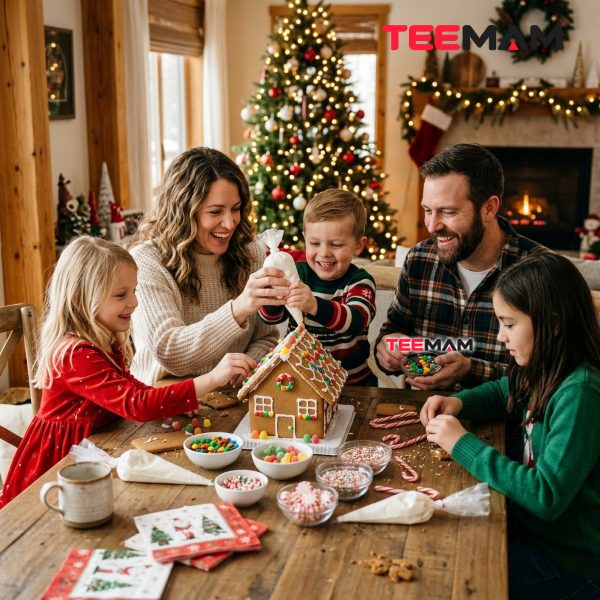
There’s no single “official” meaning attached to the tradition, but a few themes come up again and again in how families talk about it:
- Togetherness. It’s rarely a solo activity; it tends to pull whoever’s in the house toward the same table.
- Creativity. There’s no wrong way to place a gumdrop, which makes it low-stakes fun for kids and adults alike.
- Abundance. A house covered in candy is, at its core, a small display of holiday plenty.
- Nostalgia. For a lot of people, gingerbread houses are tied to specific childhood memories more than to any historical fact.
These are cultural associations that built up over generations rather than a fixed meaning handed down from any documented source, which, if anything, makes them feel more genuine.
How Gingerbread Houses Became a Modern Christmas Tradition
The connection between gingerbread houses and Christmas has become even more visible in modern holiday culture, partly because the activity is now easier to recreate at home. Today’s version of the tradition looks pretty different from a 17th-century German bakery. Pre-made kits with flat gingerbread panels, royal icing, and small bags of candy have made the activity accessible to families with no interest in baking a structurally sound roof from scratch. School classrooms run gingerbread-building afternoons, and bakeries and hotels host elaborate competitions where entrants build multi-story structures that look more like architecture than dessert. None of that makes the tradition less “real.” Buying a kit is still a way of taking part in something that’s been passed down for centuries, just with less flour on the counter. It’s the same impulse that keeps other holiday stories alive year after year, the same way families still like to discover Rudolph’s Christmas story alongside the older, stranger tale of Hansel and Gretel.
A Gingerbread House Night Is More Than Baking
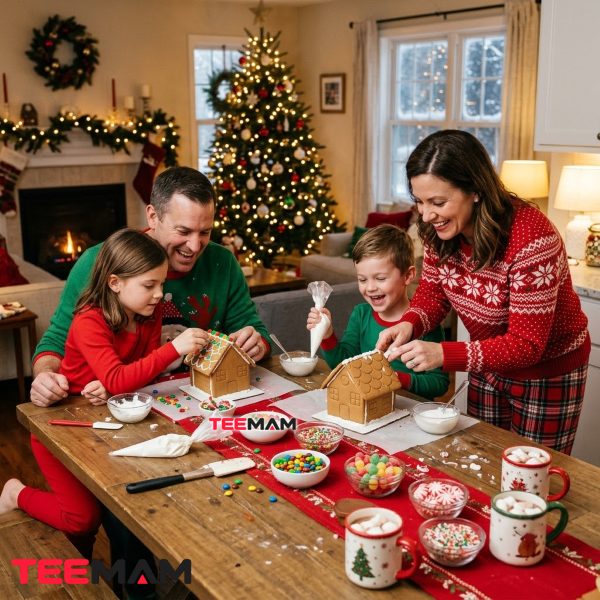
For many families, the appeal isn’t really about building a technically perfect house. It’s about having a shared holiday activity: the decorating, the mess, and even the inevitable crooked roof become part of what people remember afterward.
Building a Simple Gingerbread Decorating Tradition
- Pick a kit, or bake your own panels a day ahead so they’ve had time to firm up.
- Prep the icing and lay out candy in small bowls, not one giant pile.
- Clear a table specifically for the mess (this is not a clean activity).
- Put on Christmas music in the background.
- Make hot chocolate or mulled cider to sip while everyone works.
- Take photos before anyone’s tempted to eat the roof.
- Let each person build their own section or house, even if it comes out crooked.
Making the Evening Feel Festive
Part of what keeps gingerbread houses and Christmas feeling connected, year after year, is how easy it is to dress the occasion up. A few small touches turn this from “a baking project” into “the thing we do every year”: matching family pajamas, a favorite Christmas sweater, an apron nobody’s precious about ruining, a table runner that only comes out in December. At TeeMam, we see holiday-themed apparel as a simple way to turn a familiar family tradition into a slightly more memorable holiday ritual.
Gingerbread Houses Beyond the Kitchen
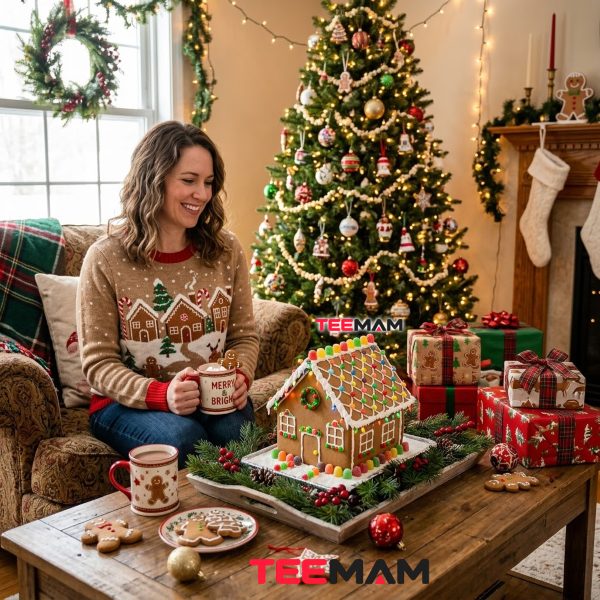
The connection between gingerbread houses and Christmas now extends well beyond the kitchen table. The gingerbread house has become a recognizable holiday motif, appearing on ugly Christmas sweaters, matching family pajama sets, holiday T-shirts, baking aprons, tree ornaments, and wrapping paper. That spread isn’t a direct continuation of the historical baking tradition; it’s better understood as a separate, later development. The gingerbread house evolved from a food custom into a visual shorthand for the holiday itself, which explains why the same candy-cane-and-icing look works just as naturally on a sweater or a mug as it does on an actual cookie.
7 Facts About Gingerbread Houses and Christmas
- Gingerbread houses did not originate with Hansel and Gretel; they predate the Brothers Grimm’s 1812 publication by roughly two centuries.
- The tale of Hansel and Gretel helped popularize the gingerbread house image; it didn’t invent it.
- German Lebkuchen, especially from Nuremberg, is one of the most historically documented forms of gingerbread in the world.
- Nürnberger Lebkuchen has carried EU Protected Geographical Indication status since 1996.
- The Nuremberg Christkindlesmarkt, one of Germany’s oldest Christmas markets, was first documented in 1628.
- German-speaking immigrants helped carry broader Christmas and baking traditions to Pennsylvania from the 1700s onward, creating an important cultural setting for later American gingerbread traditions.
- Queen Elizabeth I is often credited with popularizing decorated gingerbread figures shaped like people, a separate tradition from gingerbread houses, which developed independently in Germany.
How Gingerbread Houses Became Part of Christmas Memories
Most gingerbread houses built in actual homes are a little lopsided. A wall slides. The roof needs extra icing to stay put. Someone’s sibling eats a window before the thing is even finished. None of that seems to bother anyone in the moment. If anything, the imperfect ones tend to be the ones people remember fondly years later, especially once the photos come out and someone starts writing the year’s best Christmas quotes and captions to go with them.
The Sweet Tradition Behind Every Gingerbread House
There’s no single inventor of the gingerbread house and no single year it “started.” It’s a tradition built out of German baking guilds, a witch’s candy cottage in a 19th-century fairy tale, immigrant families carrying customs across an ocean, and generations of people deciding it was worth doing again the next year. What ties gingerbread houses and Christmas together isn’t one historical fact; it’s the accumulation of all of them, plus the family evenings that keep the tradition going long after anyone remembers where it started, right alongside other holiday customs families revisit each year, like the ones you’ll find if you learn the Twelve Days tradition. The value was never really in a perfectly straight roofline. It’s in doing it together.
Questions People Ask About Gingerbread Houses at Christmas
How did gingerbread houses become a Christmas tradition? The connection between gingerbread houses and Christmas built up gradually rather than starting from one event. German bakers made gingerbread for fairs and festivals for centuries; over time, winter spices, holiday markets like Nuremberg’s Christkindlesmarkt, and family gatherings pulled the tradition toward Christmas specifically.
Did Hansel and Gretel inspire gingerbread houses? Not quite in the way people assume. Gingerbread houses already existed in German-speaking Europe before the Brothers Grimm published their version of the tale in 1812. The story is widely credited with popularizing the image, not inventing it, a distinction worth keeping straight.
When did gingerbread houses become popular? The craft of building houses out of gingerbread appears to date to around the 1600s in Germany, making it an established tradition well before the 19th century, when the Grimm fairy tale gave it a much wider cultural spotlight.
Did gingerbread houses originate in Germany? The tradition is most strongly associated with German-speaking Europe, particularly regions with strong gingerbread-baking guilds like Nuremberg. Exact origins are hard to date precisely, but the German connection is well documented across multiple historical sources.
What does a gingerbread house symbolize? There’s no single official meaning, but families commonly connect it to togetherness, creativity, and holiday abundance. These are cultural associations that developed over time rather than a fixed symbolic meaning from any historical source.
Why do families decorate gingerbread houses at Christmas? Mostly because it’s a low-stakes, shared activity that works for a wide age range. It doesn’t require any real skill to enjoy, it fills an evening with music and hot chocolate, and it produces something to photograph and remember. For many families, the tradition of building gingerbread houses and Christmas itself have become hard to separate.

Hi, I’m Olivia Bennett, a fashion and lifestyle writer at TeeMam with 6 years of experience creating content about fashion, outfits, and lifestyle trends. I enjoy sharing practical style ideas for everyday wear, game days, holidays, and special occasions, helping readers find looks that feel comfortable, fun, and uniquely their own.