Halloween vs. Día de los Muertos: How Mexico Celebrates
Every year, right around the time the weather turns, a familiar question comes up: is Día de los Muertos just Mexico’s version of Halloween? The two holidays sit back to back on the calendar, October 31 bleeding into November 1 and 2, and from a distance the overlap looks obvious, skeletons everywhere, kids in costumes, candy changing hands.
Look closer and the picture splits into two different stories. Halloween and Día de los Muertos overlap on the calendar, but they are not the same celebration. One grew out of Celtic harvest rites and turned into a night of costumes and candy. The other is a centuries-old Mexican tradition of welcoming deceased loved ones home for a few days each year. This guide covers where each holiday comes from, how Mexico Halloween traditions show up in daily life, what belongs specifically to Día de los Muertos, and how the two now share a season without becoming the same thing. For more on the American side of the holiday, the history behind Halloween is worth a look first.
Is Día de los Muertos the Mexican Version of Halloween?
No. Día de los Muertos is not simply the Mexican version of Halloween, even though the two get lumped together constantly. Understanding Mexico Halloween traditions on their own terms, separate from the assumption that they’re a costume-store version of Día de los Muertos, makes the distinction easier to hold onto.
- Purpose. Halloween centers on spooky entertainment, costumes, parties, trick-or-treating. Día de los Muertos centers on remembrance: families set out photographs, food, and belongings to welcome back relatives who have died.
- Timing. Halloween happens on October 31. Día de los Muertos is observed primarily November 1 and 2, though ofrendas (home altars) are often assembled days ahead.
- Tradition. Día de los Muertos blends Indigenous Mexican ritual practice with Catholic feast days introduced after Spanish colonization, a fusion Halloween doesn’t share.
Practices still shift by region, generation, and household, which is part of why flattening the two holidays into one misses so much.
Halloween vs. Día de los Muertos: Key Differences at a Glance
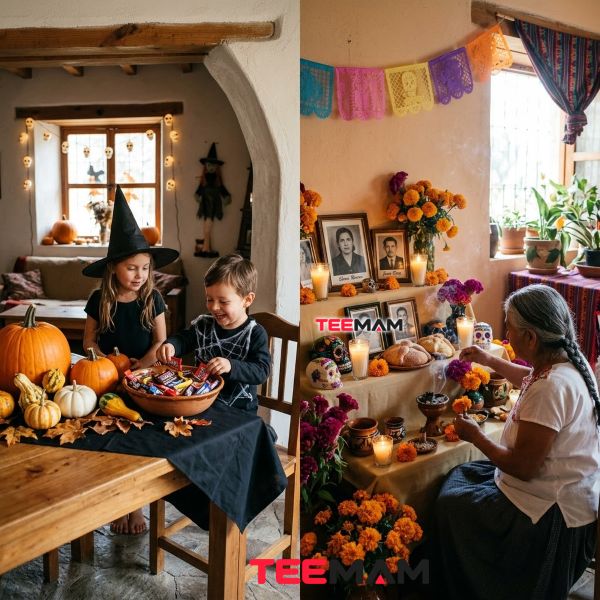
| Feature | Halloween | Día de los Muertos |
|---|---|---|
| Main date | October 31 | November 1–2 |
| Cultural roots | Celtic Samhain, later shaped by Christian and Western customs | Indigenous Mexican tradition combined with Catholic influence |
| Main purpose | Costumes, spooky entertainment | Honoring deceased loved ones |
| Emotional tone | Playful, mischievous | Reflective, affectionate, colorful |
| Common symbols | Pumpkins, ghosts, witches, bats | Ofrendas, cempasúchil, calaveras, papel picado |
| Typical activities | Trick-or-treating, costume parties | Building ofrendas, visiting graves, sharing meals |
| Signature food | Candy, seasonal treats | Pan de muerto, the deceased’s favorite dishes |
| Relationship with death | Fictional, supernatural imagery | Memory, family, continuity |
Read any row on its own and it holds up, these are two different relationships with the same time of year, not two shades of the same holiday. The table also shows why Mexico Halloween traditions and Día de los Muertos customs can sit side by side on the same street without competing for the same emotional ground.
Where Do These Two Celebrations Come From?
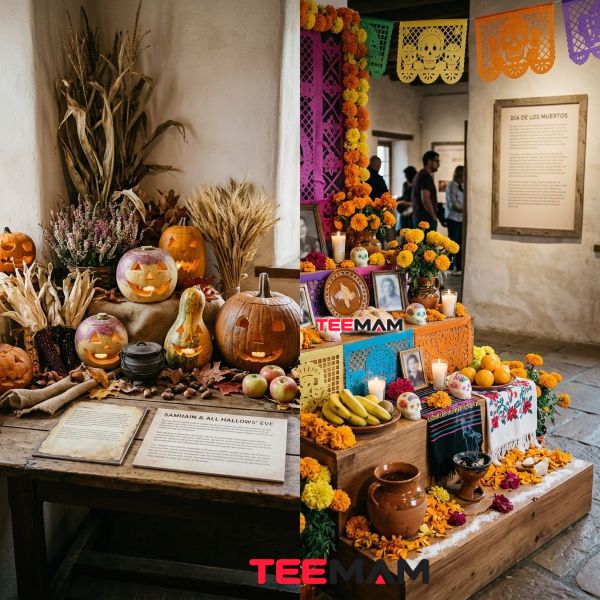
Halloween traces back to Samhain, a Celtic festival marking the end of harvest and the start of winter, when the boundary between the living and the dead was believed to thin. Christian missionaries folded the observance into All Hallows’ Eve, and what eventually reached the United States through Irish and Scottish immigration was reshaped over centuries into the costume-and-candy holiday recognized today.
Día de los Muertos has a separate lineage. UNESCO inscribed the tradition on its Representative List of the Intangible Cultural Heritage of Humanity in 2008, describing it as a practice of Indigenous Mexican communities in which families lay flower petals, candles, and offerings along the path from the cemetery to the home to guide deceased relatives back for a visit, in a fusion of pre-Hispanic religious rites and Catholic feast days that Halloween never went through. Its expression still varies, from the multi-tiered altars of central Mexico to the cemetery vigils common in the Yucatán.
What Are the Main Mexico Halloween Traditions?
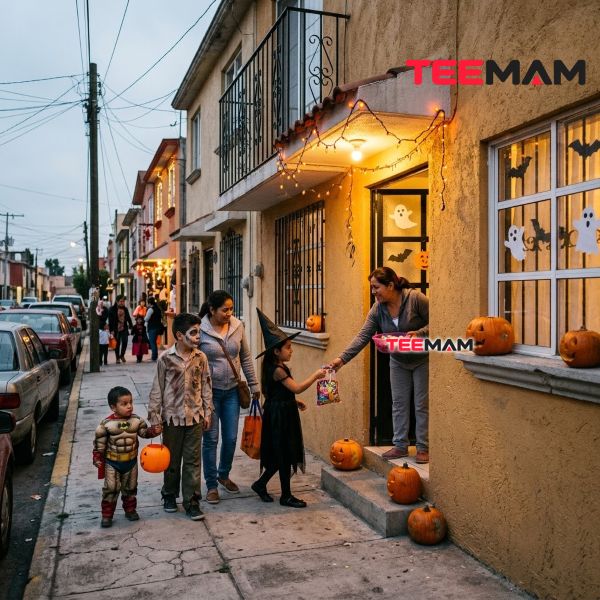
Do people in Mexico celebrate Halloween on October 31? Yes, in many households, though not uniformly. Halloween shows up widely across the country, especially in cities and in northern states near the U.S. border, but its popularity still depends on region, age group, and family.
Where it’s celebrated, Mexico Halloween traditions look fairly familiar: children dress up, neighborhoods hand out candy, and parties lean on costumes borrowed from American pop culture. What makes the picture distinctly Mexican is what happens alongside it. The clearest example is pedir calaverita, the local twist on trick-or-treating, where children go door to door asking “¿Me da mi calaverita?” Mexico’s Instituto Nacional de Antropología e Historia traces the phrase to the eighteenth century, when families of modest means asked wealthier neighbors for leftovers from elaborate Día de los Muertos altars. In 2025, with the two dates falling on a Friday and Saturday, many families simply let children go out both nights, and homes often mix the two aesthetics outright, paper spiderwebs and pumpkins beside marigolds and papel picado on the same porch. Halloween tends to arrive in Mexico as an addition to the season, not a replacement for anything already there.
How Día de los Muertos Is Celebrated in Mexico
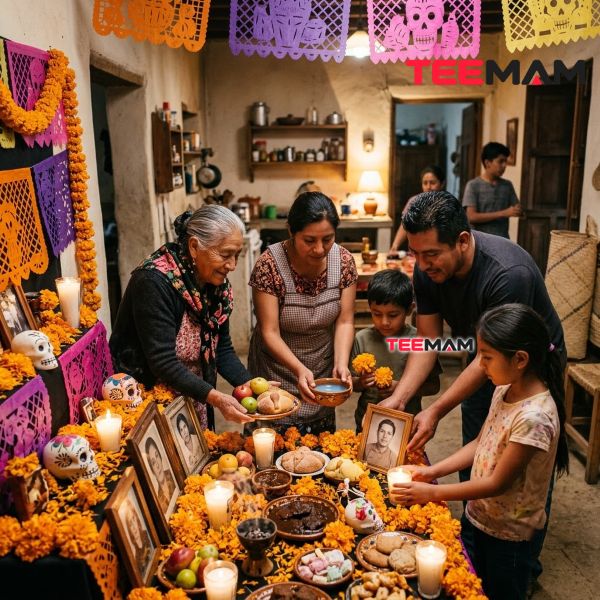
The ofrenda sits at the center of the observance. According to Mexico’s Instituto Nacional de Antropología e Historia, a typical altar brings together a portrait of the person being honored, candles to guide the soul home, food and water to ease the journey, cempasúchil flowers marking a path from the entrance of the home to the altar, copal incense, papel picado, sugar skulls, and pan de muerto, though these core elements still vary in detail by region. The marigold’s bright orange petals are scattered from the street into the house, forming a trail believed to predate the modern holiday by centuries.
In many communities, the tradition extends into the cemetery itself: families clean and decorate graves and sit with food and music through the evening, treating the visit as time spent with one specific person rather than a generic tribute to death. That specificity is what keeps the tradition personal rather than folkloric.
Why Are Sugar Skulls and Calaveras So Colorful?
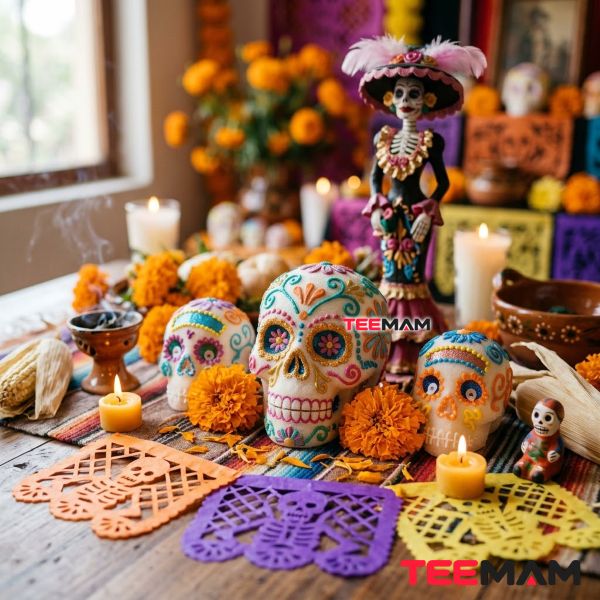
Calaveras, the decorated skull imagery tied to the holiday, aren’t meant to frighten. Sugar skulls are one recognizable form, hand-decorated with icing and bright patterns, often personalized with a name across the forehead.
What does La Catrina represent? She began as a satirical illustration by artist José Guadalupe Posada, a skeletal society woman poking fun at Mexicans who imitated European fashion while forgetting their own roots. Diego Rivera later gave her a name, and she’s since become one of the most recognizable images tied to Día de los Muertos, though how people read her, as satire, elegance, or a symbol of equality in death, still varies by person and region.
From Costumes to Cultural Appreciation: What Should You Wear?
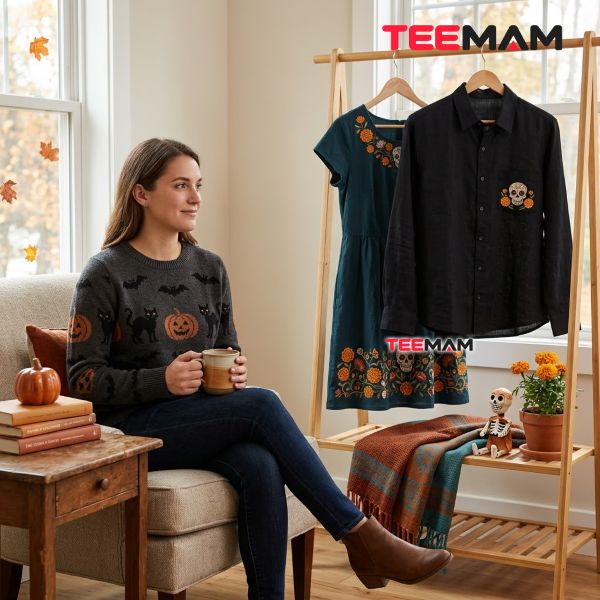
Halloween apparel and Día de los Muertos-inspired imagery aren’t interchangeable. A witch hat or a pumpkin sweater is meant to be playful. Calavera artwork, sugar-skull face paint, or La Catrina-inspired designs come out of a specific cultural and spiritual tradition, so wearing them well means favoring pieces presented as tribute rather than costume-store caricature, and taking a moment to learn the story behind a symbol before putting it on.
A Respectful Way to Incorporate the Season Into Your Wardrobe
None of this rules out having fun with the season. Halloween apparel for October 31 parties, trick-or-treat nights, and general spooky-season styling is its own category, separate from anything tied to Día de los Muertos. At TeeMam, we see seasonal apparel as a way to express personal style while encouraging readers to understand the traditions behind the imagery they wear. If you’re putting together an October wardrobe, our Halloween apparel for spooky season collection covers costume parties and trick-or-treat nights without wandering into imagery from a different tradition.
Halloween and Día de los Muertos Can Coexist in Mexico
Halloween’s growing visibility in Mexico doesn’t mean Día de los Muertos is being crowded out. Coverage of the 2025 season, including El Informador’s reporting, showed exactly that pattern: children asking for candy on October 31 under the banner of Halloween, then doing the same thing again on November 1 as pedir calaverita. Decorations blend pumpkins and marigolds on the same street, and proximity to the United States has pushed Halloween further into Mexican calendars, but the remembrance-centered core of Día de los Muertos has stayed intact alongside it.
Common Misconceptions About Mexico’s Halloween Season
“Día de los Muertos is Mexican Halloween.” Different histories, different purposes: one is entertainment, the other remembrance.
“Everyone in Mexico celebrates Halloween.” It’s widespread, especially in cities and northern states, but participation still depends on region and household.
“Día de los Muertos is a sad version of Halloween.” Its focus is connection, not sorrow; families treat it as a joyful reunion with people they’ve lost.
“All Día de los Muertos traditions look the same across Mexico.” Altar styles, foods, and flowers shift from state to state.
What Should Readers Remember About These Two Holidays?
Three things are worth keeping. Halloween and Día de los Muertos are distinct traditions with separate origins and purposes. Mexico can take part in Mexico Halloween traditions on October 31 while keeping Día de los Muertos fully intact days later. And understanding what a symbol like an ofrenda, a marigold, or a Catrina design actually represents makes it far easier to enjoy the season with genuine respect.
Questions About Halloween and Día de los Muertos in Mexico
Do they celebrate Halloween in Mexico?
Yes, particularly in cities and northern states close to the U.S. border, where children dress up and go door to door asking “¿me da mi calaverita?” Participation varies by region, and in many communities the custom continues into November 1 as part of Día de los Muertos.
What are the main Mexico Halloween traditions?
Costumes, trick-or-treating known locally as pedir calaverita, neighborhood candy handouts, and decorations that mix Halloween imagery like pumpkins with Día de los Muertos elements like marigolds on the same porch.
Is Día de los Muertos the same as Halloween?
No. Día de los Muertos honors deceased loved ones through remembrance and family connection on November 1 and 2, while Halloween is an October 31 celebration centered on costumes and spooky entertainment.
What is the difference between Halloween and Día de los Muertos?
Halloween is a single night of costumes and candy rooted in Celtic and Christian tradition. Día de los Muertos is a multi-day Mexican observance rooted in Indigenous and Catholic practice, built around ofrendas honoring specific deceased relatives.
What are common Día de los Muertos symbols?
Ofrendas, cempasúchil marigolds, candles, papel picado, calaveras, photographs of the deceased, favorite foods of loved ones, and pan de muerto, though exact combinations vary by region.
Why are sugar skulls used for Día de los Muertos?
They’re a decorated, personalized form of calavera imagery placed on ofrendas, often bearing the name of the person being honored, and represent affection and remembrance rather than fear.
Can you celebrate Halloween and Día de los Muertos?
Yes. Many Mexican families do exactly that, treating October 31 as a night for costumes and candy and November 1 and 2 as time for remembrance, without merging the two into a single event.
What should you know before wearing Día de los Muertos-inspired designs?
Treat the imagery as tribute rather than costume, and take a moment to learn what an ofrenda, a marigold, or a Catrina design actually represents before choosing a piece.

Hi, I’m Olivia Bennett, a fashion and lifestyle writer at TeeMam with 6 years of experience creating content about fashion, outfits, and lifestyle trends. I enjoy sharing practical style ideas for everyday wear, game days, holidays, and special occasions, helping readers find looks that feel comfortable, fun, and uniquely their own.