Deion Sanders and the Dallas Cowboys: A Legendary Partnership
Key takeaways
- Deion Sanders signed with Dallas on September 9, 1995, seven months after winning Super Bowl XXIX with the San Francisco 49ers.
- The deal, seven years and $35 million with a $12.999 million signing bonus, made him the highest-paid defensive player in NFL history at the time.
- An ankle procedure delayed his Cowboys debut until Week 9. He still finished the season with 26 tackles and two interceptions in nine games.
- Dallas beat the Pittsburgh Steelers 27-17 in Super Bowl XXX, giving Sanders back-to-back championships with two different teams.
- His “Prime Time” persona and No. 21 jersey remain shorthand for the Cowboys’ mid-1990s identity, on and off the field.
Every detail of the Deion Sanders Dallas Cowboys signing traces back to one Monday night. Dallas had just demolished the New York Giants 35-0 to open the 1995 season when starting cornerback Kevin Smith went down with a torn Achilles, ending his year on the spot. Nine days later, Sanders, fresh off a Defensive Player of the Year season and a Super Bowl ring with the 49ers, was a Cowboy. What follows is the real story behind that move: the injury that forced it, the salary-cap math that made it possible, and the championship season it produced.
Why Did Deion Sanders Join the Dallas Cowboys in 1995?
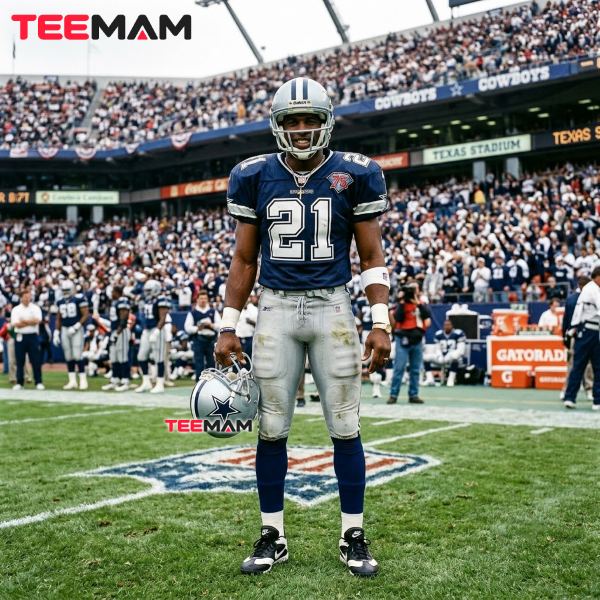
An Injury Turned a Luxury Into a Need
Dallas and San Francisco had met in the NFC Championship Game in three straight seasons, from 1992 through 1994, with Dallas winning two of the three meetings. Sanders had been on the winning side of that lone San Francisco victory, helping the 49ers beat Dallas in the 1994 title game before going on to win Super Bowl XXIX. So when Kevin Smith tore his Achilles in Dallas’ Week 1 rout of the Giants, head coach Barry Switzer didn’t hide his reaction. “I want to tell Jerry, ‘Hey, it’s serious now,'” Switzer told reporters afterward. “Get Deion. We need Deion now.”
Jerry Jones Wanted an Elite Cornerback
Dallas didn’t need a rebuild. It needed a cornerback capable of taking a top receiver out of the game on his own, freeing the rest of the secondary, including Larry Brown and Darren Woodson, to play more aggressively elsewhere on the field. Sanders offered that kind of coverage, plus the ability to contribute at receiver and on special teams. He was joining a roster that already featured Troy Aikman, Emmitt Smith and Michael Irvin, not rescuing one that needed saving. It’s one of the signature moves in the broader Dallas Cowboys history and legacy, a roster addition made mid-season rather than in a normal offseason.
The 1995 Contract and the Salary-Cap Puzzle
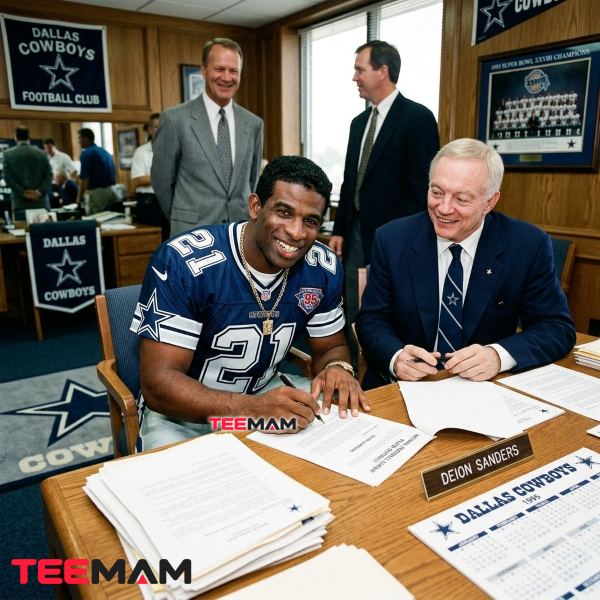
On September 9, 1995, Sanders signed a seven-year, $35 million contract with a $12.999 million signing bonus (Jones reportedly avoided a round $13 million out of superstition), making Sanders the highest-paid defensive player in league history at that point. He later said the Oakland Raiders had actually offered more money, but he chose Dallas for a bigger role on offense, a shot at a second straight title, and his friendship with Irvin.
The contract becomes more interesting once you look at the Cowboys’ cap sheet from that week. According to contemporaneous reporting from The Washington Post, Dallas had just $155,000 in space left under the NFL’s $37.1 million salary cap the day before the deal closed. Getting there required creativity: Aikman restructured his own contract that week to help create the cap room Dallas needed for Sanders’ deal. The Deion Sanders Dallas Cowboys contract wasn’t just a big check. It was a cap-management exercise that took the whole locker room’s buy-in.
What Did Sanders Actually Add to the Cowboys?
One of the defining features of the Deion Sanders Dallas Cowboys era was his ability to handle difficult man-coverage assignments without constant safety help over the top. That’s a real, if hard-to-quantify, form of value. Sanders finished his nine-game 1995 regular season with two interceptions. That number alone doesn’t capture the value Dallas expected from a cornerback capable of handling the league’s toughest coverage assignments. The safer conclusion is that Dallas valued what Sanders could do in coverage more than his interception total suggests, which let Brown and Woodson play with more freedom elsewhere in the secondary.
Deion Sanders Cowboys Stats: What Happened in 1995?
| Sanders in 1995 | Result |
|---|---|
| Games played | 9 |
| Starts | 9 |
| Total tackles | 26 |
| Interceptions | 2 |
| Cowboys regular-season record | 12-4 |
| Super Bowl XXX result | Dallas 27, Pittsburgh 17 |
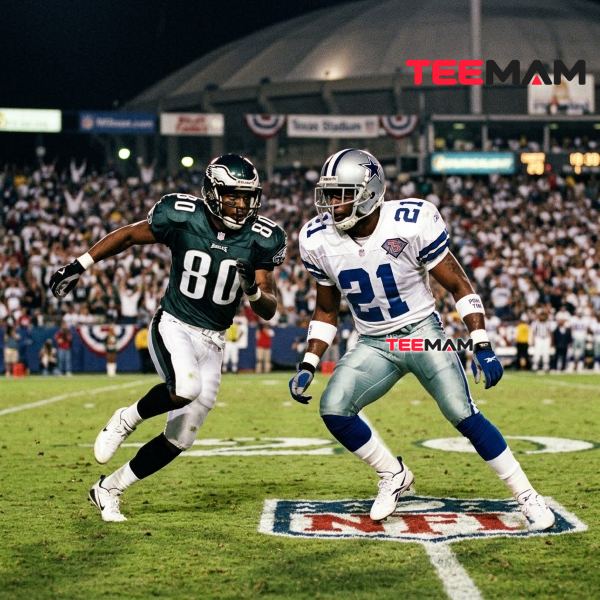
A proper Deion Sanders Dallas Cowboys stats breakdown has to start with what limited his workload that year. He injured his left ankle that spring while playing baseball for the Cincinnati Reds, and arthroscopic surgery delayed his Cowboys debut until Week 9. He made his Cowboys debut against the Atlanta Falcons, his former team, in a 28-13 Dallas win, then started every remaining game through the playoffs. NFL.com’s official statistics confirm the nine games, nine starts and two interceptions for that season. Dallas had pursued Sanders for his ability to handle difficult coverage assignments when the games mattered most, which is why his availability for the stretch run and postseason carried more weight than the raw interception count.
Super Bowl XXX: The Championship That Defined the Partnership
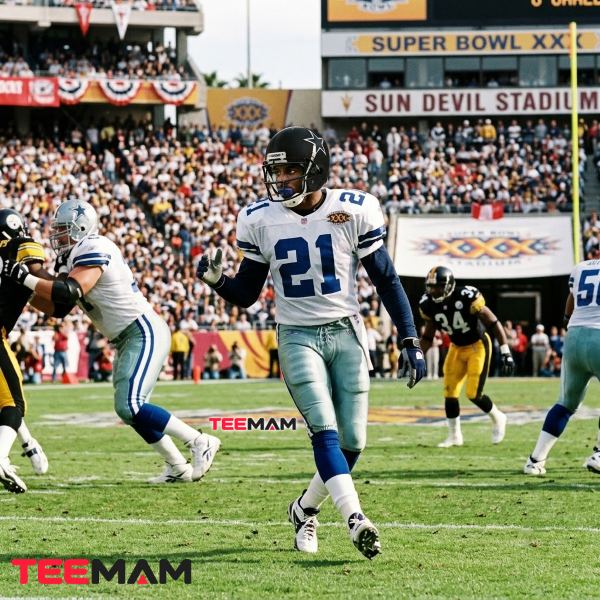
On January 28, 1996, at Sun Devil Stadium in Tempe, Arizona, Dallas beat the Pittsburgh Steelers 27-17 to win its third Super Bowl in four seasons and fifth overall. Cornerback Larry Brown became the first defensive back named Super Bowl MVP, intercepting Neil O’Donnell twice in the second half and setting up two Dallas touchdowns. Sanders didn’t record an interception in the game, but he caught a 47-yard pass from Aikman on offense that helped set up an early Dallas score, according to Pro Football Reference’s play-by-play data.
Sanders spent the game handling Pittsburgh’s outside receivers as part of a Dallas defense that held the Steelers to 17 points and forced three O’Donnell interceptions overall. He wasn’t the game’s headline performer, Brown owns that distinction, but the Deion Sanders Dallas Cowboys partnership had now produced a championship in Sanders’ first season with the franchise, adding another chapter to his rivalry with San Francisco.
The Prime Time Identity: How No. 21 Became Part of Cowboys Culture
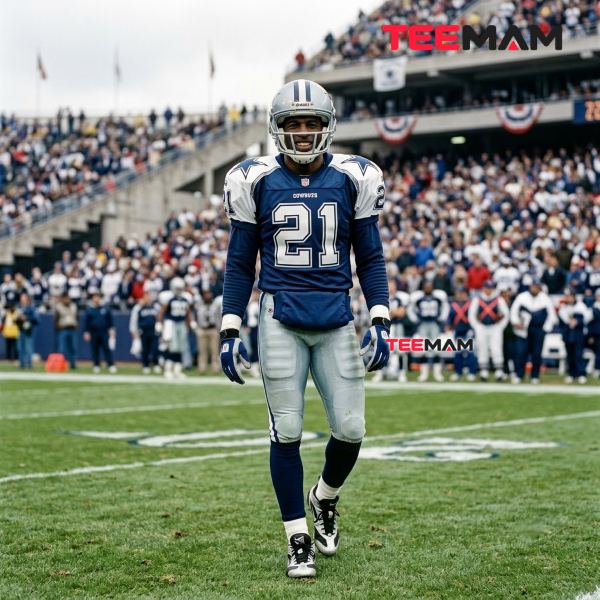
Sanders brought a level of celebrity to Dallas that went beyond the box score. He’d already built the “Prime Time” persona in Atlanta and San Francisco, and Dallas gave that persona an even bigger national stage. That combination of elite coverage and celebrity helped make No. 21 one of the most recognizable numbers in the Dallas Cowboys jersey numbers guide.
Why Sanders’ Cowboys Legacy Still Resonates
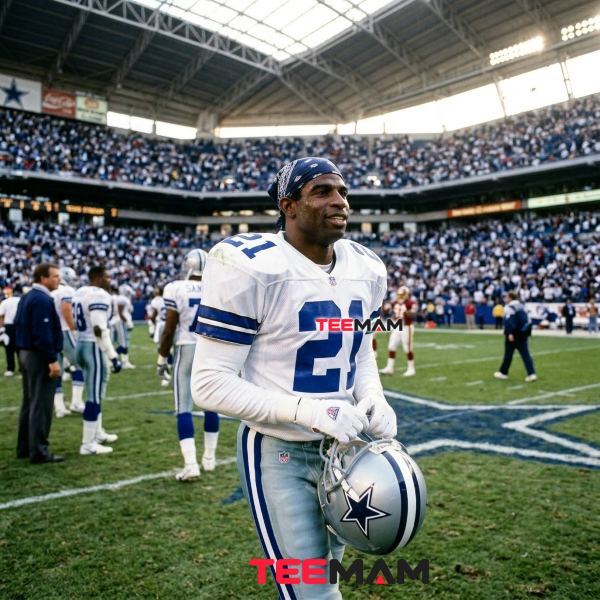
Sanders played five seasons in Dallas, 1995 through 1999, shorter than most of his teammates’ tenures, before the Cowboys released him in 2000 after a move tied to salary-cap consequences from his contract. That brief stretch, though, packed in a championship, a record contract and a persona that still shapes how people picture 1990s Cowboys football. He’s often named among the greatest Dallas Cowboys players, not for longevity but for how much he accomplished in a short window. The Deion Sanders Dallas Cowboys era stands out precisely because it compressed so much history into so little time.
At TeeMam, we build fan apparel around moments like this one, where the history behind a number or a season shapes the design rather than getting reduced to a name on a shirt.
How Sanders Fits Into the Larger Cowboys Story
The wider Deion Sanders Dallas Cowboys story sits inside a larger roster built over several years, not around one player’s arrival. The 1990s Cowboys were built on a homegrown offensive core in Aikman, Emmitt Smith and Irvin, paired with a defense that kept adding difference-makers like Woodson, Brown and Charles Haley. Sanders arrived as one of the last high-profile pieces of that roster, not as the player who built it from scratch.
Questions Fans Still Ask About Deion Sanders in Dallas
When did Deion Sanders join the Dallas Cowboys?
Sanders signed with Dallas on September 9, 1995, nine days after starting cornerback Kevin Smith suffered a season-ending Achilles injury. He’d won Super Bowl XXIX with the San Francisco 49ers the previous season.
Did Deion Sanders win a Super Bowl with the Cowboys?
Yes. Dallas defeated the Pittsburgh Steelers 27-17 in Super Bowl XXX on January 28, 1996, giving Sanders a championship in his first season with the franchise.
What number did Deion Sanders wear with Dallas?
Sanders wore No. 21, a number now closely associated with his Cowboys tenure and the “Prime Time” identity he built during the mid-1990s.
How many seasons did Deion Sanders play for the Cowboys?
Sanders played five seasons in Dallas, from 1995 through 1999, before the team released him in 2000 in a move tied to salary-cap consequences from his contract.
How many interceptions did Deion Sanders have for Dallas in 1995?
Sanders recorded two interceptions in nine regular-season games in 1995. He didn’t debut until Week 9 because of an offseason ankle procedure, which shortened his workload that year.
The Lasting Legacy of Deion Sanders in Dallas
More than 30 years later, Sanders’ Dallas chapter still gets talked about, not because of a long tenure but because of how much it packed into a short one: a record contract built around real salary-cap gymnastics, a championship in year one, and a personality that turned a great roster into must-watch television. That is what makes the Deion Sanders Dallas Cowboys chapter unusual: it was short, expensive and immediately successful.
Sources
- Deion Sanders career statistics — NFL.com
- Deion Sanders career profile and Hall of Fame bio — Pro Football Hall of Fame
- Deion Sanders’s career Super Bowl plays — Pro Football Reference
- Cowboys Pull Sanders Out of Their Cap — The Washington Post, September 18, 1995
- Why Deion Sanders “without a doubt” made the biggest free agency splash in Cowboys history — The Dallas Morning News
- Cowboys Humiliate Giants, 35-0 — Deseret News, September 5, 1995

Hi, I’m Olivia Bennett, a fashion and lifestyle writer at TeeMam with 6 years of experience creating content about fashion, outfits, and lifestyle trends. I enjoy sharing practical style ideas for everyday wear, game days, holidays, and special occasions, helping readers find looks that feel comfortable, fun, and uniquely their own.