America’s Sweethearts: Inside the Dallas Cowboys Cheerleaders Documentary
Netflix’s America’s Sweethearts Dallas Cowboys Cheerleaders follows the women competing for a spot on one of the most recognizable teams in American sports, tracking them from open auditions through training camp and into a full NFL season. Three seasons in, it has done something few sports documentaries manage: it turned a niche behind-the-scenes subject into a mainstream conversation about ambition, work, money, and identity.
Since its June 2024 premiere, the show has pulled viewers into a world of pre-dawn rehearsals, brutal final cuts, cheerleaders working second and third jobs, and a pay dispute that eventually made national headlines. Making the team turns out to be the easy part to explain on camera. The harder part, the one the cameras keep circling back to, is what happens once the glamour becomes a job: long rehearsals, public scrutiny, physical strain, and the possibility of not making the team again next year.
This guide breaks down what America’s Sweethearts: Dallas Cowboys Cheerleaders actually covers, who the standout cast members are, how tough the tryout process really is, what the cheerleaders get paid, why the uniform carries so much cultural weight, and where the most talked-about cheerleaders have ended up since the cameras stopped rolling.
| Season | Release date | Main focus |
|---|---|---|
| Season 1 | June 20, 2024 | Auditions, training camp, and first-year cast stories |
| Season 2 | June 18, 2025 | The 400 percent pay raise and veteran turnover |
| Season 3 | June 16, 2026 | 30 returning veterans, the first international tour, and rising public scrutiny |
What Is America’s Sweethearts Dallas Cowboys Cheerleaders About?
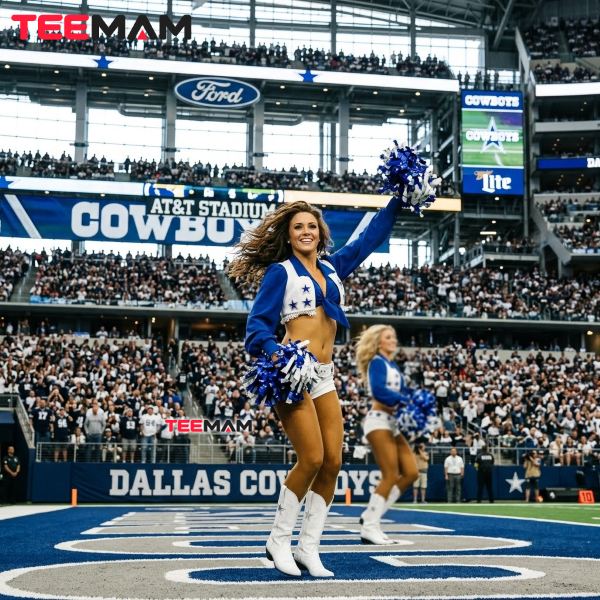
The documentary follows the people behind the DCC image
At its core, the show tracks the Dallas Cowboys Cheerleaders (DCC) selection process from open auditions through training camp cuts, then follows the finalized 36-woman squad across a full season of games, appearances, and choreography changes. Directed by Emmy winner Greg Whiteley, known for Cheer and Last Chance U, the series leans on the same observational style that made those shows work: long-take interviews, handheld camera in rehearsal rooms, and very little narration.
That approach separates it from a straightforward competition format. DCC Senior Director Kelli Finglass and Head Choreographer Judy Trammell sit at the center of nearly every episode, and the camera treats their judgment calls, who gets cut, who gets a second chance, as the real dramatic engine. Finglass danced for the Cowboys from 1984 to 1989, was hired as assistant director after retiring, and has run the program as director since 1991. Her history with the squad gives the series an authority a purely produced reality format would not have.
Why the Dallas Cowboys Cheerleaders are uniquely recognizable
DCC is not just another NFL cheer squad. Its national visibility, USO tours, annual calendar, and decades of television exposure have made it arguably the most recognized cheerleading organization in American sports, predating most current NFL cheer programs by years. America’s Sweethearts is effectively a successor in subject matter to Dallas Cowboys Cheerleaders: Making the Team, which aired on CMT from 2006 to 2021, but the two series take a different documentary approach: Making the Team leaned into competition-format polish, while America’s Sweethearts trades that for something rawer and more personal.
The Cheerleaders Who Became the Face of the Series
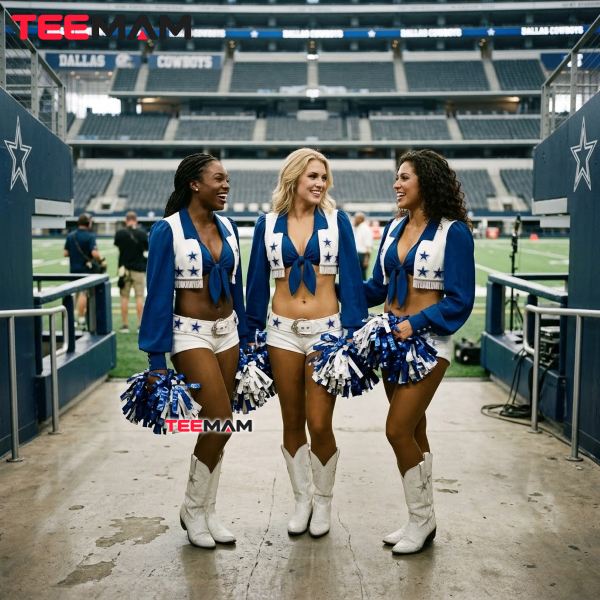
The main cast has shifted across all three seasons because a significant share of veterans do not return each year. A few names have carried the show from the start.
| Cheerleader | Role in the series | Status as of Season 3 |
|---|---|---|
| Victoria Kalina | Season 1 breakout, fourth-year veteran | Left DCC after Season 1; training for the Radio City Rockettes |
| Reece Weaver | Rookie-to-veteran arc across all three seasons | Retired from DCC after Season 3; Broadway debut in Chicago |
| Kelcey Wetterberg | Five-year veteran and group leader | Retired after the 2023 season; works as a pediatric nurse |
Victoria Kalina was one of Season 1’s breakout figures, a fourth-year veteran whose mother, Tina Kalina, cheered for the Cowboys in the 1980s. Victoria left the squad after Season 1 and appeared in Season 2 pursuing a new goal in New York City: a spot with the Radio City Rockettes.
Reece Weaver joined DCC in 2023 as a rookie and quickly became one of the most-followed cast members, known for her classical dance training and her openness on camera about balancing a full-time job with the demands of the squad. She appeared in all three seasons and announced her retirement in the Season 3 finale after dealing with a high ankle sprain and long-term hip pain during her final year.
Kelcey Wetterberg was a five-year veteran and group leader who anchored much of Season 1’s emotional weight, largely because she worked full time as a pediatric nurse while treating DCC as what she called a second job. She did not try out for the 2024 to 2025 team, retiring after the 2023 season, which makes Season 1 her only appearance on the show.
Around these three, the series builds out its cast each season with a rotating mix of veterans, including Kelly Villares and Megan McElaney, and a fresh wave of rookies fighting for one of the limited open spots. The show does not try to profile all 36 cheerleaders in depth. It selects a handful of stories, some driven by competition and others by personal circumstances, to carry each season’s narrative.
How Season 3 Raises the Stakes
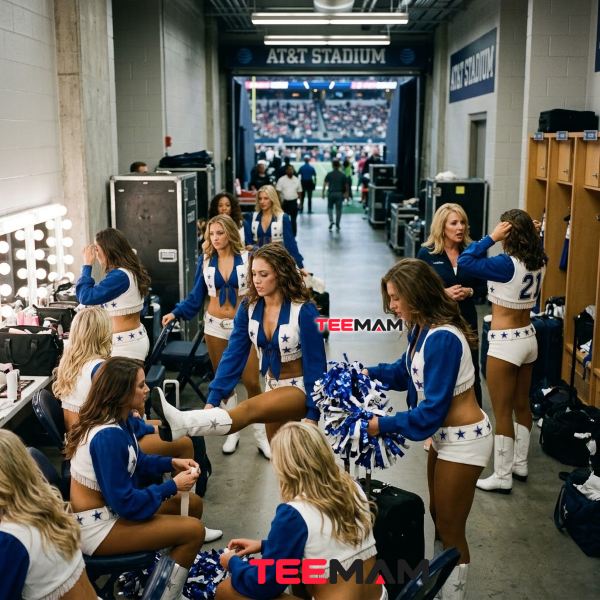
Season 3, which released all seven episodes on Netflix on June 16, 2026, changes the balance of the competition. Thirty veterans returned to auditions that year, leaving only six spots open for newcomers on the 36-member squad, according to Netflix’s own Season 3 guide. For rookies, that means breaking into an unusually experienced roster. For returning cheerleaders, it means proving that past success on the team is not enough to guarantee a spot.
The same guide points to the squad’s first international tour, marquee appearances, and rapidly increasing social media visibility that season, paired with a level of public scrutiny the earlier seasons did not have to contend with. The documentary is no longer only about whether someone can make the squad. It is increasingly about what happens once making the squad turns someone into a public figure with a following of her own.
How Hard Is the Dallas Cowboys Cheerleaders Tryout Process?
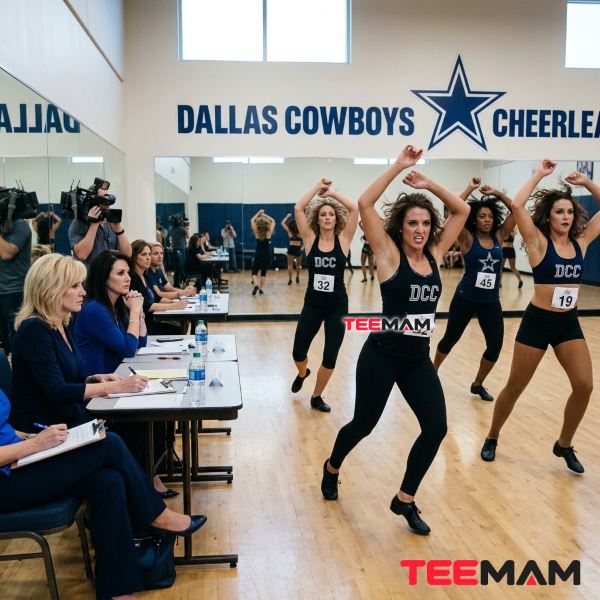
Making the Dallas Cowboys Cheerleaders squad is widely regarded as one of the toughest tryouts in professional dance and sports entertainment. Candidates need elite technical skill, physical conditioning, on-camera poise, and the ability to perform under intense scrutiny, all within a multi-stage audition process that eliminates the large majority of hopefuls before training camp even begins.
More than learning choreography
The judging panel is not just scoring memorized routines. Candidates are evaluated on:
- Technical dance ability, including precision and retention under pressure
- Physical conditioning and stamina across long rehearsal days
- Stage presence and the specific performance quality DCC looks for
- Appearance and presentation standards set by the organization
- Composure and consistency when nerves are visibly working against a candidate
From audition to training camp
The path runs in a fairly consistent sequence each season: open auditions draw hundreds of hopefuls, callbacks narrow that group, training camp puts survivors through weeks of grueling rehearsal and evaluation, and a final round of cuts, often the show’s most emotional beat, sets the 36-woman roster.
Why getting selected is only the beginning
Making the team does not end the pressure. Cheerleaders are expected to maintain performance standards through a full NFL season of rehearsals, game-day routines, and public appearances, all while competing internally for featured spots and group leader roles. Only 23 of 36 veterans from the 2023 to 2024 season returned to try out for Season 2, and the turnover looked similar heading into Season 3, when 30 of 36 veterans came back for a squad with just six rookie openings, both signs of how much churn the squad experiences even among cheerleaders who already made the team once.
The Money Question: How Much Do Dallas Cowboys Cheerleaders Make?
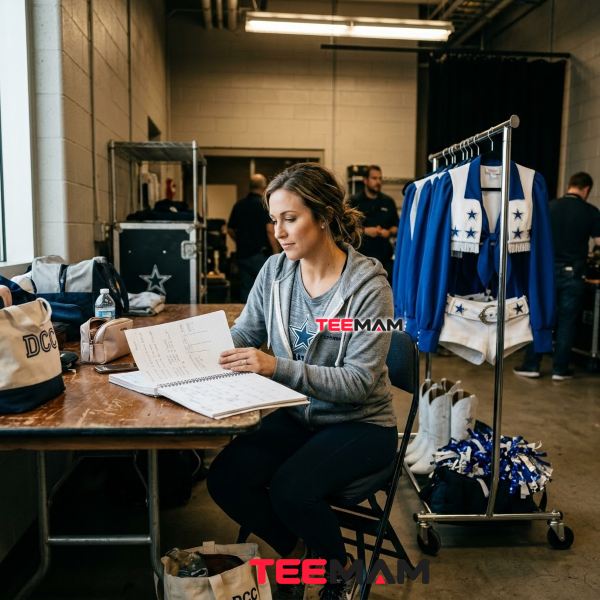
Dallas Cowboys Cheerleaders received an approximately 400 percent pay increase for the 2025 season, a figure revealed on Season 2 of the Netflix series and independently confirmed by ABC News’ report on the raise. Cheerleaders speaking on the show and in follow-up interviews have said the increase could push veteran hourly pay above $75, up from roughly $15 the year before, though the Cowboys organization has not published an official salary schedule confirming an exact figure.
Why DCC pay became a major talking point
The raise did not come out of nowhere. In 2018, former cheerleader Erica Wilkins sued the organization over pay; at the time she said she earned $7 an hour plus a flat $200 per game. That case settled in 2019, doubling game-day pay to $400. The 2025 increase followed that earlier settlement rather than building directly on top of it as a single cumulative jump. Four-year veteran Megan McElaney described the new raise on camera, in Season 2’s seventh episode “Saturn Returns,” as “life-changing.”
What the documentary reveals about the economics of cheerleading
Season 1 spent real time on cheerleaders juggling full-time jobs, nursing shifts, marketing work, and florist jobs, all alongside demanding DCC commitments that regularly ran past midnight. Kat Puryear, a former cheerleader featured on the show, once compared her DCC earnings to a substitute teacher’s salary. That context matters, because it reframes the raise less as a bonus and more as a correction. Fox Business reporting has estimated that the DCC brand contributes tens of millions of dollars in value to the Cowboys organization, a gap worth noting since it is part of why the pay story drew so much attention once viewers actually saw the hours cheerleaders were putting in.
The bigger picture
The pay number is memorable, but the larger story is the mismatch between visibility and compensation. DCC performers help turn the Cowboys brand into a weekly spectacle, yet for years many of them balanced that highly visible role with a second or third job just to make rent. That contradiction is what makes this salary story more interesting than a simple question of whether $15 or $75 an hour counts as fair. For a deeper breakdown of exactly how DCC compensation has evolved and what the role involves day to day, Dallas Cowboys Cheerleaders pay and role covers it in more detail.
Why the DCC Uniform Matters More Than It Looks
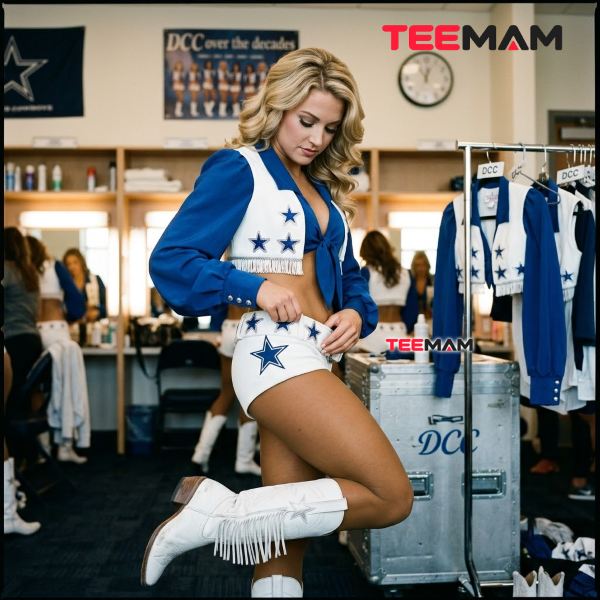
The visual language of the uniform
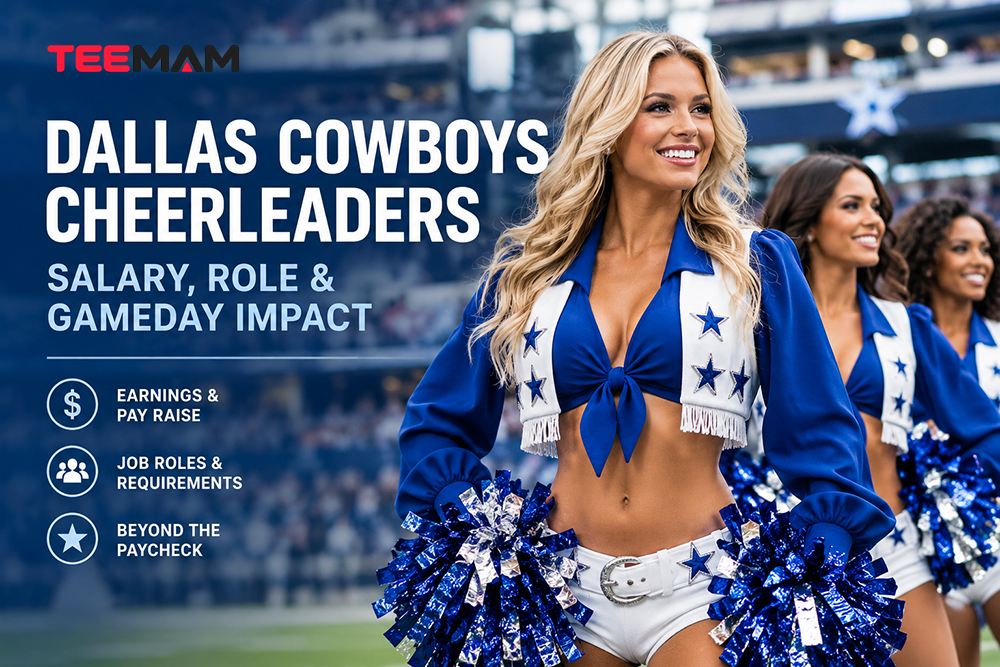
The white vest, blue star, fringe, and white boots were designed in 1972 through a collaboration between DCC director Dee Brock, Cowboys general manager Tex Schramm, and Dallas designer Paula Van Wagoner, whose work produced the blue-and-white uniform that became central to the squad’s identity. The redesign was paired with more demanding choreography and helped transform the squad from a traditional sideline attraction into a nationally recognized entertainment brand. A copy of Van Wagoner’s original sketch now sits in the Smithsonian’s National Museum of American History, which describes the signature uniform as a closely guarded trademark rather than a static costume.
From sideline costume to American sports icon
That consistency is the point. Every synchronized routine reinforces the same silhouette, which is part of why DCC reads less like 36 individual performers and more like one collective symbol. The signature uniform has remained closely protected as a trademark for decades, helping preserve one of the most recognizable visual identities in American sports.
Why fans recreate the feeling, not the exact uniform
Fans rarely reproduce the DCC uniform literally. What they borrow is the visual vocabulary: the star, Cowboys blue, Western-inspired details, retro graphics, and the sense that game-day clothing should look immediately recognizable from across a stadium. That is where fan style around the team actually lives, separate from the official uniform itself.
Inside Dallas Cowboys Culture: What the Series Reveals
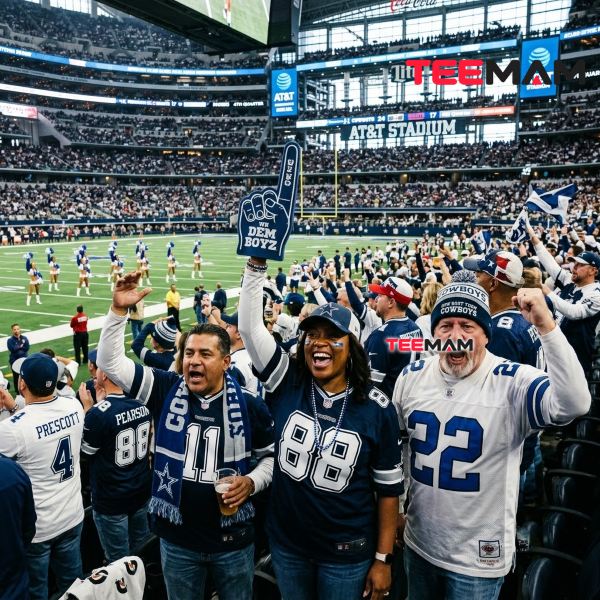
The Cowboys have long been marketed as “America’s Team,” and the branding has held for decades because the organization treats game day as full spectacle, not just football. Cheerleading fits into that machine deliberately: stadium entertainment, brand mythology, and a level of public visibility most NFL cheer programs never approach.
The series makes that machinery visible. A DCC performance is not presented as a break between football plays; it is part of the Cowboys’ larger game-day production, with choreography, appearances, branding, and social media attention all feeding the same spectacle. DCC’s history stretches back to 1961, when a much tamer squad called the CowBelles & Beaux performed in trousers and pinafores rather than the current uniform. The 1972 overhaul, led by DCC director Dee Brock and designer Paula Van Wagoner, helped transform the squad from a game-day attraction into a cultural institution with its own following, media coverage, and, eventually, its own Netflix series. Readers who want the fuller arc of how the Cowboys became this kind of cultural fixture can find it in Dallas Cowboys history and heritage.
The Pressure Behind the “America’s Sweetheart” Image
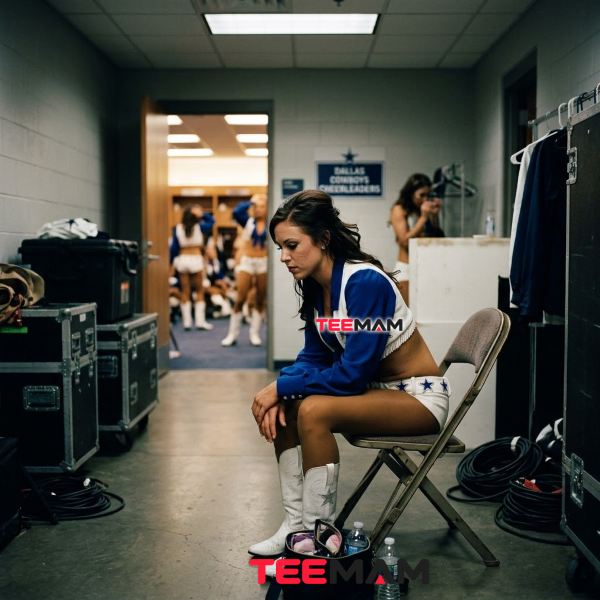
Perfection as part of the brand
Smile placement, synchronization, appearance standards, and public behavior are all part of what the judges evaluate, and that scrutiny does not stop once a cheerleader makes the team. It follows her through every game and every public appearance for the rest of the season.
The emotional cost of staying at the top
The show does not shy away from the trade-offs. Injuries, most visibly Reece Weaver’s hip pain and a high ankle sprain during Season 3, force cheerleaders to weigh physical limits against the pressure to keep performing. Comparison among teammates, fear of being cut after already making the team once, and the difficulty of maintaining a personal life around a demanding rehearsal schedule all surface across the three seasons, usually without the show editorializing about whether any of it is fair.
Why the documentary works when it stops being glamorous
The strongest moments rarely come during the performance sequences. What stays with viewers is the silence right after a cut: the choreography disappears from the frame, and the show shifts from a sports documentary into something closer to a workplace drama about people deciding how much they are willing to give up for one role.
Where Are the Dallas Cowboys Cheerleaders From the Show Now?
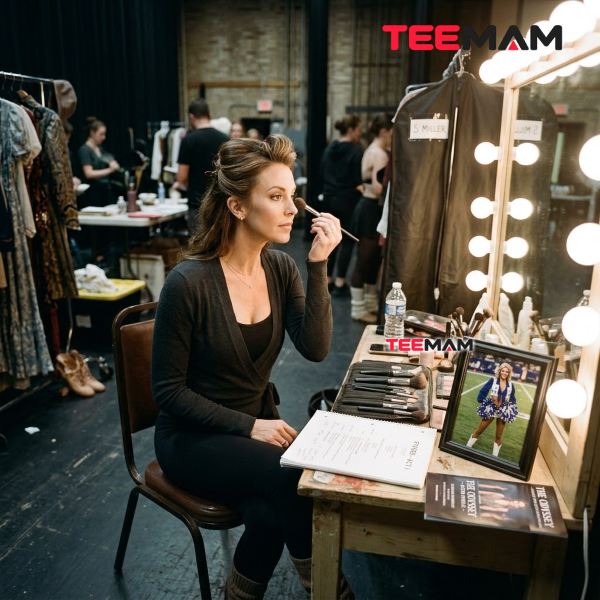
Victoria Kalina left DCC after Season 1 and moved to New York to chase a spot with the Radio City Rockettes. She did not make the cut at her first audition in 2025, and in April 2026 she announced she was sitting out that year’s audition cycle entirely to keep training, telling followers she wanted more time to “perform at the level I hold myself to.”
Kelcey Wetterberg returned to her career as a pediatric registered nurse after retiring from DCC in 2023 and has remained connected to the organization’s alumni network since.
Reece Weaver retired from the Dallas Cowboys Cheerleaders in the Season 3 finale after three seasons. She moved directly into theater, making her Broadway debut as Roxie Hart in Chicago on September 7, 2026, for a six-week limited run at the Ambassador Theatre through October 18.
What changed after the cameras stopped?
The series gave all three a public profile that extends well beyond game days, but their post-DCC paths have gone in noticeably different directions: Weaver moved toward theater, Kalina toward dance opportunities in New York, and Wetterberg back to a more conventional professional life centered on nursing and family.
What the Documentary Gets Right, and What It Leaves Out
The series is genuinely strong on the human side: the competition, the discipline, the emotional stakes of a cut, and the physical toll of the job all come through clearly. Where it leaves gaps is context. Casual viewers get very little of DCC’s decades-long history before 2023, limited detail on how the organization’s finances actually work, and only glancing coverage of how the Cowboys front office, rather than Finglass and Trammell, factors into decisions like the 2025 pay raise. None of that is really a flaw. The show is built around personal stories rather than institutional reporting, but it does mean the documentary works best as a starting point rather than the full picture. Viewers who want that fuller context, including how other Cowboys-related documentaries cover the organization from different angles, might find it useful to check out best Dallas Cowboys documentaries.
More Than a Netflix Documentary: Why DCC Still Matters to Fans
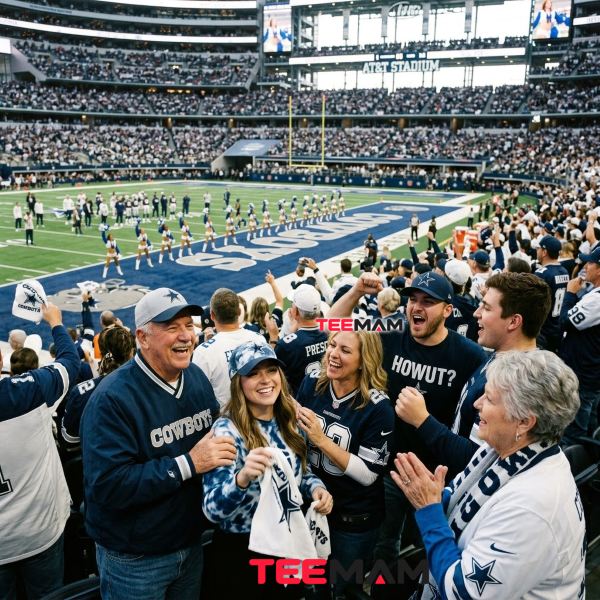
Part of what makes this show interesting from a culture standpoint is how quickly it revived interest in DCC among people who had never followed the squad before, alongside longtime Cowboys fans who grew up watching Making the Team. That renewed attention has fed directly into fan style, too. The DCC look has influenced the broader visual language of Cowboys fandom: star imagery, blue-and-white color combinations, retro sports graphics, and Western-inspired details all translate easily into everyday game-day apparel.
We at TeeMam think about that kind of design language as part of a broader culture around sports-inspired gifting and fandom, rather than treating a documentary like this as a shopping hook.
Questions Fans Still Ask About America’s Sweethearts
Is America’s Sweethearts Dallas Cowboys Cheerleaders a documentary or reality show? It is generally classified as a docuseries. It follows real people through an actual competitive process without scripted plotlines, but it uses reality-TV editing techniques, confessional interviews, and structured season arcs to build narrative tension.
Where can you watch America’s Sweethearts: Dallas Cowboys Cheerleaders? All three seasons stream exclusively on Netflix. Season 1 premiered June 20, 2024, Season 2 on June 18, 2025, and Season 3 on June 16, 2026.
Who is the most prominent cheerleader in the series? That is largely subjective, but Victoria Kalina, Reece Weaver, and Kelcey Wetterberg are consistently among the most prominently featured cheerleaders across the show’s run, alongside Kelli Finglass and Judy Trammell as the constant leadership presence.
How much do Dallas Cowboys Cheerleaders get paid? Cheerleaders have said an approximately 400 percent raise secured for the 2025 season could push veteran hourly pay above $75, up from around $15 an hour previously, plus per-appearance and per-game compensation, though the Cowboys have not published official figures.
How hard is it to make the Dallas Cowboys Cheerleaders? It requires clearing multi-stage auditions, callbacks, and training camp cuts that evaluate technical dance skill, conditioning, presentation, and composure under pressure, a process that eliminates the vast majority of hopefuls each year.
Are the Dallas Cowboys Cheerleaders professional dancers? Many DCC members have extensive competitive dance training, and the physical and technical demands of the job are comparable to professional dance work, though DCC itself functions as a part-time role rather than a full-time salaried position for most members.
Is there another season of America’s Sweethearts? Yes. Netflix has confirmed a fourth season for 2027, which will follow the 2026-27 Dallas Cowboys Cheerleaders team through auditions, training camp, and the NFL season, continuing the show’s established format.
Why the DCC Story Resonates Beyond Football
Three seasons in, the appeal of America’s Sweethearts Dallas Cowboys Cheerleaders is easier to pin down. The uniforms and the performances get viewers through the door, but the work behind them is what keeps people watching. DCC has spent more than fifty years selling an image of effortless perfection. This series is most compelling in the moments it shows exactly how much effort that image actually requires, and how often the people wearing it decide the cost is worth paying again next season.
Sources
- America’s Sweethearts Season 3: Everything You Need to Know About the DCC — Netflix Tudum
- AMERICA’S SWEETHEARTS: Dallas Cowboys Cheerleaders, Season 4 logline — Netflix Media Center
- Dallas Cowboys Cheerleaders get 400% pay raise — ABC News
- Do the Dallas Cowboys Cheerleaders make enough? — Fox Business
- CHICAGO Welcomes Reece Weaver as “Roxie,” September 7 — Shubert Organization
- Copy of the original sketch for the Dallas Cowboys Cheerleading uniform — Smithsonian National Museum of American History

Hi, I’m Olivia Bennett, a fashion and lifestyle writer at TeeMam with 6 years of experience creating content about fashion, outfits, and lifestyle trends. I enjoy sharing practical style ideas for everyday wear, game days, holidays, and special occasions, helping readers find looks that feel comfortable, fun, and uniquely their own.